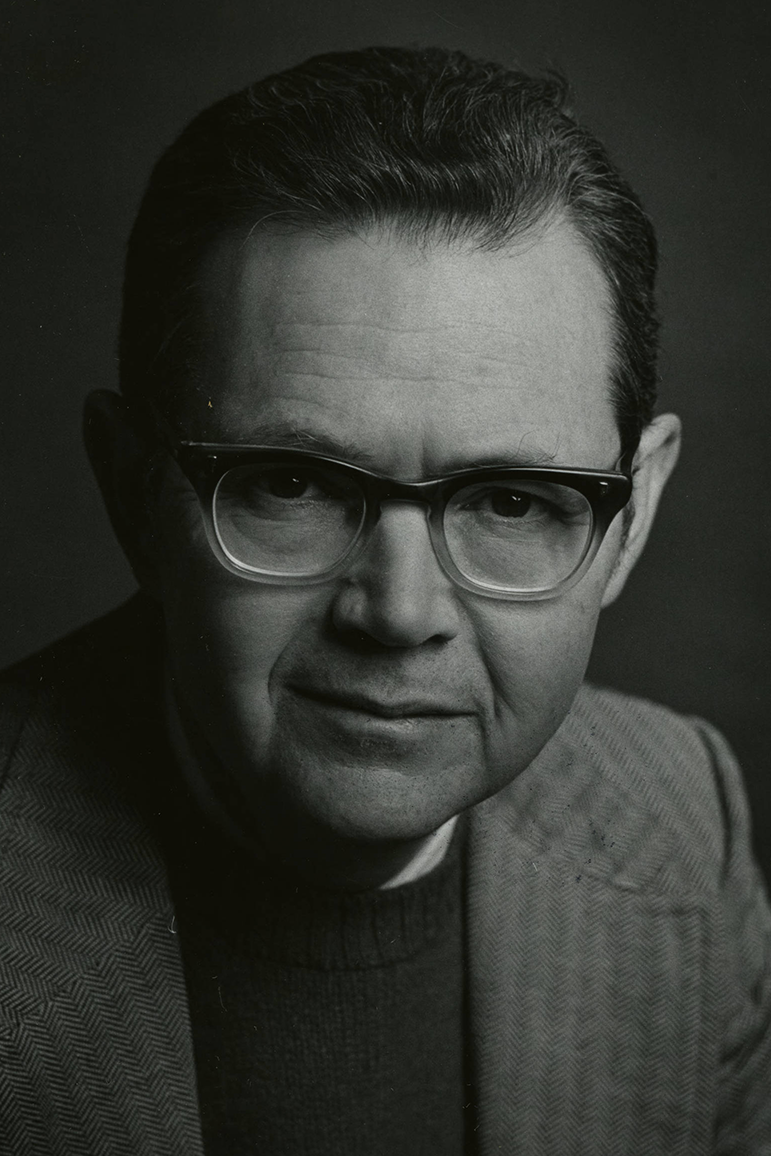
Marvin Stein
University of Minnesota · Computer Science and Engineering
Active 1952–2015
Research topics
- Computer science
- Arithmetic
- Programming language
- Mathematics
- Algorithm
Selected publications
Utrecht University Repository (Utrecht University) · 2015-09-21
dissertation1st authorCorrespondingThis thesis examines the role of propaganda in framing a conflict to legitimize violence. In focusing on the case study of the Islamic State, or Daesh, and how the group uses an extended propaganda campaign in order to portray a certain perspective of both the group itself and the conflict, I demonstrate the way in which propaganda can propagate a certain frame. Daesh, I argue, utilizes propaganda in order to legitimize its violent actions as a part of a bigger picture in the framework of a violent imaginary. This framework is broken down into the concepts of narratives, performances, and inscriptions, which, this thesis asserts, are interwoven throughout each piece of propaganda in order to paint a holistic image of Daesh as a legitimate and justified actor. The perspective shown in this holistic image challenges the Western “new war” perspective, and demonstrates the need for the existing basis of Western theory to be expanded.
Erfahrungen mit der Translaryngealen Tracheotomie (TLT) nach Fantoni
AINS - Anästhesiologie · Intensivmedizin · Notfallmedizin · Schmerztherapie · 2004-04-28
article1st authorCorrespondingOral history interview with Marvin L. Stein
University of Minnesota Digital Conservancy (University of Minnesota) · 1984-01-01
articleOpen access1st authorCorrespondingIn the first session of the interview, Stein discusses his early career and the formation of the University of Minnesota's computing facilities.After learning basic digital and analog operation during World War II, he obtained a doctorate in mathematics from UCLA.While teaching numerical analysis at UCLA, he also worked on missile simulation at Convair, Inc., in San Diego.After becoming familiar with the ERA 1103 computer Convair purchased from Engineering Research Associates, Stein made frequent consultant visits to ERA headquarters in Minnesota.In 1955, the University of Minnesota hired Stein to introduce their first computer courses and administer ERA's gift of free computer time.He describes early computer applications to crystallography and low-energy electron scattering, and the policy he established for the computer center to make users self-sufficient programmers.Stein reviews the growth of the Computer Center: the acquisition of an ERA 1103 computer with National Science Foundation support, the construction and use of a hybrid computer out of the 1103 and a Reeves Electronic Analog Computer (REAC), and the purchase in 1960 of Control Data 1604 and 1700 computers.
Bilateral herniation of renal pelves A complication of cutaneous pyelostomy
Urology · 1978-05-01 · 3 citations
article1st authorCorrespondingCommunications of the ACM · 1971-04-01
articleOpen access1st authorCorrespondingThe division algorithm theorem is expressed in a form that permits it to serve as the basis for devising division operations that produce both quotient and remainder in complement form. Algorithms for division yielding complement results are derived for numbers represented in any base greater than one. Both radix and radix-less-one complementation schemes are considered. The binary form of the algorithms thus includes both two's and one's complement implementation. The problem of quotient overflow for complement results is dealt with as is that of selecting an appropriate form of the remainder condition for complement division.
IEEE Transactions on Computers · 1971-06-01
article1st authorCorrespondingA general approach to the problem of scaling machine arithmetic is developed. This leads to the determination of inequalities that can serve as a basis for the derivation of systematic scaling techniques. The inequalities and techniques are shown to apply to complement arithmetic with either integral or fractional machine operations and to absolute value and sign arithmetic for both types of operations. A detailed discussion is presented for the case of complement integer arithmetic. The connections with floating point arithmetic are derived.
Introduction to machine arithmetic
CERN Document Server (European Organization for Nuclear Research) · 1971-01-01 · 3 citations
book1st authorCorrespondingSorting Implicit Outputs in Digital Simulation
IEEE Transactions on Computers · 1970-09-01 · 1 citations
article1st authorCorrespondingThe Stein-Rose sorting algorithm for digital simulation is reexamined and reformulated in current terms. It is pointed out that the algorithm already contains within itself the means for the automatic detection of feedback loops (implicit outputs) in analog programs. The algorithm is then extended so that it can handle implicit outputs and the extended version is shown to be finite. Thus compilers for digital simulation languages utilizing the extended algorithm need not require that programmers take a priori action either to remove feedback loops from analog programs or to identify such loops to the compiler.
Computer Programming: A Mixed Language Approach.
American Mathematical Monthly · 1966-05-01
articleA Fortran introduction to programming and computers : including Fortran IV
Academic Press eBooks · 1966-01-01
book1st authorCorresponding
Frequent coauthors
- 17 shared
William D. Munro
- 2 shared
Franz Halberg
University of Minnesota
- 2 shared
M. Diffley
University of Minnesota
- 2 shared
David Parker
Kennesaw State University
- 2 shared
John R. Rose
Xavier Institute of Communications
- 2 shared
G. Adkins
Cambridge Hospital
- 2 shared
H. A. Panofsky
- 1 shared
Glen W. Erickson
Education
- 1941
B.S.
Roosevelt High School
- 1951
Ph.D., Mathematics
University of California, Los Angeles (UCLA)
Awards & honors
- Outstanding Achievement
- Distinguished Leadership
- Honorary Doctorate Degrees
- Resume-aware match score
- Save to shortlist
- AI-drafted outreach
See your match with Marvin Stein
PhdFit ranks faculty by your research interests, methods, and publications — grounded in their actual work, not templates.
- Free to start
- No credit card
- 30-second signup