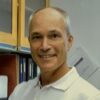
Marty W. Mayo
· Professor of Transcriptional Regulation by NFKBVerifiedUniversity of Virginia · Biochemistry and Molecular Genetics
Active 1996–2026
About
Marty W. Mayo is a Professor of Biochemistry and Molecular Genetics at the University of Virginia School of Medicine. His educational background includes a BS in Microbiology from Clemson University, a PhD in Microbiology and Immunology from East Carolina University, and a postdoctoral fellowship in Cancer Research at the University of North Carolina, Chapel Hill. His research focuses on the transcriptional regulation by NF-kB, particularly its role in cell survival, apoptosis, and cancer progression. Dr. Mayo's laboratory was among the first to describe the involvement of the transcription factor NF-kB in the inhibition of cell death. His work investigates how NF-kB is activated by various stimuli, including tumor necrosis factor, and how this activation leads to the production of gene products that protect cells from apoptosis. His research aims to understand the signaling pathways that activate NF-kB, the mechanisms of its transcriptional activation, and the gene products regulated by NF-kB that block apoptosis. Additionally, his team explores pharmacological agents that inhibit NF-kB activation and their potential use in combination with standard cancer therapies. His research utilizes human cancer cell lines and xenograft tumor models to elucidate the processes regulated by NF-kB and their relevance in human cancer.
Research topics
- Internal medicine
- Genetics
- Medicine
- Biology
- Oncology
- Pathology
- Cancer research
- Cell biology
Selected publications
Leukemia · 2026-04-13
articleOpen accessNucleic Acids Research · 2025-06-14 · 2 citations
articleOpen accessG-quadruplexes (G4s) are four-stranded alternative secondary structures formed by guanine-rich nucleic acids and are prevalent across the human genome. G4s are enzymatically resolved by specialized helicases. Previous in vitro studies showed that DEAH-box helicase 36 (DHX36/G4R1/RHAU) has the highest specificity and affinity for G4 structures. Here, by mapping genome-wide DNA double-strand breaks (DSBs), we demonstrate that knockout of DHX36 helicase increases DSB enrichment at G4 sites and that the presence of the G4 motif is a significant mediator of genome instability at regulatory regions. The loss of DHX36 corresponds with the significant upregulation of NF-κB transcriptional programs, culminating in the production and secretion of proinflammatory cytokines. Loss of DHX36 expression results in the accumulation of cytoplasmic DNA fragments, an increase in the innate immune signaling stimulator of interferon response cGAMP interactor 1 (STING1) expression, and activation of genes involved in immune response pathways. Importantly, higher levels of DHX36 messenger RNA expression in human B-cell acute lymphoblastic leukemia correlate with improved overall survival relative to lower expression of DHX36, highlighting its critical role in preserving genome integrity at a cellular level and in the context of cancer.
bioRxiv (Cold Spring Harbor Laboratory) · 2025-01-03 · 1 citations
preprintOpen accessSUMMARY G-quadruplexes (G4s) are four-stranded alternative secondary structures formed by guanine-rich nucleic acids and are prevalent across the human genome. G4s are enzymatically resolved using specialized helicases. Previous in vitro studies showed that DEAH-box Helicase 36 (DHX36/G4R1/RHAU), has the highest specificity and affinity for G4 structures. Here, by mapping genome-wide DNA double-strand breaks (DSBs), we demonstrate that knockout (KO) of DHX36 helicase increases DSB enrichment at G4 sites and that the presence of the G4 motif is a significant mediator of genome instability at regulatory regions. The loss of DHX36 corresponds with the significant upregulation of NF-κB transcriptional programs, culminating in the production and secretion of proinflammatory cytokines. Loss of DHX36 expression results in an increase in the innate immune signaling stimulator of interferon response cGAMP interactor 1 ( STING1 ) expression and activation of genes involved in immune response pathways. Importantly, higher levels of DHX36 mRNA expression in human B-cell acute lymphoblastic leukemia correlate with improved overall survival relative to lower expression of DHX36 , highlighting its critical role in preserving genome integrity at a cellular level and in the context of cancer.
Cytotherapy · 2025-04-30
articleModeling lung adenocarcinoma metastases using patient-derived organoids
Cell Reports Medicine · 2024-10-01 · 18 citations
articleOpen accessPDOs to sotorasib demonstrates that the model can examine the efficacy of treatments to suppress metastasis and identify mechanisms of drug resistance. Finally, our PDO model cocultured with autologous peripheral blood mononuclear cells can potentially be used to determine the optimal immune-priming strategy for individual patients with LUAD.
2023-03-31
supplementary-materialsOpen access<p>Table IV: List of genes in top 5 GSEA categories whose expression significantly correlates with increased TRIM37 levels in 231-2b cells.</p>
2023-03-31
supplementary-materialsOpen access<p>Table II: List of primers and shRNA used for qRT-PCR, ChIP and vector construction.</p>
2023-03-31
preprintOpen access<p>Supplementary Figure 7. Targeting of TRIM37 suppresses TNBC metastasis.</p>
2023-03-31
preprintOpen access<p>Supplementary Figure 2: TRIM37-mediated H2A mono-ubiquitination promotes TNBC cell survival following chemotherapy.</p>
2023-03-31
preprintOpen access<p>Supplementary Figure 2: TRIM37-mediated H2A mono-ubiquitination promotes TNBC cell survival following chemotherapy.</p>
Recent grants
NIH · $29k
NIH · $2.4M · 2014
Identifying tumor suppressor targets of SIRT6 in lung cancer
NIH · $1.9M · 2015–2021
NIH · $1.4M · 2009
NIH · $659k · 2004
Frequent coauthors
- 90 shared
Albert S. Baldwin
- 51 shared
David R. Jones
Memorial Sloan Kettering Cancer Center
- 25 shared
Lee V. Madrid
University of North Carolina at Chapel Hill
- 24 shared
Benjamin B. Morris
- 23 shared
Cun-Yu Wang
University of California, Los Angeles
- 22 shared
Luís Teixeira
- 22 shared
Jacqueline Lehmann‐Che
- 22 shared
Jogender Tushir‐Singh
UC Davis Comprehensive Cancer Center
- Resume-aware match score
- Save to shortlist
- AI-drafted outreach
See your match with Marty W. Mayo
PhdFit ranks faculty by your research interests, methods, and publications — grounded in their actual work, not templates.
- Free to start
- No credit card
- 30-second signup