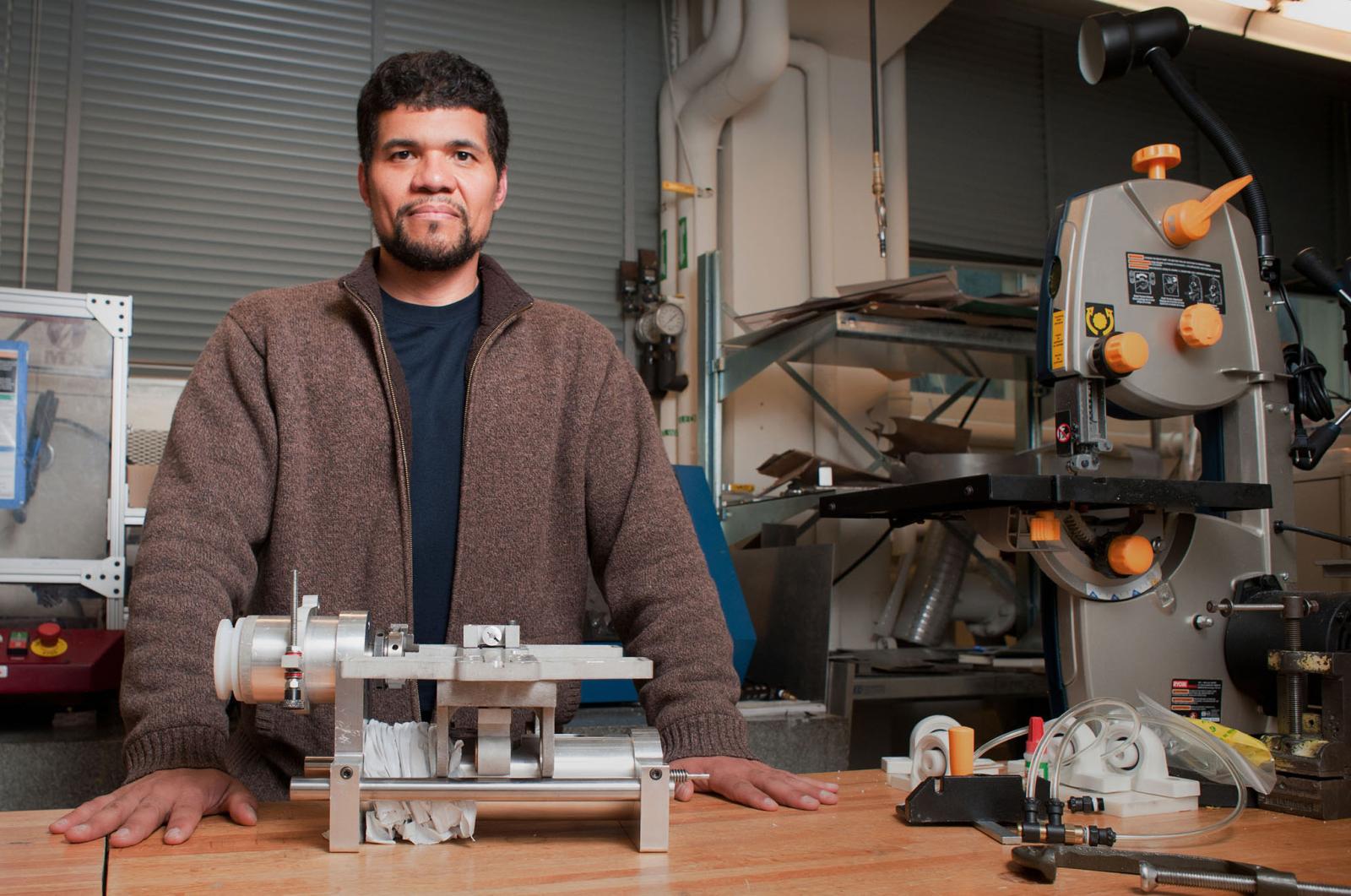
Martin Culpepper
· ProfessorMassachusetts Institute of Technology · Mechanical Engineering
Active 1998–2026
About
Professor Martin L. Culpepper is the Ralph E. and Eloise F. Cross Professor in Manufacturing at MIT and a Class of 1960 Fellow. His research focuses on the science and practical application of machine and instrument design, addressing the challenges where state-of-the-art technology cannot handle emerging applications. His work involves inventing, designing, and fabricating high-performance machine systems, generating design theory, tools, and methods to enable deployment, and training scientists and engineers through collaboration and professional classes. Culpepper's approach melds advanced engineering and science to produce new concepts that change paradigms and enable rapid technological advances, with a focus on understanding fundamental issues and creating practical knowledge, tools, and proofs to facilitate rapid design, employment, and scaling of advanced machine technologies. His educational philosophy emphasizes hands-on fabrication and testing, integrating theory with applied methods to produce engineers capable of designing machines that are effective, cost-efficient, and ahead of schedule. He is dedicated to enabling people to become better designers, scientists, and engineers, and enjoys working with them to create new technologies.
Research topics
- Computer Science
- Optoelectronics
- Artificial Intelligence
- Telecommunications
- Materials science
- Nanotechnology
- Electronic engineering
- Engineering
Selected publications
Advanced Science · 2026-03-01
articleOpen accessBiohybrid Tendons Enhance the Power‐to‐Weight Ratio and Modularity of Muscle‐Powered Robots
Advanced Science · 2025-11-30 · 2 citations
articleOpen accessBiohybrid robots powered by tissue engineered skeletal muscle have historically relied on architectures in which muscle actuators are placed directly on skeletons, thus limiting the accessible design space for such machines. By contrast, native musculoskeletal architecture relies on tendons to bridge the interface between muscles and skeletons, enabling precise, space-efficient, and energy-efficient force transmission. In this study, a mathematical model of the muscle-tendon-skeleton interface is used to design a biohybrid muscle-tendon unit composed of tissue engineered muscle coupled to adhesive tough hydrogel tendons. It is demonstrated that tuning tendon stiffness and pre-tension optimizes actuator performance, and tuning skeleton stiffness modulates force transmission from muscles to skeletons, with fatigue characteristics measured over > 7000 cycles. Furthermore, an ≈11X improvement in power-to-weight ratio of muscle-tendon units is demonstrated compared to previous demonstrations of robots powered by muscles alone. This work validates a robust approach for designing, manufacturing, and deploying muscle-tendon actuators that promises to enhance the modularity and efficiency of biohybrid robots.
Biohybrid tendons enhance the power-to-weight ratio and modularity of muscle-powered robots
bioRxiv (Cold Spring Harbor Laboratory) · 2025-07-14
preprintOpen accessAbstract Biohybrid robots powered by tissue engineered skeletal muscle have historically relied on architectures in which muscle actuators are placed directly on skeletons, thus limiting the accessible design space for such machines. By contrast, native musculoskeletal architecture relies on tendons to bridge the interface between muscles and skeletons, enabling precise, space-efficient, and energy-efficient force transmission. In this study, we use a mathematical model of the muscle-tendon-skeleton interface to design a biohybrid muscle-tendon unit composed of tissue engineered muscle coupled to adhesive tough hydrogel tendons. We show how tuning tendon stiffness and pre-tension modulates actuator performance, measure fatigue characteristics of our actuators over >7000 cycles, and tune skeleton stiffness to increase force transmission muscles to skeletons by ∼29X. Furthermore, we demonstrate an ∼11X improvement in power-to-weight ratio of muscle-tendon units as compared to previous demonstrations of robots powered by muscles alone. This work validates a robust approach for designing, manufacturing, and deploying muscle-tendon actuators that promises to enhance the modularity and efficiency of biohybrid robots.
Impact of Introducing Technical Design Elements in Makerspace Trainings
2025-08-06
articleOpen accessSenior authorMakerspaces are used as a tool in higher education to support curricular, hands-on projects and encourage student extracurricular and personal projects.Because access to making is more self-driven, there is a gap between what makerspace trainings teach students and what students are expected to know by the time they reach capstone courses in engineering.To test the effects of introducing a technical makerspace training to
Enhancing and Decoding the Performance of Muscle Actuators with Flexures
Advanced Intelligent Systems · 2024 · 19 citations
- Computer Science
- Computer Science
- Artificial Intelligence
Leveraging living muscle as an efficient and adaptive actuator for soft robots has been of increasing interest over the past decade, with a focus on proof‐of‐concept demonstrations of function. Reproducible design and scalable manufacturing of biohybrid machines requires methods to increase the stroke output of strain‐limited muscle actuators and enable accurate and precise quality control and performance monitoring. Compliant mechanical elements, termed flexures, are designed to enhance muscle contractile stroke to ≈5× previously reported values and decode contraction dynamics with high spatiotemporal resolution. Combining rigid and flexible elements within a linear elastic flexure enables us to outperform the sensitivity of gold standard elastomeric beam‐based measurements of muscle contraction at both low‐ and high‐frequency stimulations. Flexures are leveraged to make quantitative comparisons of force, work, and power outputs in muscle actuators, driving us to discover a new observation of frequency‐dependent fatigue in muscle, and also develop a novel method for tuning muscle contractile dynamics in a frequency‐independent manner. By enhancing the contractile stroke of muscle actuators and precisely tuning contractile dynamics and endurance with unprecedented precision, this study sets the stage for leveraging flexures to improve robust, reproducible, and predictive design and manufacturing of next‐generation biohybrid robots.
Enhancing and Decoding the Performance of Muscle Actuators with Flexures
Advanced Intelligent Systems · 2024-07-01 · 4 citations
articleOpen accessMuscle Actuators with Flexures Biohybrid robots require robust, reproducible, and predictable muscle actuators. Ritu Raman and co-workers have designed compliant mechanisms, termed “flexures”, that enhance the performance and decode the contractile dynamics of biological actuators with unprecedented accuracy and precision (see article number 2300834). The authors’ platform enables user-defined control of muscle contractile dynamics and fatigue behavior, enabling real-world applications of muscle as an actuator for adaptive machines. [Cover art by Ella Marushchenko.]
Producing Lunar Steel and Oxygen using Molten Regolith Electrolysis
2023-10-17
articleWith the current Artemis missions planned, by 2028, NASA and its international and commercial partners may be establishing a permanent presence at the lunar South pole. The Artemis Base Camp will be the locus of international and public-private collaboration under the Artemis Accords, helping to bootstrap a lunar economy. As the lunar economy grows, traffic of people and goods will grow with it. Thus, we envision that NASA and its international and commercial partners will have increasing long-term needs for producing metal from in situ resources such as lunar regolith. These metals can be used to produce many end products on the moon including large pressure vessels, both for spacious habitats and industrial-scale storage and operations. In this paper, as a part of the NASA 2023 BIG Idea Challenge ’Lunar Forge: Producing Metal Products on the Moon’, we design and manufacture a molten regolith electrolysis (MRE) reactor capable of producing various alloys of steel and other metal products from lunar regolith, with oxygen as a useful byproduct. We have built ARTEMIS Steelworks (Advancing Reactor Technologies for Electrolytic Manufacturing of In situ Steel), which consists of an electrolytic reactor, supporting the addition of alloying elements to produce molten steel from lunar regolith simulant. To prepare for a lunar technology demonstration, a preliminary test of the reaction on Earth was performed in a vacuum, a sonicator was tested to dislodge oxygen bubbles from the anode to increase electrode life, and an automated iron and slag collector was made to reduce the need for astronaut operation. The project’s technical objectives are to demonstrate steel-making capability while also quantifying energy efficiency, steel quality, and the expected useful life of the electrodes and vessel under different configurations relative to the state of the art. The comprehensive testing plan presented here includes functional subsystem and integrated testing in ambient conditions; automation capabilities; and validation of the main output, steel alloys, using tests and simulations to confirm their suitability for the intended primary end-use of large steel pressure vessels. Through the demonstration of the MRE reactor and the demonstration and characterization of alternative steel alloys, we aim to show the utility of the proposed technology to the lunar exploration goals of NASA and its international and commercial partners.
Design optimization of semiconductor piezoresistors with Schottky diode contacts
Precision Engineering · 2020 · 2 citations
Senior authorCorresponding- Materials science
- Optoelectronics
- Electronic engineering
Journal of Micro and Nano-Manufacturing · 2020 · 1 citations
Senior authorCorresponding- Computer Science
- Materials science
- Computer Science
Abstract A process flow is described for the low cost, flexible fabrication of metal micro-electromechanical systems (MEMS) with high performance integrated sensing. The process is capable of producing new designs in ≈1 week at an average unit cost of <$1 k/device even at batch sizes of ≈1–10, with expected sensing performance limits of about 135 dB over a 10 kHz sensor bandwidth. This is a ≈20× reduction in cost, ≈25× reduction in time, and potentially >30× increase in sensing dynamic range over comparable state-of-the-art compliant nanopositioners. The nonlithographically based microfabrication (NLBM) process is uniquely suited to create high performance nanopositioning architectures which are customizable to the positioning requirements of a range of nanoscale applications. These can significantly reduce the cost of nanomanufacturing research and development, as well as accelerate the development of new processes and the testing of fabrication process chains without excess capital investment. A six degrees-of-freedom (6DOF) flexural nanopositioner with integrated sensing for all 6DOF was fabricated using the newly developed process chain. The fabrication process was measured to have ≈30 μm alignment. Sensor arm, flexure, and trace widths of 150 μm, 150 μm, and 800 μm, respectively, were demonstrated. Process capabilities suggest lower bounds of 25 μm, 50 μm, and 100 μm, respectively. Dynamic range sensing of 52 dB was demonstrated for the nanopositioner over a 10 kHz sensor bandwidth. Improvements are proposed to approach sensor performance of about 135 dB over a 10 kHz sensor bandwidth.
Deterministic Switching of Hierarchy during Wrinkling in Quasi‐Planar Bilayers
Advanced Engineering Materials · 2016-04-25 · 4 citations
articleOpen accessSenior authorEmergence of hierarchy during compression of quasi-planar bilayers is preceded by a mode-locked state during which the quasi-planar form persists. Transition to hierarchy is determined entirely by geometrically observable parameters. This results in a universal transition phase diagram that enables one to deterministically tune hierarchy even with limited knowledge about material properties. The lack of affordable and scalable manufacturing processes for pattern generation is a bottleneck in transitioning several promising nano-enabled technologies from research laboratories to real-world adoption.1 In contrast to the existing slow and expensive pattern generation techniques, self-organization-based processes provide an alternate route to scale-up by enabling low-cost patterning over large areas.2-4 For example, uniform 1-D periodic wrinkled patterns can be generated over large areas via uniaxial compression of flat bilayers.5, 6 Such patterns have been used in the past to fabricate tunable nanofluidic channels,7, 8 tunable diffraction gratings,9, 10 and for low-cost nanometrology.11, 12 Although pattern fabrication via wrinkling is scalable, this process is currently of limited practical import. This is primarily because predictive design of wrinkled patterns is limited to a small set of elementary geometric patterns,13-16 that is, it is not possible to deterministically predict complex multi-period wrinkled patterns for a given set of process parameters. This makes it difficult to fabricate the desired wrinkled patterns with any certainty. We have overcome this limitation for the specific case of hierarchical wrinkled patterns by demonstrating deterministic switching of hierarchy during compression of quasi-planar bilayers. In the past, several empirical studies have demonstrated the feasibility of hierarchical wrinkle formation by “adding up” patterns.17-21 Physical pattern addition is often achieved by compressing a pre-patterned non-flat bilayer.19-21 This non-flat geometry can be conveniently generated via recursive wrinkling, that is, by replicating/imprinting wrinkled patterns that are fabricated via compression of flat bilayers.19 As wrinkled patterns form due to non-linear buckling bifurcation phenomena, the observed composite patterns are not equivalent to a linear superposition of the elementary patterns. To predict these composite patterns, approximate semi-empirical models may be generated by reducing the pre-patterned system to either a flat bilayer21 or a curved bilayer with a non-zero average global curvature.22 Unfortunately, such approximations do not capture the physical effect of quasi-planar geometry on pattern formation. A quasi-planar geometry is fundamentally distinct in form and behavior from both flat and curved geometry and refers to an “almost” flat surface geometry that has periodic spatial variations in the local curvature but a zero average global curvature. Herein, we investigate the effect of form of quasi-planar bilayers on the pattern formation behavior by identifying how the pre-pattern geometry fundamentally alters the deformation energy during compression of such systems. We show that the emergence of hierarchy during compression of quasi-planar bilayers is determined by two competing effects that arise due to the non-flat periodic geometry of such systems. As a result, emergence of hierarchy is preceded by a mode-locked state during which the quasi-planar form persists. We have fabricated quasi-planar bilayer systems by generating glassy thin films on top of pre-patterned and stretched elastomeric base layers. Glassy thin films were generated by plasma oxidation of the polydimethylsiloxane (PDMS) base layers;23, 24 pre-patterns were generated in the base by replicating single-period wrinkled patterns onto the base during curing. The pre-patterns were aligned such that the directions of periodicity and pre-stretch were collinear.25, 26 Upon gradual release of the stretch in the base, one observes a mode lock-in behavior wherein the amplitude of the pre-pattern increases while maintaining the single-period pre-pattern geometry. With further release of the stretch, a multi-period hierarchical mode emerges beyond a critical threshold. The patterns are reversible around this transition strain (ϵt), that is, the hierarchical mode can be switched back to the single-period pre-pattern mode by increasing the stretch in the base. This phenomenon is illustrated in Figure 1. The mode lock-in behavior is a distinct characteristic of quasi-planar systems and can be tuned via process parameters. For example, when the initial stretch in the base layer is lower than the transition strain, no hierarchical wrinkles are observed upon full pre-stretch release. One such representative mode-locked pattern is depicted in Figure 1d. We have also verified this mode lock-in behavior via finite element simulations, as illustrated in Figure 1c. Simulations were performed by modeling the non-linear buckling bifurcation phenomenon that occurs during compression of pre-patterned bilayers. Custom codes were written to transform flat bilayers into quasi-planar bilayers by applying large mesh perturbations; these codes are available elsewhere.27 The mode lock-in behavior arises due to the competing effects of the period and the amplitude of pre-patterns on the deformation energy. In the absence of a pre-pattern, a flat bilayer system bifurcates into its natural period, that is, into the period that minimizes the deformation energy. By pre-patterning the base with a period that is different from the natural pattern, one “forces” the bilayer system into a higher energy deformation state. Concurrently, an energy advantage arises due to the non-flat geometry. This is because the deformation energy of a flat system is higher than that of a strain-free non-flat system when compressed by the same strain (see Supporting Information Section S4.2). Hierarchical wrinkles are formed due to a competition between these two effects: energy penalty due to non-natural period and energy advantage due to non-zero amplitude. Mode lock-in at the onset of pre-stretch release occurs because the energy advantage due to non-zero amplitude dominates the energy penalty due to non-natural period. This energy advantage forces the system to stay locked into an otherwise energetically unfavorable mode. As strain affects amplitude and period differently, these energy penalties and advantages vary with the strain. With further pre-stretch release, the energy penalty gradually starts dominating. Hierarchical wrinkles emerge when this penalty exceeds the energy advantage. In finite element simulations and physical systems, this transition can be identified by the emergence of the natural period in the patterns. The Fast Fourier Transform of the simulated patterns shown in Figure 2 demonstrates how emergence of the natural period results in hierarchy. As illustrated in Figure 2d, this mode transition is accompanied with a distinct change in the slope of deformation energy versus strain plot. Herein, we have separately captured these two competing effects via analytical models to predict the transition of quasi-planar bilayers into hierarchical modes. This scaled strain energy is a ratio of the strain energy in a system that is pre-patterned with the natural period (Up,n) and in an equivalent flat system (Uf,n). This ratio varies between one and zero; a value of one corresponds to a pre-pattern with zero amplitude, that is, a flat system. Thus, a low value for this ratio corresponds to a high “energy advantage.” Here, “n” is the ratio of amplitudes of the pre-pattern and the natural pattern, that is, n = Ap/An. As illustrated in Figure 3a, “energy advantage” in the system decreases with an increase in the compressive strain. The initial deviation of the computed “energy advantage” from the predicted values is due to the presence of the longitudinal film compressive mode in flat bilayers before the onset of wrinkling. In pre-patterned bilayers, this longitudinal compression is negligibly small (see Supporting Information Section S4.2) and does not affect pattern formation. As the natural pattern is physically observable, the natural period (λn) and amplitude (An) may be empirically determined by observing the period and amplitude of wrinkles formed in an equivalent flat bilayer system. Within these geometric parameters, the effect of thin film thickness (h) and ratio of Young's moduli (η) is incorporated in the natural period (λn ∼ h · η1/3) whereas the effect of strain (ϵ) is incorporated in the amplitude of the natural mode (An ∼ λn · ϵ0.5). Here, Uf,p is the strain energy in the flat bilayer if it bifurcates into wrinkles of same period as the pre-pattern and “m” is the ratio of period of pre-pattern to natural period, that is, m = λp/λn. The energy penalty increases as the pre-pattern period deviates away from the natural period. As illustrated in Figure 3b, the penalty demonstrates a distinct asymmetry about the natural period, that is, the increase in penalty is steeper for periods that are lower than the natural period. Asymmetric behavior arises due to the difference in the source of penalty; penalty for higher periods arises due to the base whereas penalty for lower periods arises due to the thin film. This is because strain energy in the base is directly proportional to the period whereas strain energy in the film is inversely proportional to the square of the period.13 For periods higher than the natural period, penalty arises due to an increase in the energy of the base; whereas for periods lower than the natural period, penalty arises due to an increase in the energy of the film. Asymmetry arises because the scaling of strain energy with period is linear for the base but quadratic for the film. As discussed later, this asymmetry is also reflected in the transition behavior and serves as a qualitative internal consistency test to verify the analytical model. As the geometric parameters that govern this transition are physically observable, one can accurately predict the transition behavior even with limited system knowledge about materials or applied strain. The universal phase diagram that represents this lock-in/hierarchy transition is shown in Figure 4. This phase diagram is applicable to all feasible combinations of process parameters and provides a powerful predictive tool to deterministically switch hierarchy in a variety of quasi-planar bilayers. We have verified the accuracy of the phase diagram by comparing the analytical model against empirical data and finite element simulations. During experiments, wrinkled surfaces were imaged upon full pre-stretch release with an atomic force microscope to identify the state of the pattern as being either mode locked or hierarchical. During simulations, the critical amplitude ratio for transition was evaluated by measuring the transition strain for a set of pre-determined period ratio and pre-pattern amplitude. As illustrated in Figure 4, finite element simulations and experiments collectively confirm the accuracy of the analytical phase diagram. Additionally, an internal consistency check was performed to verify that the asymmetry in the energy penalty is accurately reflected in the asymmetry of the phase diagram. As non-natural periods with a period ratio less than unity have a steeper energy penalty, they force the quasi-planar systems to stay longer in the mode-locked state. This is reflected in the phase diagram in the form of a larger mode-locked region for period ratios less than unity. The phase diagram presented here enables one to make rational design decisions that cannot be made via prevalent empirical techniques that rely on trial-and-error. For example, when tunable wrinkles are desired one may select the pre-pattern and natural patterns with either m > 1 or m < 1. Although similar hierarchical wrinkles can be theoretically obtained for both of these cases, based on the phase diagram we now know that the first combination provides a larger accessible design-space for hierarchy whereas the second combination favors mode lock-in. One can also deduce from the phase diagram and Equation 5 that tunability of hierarchy is lost when the pre-pattern period is substantially higher than the natural period, that is, higher by a factor of at least 10. For such systems, the transition strain is negligibly small and one would fail to observe mode lock-in as a distinct state; instead, hierarchical wrinkles would seem to emerge immediately at the onset of pre-stretch release. We suspect that this is one of the reasons why the mode lock-in phenomenon has not been reported in the past within the context of wrinkling of pre-patterned surfaces. Herein, we have generated the process knowledge that enables one to perform predictive design and fabrication of tunable hierarchical structures for the special case of single-period quasi-planar bilayers. Such tunable structures find applications in tunable gratings, microfluidics, and control of adhesion and wetting properties.28, 29 Specifically, hierarchical wrinkles with a period ratio of 1–2 can be used as shape-tunable optical gratings wherein the shape can be tuned via strain; whereas, hierarchical wrinkles with a period ratio of 5–10 may be used as tunable microfluidic channels wherein the lower period wrinkles generate tunable roughness on the surface of the larger period channels. Use of multi-period quasi-planar surfaces would broaden the applications of hierarchical wrinkles beyond these specific cases. By identifying the fundamental link between geometric form and pattern formation behavior of single-period quasi-planar geometries, we provide the framework that is required to understand pattern formation in more complex multi-period quasi-planar geometries. Flat PDMS base films were fabricated by casting and thermally curing a two-part polydimethylsiloxane (PDMS) silicone elastomer mix that is commercially available from Dow Corning (Sylgard 184). The two parts were mixed by combining 12 parts of resin and one part of curing agent by weight. After degassing the mixture, curing was performed via a two-step thermal curing process so as to minimize the volumetric shrinkage in the film. Alignment features were generated on the bottom surface of the films by casting and curing the mixture in custom-made aluminum molds. These alignment features were later used to align the direction of stretch with the wrinkle pre-patterns. The cured PDMS films were manually cut into individual coupons that were approximately 20 mm wide, 1.9–2.2 mm thick, and had a clamped length of 37.5 mm. These coupons were then mounted and stretched on a custom-made precision tensile stage.25 The accuracy of the clamped length was ensured by mating the alignment features on the coupons to the corresponding features on the stage. The entire stage with the stretched coupon was then inserted into a vacuum chamber and exposed to low-pressure RF air plasma. The air plasma chemically modifies the surface and generates a glassy thin film on top of the PDMS layer that has a Young's modulus of 3.2 ± 0.78 GPa26 and is 10–100 nm thick. The thickness of the glassy film can be tuned by controlling the duration of the plasma exposure. The plasma oxidation process was calibrated to link the observed period to the duration of exposure; the calibration chart is available in the Supporting Information. After plasma oxidation, wrinkles were generated by gradually releasing the stretch in the base layer thereby causing the top glassy layer to compress and buckle. Quasi-planar base layers were fabricated by imprinting wrinkled surfaces onto the base during the thermal curing process. Imprinting was performed by gradually and “gently” placing the coupons with the wrinkled surfaces on top of the curing material after the onset of curing but before gelation. Alignment of the pre-patterns to the subsequent direction of stretch was achieved by visually sensing and then aligning the alignment marks on the coupons with the alignment marks on the mold. It was observed that when imprinting is performed immediately at the beginning of curing, the coupons quickly sink to the bottom of the mold leading to an extremely thin and unusable quasi-planar base. Therefore, imprinting was delayed by several minutes after the onset of curing to ensure that the base film is sufficiently viscous to support the weight of the coupon. The protocol for imprinting is summarized in the Supporting Information and described in detail elsewhere.26 The experimental data illustrated in Figure 4 were obtained by recording a scan of the wrinkled surface on an Atomic Force Microscope (AFM) when the pre-stretch in the pre-patterned base was fully released. The compressive strain in the top film was measured from the wrinkled profile by evaluating the total length of the curved profile. The pre-pattern amplitude and period and the natural period were directly measured for one set of experiments and indirectly via calibration of the plasma oxidation process for the other set. The observable geometric parameters of the experiments and details of the metrology protocol are available in the Supporting Information. Uncertainty in the experimental data arises due to spatial variation in the measurement of the pre-pattern and the calibration curves. This uncertainty has been previously characterized elsewhere in detail.25 The error bars in Figure 4 are based on this characterization and quantify the standard deviation in the period and amplitude of ±5% for direct measurements and ±6.5% for indirect measurements. Finite element modeling was performed by developing 2-D models of wrinkling using the Structural Mechanics module of the COMSOL 4.2 software package. These models were developed by implementing buckling of wide plates under the plane strain condition wherein the top film is a linear elastic material and the bottom layer is a Neo-Hookean material. A non-linear strain–displacement relationship was used for both layers to account for large angles during wrinkling. The bilayer was uniaxially compressed by simultaneously compressing the top and bottom layers. Modeling of wrinkle formation in flat bilayers was performed in two steps:30 i) linear pre-buckling analysis to predict the mode shapes required for generating the perturbed mesh and ii) a non-linear post-buckling analysis on the perturbed mesh to predict the shape and amplitude of the wrinkles after buckling bifurcation. Modeling of wrinkle formation in pre-patterned bilayers was performed on the perturbed mesh via a single-step non-linear analysis. The perturbed mesh was generated from the pre-pattern geometry, as discussed in the Supporting Information. It was observed that additional mesh perturbations were not necessary to generate wrinkles during compression of pre-patterned bilayers. The transition strain (ϵt) at which the pre-patterned surfaces transition into the hierarchical mode was evaluated as the strain at which the absolute value of the second derivative of film energy versus strain has a peak. This criterion captures the change in the deformation mode that accompanies the transition from single-period mode-locked state to a two-period hierarchical state. As a service to our authors and readers, this journal provides supporting information supplied by the authors. Such materials are peer reviewed and may be re-organized for online delivery, but are not copy-edited or typeset. Technical support issues arising from supporting information (other than missing files) should be addressed to the authors. Please note: The publisher is not responsible for the content or functionality of any supporting information supplied by the authors. Any queries (other than missing content) should be directed to the corresponding author for the article.
Recent grants
NSF · $238k · 2005–2008
NSF · $400k · 2004–2009
NIH · $214k · 2007
Frequent coauthors
- 21 shared
Michael Cullinan
The University of Texas at Austin
- 13 shared
Sourabh K. Saha
Georgia Institute of Technology
- 13 shared
Alexander H. Slocum
Massachusetts Institute of Technology
- 12 shared
Robert M. Panas
- 11 shared
Jonathan B. Hopkins
University of California, Los Angeles
- 9 shared
Shih‐Chi Chen
- 8 shared
Christopher M. DiBiasio
Draper Laboratory
- 7 shared
Jonathan F. Bean
Awards & honors
- Ralph E. and Eloise F. Cross Professor in Manufacturing
- Class of 1960 Fellow
- Joseph Henry Keenan Teaching Award For Innovation in Undergr…
- Fellow of the ASME
- Presidential Early Career Award for Scientists and Engineers
- Resume-aware match score
- Save to shortlist
- AI-drafted outreach
See your match with Martin Culpepper
PhdFit ranks faculty by your research interests, methods, and publications — grounded in their actual work, not templates.
- Free to start
- No credit card
- 30-second signup