
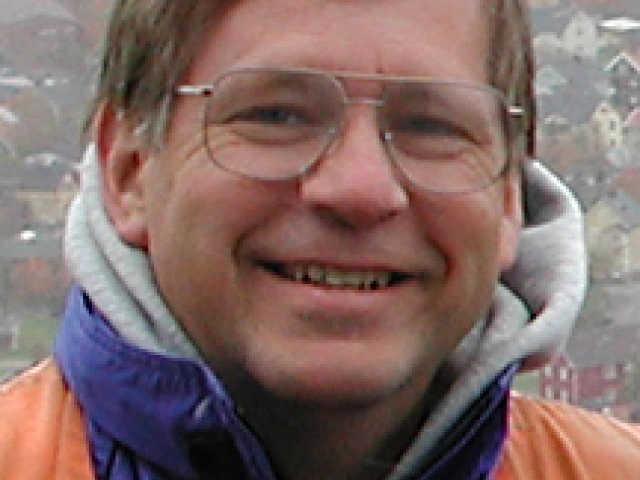
Mark D. Barton
· Professor of GeosciencesUniversity of Arizona · Geosciences
Active 1982–2025
Academic metrics are sourced from OpenAlex and public funding records; values may differ from Google Scholar.
About
Mark D. Barton is a Professor of Geosciences and the Director of the Lowell Institute for Mineral Resources at the University of Arizona. He earned his BS and MS degrees from Virginia Tech in 1977 and 1978, respectively, and completed his PhD at the University of Chicago in 1981. Following a post-doctoral fellowship at the Geophysical Laboratory of the Carnegie Institution of Washington, he taught at the University of California, Los Angeles before joining the University of Arizona faculty in 1990. He co-founded the Lowell Institute for Mineral Resources in 2008 and led the creation of the School of Mining and Mineral Resources in 2021. His research interests encompass many aspects of energy and mass transfer in the Earth's lithosphere, with applications to mineral deposits. Recent research has focused on critical minerals in various geologic environments, recovery of critical minerals from mine waste, and assessment of abandoned mine lands. He has developed and managed multiple industry-government consortia on mineral challenges and collaborates with numerous companies and government agencies. Mark has advised over 24 PhD students and more than 60 master's students. His broad research interests include economic geology, geochemistry, petrology, mineralogy, and tectonics, utilizing tools such as geologic mapping, lab-based petrology and geochemistry, and theoretical approaches.
Research topics
- Geology
- Environmental chemistry
- Environmental science
- Materials science
- Engineering
- Chemistry
- Organic chemistry
- Chemical engineering
- Remote sensing
- Geomorphology
Selected publications
Recovery of Critical Metals from Aqueous Sources
ACS Sustainable Chemistry & Engineering · 2021 · 93 citations
Critical metals, identified from supply, demand, imports, and market factors, include rare earth elements (REE), platinum group metals, precious metals, and other valuable metals such as lithium, cobalt, nickel, and uranium. Extraction of metals from U.S. saline aqueous, emphasizing saline, sources is explored as an alternative to hardrock ore mining. Potential aqueous sources include seawater, desalination brines, oil-and-gas produced waters, geothermal aquifers, and acid mine drainage, among o…
Mining Metallurgy & Exploration · 2021 · 41 citations
Mining Metallurgy & Exploration · 2019-11-05 · 38 citations
articleSenior authorGeological Society of America Bulletin · 2022 · 23 citations
Abstract The Paradox Basin in the Colorado Plateau (USA) has some of the most iconic records of paleofluid flow, including sandstone bleaching and ore mineralization, and hydrocarbon, CO2, and He reservoirs, yet the sources of fluids responsible for these extensive fluid-rock reactions are highly debated. This study, for the first time, characterizes fluids within the basin to constrain the sources and emergent behavior of paleofluid flow resulting in the iconic rock records. Major ion and isoto…
Geological Society of America eBooks · 2019-09-04 · 8 citations
book-chapterSenior authorABSTRACT Porphyry copper provinces are time-space clusters of porphyry copper deposits (PCDs) that form in magmatic arcs. The evolution of the Laramide arc of southwestern North America, which hosts the Laramide porphyry copper province—the second-largest in the world—provides insight into factors contributing to its transient and localized metallogenic fertility. Regional-scale patterns are evident based on new and compiled U-Pb geochronological and whole-rock geochemical data, collected as par…
Recent grants
Petrochemical Studies of Fe-Oxide (-Cu-Au-REE) Hydrothermal Systems
NSF · $156k · 1999–2001
NSF · $98k · 2006–2008
NSF · $209k · 2009–2011
Frequent coauthors
- 33 shared
Eric Seedorff
- 21 shared
Isabel Barton
Arizona Geological Survey
- 15 shared
Shirley P. Dutton
- 14 shared
Simone E. Runyon
Wyoming Department of Education
- 12 shared
Carson A. Richardson
- 12 shared
Roy E. Greig
University of Massachusetts Lowell
- 11 shared
F. K. Mazdab
University of Arizona
- 9 shared
Carlos Pirmez
Awards & honors
- Mineralogical Society of America Award
- Lindgren Award (Society of Economic Geologists)
- MSA Fellow
- GSA Fellow
- SEG Fellow
Similar researchers at University of Arizona
- Resume-aware match score
- Save to shortlist
- AI-drafted outreach
See your match with Mark D. Barton
PhdFit ranks faculty by your research interests, methods, and publications — grounded in their actual work, not templates.
- Free to start
- No credit card
- 30-second signup