Resume-aware faculty matching

Find professors who actually fit you

Upload your resume. Four AI agents analyze your background, rank the faculty who fit, inspect their recent research, and help you draft outreach — grounded in their actual work, not templates.

Free to startNo credit cardCancel anytime
Top matches Balanced preset
Dr. Sarah Chen
Stanford · Interpretability · NLP
91
Dr. Marcus Holloway
MIT · Robotics · RL
84
Dr. Aisha Okonkwo
CMU · Fairness · HCI
82
Nova · Professor Researcher · re-ranking top 20…
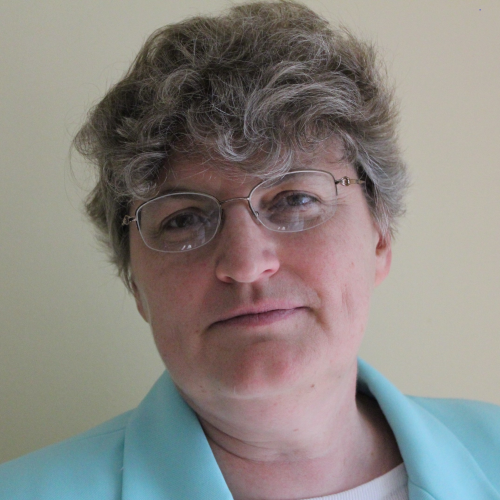
Marina Bykova

Marina Bykova

Verified

North Carolina State University · Philosophy

Active 1990–2026

h-index4
Citations104
Papers11235 last 5y
Funding
See your match with Marina Bykova — sign in to PhdFit.Sign in

About

Marina F. Bykova is a professor of philosophy at North Carolina State University, specializing in the history of nineteenth-century continental philosophy with a focus on German idealism, particularly Kant, Fichte, and Hegel. She is the editor-in-chief of the international philosophical journal, Studies in East European Thought. Her scholarly work includes authoring and editing several books on German idealism, Russian intellectual tradition, and contemporary Russian philosophy, with recent publications covering topics such as Hegel’s philosophy and Russian thought in the 20th and 21st centuries. She is currently working on a monograph titled Hegel on Spirit, under contract with Cambridge University Press. Her works have been published in Russian, German, and English, and she has received prestigious fellowships including the Alexander von Humboldt Fellowship, European Fellowship, Lisa Meitner Fellowship, and the Aleksanteri Institute Visiting Fellowship.

Research topics

  • Philosophy
  • Epistemology
  • Sociology
  • Political Science
  • History
  • Economics
  • Political economy
  • Law
  • Development economics

Selected publications

  • Contemporary Russian conservatism: myth, violence, and the rejection of universality

    Studies in East European Thought · 2026-02-11

    articleOpen access1st authorCorresponding
  • Nelly Motroshilova, Piama Gaidenko, and Russia’s Philosophy of the Late Soviet and Early Post-Soviet Periods

    2026-04-13

    book-chapter1st authorCorresponding
  • Tribute to Jutta Scherrer (1938–2025)

    Studies in East European Thought · 2025-08-01

    articleOpen access1st authorCorresponding
  • On the Real Content of Hegel’s Philosophy of History: An Attempt at Demystification

    History of Philosophy Yearbook · 2025-12-29

    articleOpen access1st authorCorresponding

    Hegel’s philosophy of history is often misinterpreted through the lens of determinism, providentialism, or teleology, leading to widespread misconceptions about the true significance of his understanding of history. Such Hegelian concepts as the “cunning of Reason” (List der Vernunft), the “march of Spirit in history” (Der Gang des Geistes in der Geschichte), and the so-called “end of history” are frequently misread as implying an external goal and as asserting external control over historical events, a fixed historical trajectory, or a predetermined conclusion to human development. This article seeks to clarify the actual role of these concepts in Hegel’s philosophy of history and correct such distortions. Hegel conceives history as a rational and necessary process emerging from the concrete actions of individuals and nations, through which the World Spirit (Weltgeist) progressively attains self-consciousness and freedom. Historical development is neither mechanistically predetermined nor imposed from outside; it unfolds through the interaction of particular actors, each contributing to the realization of freedom. Hegel’s philosophical analysis reveals the rational structure of historical processes without reducing them to fatalism or metaphysical determinism. By examining the “cunning of Reason,” the “march of Spirit in history,” and the philosophical notion of the “end of history,” the article demonstrates how Hegel reconciles human agency with the rational logic of history. His philosophy of history thus presents a dynamic framework in which freedom is both the process and the goal, offering insightful understanding into the structure and meaning of historical development.

  • Why Russian thought requires a critical reassessment

    Studies in East European Thought · 2025-08-19

    articleOpen access1st authorCorresponding
  • Expulsions and exoduses: Russia’s recurring struggle between philosophy and power

    Studies in East European Thought · 2025-09-12

    articleOpen access1st authorCorresponding

    Abstract This article explores the recurring conflict between authoritarian state power and independent philosophical thought in Russia, focusing on two critical moments separated by a century: the 1922–23 deportation of intellectuals aboard the so-called “Philosophy Steamer” and the contemporary exodus of Russian intellectuals following the 2022 invasion of Ukraine. While the 1922–23 deportation forcibly expelled key figures of the Russian intelligentsia in an attempt to eliminate pluralism and enforce ideological conformity, the recent wave of emigration, though voluntary, reflects a similar flight from an increasingly repressive, ultraconservative regime. The current authoritarian order is marked not only by political oppression but also by an explicit antagonism toward critical, independent inquiry—the lifeblood of philosophical thought—which is inherently open to diverse perspectives and resistant to ideological dogma. By tracing the historical and philosophical significance of these two episodes, the article highlights the persistent vulnerability of critical, independent inquiry under authoritarian rule. It argues that the Russian state’s hostility toward critical independent thought has shaped both Soviet and post-Soviet intellectual history, posing an ongoing threat to the possibility of a genuinely reflective and pluralistic philosophical culture in contemporary Russia.

  • Hegel and the Truth of Art

    2025-11-13

    book-chapter1st authorCorresponding
  • Introduction

    Klostermann eBooks · 2025-01-01

    book-chapter1st authorCorresponding
  • At the Edge of the Abyss: The Countdown Begins

    2024-01-01

    other1st authorCorresponding
  • Hegel’s Philosophy of Nature

    Cambridge University Press eBooks · 2024-12-12

    book-chapter1st authorCorresponding

Frequent coauthors

  • Lina Steiner

    3 shared
  • Julia V. Sineokaya

    2 shared
  • Michael Ν. Forster

    1 shared
  • Yulia V. Sineokaya

    1 shared
  • Sean Douglas

    1 shared
  • Kristína Bosáková

    Technical University of Košice

    1 shared
  • Shawn Ostermann

    Ohio University

    1 shared

Education

  • M.A. Honors, Faculty of Philosophy

    Southern Federal University

    1982

Awards & honors

  • 2025: Springer Nature Author Service Award
  • 2025: Springer Nature Editor Contribution Award
  • 2022–23 Fellow, Aleksanteri Institute, University of Helsink…
  • 2022: Research Grant, Alexander von Humboldt Foundation, Ger…
  • Resume-aware match score
  • Save to shortlist
  • AI-drafted outreach

See your match with Marina Bykova

PhdFit ranks faculty by your research interests, methods, and publications — grounded in their actual work, not templates.

  • Free to start
  • No credit card
  • 30-second signup