
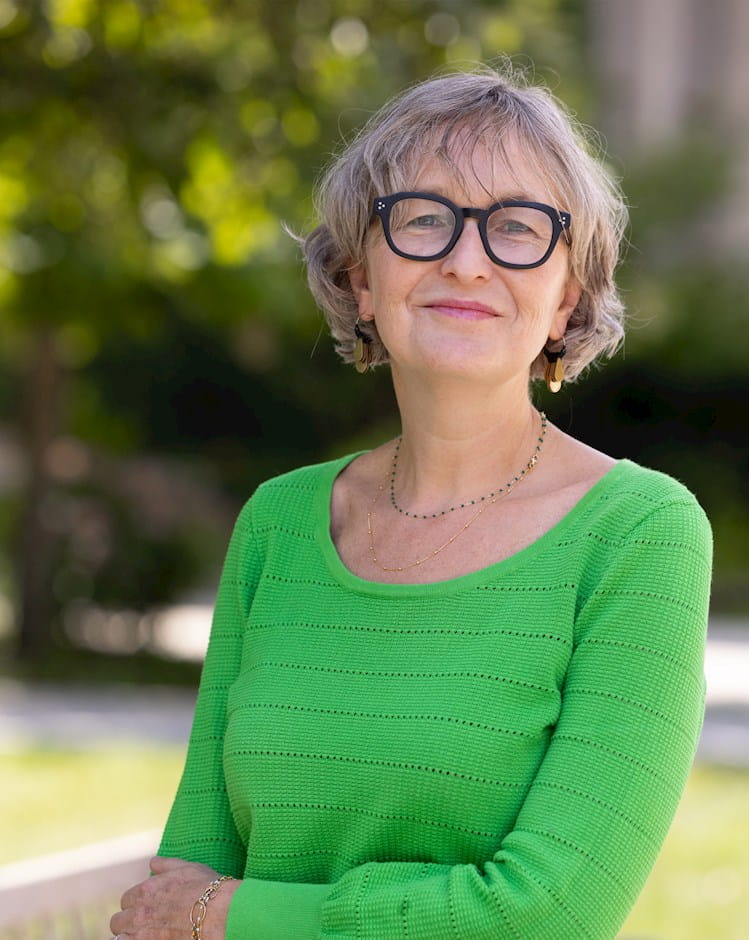
Marianne Bertrand
· Chris P. Dialynas Distinguished Service Professor of EconomicsUniversity of Chicago · Microeconomics
Active 1998–2025
Academic metrics are sourced from OpenAlex and public funding records; values may differ from Google Scholar.
About
Marianne Bertrand is the Chris P. Dialynas Professor of Economics at the University of Chicago Booth School of Business. She is a Research Fellow at the National Bureau of Economic Research, the Center for Economic Policy Research, and the Institute for the Study of Labor. Professor Bertrand is an applied micro-economist whose research covers the fields of labor economics, corporate finance, and development economics. Her research in these areas has been published widely, including numerous research articles in the Quarterly Journal of Economics, the Journal of Political Economy, the American Economic Review, and the Journal of Finance.
Research topics
- Economics
- Sociology
- Political Science
- Business
- Labour economics
- Psychology
- Economic growth
- Demography
- Demographic economics
- Medicine
Selected publications
The impact of COVID-19 on small business outcomes and expectations
Proceedings of the National Academy of Sciences · 2020 · 1602 citations
To explore the impact of coronavirus disease 2019 (COVID-19) on small businesses, we conducted a survey of more than 5,800 small businesses between March 28 and April 4, 2020. Several themes emerged. First, mass layoffs and closures had already occurred-just a few weeks into the crisis. Second, the risk of closure was negatively associated with the expected length of the crisis. Moreover, businesses had widely varying beliefs about the likely duration of COVID-related disruptions. Third, many sm…
Tax-Exempt Lobbying: Corporate Philanthropy as a Tool for Political Influence
American Economic Review · 2020 · 262 citations
1st authorCorrespondingWe explore the role of charitable giving as a means of political influence. For philanthropic foundations associated with large US corporations, we present three different identification strategies that consistently point to the use of corporate social responsibility in ways that parallel the strategic use of political action committee (PAC) spending. Our estimates imply that 6.3 percent of corporate charitable giving may be politically motivated, an amount 2.5 times larger than annual PAC contr…
Measuring the Labor Market at the Onset of the COVID-19 Crisis
SSRN Electronic Journal · 2020 · 135 citations
Coming Apart? Cultural Distances in the United States over Time
American Economic Journal Applied Economics · 2023 · 50 citations
1st authorCorrespondingWe analyze trends in cultural distances between groups in the United States defined by income, education, gender, race, and political ideology. We measure cultural distance as the ability to infer an individual's group based on media diet, consumer behavior, time use, social attitudes, or newborn's name. Gender difference in time-use decreased between 1965 and 1995 and has remained constant since. Differences in social attitudes by political ideology, and somewhat by income, have increased over…
Predicting and Preventing Gun Violence: An Experimental Evaluation of READI Chicago
National Bureau of Economic Research · 2023-01-01 · 23 citations
reportGun violence is the most pressing public safety problem in American cities.We report results from a randomized controlled trial (N = 2, 456) of a community-researcher partnership called the Rapid Employment and Development Initiative (READI) Chicago.The program offered an 18month job alongside cognitive behavioral therapy and other social support.Both algorithmic and human referral methods identified men with strikingly high scope for gun violence reduction: for every 100 people in the control g…
Frequent coauthors
- 201 shared
Sendhil Mullainathan
University of Chicago
- 113 shared
Bruno Crépon
École Nationale de la Statistique et de l'Administration Économique
- 93 shared
Alicia Marguerie
- 87 shared
Robin Burgess
- 81 shared
Patrick Premand
Impact
- 67 shared
Antoinette Schoar
National Bureau of Economic Research
- 60 shared
Francesco Trebbi
- 50 shared
Guo Xu
Education
- 1991
B.A.
Universite Libre de Bruxelles
- 1992
M.S.
Universite Libre de Bruxelles
- 1998
Ph.D.
Harvard University
Awards & honors
- 2004 Elaine Bennett Research Prize
- 2012 Society of Labor Economists’ Rosen Prize for Outstandin…
- Fellow of the American Academy of Arts and Sciences
- Fellow of the Econometric Society
- Elected to the National Academy of Sciences in 2021
Similar researchers at University of Chicago
- Resume-aware match score
- Save to shortlist
- AI-drafted outreach
See your match with Marianne Bertrand
PhdFit ranks faculty by your research interests, methods, and publications — grounded in their actual work, not templates.
- Free to start
- No credit card
- 30-second signup