Resume-aware faculty matching

Find professors who actually fit you

Upload your resume. Four AI agents analyze your background, rank the faculty who fit, inspect their recent research, and help you draft outreach — grounded in their actual work, not templates.

Free to startNo credit cardCancel anytime
Top matches Balanced preset
Dr. Sarah Chen
Stanford · Interpretability · NLP
91
Dr. Marcus Holloway
MIT · Robotics · RL
84
Dr. Aisha Okonkwo
CMU · Fairness · HCI
82
Nova · Professor Researcher · re-ranking top 20…
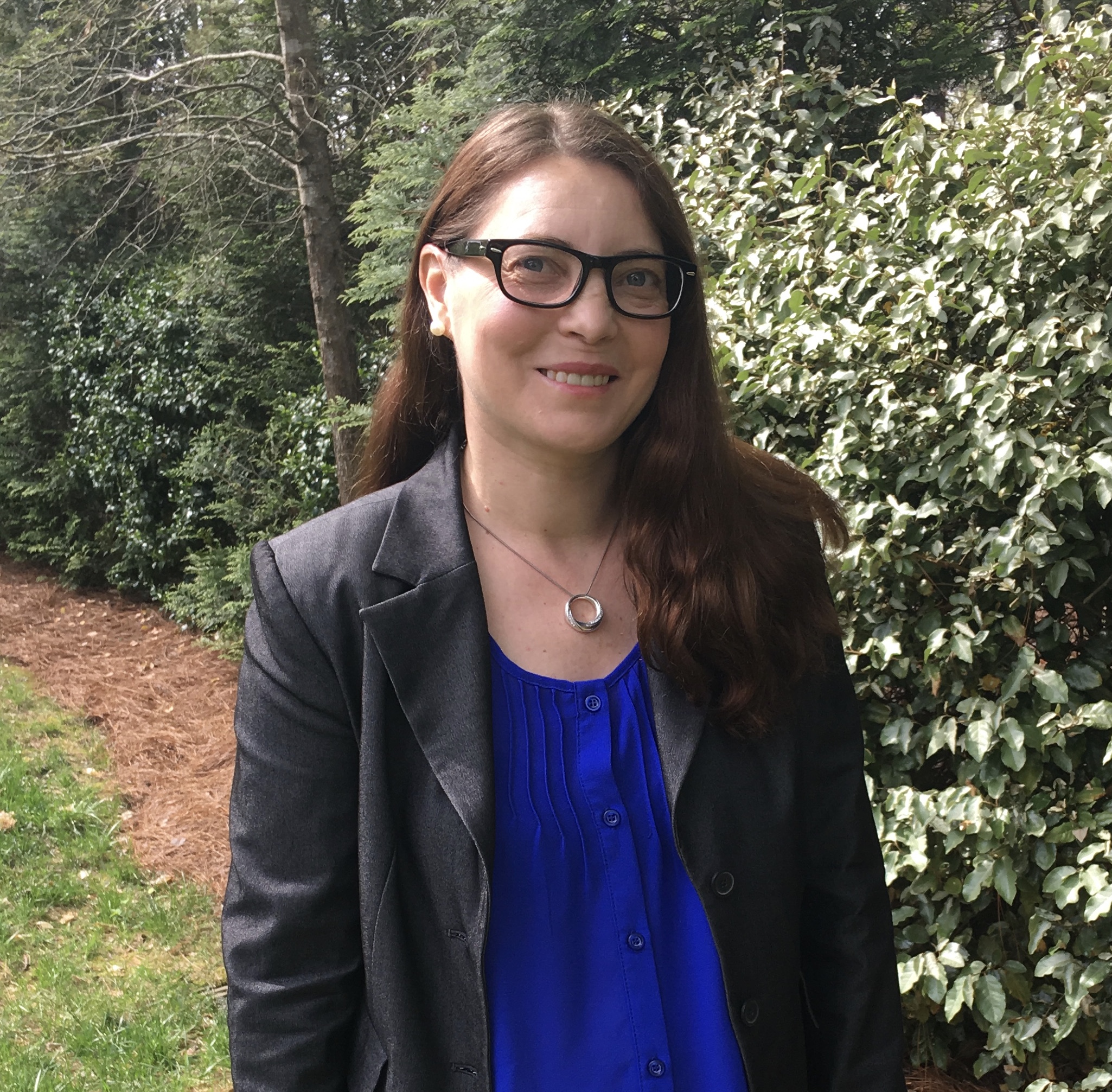
Margareta M. Thomson

Margareta M. Thomson

· Professor of Educational PsychologyVerified

North Carolina State University · Health, Physical Education, and Recreation

Active 2001–2025

h-index18
Citations1.0k
Papers528 last 5y
Funding
See your match with Margareta M. Thomson — sign in to PhdFit.Sign in

About

Dr. Margareta M. Thomson holds a Ph.D. in Educational Psychology and Learning Systems from Florida State University. She is a Professor of Educational Psychology at North Carolina State University and a University Faculty Scholar. Since beginning her academic career at NC State in 2008, she has established a national and international presence through her research and scholarly work. Her research primarily explores teachers’ and students' motivations, with a particular focus on STEM domains. Dr. Thomson is involved in major research projects funded by agencies such as the National Science Foundation (NSF) and the National Institutes of Health (NIH), and has published extensively in high-impact research journals. She has received distinguished awards including the U.S. Core Fulbright Scholar Award and the NC State University Faculty Scholars Award. Her scholarly contributions include authored and edited books, book chapters, and numerous refereed journal articles, emphasizing motivation, engagement, and efficacy in educational settings.

Research topics

  • Mathematics education
  • Psychology
  • Social psychology
  • Sociology
  • Computer Science
  • Pedagogy
  • Social Science
  • Medicine
  • Medical education
  • Mathematics

Selected publications

  • Implementing STEM-Focused Programs: Developing Motivation and Learning Opportunities for Students and Teachers via Immersive Experiences

    International Journal of Research in Education and Science · 2025-06-30

    articleOpen access1st authorCorresponding

    In the current study three different STEM-focused programs are presented in which teachers and students are immersed in authentic learning experiences and benefit from the rigors of a structured mentoring program. All three projects have been supported by United States federal funding and offered different STEM models with the general aim to enhance STEM learning and motivation among students and teachers. The longitudinal mixed-methods design employed in all studies, in which quantitative and qualitative data have been collected, allowed for in-depth analysis of data. Each project adopted a different model of STEM learning and curriculum. In one study, teachers and students alike interacted with a mentor scientist in the classroom, and were presented with learning opportunities that greatly enhanced their science motivation and academic learning. In another study, inservice teachers are immersed in a science mentoring program working alongside mentor scientists and the host lab team. And finally in another study, preservice teachers are presented with a STEM-focused curriculum which greatly contributed to the development of their STEM knowledge and skills, and science teaching identity. All three programs were designed to increase STEM knowledge, literacy, and enhance motivation and domain identification with STEM among participants.

  • Mentoring and motivation: Examining teachers’ experiences in an immersive research program

    Florida Educational Research Association · 2025-12-22

    articleOpen access1st authorCorresponding

    The present study sets out to examine motivational aspects in science teachers from high-poverty schools, within the bounded context of an immersive science Professional Development (PD) program. Self-Determination Theory (SDT) was used to frame teachers’ data collected via focus groups and individual interviews. Findings suggested that teachers placed importance on experiences that were connected to feelings of competence, autonomy, and relatedness. These findings have implications for PD program design, and for teachers and administrators.

  • Students’ Perception of Scientists and their Work

    2024-01-17

    book-chapter1st authorCorresponding
  • Understanding the Process of Changes in Science Beliefs and Classroom Practices from Immersive Research Experience for Science Teachers

    International Journal of Research in Education and Science · 2024-05-12 · 2 citations

    articleOpen accessSenior author

    This study explored 8 high school science teachers’ experiences in an 8-week immersive research laboratory professional development program. The aim was to understand their motivation for participating and what factors influenced changes in beliefs about science instructions. Mentor scientists and their lab members hosted teachers for the duration of the program allowing teacher participants to become active members of research. Results showed that participants used three major lenses to understand their research experience: self as educator, self as learner, self as researcher. The use of overlapping lenses provided participants with the impetus to change beliefs about science and research practices in their classrooms. Ample time and collaboration in professional development is critical to changes in beliefs about science instruction.

  • Developing Students’ Motivation for Science and Stem Via Role Models

    2024-01-17

    book-chapter1st authorCorresponding
  • Examining Motivation Among Elementaryaged African-American Students

    2024-01-17

    book-chapterSenior author
  • Research Experiences for Teachers in a Cognitive Apprenticeship Program

    2024-01-17

    book-chapter1st authorCorresponding
  • Motivational Typologies among Teachers and Differences Within

    International Journal on Studies in Education · 2023-03-21

    articleOpen access1st authorCorresponding

    The current study investigated teaching typologies, more specifically, motivational profiles and differences among the identified typologies based on their instructional beliefs and teaching efficacy beliefs. Data was collected using surveys from preservice teachers in the United States (N=327) enrolled in a traditional teacher training program at a major university in the Southeast. Study results identified distinct teacher typologies based on their teaching motivations, and differences with respect to their instructional and efficacy beliefs. Study findings can help researchers and teacher education programs understand the complex interplay between teaching motivations, beliefs and cultural nuances related to these concepts. Study implications are further discussed in relation with findings.

  • Developmental trajectories for novice teachers: teaching efficacy, instructional beliefs, and domain knowledge

    International Journal of Science Education · 2022 · 5 citations

    1st authorCorresponding
    • Mathematics education
    • Psychology
    • Pedagogy

    The current study investigates the developmental trajectories of novice elementary teachers’ self-efficacy science beliefs, their science instructional beliefs and science knowledge over the course of participants’ teacher preparation and into their first two years of teaching. Study results indicate changes in teachers’ self-efficacy science beliefs, in their science instructional beliefs, and changes in science knowledge. Additionally, teachers’ growth in science content knowledge had an impact on teachers’ self-efficacy science beliefs and on teachers’ instructional science beliefs. Findings from our study can help teacher educators, researchers, and policy makers in better understanding novice elementary teachers’ science developmental trajectories and the role of knowledge and beliefs in their professional growth.

  • Immersive Research Experiences: Influences on Science Teaching Motivation and Practices

    IAFOR Journal of Psychology & the Behavioral Sciences · 2022-08-12 · 2 citations

    articleOpen accessSenior author

    The push for inquiry-based learning in science classrooms has been met with anxiety and oftentimes low teaching self-efficacy among science teachers (Martin, et al., 2019). Professional development offers an opportunity for teachers to gain confidence through experiencing a real research lab. The current study investigates the outcomes of an extensive 8-week professional development program (N=8) on teachers’ classroom instruction and explores the influential factors in instructional change. Focus groups and individual interviews were conducted to understand teacher’s PD experiences. Three major themes emerged: model the actions of scientists, evidence of inquiry-based instruction, and evidence of self-efficacy. Professional development opportunities including an immersive lab experience, opportunities to build a learning community, and opportunities to feel like a student are influential to changes towards are more inquiry-based learning approach in the classroom and higher self-efficacy. When seeking opportunities for professional development for high school science teachers, school leaders and science teachers should search for key features that promote changes in the classroom leading to more inquiry-based learning.

Frequent coauthors

Awards & honors

  • U.S. Core Fulbright Scholar Award
  • Fulbright Pathfinder Award, Office for Faculty Excellence, N…
  • University Faculty Scholars Award, North Carolina State Univ…
  • Resume-aware match score
  • Save to shortlist
  • AI-drafted outreach

See your match with Margareta M. Thomson

PhdFit ranks faculty by your research interests, methods, and publications — grounded in their actual work, not templates.

  • Free to start
  • No credit card
  • 30-second signup