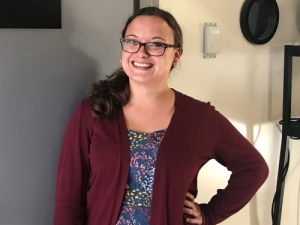
Maite Urcaregui
VerifiedUniversity of California, Santa Barbara · English
Active 2018–2025
About
Maite Urcaregui is a doctoral candidate in the Department of English at the University of California, Santa Barbara, where she also participates in graduate emphasis programs in the Department of Black Studies and the Department of Feminist Studies. She holds a Master of Arts in English with a certificate in Women and Gender Studies from the University of Colorado, Boulder, and a B.A. in English, magna cum laude, from Gonzaga University. Her research focuses on twentieth- and twenty-first-century American literature and comics through an interdisciplinary framework that incorporates theories of gender, race, sexuality, and performance. Her current work employs a queer formalist approach to analyze how multiethnic American authors use visual elements in their literature to navigate and critique the visual politics of race, gender, and sexuality, especially in relation to notions of citizenship.
Research topics
- Art
- Sociology
- Aesthetics
- Literature
- Gender studies
Selected publications
Just Keep Swimming? Queer Pooling and Hydropoetics
Water · 2025-02-07
book-chapterOpen accessSenior authorIntroduction: Latinx Comics beyond Representation: Interdisciplinary and Intersectional Approaches
Rutgers University Press eBooks · 2025-02-18
book-chapterSenior authorRutgers University Press eBooks · 2025-02-18
book-chapter1st authorCorrespondingComposing Crip Corporealities, or Decomposing Comics, in <i>Dumb</i> and <i>Dancing After TEN</i>
Journal of Literary & Cultural Disability Studies · 2023-08-09 · 1 citations
article1st authorCorrespondingThe article extends understandings of embodiment in comics studies by exploring feminist, queer, and crip affinities and aesthetics in graphic medicine. It analyzes two works of graphic medicine, Georgia Webber’s Dumb: Living Without a Voice (2018) and Vivian Chong and Webber’s Dancing After TEN (2020), that explore the authors’ experiences of voicelessness and blindness respectively. The article employs Robert McRuer’s concept of “decomposition,” a disorderly process of writing that resists normativity, to examine how these two works draw attention to the embodied stakes of composition even as they destabilize disability as a fact of the body. The article first contextualizes how Dumb and Dancing After TEN crip corporeality by proclaiming disability as an epistemological position and politicized identity that is shaped by and resists heteropatriarchal and ableist power structures. It then analyzes how they crip comics aesthetics to emphasize the creative, intellectual, and embodied labor of their graphic medicine. By highlighting their creators’ composing bodies in the disorderly process of making comics, Dumb and Dancing After TEN invite multisensory modes of analyzing the lived realities of disability in graphic medicine beyond assimilation or celebration.
Literature & History · 2023-05-01
article1st authorCorrespondingAngelaki · 2023-01-02
articleSenior authorCorrespondingBy bringing queer ecologies to bear on the blue humanities, this essay promotes a queer hydropoetic investigation that attends to the forms, aesthetics, and politics of pools. Pools are sites of aquatic enjoyment, sport, and revelation that have long been understudied within the blue humanities. We ask whether the promises and failures of swimming in these geographies can provide a queer heuristic in which submersion, immersion, and staying afloat subtend coming out, queer eroticism, and queer of color coalitional politics. Our tripartite examination engages the independent film Saved! (2004), the ecosexual documentary Water Makes Us Wet (2019), and the young adult novel and graphic novel adaptation of Gabby Rivera’s Juliet Takes a Breath (2016/2019 and 2020, respectively). Our analysis of pools, as intimate bodies of water that capture media and literature alike, reorients the blue humanities to consider closer proximities and smaller scales of water’s queer potentiality.
Review of Beyond the Icon: Asian American Graphic Narratives by Eleanor Ty
Asian American Literature Discourses & Pedagogies · 2023-12-21
articleOpen access1st authorCorrespondingNarratives (2022) looks to the visual form of graphic narratives to unravel Asian American representation beyond stereotypical images and iconography.While comics and graphic novels have tended to rely on stereotyping as a visual shorthand, a tendency that often reinforces racist and xenophobic tropes and caricatures, Beyond the Icon advocates for graphic narrative's potential for picturing racial power dynamics, providing counternarratives, and combating misrepresentation.Ty situates the collection within two historical movements.First, rather than studying graphic narrative as an isolated form, she historicizes the development of the graphic novel alongside the growing field of Asian American literature.These twin trajectories not only coincide historically, following the civil rights movements of the 1960s; they also share, although are not limited to, an autobiographical impulse, a desire to make visible individual and collective experiences for aesthetic and political purposes.Second, Ty situates the volume within the contemporary realities of the COVID-19 pandemic and the escalation of anti-Asian racism and violence.Again, rather than discussing this violence as an anomaly, Ty understands it as "evidence of a history of racism against Asian Americans dating back to the late nineteenth century" in which Asian Americans have been consistently excluded from the full benefits of citizenship and national belonging (2).In addition to this historical framing, the introduction also theorizes the comics form as one that is fundamentally about perspective.Ty explores how comics' framing devices, such as the use of panels, and its collaging of the visual and verbal might ask readers to see difference from below.Beyond the Icon highlights the heterogeneity within Asian American experiences and uncovers the intersectional interstices therein, attending to the difference that gender, sexuality, and disability make to understandings of racial, ethnic, and national identity.The collection's deep sense of historicity and clear commitment to intersectional analysis make it a vital contribution to conversations about ethnoracial identity within comics studies.Rather than focusing narrowly on
Family Resemblances by Chris Gavaler
Studies in Comics · 2021-11-01 · 1 citations
articleSenior authorPreview this article: Family Resemblances by Chris Gavaler, Page 1 of 1 < Previous page | Next page > /docserver/preview/fulltext/stic/12/1/stic.12.1.137-1.gif
The Content of Our Caricature: African American Comic Art and Political Belonging by Rebecca Wanzo
Inks · 2021-01-01 · 1 citations
article1st authorCorrespondingReviewed by: The Content of Our Caricature: African American Comic Art and Political Belonging by Rebecca Wanzo Maite Urcaregui (bio) Wanzo, Rebecca. The Content of Our Caricature: African American Comic Art and Political Belonging. New York University Press, 2020. 256 pp, $89.00 HC/ $29.00 PB Click for larger view View full resolution In The Content of Our Caricature: African American Comic Art and Political Belonging, Rebecca Wanzo explores how African American cartoonists reappropriate stereotypical caricatures of Blackness to question and reveal normative ideals of US citizenship. Taking up a long history of caricature in African American comic and cartoon art, the book provocatively asks, "Can the racist caricature be used in aesthetic practices of freedom?"1 By way of answering this question, Wanzo examines how African American artists formally exploit caricature's racial inheritance to point to the injury of racist images and the structures that produce them. Through their artistic reframing, they invite diverse and divergent affective responses to caricature that open alternative attachments to citizenship. The book explicates how comics, like other forms of popular media, create and uphold narratives of "good" and "bad" citizens. Comic narratives participate in these discourses of belonging through what Wanzo identifies as "citizenship genres": "often masculine categories of representation that the state's subjects are interpellated to inhabit."2 Each chapter interrogates a citizenship genre within comics and the subjects they herald—the revolutionary leader, the soldier, the child, and the countercultural subject. After identifying the normative ideals these genres uphold, Wanzo goes on to examine how African American artists, recognizing the "racialized ideological work of these typologies," strategically play with the formal affordances and limitations of the genre to highlight the grotesque realities of racism and articulate resistant representations of Black identity and national belonging. Chapter One lays the foundation for understanding "broad ranging articulations" of how comics artists utilize caricature across form and genre—including examples from [End Page 119] George Herriman's Krazy Kat, Sam Milai's Pittsburgh Courier editorial cartoons, and contemporary works, such as Jeremy Love's Bayou and Valentin De Landro's Bitch Planet—to critique and negotiate "how African Americans are marked by noncitizenship status."3 Chapter Two "explores the lasting legacy of black subjection in archetypes of heroism in the white popular imaginary" and looks to two graphic biographies, Kyle Baker's Nat Turner and Ho Che Anderson's King, that challenge the image of the frozen-in-time supplicating Black subject. Chapter Three takes up the superhero genre, putting Baker's Truth: Red, White, & Black in conversation with Jay Jackson's World War II editorial cartoons, to argue that Isaiah Bradley, the Black Captain America, simultaneously represents a desire for full citizenship and a recognition of that impoverished promise. Building on Anne Anlin Cheng's "racial melancholia," which explores the psychoanalytic consequences of racialization,4 Wanzo theorizes "melancholic patriotism" to describe African Americans' attachments to full citizenship "as a lost love object that both never was and is continually chased."5 In a powerful reading of Isaiah—who at the end of the arc has survived the war but has lost both his friends and his mind as a result of state-sanctioned medical violence, a fictional evocation of the Tuskegee experiments—in what is left of the Captain America uniform he was incarcerated for wearing, Wanzo says, "Truth constructs an African American love object, a black Captain America whose ambivalent figure represents a threadbare version of the American Dream to which not only African Americans but other Americans cling."6 Chapter Four engages with discourses of infantile citizenship and the aesthetics of cuteness to investigate how the nation pins its democratic hopes on the figure of the innocent White child and their futurity. In contrast, analyzing examples from Ollie Harrington's editorial cartoon Dark Laughter to Jennifer Cruté's life narrative Jennifer's Journal, Wanzo argues that African American cartoonists' use of "the black infantile citizen disrupts this representational regime" by challenging viewers to remember the nation's abuses and failures, "as opposed to the improbable white child ideals that encourage the nation to forget."7 The final chapter explores perhaps the most excessive or grotesque example of racist caricature...
Latinx superheroes in mainstream comics
Journal of Graphic Novels & Comics · 2021-02-01
article1st authorCorrespondingFrederick Luis Aldama’s Latinx Superheroes in Mainstream Comics offers an encyclopaedic account of Latinx characters in DC and Marvel comic book storyworlds. This book builds on Aldama’s earlier wo...
Frequent coauthors
- 1 shared
Chris Gavaler
Washington and Lee University
- 1 shared
Madeleine Roepe
- 1 shared
Aili Pettersson Peeker
University of California, Santa Barbara
- 1 shared
Jeremy Chow
- 1 shared
Sage Gerson
Education
- 2022
PhD, Department of English
University of California, Santa Barbara
- 2016
MA, Department of English with Certificate in Women & Gender Studies
University of Colorado, Boulder
- 2013
B.A., Department of English
Gonzaga University
- Resume-aware match score
- Save to shortlist
- AI-drafted outreach
See your match with Maite Urcaregui
PhdFit ranks faculty by your research interests, methods, and publications — grounded in their actual work, not templates.
- Free to start
- No credit card
- 30-second signup