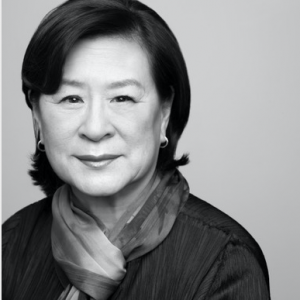
Mae Ngai
Columbia University · History
Active 1996–2023
About
Mae Ngai is the Lung Family Professor of Asian American Studies and Professor of History at Columbia University. She is a U.S. legal and political historian with interests in the histories of immigration, citizenship, nationalism, and the Chinese diaspora. Ngai is the author of several award-winning books, including 'Impossible Subjects: Illegal Aliens and the Making of Modern America,' 'The Lucky Ones: One Family and the Extraordinary Invention of Chinese America,' and 'The Chinese Question: The Gold Rushes and Global Politics.' She is also a coeditor of 'Corky Lee’s Asian America: Fifty Years of Photographic Justice' and has written extensively on immigration history and policy for prominent publications such as the Washington Post, New York Times, Los Angeles Times, the Atlantic, the Nation, and Dissent. Before her academic career, she was a labor-union organizer and educator in New York City, working for District 65-UAW and the Consortium for Worker Education. Ngai is currently working on a book titled 'Nation of Immigrants: A Short History of an Idea,' under contract with Princeton University Press.
Research topics
- Political Science
- Sociology
- Law
- Computer Science
- Political economy
- Archaeology
- History
Selected publications
The Architecture of Immigration Restriction, 1924
Labor Studies in Working-Class History of the Americas · 2023
1st authorCorresponding- Political Science
- Political Science
- History
The Immigration Act of 1924 is arguably the most restrictive and racist immigration law ever to have been passed by the US Congress. It was not unprecedented in its restrictive nature—since 1882 Congress had imposed qualitative exclusions on persons deemed likely to become public charges or otherwise morally or physically deficient—or in its racism: notably, the Chinese and Asiatic exclusion laws of the nineteenth and early twentieth century paved its way. But the 1924 act marked a historical turning point in immigration policy. It imposed, for the first time, a numerical ceiling on the number of immigrants admitted into the country; it also applied a racial hierarchy of desirability to all countries in the world. The first element, numerical restriction, has become a normative feature of American immigration policy. The second, racial desirability, was formally repealed in 1965 but was reproduced in more subtle ways and haunts immigration policy and political discourse to this day.It's hard for many Americans to imagine that before World War I immigration into the United States was basically unrestricted, save for Chinese and other Asians. Passports were a new feature of international travel, born of the war; but as yet there were no visas, no quotas, no green cards. Inspection was cursory. A bare 2 percent of those arriving at Ellis Island during its peak decades were turned away.The Immigration Act of 1924 introduced a bold and new restrictive system.1 The numerical limit, 150,000 a year, was 15 percent of pre–World War I levels. The law was structured as a tripartite border policy, with different conditions imposed on migrants coming from across the Atlantic, the Pacific, and the Western Hemisphere. Contemporaries sometimes called the law the “quota act” or the “Japanese exclusion act,” signaling the law's premier goals, which had long been sought by nativist lobbies.The national origin quotas and Asiatic exclusion were the law's most odious discriminations. National origin quotas aimed to restrict immigration from eastern, southern, and central Europe. Restrictionists opposed the growing population of Jews, Italians, and Slavs, who had contributed their brawn and sweat to America's industrialization and urbanization, as the “degraded races of Europe.” The exclusion of all persons “ineligible to citizenship” was a legal euphemism for a concept of “whiteness” that the US Supreme Court constructed to deny naturalized citizenship to all Asians in 1923.2 A third aspect of the policy imposed no numerical quotas on countries of the Western Hemisphere, owing to diplomatic and agricultural interests. It went largely unremarked on at the time but was no less significant in the long run. The 1924 act thus had three border policies: one for the Atlantic, one for the Pacific, and one for the Western Hemisphere.The Immigration Act of 1924 did not, of course, drop from the sky. It was the legislative triumph of several decades of nativist agitation and lobbying. The politics of the lead-up to the bill are instructive both for historical context and for thinking about their afterlives in American society.In his classic intellectual history of American nativism, Strangers in the Land (1955), John Higham analyzed the 1924 act as a victory of racial nativism, especially scientific racism and eugenics, the decades-long project to establish the biological superiority of “whites,” especially “Anglo-Saxons” and “Nordics.” Higham called it a triumph of the “Tribal Twenties.” Strangers in the Land also argued that nativist feeling increased during times of economic downturn and crises of national confidence. The views that the 1924 act was a triumph of eugenics and more generally the theory that labor competition drives nativism have long been influential in both academic and popular writing.3The influence of eugenics is more complex, however. Certainly, scientific race theories of the late nineteenth century, including eugenics, were influential in paving the way for the 1924 act, but they were not solely constitutive of it.4 In the 1920s a more modern bill was needed for regulating and restricting immigration, one based on countries and administered by states. The sublimation of eugenics into an immigration system of countries and national origins allowed for the assimilation of European ethnics as white Americans while reserving race-based exclusion for Asians. Anti-Asian racism was based not on eugenics but, rather, on cultural traits thought to be so ancient as to be innate. It might be said that Asian Americans have never recovered from their racialization in US law, as evidenced by the racist harassment and violence unleashed against them during the coronavirus pandemic.As for the unemployment theory, a closer examination shows that nativist surges occur historically not during cyclical downturns but in times of economic expansion and large-scale structural changes. These are times of both opportunity and precarity. New sectors of capital emerge, creating new jobs and stimulating immigration, while capital and jobs in older sectors decline. The pattern is manifest in the three great moments of structural economic change in modern US history: (1) The agitation for Chinese exclusion on the Pacific coast arose after the Civil War. The unification of a national market and the completion of the transcontinental railroad in 1869 brought both new migrants and cheap manufactured goods to California, undermining a previously protected market of high wages and high prices. (2) Industrialization during the late nineteenth century brought about a consolidation of corporate capital, the deskilling of craft work, and a demand for unskilled labor. And (3) in the late twentieth century, the domestic economy became characterized by the rise of finance and service industries, while offshore production and automation diminished the number of manufacturing and industrial jobs. In all three cases, workers in declining industries were susceptible to theories that blamed immigrants for “taking” their jobs. The nativist playbook has been remarkably consistent over time: appeal to a grievance, offer a theory of difference, and weaponize for partisan gain.The political origins of the 1924 act lie in the era of industrialization and mass immigration. Nativist politics emerged in the 1890s and picked up steam in the early twentieth century, aimed at Italians, Jews, and Slavs. The movement was an alliance of Boston Brahmins, led by the conservative US senator Henry Cabot Lodge and other elite WASPs engaged in a culture war against the swarthy peasant races, and native-born craft workers who had been accustomed to a fair degree of autonomy and control over setting their wages and working conditions, power that derived from their control over production knowledge. The Knights of Labor and the American Federation of Labor shifted their focus—and arguably the core of working-class identity—from that of producers to that of waged workers operating in a competitive labor market, where they contended with lower-paid workers, first Chinese and then newly arrived European immigrants. Gwendolyn Mink's book Old Labor and New Immigrants in American Political Development: Union, Party, and State, 1875–1920 captured the ease of this segue with a chapter title that riffed on Samuel Gompers's famous tract written for the Asiatic Exclusion League, “Meat v. Rice (and Pasta).”5Still, it was not easy to legislate restriction against European immigrants in the early twentieth century. Elite interests in industry, manufacturing, and urban infrastructure, which needed unskilled and low-paid immigrant labor, prevailed over the culture warriors. Proposals to require a literacy test for admission—regarded as the best method for excluding ignorant peasants—passed Congress but failed by presidential veto four times until 1917, when Congress overrode Woodrow Wilson's second veto in a tide of war nationalism against all “hyphenates.” But the literacy test proved a feeble barrier (a few words in one's native language on flash cards), and immigration from Europe picked up again after the war.Alarmed, Congress passed an “emergency” act in 1921, using the national-origin quota device for the first time, limiting immigration to 3 percent of the foreign-born population in 1910. Authors of the 1924 act sought an even greater restriction by proposing a formula of 2 percent of the 1890 foreign-born population, but it was difficult to justify using 1890 as the benchmark. The bill's sponsors then devised a formula using quotas based on the proportion of the national origin of the entire white population (not just foreign born) in the 1920 census. It was up-to-date and appeared to be fair, modern, and not overtly racial. Notwithstanding the difficulty of determining the “national origin” of native-born white Americans, which included generations of mixed ancestry and anglicized names, the concept became normalized as a classification of American identity.Asiatic exclusion also was perfected in the 1924 act without resort to explicit use of race, using the terminology of excluding from admission all “aliens ineligible to citizenship.” Only by reading the fine print would one notice that China had a nominal quota of one hundred that could not be used by Chinese people. In fact, during the 1930s European Jews who made their way to Shanghai to escape Nazi fascism used the China quota to seek admission to the United States. Although the formal quota system allocated visas to countries, race thinking still remained in the Immigration Bureau's collection of data on “races and peoples,” which included “Hebrew,” “Italy (north)” and “Italy (south),” “Hindu,” and so on.To enforce the new regime of comprehensive restriction, in 1925 Congress created the Border Patrol. In 1929 the State Department, acceding to nativist demands, began to deny visas to Mexicans of the laboring class. Although immigration from Mexico was not numerically restricted, administrative measures like visa controls and border inspection led to an anomaly of a southern border that was formally open and easy to cross—but only with documents.To complete the picture, Congress passed the Indian Citizenship Act of 1924, which imposed American citizenship on all Native peoples born in the United States (while not vacating their rights to tribal property protected by treaty). Many states, including New Mexico, Arizona, and Maine, continued to deny Native peoples access to the franchise until after World War II.If the Immigration Act of 1924 was the most restrictive and racist immigration policy to date, it also consolidated a general entrenchment of white supremacy in national politics. That course had been set by the reversal of Reconstruction in 1877 and the advent of Jim Crow segregation, debt peonage, convict leasing, and violence against Black people in the South. It is no accident that Chinese exclusion passed Congress with a solid alliance of votes from the South and the West, the two sectional bastions of white supremacy. In the North there were remnants of antislavery politics that supported Chinese immigration, although the same northern race fatigue that acceded to the abandonment of Black civil rights also facilitated Chinese exclusion. Organized labor also undermined opposition to Chinese exclusion in the North. As noted above, the trade unions transferred their anxieties over Chinese to European immigrant labor in the first two decades of the twentieth century. The long struggle for restriction from the 1890s to 1924 was thus integral to the consolidation of a national political economy dominated by corporate capital and a polity of whites (and, until 1919, white men only).The national origins quotas and Asiatic exclusion were both rejected after World War II, considered finally to be “the unlovely residue of outworn prejudices” described by Oscar Handlin. Post–World War II racial liberalism and Cold War civil rights drove reform, but it took two decades to complete the process.6 The Asian exclusion laws were the first to fall, during the war when China was a US ally (1943) and as a product of the decolonization of India and the Philippines (1946). The McCarran Walter Act of 1952 eliminated all racial barriers to naturalization, ending Asiatic exclusion, which was necessary for the American Cold War alliance with Japan. These were important gestures for foreign relations, but Congress had no intention of welcoming large numbers of Asian immigrants. It set low quotas in line with the existing national origin quota system—105 for China, 100 each for India and the Philippines, and 185 for Japan—and limited immigration by all other Asians within an “Asia-Pacific triangle,” a large geographical area, to a total of 2,000 a year, which they believed would exclude all other Asians. The annual quota for China was essentially a race quota that applied to all persons with one-half Chinese ancestry in the world, in order to prevent Chinese from entering from Hong Kong, which had access to Britain's large and mostly unused quota, and from Latin America, which continued to be numerically unrestricted.The Hart-Celler Immigration Act of 1965 repealed the national origin quota system in favor of a uniform maximum number allowable from all countries (20,000, now set at 26,500). The reform was celebrated for its liberality, since it replaced a discriminatory system with one that treated all countries equally, and for its preferences for family unification. But in important respects the law was also decidedly illiberal, namely in continuing the numerical ceiling—and, indeed, extending it to the entire world and imposing country quotas on Mexico and the Western Hemisphere where there had been none before. Sponsors saw the 1965 act as a symbolic measure, a long-delayed recognition of belonging for the European ethnics for whom the stigma of the national origins quotas had retarded their acceptance in mainstream American society, and a recognition of Cold War alliances in Asia. Some cynically believed the domination of whites in the population would be ensured by the family unification provisions of the law, a continuation of the national origins policy by other means. Actual Asian and Latino communities and prospective immigrants barely registered in their minds. The large numbers of Asian and Latino immigrants who arrived in the late twentieth century prompted many observers to call the Immigration Act of 1965 an exemplary law of unintended consequences.Historical memory has disregarded the first and most enduring feature of the 1924 act, the numerical ceiling. Quantitative restriction became normative of American immigration policy, never to be again questioned. The ceiling could be raised or lowered, but not eliminated. The presumption has held that without numerical limits and border controls, hordes of people from the poorer sections of the world would wash up on American shores. This is not necessarily the case. In the era before 1924, when there were no numerical restrictions, migration was not a free-for-all but the result of more determinative levers of need and opportunity. During the 1910s, at the peak of migration during the era of industrialization and urbanization, the foreign born comprised 14 percent of the total population, the same proportion as today. In our own time, immigration from Mexico (both legal and unauthorized) plummeted after the 2008 recession and remains at net zero more than a decade later.The precedent that Western Hemisphere immigration remained formally open (that is, with no numerical ceiling) until 1965 has also been largely forgotten. It has slowly crept back into policy discussions. During the early 2010s immigration reformers proposed a qualified version of an open southern border, with renewable work visas that would allow for legal but temporary work in the United States and a kind of circular migration, a common earlier pattern. (To guard against the exploitations associated with guest worker programs, reformers proposed that work visas should be held by the worker, not the employer, and that they should have the option to apply for permanent residency.) The idea faltered on the shoals of racism and nativism whipped up by Donald Trump's administration. In fact, under Trump there was open longing for the Immigration Act of 1924. Jeff Sessions, Trump's first attorney general, lauded the 1924 act, while Trump himself declared Norwegians the ideal immigrants, preferable to those from “shithole countries.”7 His successor, President Joe Biden, and most other Americans reject such hardline racist immigration politics. But there are through-lines from 1924 to 1965 to the present, especially in the persistence of low numerical limits, which have been the single greatest cause of undocumented immigration, especially from Mexico and Central America.In our own time, global economic inequalities, political repression and state violence, and the specter of climate-driven migration make reconsideration of immigration policy urgent. It is a beat in the struggle of democracy and inclusion versus authoritarianism and exclusion. We might begin with a return to basic principles: in the broadest terms, migration redresses the unequal distribution of wealth in the world. The accident of birth across all of humanity consigns some to advantage and others to disadvantage; that is why the right to migrate has long been recognized as a human right. The French Revolution guaranteed as a natural and civil right the “liberty to move about, to remain, and to depart”; Frederick Douglass supported Chinese immigration as a human right and linked exclusion to imperialism.8 In the era of climate change, when the future of the planet depends on international cooperation, America and the countries of the global North should be part of righting the world, not erecting fortresses against it.
Comment to Transpacific Connections in the Civil War Era
The Journal of the Civil War Era · 2023-11-21
article1st authorCorrespondingComment to Transpacific Connections in the Civil War Era Mae Ngai (bio) President Abraham Lincoln signed An Act to Prohibit the 'Coolie Trade' by American Citizens in American Vessels into law on February 19, 1862, just a year into the Civil War. The act prohibited American-owned and –operated ships from transporting Chinese subjects "known as coolies" abroad to be "sold … or to be held to service or labor." Its proponents directly compared the trade of "coolie" labor to Cuba to the Atlantic slave trade (outlawed in 1807), deeming both as traffics of violence and coercion, unfreedom, and cruel exploitation. Indeed, antislavery Republicans had introduced the bill into the Congress just eight months after the war began, extending the battle against American slavery to the Asiatic quarter of the globe.1 The anti-coolie law carved out an allowance for "free and voluntary emigration of any Chinese subject" to the United States, with the requirement that a US consul attest to their status in writing. The provision reflected the antislavery ethos of the time, which distinguished between free and unfree labor. Historian Moon-Ho Jung called the 1862 anti-coolie act the United States' "last slave-trade law [and] simultaneously the first immigration law." But, as Jung astutely observed, the inherent ambiguities in the definition of coolie and the certification requirement for voluntary immigration set the stage for ongoing political conflict over Chinese immigration through the end of the nineteenth century.2 This vexed history animates the forum on transpacific connections during the Civil War era. In his introduction, Hidetaka Hirota proposes an intervention in multiple historiographies—nineteenth-century international politics, the West, and Chinese communities in California. Exciting new frameworks ("greater Reconstruction" or "the world the Civil War made") have emerged and enriched Civil War era historiography, but, Hirota points out, much of the expanded scholarship has focused on the Atlantic world and continental expansion.3 There's been relatively less attention to the Pacific World. The four essays in this issue address that need. [End Page 537] The forum fits well into the journal's imperative to think about the Civil War era in ways that are expansive, both temporally and geographically, beyond the traditional sectional conflict. In this model, there are influences, reverberations, and consequences, but connections are not necessarily tight. As I read these essays, I began to ask what it would mean to press for tighter, more direct connections. The anti-coolie law of 1862 is a case in point: antislavery Republicans intentionally connected the problem of slavery in the US South to Asiatic labor migration to the Americas. They were not speaking in metaphors but drew a substantive equivalency between slavery and coolieism. After the war, and with bipartisan support, that association would shape—and haunt—racial and labor politics well into the twentieth century. Organized labor embraced the racialization of Chinese as a species of degraded labor, justifying Chinese exclusion on grounds of class and yoking (white) working-class interest to a white supremacist vision of "national security."4 It might be productive to think about the Pacific angles of the Civil War era in shorter periodizations rather than as one long era. For example, during the antebellum period westward expansion entwined the sectional competition to add free and slave territories with the pursuit of continental conquest under banner of manifest destiny. That project defined the West as a white entitlement, achieved through genocide and removal of native peoples, war with Mexico, and white settlement.5 When white settlers reached the edge of the continent, they closed the frontier and looked out at the next frontier, the Asia-Pacific. Focusing on the antebellum period rather than a longer view of the Civil War "era" allows us to connect the sectional conflict directly to transpacific expansionist ambitions. Before the California gold rush, American trading vessels and warships had mostly traveled to Asia from the eastern United States and across the Atlantic and Indian Ocean routes. Yankee traders grew rich from the early China trade, but through the two Opium Wars only a few Chinese traveled those routes back to the United States, and then mostly to the East Coast. Japan's first diplomatic mission...
The Root of Discrimination Against Asian-Americans in the U.S. and Its Remedy
2023-01-01 · 1 citations
book-chapterOpen access1st authorCorrespondingRacial discrimination against Asian-Americans has been a long-standing problem in the United States, fueled further by the outbreak of the COVID-19 pandemic in 2020. According to the New York City Police Department, in 2021, there was a 368% spike in hate crimes against Asians in September alone, compared with the same period the previous year. Biased comments by some Western politicians have also stoked the anti-Asian sentiment in American society. Mae Ngai looks at the historical roots of the discrimination against Asian-Americans in the U.S., whether the community, including Chinese-Americans, has achieved equality in the U.S. after more than a century of immigration, and the possible remedies.
Immigration Policy and Politics under Trump
Princeton University Press eBooks · 2022 · 12 citations
1st authorCorresponding- Political Science
- Political Science
- Sociology
8 Immigration Policy and Politics under Trump
Princeton University Press eBooks · 2022
1st authorCorresponding- Political Science
- Political Science
- Sociology
American Nativism, Past and Present
The New Press eBooks · 2021-09-07
book-chapter1st authorCorrespondingCan We Remake a Broken Immigration System?
Dissent · 2020-01-01
article1st authorCorrespondingThe great pandemic of our age will bring us, as Arundhati Roy has written, through a portal. In the United States, what lies on the other side will depend, foremost, on the outcome of the presidential election.If Donald Trump is reelected, we face the likelihood of a full-blown authoritarian state. For immigrants—legal and undocumented, already here or trying to come, asylum seekers and refugees—life will be more miserable, more vulnerable, and more frightening. The immigrant rights movement will remain on the defensive. And because the Trump agenda calls for drastically reducing legal immigration as well as rounding up the undocumented for deportation, one wonders how the "essential" work of the nation (agriculture, food processing, dishwashing, construction, domestic work, healthcare) will be done.
Stanford University Press eBooks · 2020
- Computer Science
- Computer Science
5. The Chinese Question: The Gold Rushes and Global Politics, 1849–1910
2019-05-07 · 5 citations
book-chapter1st authorCorresponding"How Chinese migration to the world's goldfields upended global power and economics and forged modern conceptions of race. In roughly five decades, between 1848 and 1899, more gold was removed from the earth than had been mined in the 3,000 preceding years. But friction between Chinese and white settlers on the goldfields of California, Australia, and South Africa catalyzed a global battle over "the Chinese Question": Would the United States and the British Empire outlaw Chinese immigration? This distinguished history of the Chinese diaspora and global capitalism chronicles how a feverish alchemy of race and money brought Chinese to the West and reshaped the nineteenth-century world, from Europe's subjugation of China to the rise of the international gold standard and the invention of racist, anti-Chinese stereotypes that linger to this day. Drawing on ten years of research across five continents, prize-winning historian Mae Ngai argues that Chinese exclusion was not extraneous to the emergent global economy but an integral part of it"--
2018-10-16 · 2 citations
book-chapter1st authorCorrespondingThis chapter, by Mae M. Ngai, locates the origins of the Chinese Question as a global racial discourse in the gold rushes of the nineteenth century and the broader context of the globalization of trade, credit, labor, and the rise of Anglo-American power. The gold rushes launched into motion hundreds of thousands of people from the British Isles, continental Europe, the Americas, Australasia, and China. Notably, they were the first occasions of large-scale contact between Westerners (Europeans and Americans) and Chinese. The chapter traces the development of anti-Chinese politics as it arose in the United States, Australia, and South Africa from conditions that were specific to gold rushes and gold mining in these regions, as well as how politics borrowed from each other and evolved into a global political discourse.
Frequent coauthors
- 2 shared
Sophie Loy‐Wilson
University of Sydney
- 1 shared
Roberto Díaz
Moffitt Cancer Center
- 1 shared
Yến Lê Espiritu
- 1 shared
Ronald Briggs
Lawrence Livermore National Laboratory
- 1 shared
Mary Nolan
- 1 shared
Wadda Firmat
Columbia University
- 1 shared
Zeb Tortorici
- 1 shared
Charlotte Brooks
Baruch College
Education
- 1998
Ph.D.
Columbia University
- 1993
M.A.
Columbia University
- 1992
B.A.
SUNY Empire State
Awards & honors
- Russell Sage Foundation (2020)
- Lawrence Stone Lectures, Princeton University (2018)
- Shelby Collum Davis for Historical Studies, Princeton Univer…
- Kluge Chair in Countries and Cultures of the North, Library…
- Huntington Library (Spring 2017)
- Resume-aware match score
- Save to shortlist
- AI-drafted outreach
See your match with Mae Ngai
PhdFit ranks faculty by your research interests, methods, and publications — grounded in their actual work, not templates.
- Free to start
- No credit card
- 30-second signup