
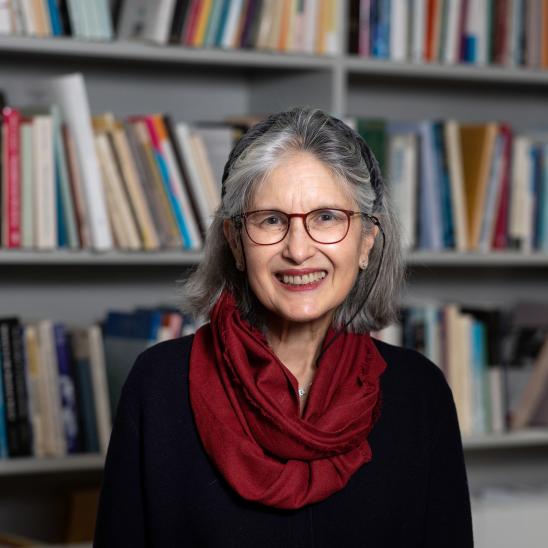
Lorraine Daston
· Visiting Professor, History and Social ThoughtUniversity of Chicago · History of Science, Medicine, and Technology
Active 1978–2026
Academic metrics are sourced from OpenAlex and public funding records; values may differ from Google Scholar.
About
Lorraine Daston is a Director at the Max Planck Institute for the History of Science in Berlin and a regular visiting professor in the Committee on Social Thought at the University of Chicago. Her work focuses on the history of rationality, especially but not exclusively scientific rationality. She has written extensively on topics such as the history of wonder, objectivity, observation, the moral authority of nature, probability, Cold War rationality, and scientific modernity. Her current book projects include a history of rules and an inquiry into the relationship between the moral and natural orders.
Research topics
- Sociology
- Political Science
- History
- Law
- Computer Science
- Social Science
- Demography
- Ethnology
- Medicine
- Virology
Selected publications
2021 · 137 citations
1st authorCorrespondingPrinceton University Press eBooks · 2022 · 37 citations
1st authorCorrespondingA panoramic history of rules in the Western world Rules order almost every aspect of our lives. They set our work hours, dictate how we drive and set the table, tell us whether to offer an extended hand or cheek in greeting, and organize the rites of life, from birth through death. We may chafe under the rules we have, and yearn for ones we don’t, yet no culture could do without them. In Rules , historian Lorraine Daston traces their development in the Western tradition and shows how rules have…
Critical Inquiry · 2020 · 34 citations
1st authorCorrespondingPrevious articleNext article FreeGround-Zero EmpiricismLorraine DastonLorraine DastonPDFPDF PLUSFull Text Add to favoritesDownload CitationTrack CitationsPermissionsReprints Share onFacebookTwitterLinked InRedditEmailQR Code SectionsMore10 April 2020I am used to waking up in the seventeenth century. As a historian of early modern science, that's where I spend a lot of time. But it is strange that everyone else is suddenly keeping me company there. No, I don't mean the plague. Fortunately for us,…
Empiricisms: Experience and Experiment from Antiquity to the Anthropocene
Common Knowledge · 2022-01-01 · 21 citations
article1st authorCorrespondingThe main thesis of this long book is encapsulated in its short title: empiricism comes in the plural. If that were the only message delivered by the book, it would still be worth reading. For far too long, histories of philosophy have opposed one monolith against another, rationalism versus empiricism (or the more recent but still more nonsensical opposition of analytical versus Continental philosophy), lumping together ideas and practices that share nothing more than an appeal to experience and…
2025-09-26 · 2 citations
article1st authorCorresponding
Frequent coauthors
- 344 shared
Pierre‐François Souyri
University of Cambridge
- 344 shared
André Orléan
- 344 shared
François Hartog
University of Cambridge
- 344 shared
Christian Lamouroux
École des Hautes Études en Santé Publique
- 344 shared
Laurent Thévenot
- 344 shared
Sandro Carocci
University of Rome Tor Vergata
- 344 shared
Jacques Revel
- 344 shared
Jane Burbank
École des hautes études en sciences sociales
Similar researchers at University of Chicago
- Resume-aware match score
- Save to shortlist
- AI-drafted outreach
See your match with Lorraine Daston
PhdFit ranks faculty by your research interests, methods, and publications — grounded in their actual work, not templates.
- Free to start
- No credit card
- 30-second signup