
Resume-aware faculty matching

Find professors who actually fit you

Upload your resume. Four AI agents analyze your background, rank the faculty who fit, inspect their recent research, and help you draft outreach — grounded in their actual work, not templates.

Free to startNo credit cardCancel anytime
Top matches Balanced preset
Dr. Sarah Chen
Stanford · Interpretability · NLP
91
Dr. Marcus Holloway
MIT · Robotics · RL
84
Dr. Aisha Okonkwo
CMU · Fairness · HCI
82
Nova · Professor Researcher · re-ranking top 20…
Leonardo A Villalon

Leonardo A Villalon

· Professor of African StudiesVerified

University of Florida · African Studies

Active 1991–2025

h-index16
Citations1.2k
Papers808 last 5y
Funding
See your match with Leonardo A Villalon — sign in to PhdFit.Sign in

Research topics

  • Political Science
  • Computer Science
  • Law
  • Economics
  • Psychoanalysis
  • Physics
  • Quantum mechanics
  • Mathematical analysis
  • Mathematics
  • Political economy
  • Development economics
  • Psychology

Selected publications

  • Crise au Mali : ce que révèle le blocus djihadiste de Bamako

    2025-11-04

    article
  • The Politics of Democratization and the State of the State in the Sahel

    Routledge eBooks · 2023

    1st authorCorresponding
    • Political Science
    • Political Science
    • Political economy

    As in much of Africa, the countries of the West Africa Sahel (Senegal, Mauritania, Mali, Burkina Faso, Niger and Chad) all responded to global pressures for democratization in the early 1990s. The nature of their respective transitions varied widely, however, as did the degree of democracy achieved over the two decades that followed. Most fundamentally, this chapter argues that the specific ways in which the “politics of democratization” was pursued in each country over that period also had highly variable long-term and profound consequences for the building of resilient state structures, independently of their apparent degree of democracy. Thus, when the region was subject to a variety of pressures, notably stemming from the spillover effects of the conflict in Libya in 2011, it was Mali’s so-called “model democracy” that collapsed. In the resulting context of international intervention and spiraling social breakdown and conflict, a persistent security crisis has tested the resilience of states across the region. In each country the ongoing politics of democratization since 2012 have become intertwined with the security imperative. Whether political dynamics in each country can balance the terrible dilemmas of security provision while building state structures amenable to democratic processes remains an open question for the Sahel.

  • Niger coup: Military takeover is a setback for democracy and US interests in West Africa

    2023-07-29 · 1 citations

    article1st authorCorresponding
  • Postscript

    I.B.Tauris eBooks · 2022 · 1 citations

    1st authorCorresponding
    • Computer Science
    • Computer Science

    The social, political and ecological spaces on which the studies in this book focus are complex and constantly shifting, sometimes slowly and barely perceptibly, like sand dunes in the desert.In his introduction to this volume Francisco Freire suggests that carrying out research in the region is like attempting to see clearly through the haze produced by the fine sands carried by assāvi breezes of the Sahara.Maintaining a clear vision of the core ethical requirements of social research -to safeguard the rights and well-being of the research participants in the field, and to represent them accurately and fairly -is no less challenging a proposition.The difficulties are compounded in a project such as this, in which the levels of analysis, the objects of study and especially the relationship of the researchers to the subjects of study, are so widely varied.The Capsahara project had the ambitious goal of critically (re-)assessing the sociopolitical and cultural dynamics of the populations scattered across the vast western expanses of the Sahara.The project is built on the logic of the historical and social interconnectedness of this region, yet in the past century it has also been geopolitically subdivided and socially transformed in many ways by factors both internal and external.Making sense of this complexity requires by definition a plurality of perspectives, skills and disciplinary frameworks, and the brilliance of European Research Council funding for large projects of this sort is in making that possible.In the case of the Capsahara project, this Herculean task was undertaken by assembling an international team of researchers and academics hailing from Europe, West Africa and the United States.By design, the cultural, sociopolitical and academic backgrounds and worldviews of the team members varied widely.The ethical considerations involving such a diverse team of researchers were twofold: 1) the external, related to adhering to established practices and procedures intended to safeguard the moral obligation of protecting participants in the field; and

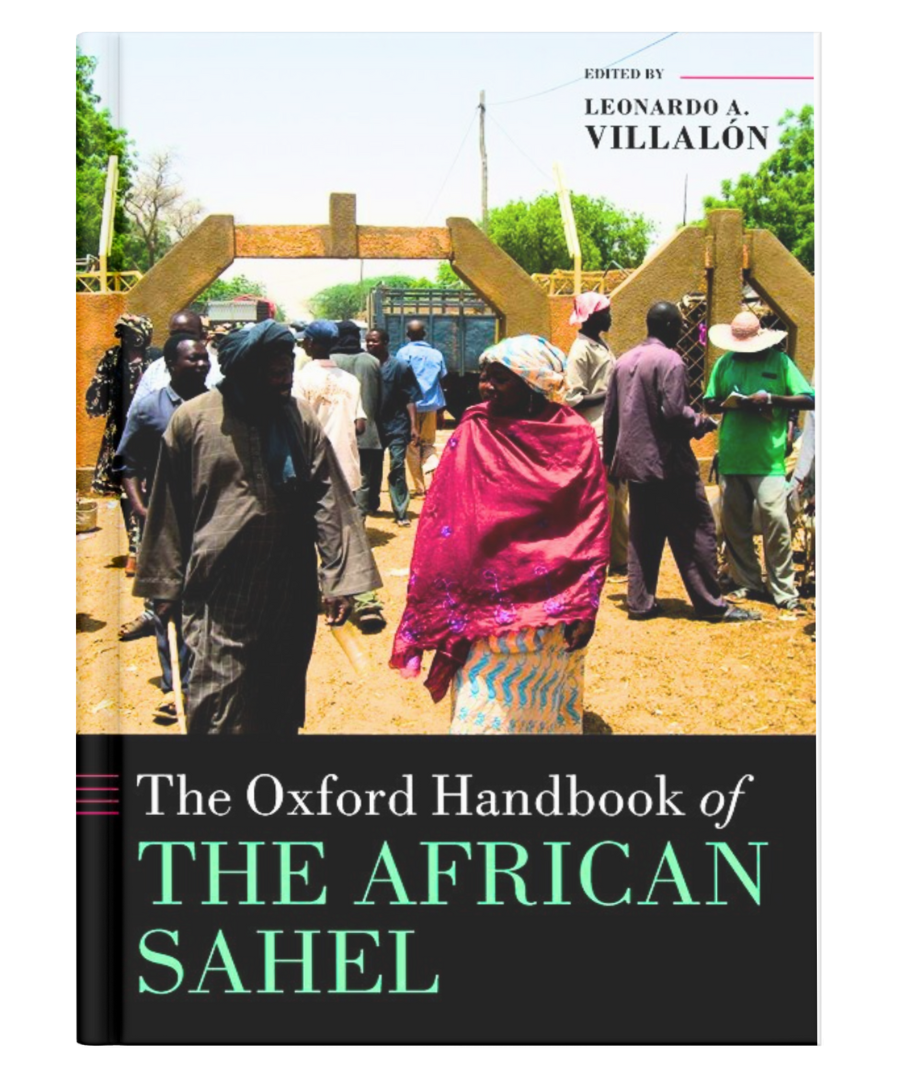
  • Editor’s Introduction

    Oxford University Press eBooks · 2021-12-08

    book-chapter1st authorCorresponding

    Abstract Bringing together a wide diversity of authors based on three continents and from different disciplinary backgrounds, this book offers analyses of a wide range of factors that characterize and that are shaping the future of the African Sahel. In forty chapters, organized in nine sections, the book examines this complex and rapidly changing region on multiple dimensions. Collectively, the book attempts to offer an understanding of the specificity of the Sahel, and to examine its core characteristics as shaped by the geographic, cultural, and political parameters that define it. Following a series of chapters focused on the shaping of the Sahelian space as a region, six chapters explore the distinct national trajectories of the countries of the political Sahel: Senegal, Mali, Niger, Burkina Faso, Mauritania, and Chad. The extraordinary combination of environmental, economic, and political challenges, and the ways in which Sahelian states and societies have responded, are the primary focus of the three subsequent sections, while the various parameters of the lived realities of these societies in motion are explored in the four final sections of the book. Transversally throughout, the chapters aim to offer an interdisciplinary and holistic view of the challenges and the dynamics that are shaping a region at a historical crossroads, and an understanding of the many factors that feed and perpetuate its vulnerabilities and fragilities, as well as its sources of resilience.

  • Education, Citizenship, and National Identity in the Sahel

    Oxford University Press eBooks · 2021-12-08 · 1 citations

    book-chapter1st authorCorresponding

    Abstract At independence, Sahelian states inherited educational systems rooted in the colonial French model and based on secularism or laïcité. Both during and after colonialism, these formal public educational systems found little popular appeal, and indeed often faced clear resistance at the popular level. By contrast, a parallel system of Islamic education thrived, expanded, and evolved in the region, ranging from traditional Quranic schools to more modern Franco-Arabic schools. In the 1990s, a number of factors began to call into question the viability of this bifurcated educational system. This chapter surveys the trajectory of educational systems in the Muslim societies of the Sahel, and analyzes the forces shaping new hybrid models that are emerging. It examines how reformed educational systems are evolving in ways that diverge from the historical secular model with the potential for producing new models of citizenship deeply imbued with religious identities. The chapter offers an interpretation of the longer-term implications of these changes for national identity and citizenship in a changing Sahel.

  • What state is the state in?

    Afrique contemporaine · 2021-09-27

    article

    (In)dépendance, construction de l’État, démocratisation… Leonardo Villalón et Pierre Englebert reviennent ici sur la nature de l’État postcolonial et de ses dynamiques, notamment depuis la « troisième vague » de démocratisation des années 1990, et les régimes qui ont émergé depuis trente ans. Ils évoquent aussi leurs expériences professionnelles, leurs parcours de pensée, et leurs travaux à venir.

  • The Democratic Struggle in the Sahel

    Oxford University Press eBooks · 2021-12-08 · 1 citations

    book-chapterSenior author

    Abstract The countries of the Sahel found themselves under intense domestic and international pressures to undertake political reforms in the name of democracy in the early 1990s, and indeed all of them launched efforts to do so. This chapter surveys the variations and the similarities in how the struggle to build and strengthen democratic institutions has played out in the Sahel. It examines some initial fundamental questions related to the nature of a democratic state that were raised by the transitions, before turning to a discussion of the core institutional debates that have defined the struggle. Subsequent sections discuss the political dynamics and the similarities and variations across countries in the institutions for organizing and administering elections and electoral systems; presidential term limits; the structure of legislatures; and the provisions for women’s representation.

  • The Politics Of Democratization And State Building In The Sahel

    2020-01-01 · 3 citations

    other1st authorCorresponding
  • The Undoing of a Semi-authoritarian Regime: The Term Limit Debate and the Fall of Blaise Compaoré in Burkina Faso

    Springer eBooks · 2020 · 5 citations

    Senior authorCorresponding
    • Political Science
    • Political Science
    • Physics

Frequent coauthors

  • Phillip A. Huxtable

    4 shared
  • Paul Nugent

    University of Edinburgh

    3 shared
  • Elliott Green

    London School of Economics and Political Science

    2 shared
  • Michelle Bodian

    2 shared
  • Jean-Louis Triaud

    2 shared
  • A. Idrissa

    2 shared
  • Mamadou Bodian

    2 shared
  • Subrata Κ. Mitra

    Heidelberg University

    2 shared
  • Resume-aware match score
  • Save to shortlist
  • AI-drafted outreach

See your match with Leonardo A Villalon

PhdFit ranks faculty by your research interests, methods, and publications — grounded in their actual work, not templates.

  • Free to start
  • No credit card
  • 30-second signup