Resume-aware faculty matching

Find professors who actually fit you

Upload your resume. Four AI agents analyze your background, rank the faculty who fit, inspect their recent research, and help you draft outreach — grounded in their actual work, not templates.

Free to startNo credit cardCancel anytime
Top matches Balanced preset
Dr. Sarah Chen
Stanford · Interpretability · NLP
91
Dr. Marcus Holloway
MIT · Robotics · RL
84
Dr. Aisha Okonkwo
CMU · Fairness · HCI
82
Nova · Professor Researcher · re-ranking top 20…
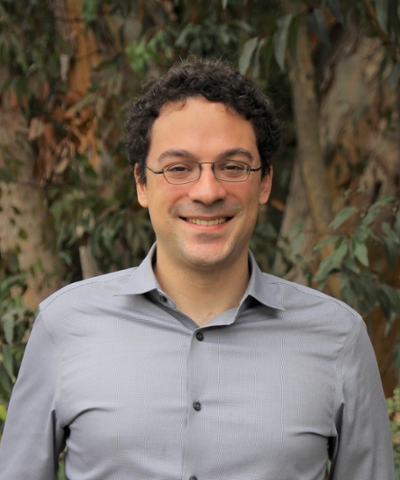
Leon Bergen

Leon Bergen

· Associate Professor of Linguistics and Computer Science (by courtesy)Verified

University of California, San Diego · Linguistics

Active 1994–2026

h-index18
Citations2.8k
Papers6124 last 5y
Funding
See your match with Leon Bergen — sign in to PhdFit.Sign in

About

Leon Bergen is an Associate Professor of Linguistics and Computer Science (by courtesy) at UC San Diego. His professional role involves research and teaching within the Department of Linguistics, with a focus on the intersection of linguistics and computer science. His academic profile indicates a specialization in areas related to linguistics and computational approaches, contributing to the understanding of language through interdisciplinary methods. Further details about his specific research interests, background, and key contributions are not provided on the page.

Research topics

  • Computer Science
  • Natural Language Processing
  • Artificial Intelligence
  • Psychology
  • Linguistics
  • Communication
  • Cognitive psychology
  • Speech recognition
  • Telecommunications
  • Algorithm
  • Cognitive science

Selected publications

  • CT Open: An Open-Access, Uncontaminated, Live Platform for the Open Challenge of Clinical Trial Outcome Prediction

    arXiv (Cornell University) · 2026-04-17

    articleOpen accessSenior author

    Scientists have long sought to accurately predict outcomes of real-world events before they happen. Can AI systems do so more reliably? We study this question through clinical trial outcome prediction, a high-stakes open challenge even for domain experts. We introduce CT Open, an open-access, live platform that will run four challenge every year. Anyone can submit predictions for each challenge. CT Open evaluates those submissions on trials whose outcomes were not yet public at the time of submission but were made public afterwards. Determining if a trial's outcome is public on the internet before a certain date is surprisingly difficult. Outcomes posted on official registries may lag behind by years, while the first mention may appear in obscure articles. To address this, we propose a novel, fully automated decontamination pipeline that uses iterative LLM-powered web search to identify the earliest mention of trial outcomes. We validate the pipeline's quality and accuracy by human expert's annotations. Since CT Open's pipeline ensures that every evaluated trial had no publicly reported outcome when the prediction was made, it allows participants to use any methodology and any data source. In this paper, we release a training set and two time-stamped test benchmarks, Winter 2025 and Summer 2025. We believe CT Open can serve as a central hub for advancing AI research on forecasting real-world outcomes before they occur, while also informing biomedical research and improving clinical trial design. CT Open Platform is hosted at $\href{https://ct-open.net/}{https://ct-open.net/}$

  • Quiet Feature Learning in Algorithmic Tasks

    Proceedings of the AAAI Conference on Artificial Intelligence · 2026-03-14

    articleOpen access

    We train Transformer-based language models on ten foundational algorithmic tasks and observe pronounced phase transitions in their loss curves that deviate from established power-law scaling trends. Over large ranges of compute, the validation loss barely improves, then abruptly decreases. Probing the models’ internal representations reveals that quiet features are learned prior to any decrease in task loss. These quiet features represent intermediate algorithmic computations that do not by themselves improve the output loss. Ablation experiments demonstrate that individual quiet features are causally necessary for task performance. Our results demonstrate that substantial representational progress can remain hidden beneath an apparently flat loss curve, challenging the prevailing use of cross‑entropy as a proxy for learning and motivating richer diagnostics for monitoring model training.

  • CT Open: An Open-Access, Uncontaminated, Live Platform for the Open Challenge of Clinical Trial Outcome Prediction

    arXiv (Cornell University) · 2026-04-17

    preprintOpen accessSenior author

    Scientists have long sought to accurately predict outcomes of real-world events before they happen. Can AI systems do so more reliably? We study this question through clinical trial outcome prediction, a high-stakes open challenge even for domain experts. We introduce CT Open, an open-access, live platform that will run four challenge every year. Anyone can submit predictions for each challenge. CT Open evaluates those submissions on trials whose outcomes were not yet public at the time of submission but were made public afterwards. Determining if a trial's outcome is public on the internet before a certain date is surprisingly difficult. Outcomes posted on official registries may lag behind by years, while the first mention may appear in obscure articles. To address this, we propose a novel, fully automated decontamination pipeline that uses iterative LLM-powered web search to identify the earliest mention of trial outcomes. We validate the pipeline's quality and accuracy by human expert's annotations. Since CT Open's pipeline ensures that every evaluated trial had no publicly reported outcome when the prediction was made, it allows participants to use any methodology and any data source. In this paper, we release a training set and two time-stamped test benchmarks, Winter 2025 and Summer 2025. We believe CT Open can serve as a central hub for advancing AI research on forecasting real-world outcomes before they occur, while also informing biomedical research and improving clinical trial design. CT Open Platform is hosted at $\href{https://ct-open.net/}{https://ct-open.net/}$

  • Does AI already have human-level intelligence? The evidence is clear

    Nature · 2026-02-02 · 1 citations

    article
  • Quiet Feature Learning in Algorithmic Tasks

    Open MIND · 2025-12-17

    otherOpen access

    We train Transformer-based language models on ten foundational algorithmic tasks and observe pronounced phase transitions in their loss curves that deviate from established power-law scaling trends. Over large ranges of compute, the validation loss barely improves, then abruptly decreases. Probing the models’ internal representations reveals that quiet features are learned prior to any decrease in task loss. These quiet features represent intermediate algorithmic computations that do not by themselves improve the output loss. Ablation experiments demonstrate that individual quiet features are causally necessary for task performance. Our results demonstrate that substantial representational progress can remain hidden beneath an apparently flat loss curve, challenging the prevailing use of cross‑entropy as a proxy for learning and motivating richer diagnostics for monitoring model training.

  • EvidenceBench: A Benchmark for Extracting Evidence from Biomedical Papers

    ArXiv.org · 2025-04-25

    preprintOpen accessSenior author

    We study the task of automatically finding evidence relevant to hypotheses in biomedical papers. Finding relevant evidence is an important step when researchers investigate scientific hypotheses. We introduce EvidenceBench to measure models performance on this task, which is created by a novel pipeline that consists of hypothesis generation and sentence-by-sentence annotation of biomedical papers for relevant evidence, completely guided by and faithfully following existing human experts judgment. We demonstrate the pipeline's validity and accuracy with multiple sets of human-expert annotations. We evaluated a diverse set of language models and retrieval systems on the benchmark and found that model performances still fall significantly short of the expert level on this task. To show the scalability of our proposed pipeline, we create a larger EvidenceBench-100k with 107,461 fully annotated papers with hypotheses to facilitate model training and development. Both datasets are available at https://github.com/EvidenceBench/EvidenceBench

  • Studying the Soupability of Documents in State Space Models

    arXiv (Cornell University) · 2025-05-29

    preprintOpen access

    We investigate whether hidden states from Structured State Space Models (SSMs) can be merged post hoc to support downstream reasoning. Inspired by model souping, we study document souping, a strategy where documents are encoded independently, and their representations are pooled, via simple operations like averaging, into a single context state. This approach enables modular encoding and reuse without reprocessing the full input for each query. We demonstrate that finetuned Mamba2 models with souped representations achieve competitive or superior performance across multi-hop QA, sparse retrieval, and long-document reasoning tasks compared to the standard monolithic encoding approach. For example, on the RACE and QuALITY benchmarks for long document question answering, this method substantially outperforms a traditional concatenation approach. Crucially, this modular design scales to hundreds of documents while delivering substantial savings in inference cost, unlocking new possibilities for large-scale corpus reasoning.

  • Measuring Risk of Bias in Biomedical Reports: The RoBBR Benchmark

    2025-01-01

    articleOpen accessSenior author

    Jianyou Wang, Weili Cao, Longtian Bao, Youze Zheng, Gil Pasternak, Kaicheng Wang, Xiaoyue Wang, Ramamohan Paturi, Leon Bergen. Proceedings of the 2025 Conference on Empirical Methods in Natural Language Processing. 2025.

  • Quiet Feature Learning in Algorithmic Tasks

    ArXiv.org · 2025-05-06

    preprintOpen access

    We train Transformer-based language models on ten foundational algorithmic tasks and observe pronounced phase transitions in their loss curves that deviate from established power-law scaling trends. Over large ranges of compute, the validation loss barely improves, then abruptly decreases. Probing the models' internal representations reveals that quiet features are learned prior to any decrease in task loss. These quiet features represent intermediate algorithmic computations that do not by themselves improve the output loss. Ablation experiments demonstrate that individual quiet features are causally necessary for task performance. Our results demonstrate that substantial representational progress can remain hidden beneath an apparently flat loss curve, challenging the prevailing use of cross-entropy as a proxy for learning and motivating richer diagnostics for monitoring model training.

  • Single-Pass Document Scanning for Question Answering

    ArXiv.org · 2025-04-04

    preprintOpen accessSenior author

    Handling extremely large documents for question answering is challenging: chunk-based embedding methods often lose track of important global context, while full-context transformers can be prohibitively expensive for hundreds of thousands of tokens. We propose a single-pass document scanning approach that processes the entire text in linear time, preserving global coherence while deciding which sentences are most relevant to the query. On 41 QA benchmarks, our single-pass scanner consistently outperforms chunk-based embedding methods and competes with large language models at a fraction of the computational cost. By conditioning on the entire preceding context without chunk breaks, the method preserves global coherence, which is especially important for long documents. Overall, single-pass document scanning offers a simple solution for question answering over massive text. All code, datasets, and model checkpoints are available at https://github.com/MambaRetriever/MambaRetriever

Frequent coauthors

  • Resume-aware match score
  • Save to shortlist
  • AI-drafted outreach

See your match with Leon Bergen

PhdFit ranks faculty by your research interests, methods, and publications — grounded in their actual work, not templates.

  • Free to start
  • No credit card
  • 30-second signup