Resume-aware faculty matching

Find professors who actually fit you

Upload your resume. Four AI agents analyze your background, rank the faculty who fit, inspect their recent research, and help you draft outreach — grounded in their actual work, not templates.

Free to startNo credit cardCancel anytime
Top matches Balanced preset
Dr. Sarah Chen
Stanford · Interpretability · NLP
91
Dr. Marcus Holloway
MIT · Robotics · RL
84
Dr. Aisha Okonkwo
CMU · Fairness · HCI
82
Nova · Professor Researcher · re-ranking top 20…
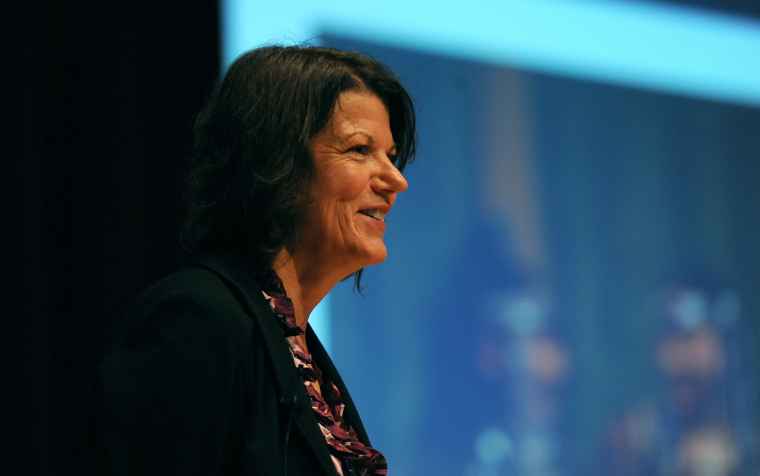
Lenore Grenoble

Lenore Grenoble

· Professor of LinguisticsVerified

University of Chicago · Cinema and Media Studies

Active 1985–2026

h-index25
Citations3.5k
Papers15432 last 5y
Funding$697k
See your match with Lenore Grenoble — sign in to PhdFit.Sign in

About

Lenore A. Grenoble is the John Matthews Manly Distinguished Service Professor in the Department of Linguistics at the University of Chicago. She specializes in the study of language contact and shift in Indigenous settings, with a particular focus on the Arctic. Her work is empirically driven and concentrates on language usage in multilingual contexts, especially within Arctic Indigenous language communities. Grenoble is involved in collaborative projects that investigate the linguistic, social, and cognitive causes and outcomes of language contact and shift, examining the impacts of urbanization and climate change on Arctic Indigenous language vitality. Her research also encompasses language revitalization and the development of sustainable language practices, with current fieldwork centered in the Russian Far North, Arctic regions, and Greenland. She has made significant contributions to the understanding of multilingualism, language vitality, and language shift, and has held prestigious positions such as the Fulbright Arctic Distinguished Chair in Norway. Grenoble is a member of the American Academy of Arts & Sciences and has received notable fellowships, including the Guggenheim Fellowship and an ACLS fellowship.

Research topics

  • Computer Science
  • Linguistics
  • Natural Language Processing
  • History
  • Philosophy
  • Psychology
  • Law and economics
  • Economics

Selected publications

  • Language shift: borrowing of Russian conjunctions in Evenki

    Arctic XXI century · 2026-01-16

    articleOpen access1st authorCorresponding

    This paper analyzes of borrowing of Russian conjunctions in Evenki speech, as a manifestation of ongoing language shift under the influence of the dominant language. The aim of the study is to identify patterns in the use of the Russian conjunctions i (‘and’), a (‘but’), ili (‘or’) and to assess their impact on Evenki syntax. The data come from recordings of oral speech of speakers of the Eastern dialect living in the village of Iengra, Republic of Sakha (Yakutia). The Iengrinskii Evenki National Nasleg (the smallest administrative unit in Yakutia) is the only place in the region where the Evenki language functions in daily informal settings; however, Russian has already become the language of primary communication here. Our research demonstrates that the Russian conjunctions are systematically used in Evenki, replacing the traditional means of coordination and partially changing basic word order. These changes are indicative of an overall shift in the balance of language dominance. The results underscore the complicated nature of syntactic influence in bilingual contexts and highlight that the borrowing of functional words, like conjunctions, can be an indication of language shift. Our study provides a detailed analysis of the role of each of the borrowed conjunctions and of the influence of Russian syntax on other components of Evenki.

  • 31. Language vitality, shift and revitalization in Siberia

    2025-04-07

    book-chapter1st authorCorresponding
  • Activism and Endangered Language Work, with an Arctic Focus

    Cambridge University Press eBooks · 2025-02-06

    book-chapter1st authorCorresponding
  • CONTACT, SHIFT & THE LIFE OF A LANGUAGE

    Proceedings of the V V Vinogradov Russian Language Institute · 2025-11-20 · 1 citations

    article1st authorCorresponding
  • ТУРЭН: МЕЖДУНАРОДНАЯ ОЛИМПИАДА ПО ЯЗЫКАМ И КУЛЬТУРАМ ЭВЕНКОВ РОССИИ И ОРОЧОНОВ КИТАЯ КАК СТИМУЛ НАУЧНОГО ИССЛЕДОВАНИЯ И ЯЗЫКОВОЙ РЕВИТАЛИЗАЦИИ

    Sociolingvistika · 2025-07-08

    articleOpen accessSenior author

    В работе представлен опыт межрегионального и международного сотрудничества Амурского государственного университета (АмГУ) по проведению образовательной олимпиады «Турэн» по эвенкийскому языку РФ и орочонскому языку КНР в целях сохранения, научного изучения и ревитализации языков коренных малочисленных народов Восточной Азии. В ходе конкурсных мероприятий в Лаборатории экспериментально-фонетических исследований (ЛЭФИ) АмГУ проведена запись речи эвенков и орочонов разных возрастов. Корпус эвенкийской и орочонской устной речи (общий объем звучания составляет более 40 часов аудиозаписей от не менее сотни дикторов) служит материалом для многоуровневых научных исследований жизнеспособности тунгусских языков Верхнего Приамурья. Научные экспериментально-фонетические исследования по устной спонтанной и репродуцированной речи показывают трансформацию артикуляторных и перцептивных привычек молодого и среднего поколения конкурсантов. Статья представляет также некоторые социолингвистические результаты, полученные в ходе анализа данных конкурсов олимпиады. Сделаны заключения и предложены рекомендации для ревитализации эвенкийского языка в Сибири и на Дальнем Востоке Российской Федерации. Авторы приходят к выводу, что Международная образовательная олимпиада «Турэн» стала не просто мероприятием по выявлению лучших знатоков языка и культуры среди эвенков России и орочонов Китая разных возрастов; проект может рассматриваться как площадка для проведения научных мероприятий по документированию, обсуждению проблем сохранения и ревитализации исчезающих тунгусских культур северо-востока Азии.

  • The Verticalization Model of Language Shift, edited by Joshua R. Brown

    Heritage Language Journal · 2025-03-18

    article1st authorCorresponding
  • Identity-based language shift modeling

    The Arctic XXI century Humanities · 2025-04-08 · 2 citations

    articleOpen accessSenior author

    The preservation of endangered languages is a widely discussed issue nowadays. Languages represent essential cultural heritage and can provide valuable botanical, biological, and geographical information. Therefore, it is necessary to develop efficient measures to preserve and revitalize endangered languages. However, the language shift process is complex and requires an interdisciplinary approach, including mathematical modeling techniques. This paper develops a new mathematical model that extends previous works on this topic. We introduce the factor of ethnic identity, which is a proxy for a more complex nexus of variables involved in an individual’s self-identity and/or a group’s identity. This proxy is socially constructed rather than solely inherited, shaped by community-determined factors, with language both indexing and creating the identity. In our model, we divide speakers into groups depending on with which language they identify themselves with. Moreover, every group includes monolinguals and bilinguals. The proposed model naturally allows us to consider cases of language coexistence and describe a broader class of linguistic situations. For example, the simulation results show that our model can result in cyclic language dynamics, drawing a parallel to cell population models. In this way, the proposed mathematical model can serve as a useful tool for developing efficient measures for language preservation and revitalization.

  • The Dynamics of Multilingualism in an Arctic Language Ecology

    Journal of Language Contact · 2024-06-18 · 1 citations

    articleOpen access1st authorCorresponding

    Abstract The Dolgan language is a Turkic variety, closely related to Sakha but differing from it due to contact, primarily with Evenki (Tungusic). We analyze the linguistic identity of translocal Dolgan communities in the Republic of Sakha (Yakutia) in the Anabar District, which is home to a minority of the larger group of Dolgan people. Linguistically, Anabar Dolgan is best classified as a northern Sakha variety with significant lexical borrowings from Tungusic. Anabar Dolgans consider it a separate language, and see themselves as speaking Dolgan, Sakha, or a mixture of the two. Their strong sense of Dolgan identity comes from an attachment to language, culture, and territory, an identity reinforced by social ties with and ongoing migrations to and from the Taimyr Dolgan-Nenets District, home to the majority of Dolgans. Data come from sociolinguistic questionnaires, structured interviews, and linguistic elicitation with 50 respondents, and a subset of open-ended interviews.

  • Commentary: Rethinking Agency

    Multilingual Matters eBooks · 2024-05-16

    book-chapterOpen access1st authorCorresponding
  • Tracking and Unlocking the Past: Documentation of Arctic Indigenous Languages

    Springer polar sciences · 2024-01-01

    book-chapter1st authorCorresponding

Recent grants

Frequent coauthors

  • Lindsay J. Whaley

    35 shared
  • Nikolai Vakhtin

    Institute of Linguistic Studies

    7 shared
  • Jessica Kantarovich

    The Ohio State University

    7 shared
  • Gunter Schaarschmidt

    University of Victoria

    6 shared
  • David Rees

    University of Alberta

    6 shared
  • Nancy Ries

    Colgate University

    5 shared
  • Ninel Malysheva

    North-Eastern Federal University

    5 shared
  • Sergius L. Kuzmin

    4 shared

Education

  • MA, PhD

    University of California Berkeley

    1986

Awards & honors

  • Fellow of the American Academy of Arts & Sciences
  • Guggenheim Fellowship
  • Fellowship from the American Council of Learned Societies (A…
  • Fulbright Arctic Distinguished Chair, Norway (2018)
  • Grants from the NSF Program in Linguistics
  • Resume-aware match score
  • Save to shortlist
  • AI-drafted outreach

See your match with Lenore Grenoble

PhdFit ranks faculty by your research interests, methods, and publications — grounded in their actual work, not templates.

  • Free to start
  • No credit card
  • 30-second signup