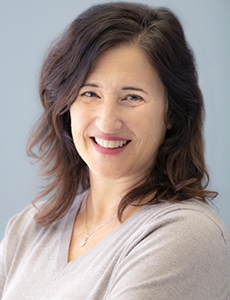
Laura Abrams
· Professor of Social WelfareVerifiedUniversity of California, Los Angeles · Public Policy
Active 1979–2026
About
Laura Abrams is a Professor of Social Welfare at UCLA Luskin School of Public Affairs. She holds a PhD from UC Berkeley School of Social Welfare, an MSW from UC Berkeley, and a BA from Brandeis University. Her scholarship focuses on improving the well-being of youth and adults with histories of incarceration, with particular attention to criminal justice, gender issues, juvenile justice, and transition age youth services. Abrams has conducted ethnographic studies examining youths’ experiences of criminality, risk, and institutional efforts to reshape their identities, which are detailed in her books 'Compassionate Confinement: A Year in the Life of Unit C' and 'Everyday Desistance: The Transition to Adulthood Among Formerly Incarcerated Youth.' She has published over 100 peer-reviewed articles and book chapters, and has edited volumes on youth imprisonment and the voluntary sector in prisons. Abrams is involved in several studies concerning youth and adult criminal legal systems and reentry, both locally and globally, including research on youth justice models across countries and the impact of juvenile justice policies. She has served as an expert witness and provided public and congressional testimony on juvenile justice and reentry issues. Her work has been cited in major media outlets, and she has received numerous awards, including induction into the American Academy for Social Work and Social Welfare and the UCLA Public Impact award.
Research topics
- Sociology
- Political Science
- Psychology
- Gender studies
- Social psychology
- Social Science
- Public relations
- Virology
- Developmental psychology
- Medicine
- Internal medicine
Selected publications
Understanding variation in juvenile life without parole legislation following Miller
CrimRxiv · 2026-01-23
articleOpen accessMiller v. Alabama and Montgomery v. Louisiana restricted states' ability to impose life without parole for youth under age 18 (henceforth JLWOP).Since Miller, 46 pieces of legislation across 34 states and the District of Columbia have altered JLWOP sentencing policies.The current study provides the first comprehensive and
Understanding variation in juvenile life without parole legislation following <i>Miller</i>
Criminology & Public Policy · 2026-01-09
articleOpen accessAbstract Research Summary Miller v. Alabama and Montgomery v. Louisiana restricted states’ ability to impose life without parole for youth under age 18 (henceforth JLWOP). Since Miller , 46 pieces of legislation across 34 states and the District of Columbia have altered JLWOP sentencing policies. The current study provides the first comprehensive and scientific review of this legislation. Using policy surveillance as a methodological guide, we found that a majority of statutes ( N = 28) ban JLWOP sentencing, above and beyond the Supreme Court's requirement. Many statutes also extended sentencing reforms and post‐conviction relief eligibility to other types of sentencing beyond JLWOP. However, all but one statute still allows either JLWOP or life with parole as a sentencing option for minors convicted of homicide crimes and requires between 15 and 40 years, at minimum, to be served before being eligible for release. Grounding our analysis in institutional theory, we argue that the relative punitivity of the JLWOP reforms enacted was associated with measures of JLWOP institutionalization across states (i.e., pre‐ Miller JLWOP population and pre‐ Miller sentencing schema), suggesting that states where JLWOP was more routinely used were more resistant to policy reform. Policy Implications The current study provides implications for future decarceration efforts. Findings suggest that state legislatures are willing to enact post‐conviction relief measures (e.g., judicial review or “second look” measures) for individuals convicted of violent crimes to address over‐incarceration, deviating from previous decarceration efforts focused on non‐violent, low‐level offenses. In spite of the promising window for juvenile justice reform that Miller provided, however, these reforms have taken a relatively modest, incremental approach toward altering extreme youth sentencing practices in the United States. Policy makers and advocates seeking to promote sentencing reform efforts should factor in how highly institutionalized a sentencing practice is in each state, as this might inform effective strategies for policy change.
Reducing Youth Legal System Involvement: Updates From the Field and a Call to Action
Academic Pediatrics · 2025-11-06
reviewOpen accessSocial work and antisemitism: issues and interventions
Journal of Human Behavior in the Social Environment · 2025-03-29
article1st authorCorrespondingFrontiers in Public Health · 2025-08-01
articleOpen accessBackground: Little is known about whether and to what extent family factors associated with risky sexual behaviors, such as experiencing commercial sexual exploitation (CSE) or having prior sexually transmitted infections (STIs), differ across risk groups of adolescents. Methods: We conducted secondary analysis of a nationally representative dataset. Latent class analysis was used to assess heterogeneity in family characteristics and childhood adversity within classes of 1,018 adolescents who engaged in risky sexual behaviors, as evidenced by a self-reported STI and/or involvement in CSE. Participants were on average 15.49 years old (SD = 1.34), 50% female, and 58% people of color. Results: class (15%). Adolescents who were CSE-impacted represented 49% of the analytic sample and were observed across all five classes in differing yet not insignificant proportions (i.e., ranging from 37% to 60%). Findings illustrate significant variability in family patterns and differences marked by demographic and sexual risk characteristics. Findings: The presence of CSE-impacted adolescents across latent classes speaks to the hidden nature of this crime and complexities related to CSE risk. Family relationships are often assumed to be protective against CSE. However, these findings point to considerable complexity in understanding how family functioning relates to CSE. Research that allows for longitudinal or retrospective analysis to understand how families were functioning at the time of CSE initiation, would help in delineating what types of families are most protective against CSE for adolescents.
Enacting Change: A Case Study of Canada’s 1984 Youth Justice Minimum Age Legislation
SSRN Electronic Journal · 2025-01-01
preprintOpen access“I made the change for me”: Theorizing Desistance for Life Sentenced Youth
Criminology & Criminal Justice · 2024-08-14 · 3 citations
articleOpen access1st authorCorrespondingBuilding on the work of Professor Joanna Shapland, this exploratory, phenomenological study theorizes contexts that ground desistance for people sentenced to life in prison for crimes committed as youth. The investigation draws from 28 interviews conducted with 10 formerly incarcerated youth lifers, all male, who were imprisoned for an average of 27 years in California. The major themes are presented along three phases in the desistance journey: life in prison as a barrier to desistance, the will to change, and policy changes and the process of parole. The analysis finds that despite a harsh and violent prison environment, all located sources of support (i.e. spiritual, family, and peers) that facilitated desistance and hope to create a meaningful life inside of prison. While the work of desistance was ultimately externally validated by a parole board, all participants asserted agency to take behavioral and attitudinal steps toward desistance long before they had hope for freedom.
Children and Youth Services Review · 2024-12-25 · 1 citations
articleOpen accessCambridge University Press eBooks · 2024-02-08
book-chapterSenior authorThis chapter introduces young Black changemaking. Black youth face racism at interpersonal, cultural, and institutional levels. Young Black changemakers take civic actions to resist racism. Our work brings a fresh, contemporary look at young Black changemaking that is drawn from youth's own voices and relevant to the current times. The research study is set in Los Angeles, a city with a long history of anti-Black racism and resistance, and coincided with summer 2020, a time of racialized police violence and uprising. Sociopolitical development theory is an important foundation for understanding young Black changemaking. We end the chapter with the 10 main ideas found in the book.
Cambridge University Press eBooks · 2024-02-08 · 1 citations
book-chapter1st authorCorrespondingIn this chapter, we presented Black youth's reflections on summer 2020 and the powerful protest movement for Black lives that reverberated about the globe. Young Black changemakers saw summer 2020 as a watershed moment in which real changes toward racial justice were happening. Summer 2020 connected Black youth's personal experiences of racism to a historic movement for racial justice, continuing a legacy of fighting for racial justice. Alongside profound joy, inspiration, and hope, Black youth experienced sadness, frustration, numbness, anger, and fear. We captured these youth's feelings while they were living through this momentous time, and they were still in the midst of processing the moment, their feelings, and their role in the movement. Summer 2020 activated agency, critical knowledge, and action for some, and for others, the movement advanced and solidified their purposeful commitments to racial justice for now and into the future.
Frequent coauthors
- 39 shared
Elizabeth S. Barnert
University of California, Los Angeles
- 27 shared
Alexandra Cox
Atrium Health Wake Forest Baptist
- 25 shared
Yvonne Jewkes
University of Bristol
- 25 shared
Ben Crewe
- 14 shared
Eraka Bath
University of California, Los Angeles
- 11 shared
Paul J. Chung
- 10 shared
Laura Curran
Hywel Dda University Health Board
- 8 shared
Sarah M. Godoy
University of North Carolina at Chapel Hill
Awards & honors
- SSWR best scholarly book award (2020)
- Frank R. Bruel prize for the best published article in Socia…
- Induction into the American Academy for Social Work and Soci…
- Inaugural UCLA Public Impact award (2022)
- Induction into the UCLA Faculty Mentoring Honor Society (202…
- Resume-aware match score
- Save to shortlist
- AI-drafted outreach
See your match with Laura Abrams
PhdFit ranks faculty by your research interests, methods, and publications — grounded in their actual work, not templates.
- Free to start
- No credit card
- 30-second signup