
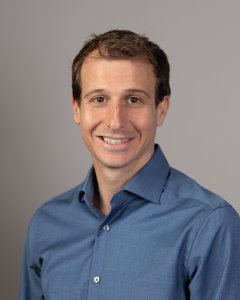
Kyle Mahowald
· Assistant ProfessorUniversity of Texas at Austin · Linguistics
Active 2010–2026
Academic metrics are sourced from OpenAlex and public funding records; values may differ from Google Scholar.
About
Kyle Mahowald is an Assistant Professor in the College of Liberal Arts at the University of Texas at Austin. His research focuses on computational linguistics, psycholinguistics, and quantitative methods in linguistics. He is also involved in natural language processing, large language models, and cognitive science, contributing to the understanding of language processing and computational modeling within these fields.
Research topics
- Computer Science
- Psychology
- Cognitive science
- Natural Language Processing
- Linguistics
- Artificial Intelligence
- Social psychology
- Cognitive psychology
- Machine Learning
- Philosophy
Selected publications
Dissociating language and thought in large language models
Trends in Cognitive Sciences · 2024 · 276 citations
1st authorCorrespondingDissociating language and thought in large language models
arXiv (Cornell University) · 2023 · 91 citations
1st authorCorrespondingLarge Language Models (LLMs) have come closest among all models to date to mastering human language, yet opinions about their linguistic and cognitive capabilities remain split. Here, we evaluate LLMs using a distinction between formal linguistic competence -- knowledge of linguistic rules and patterns -- and functional linguistic competence -- understanding and using language in the world. We ground this distinction in human neuroscience, which has shown that formal and functional competence re…
Action anticipation based on an agent's epistemic state in toddlers and adults
2021 · 31 citations
Do toddlers and adults engage in spontaneous Theory of Mind (ToM)? Evidence from anticipatory looking (AL) studies suggests that they do. But a growing body of failed replication studies raised questions about the paradigm’s suitability. In this multi-lab collaboration, we test the robustness of spontaneous ToM measures. We examine whether 18- to 27-month-olds’ and adults’ anticipatory looks distinguish between two basic forms of an agent’s epistemic states: knowledge and ignorance. In toddlers…
France or Spain or Germany or France: A Neural Account of Non-Redundant Redundant Disjunctions
ArXiv.org · 2026-02-26
articleOpen accessSenior authorSentences like "She will go to France or Spain, or perhaps to Germany or France." appear formally redundant, yet become acceptable in contexts such as "Mary will go to a philosophy program in France or Spain, or a mathematics program in Germany or France." While this phenomenon has typically been analyzed using symbolic formal representations, we aim to provide an account grounded in artificial neural mechanisms. We first present new behavioral evidence from humans and large language models demo…
Dissociating Direct Access from Inference in AI Introspection
arXiv (Cornell University) · 2026-03-05
articleOpen accessSenior authorIntrospection is a foundational cognitive ability, but its mechanism is not well understood. Recent work has shown that AI models can introspect. We study their mechanism of introspection, first extensively replicating Lindsey et al. (2025)'s thought injection detection paradigm in large open-source models. We show that these models detect injected representations via two separable mechanisms: (i) probability-matching (inferring from perceived anomaly of the prompt) and (ii) direct access to int…
Recent grants
CRII: RI: Using Linguistic Variation to Understand Deep Neural Models of Language
NSF · $175k · 2021–2024
Frequent coauthors
- 46 shared
Edward Gibson
- 40 shared
Evelina Fedorenko
Massachusetts Institute of Technology
- 30 shared
Richard Futrell
- 18 shared
Isabelle Dautriche
Laboratoire de Psychologie Cognitive
- 14 shared
Tiago Pimentel
- 14 shared
Peter Graff
- 13 shared
Ryan Cotterell
- 13 shared
Jeremy Hartman
Similar researchers at University of Texas at Austin
- Resume-aware match score
- Save to shortlist
- AI-drafted outreach
See your match with Kyle Mahowald
PhdFit ranks faculty by your research interests, methods, and publications — grounded in their actual work, not templates.
- Free to start
- No credit card
- 30-second signup