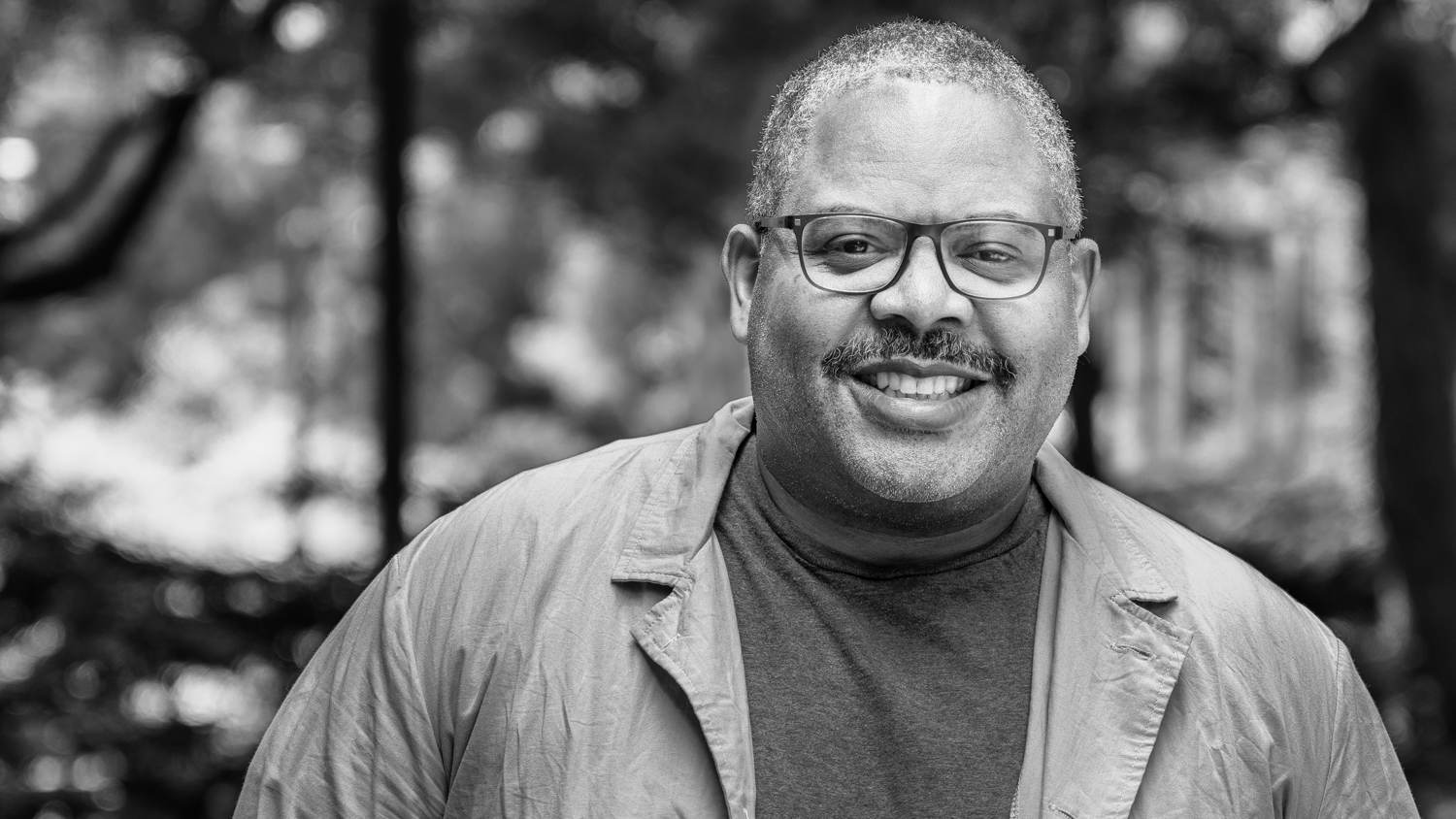
Kofi Boone
· Joseph D. Moore Distinguished Professor of Landscape Architecture and Environmental PlanningNorth Carolina State University · Landscape Architecture and Environmental Planning
Active 1992–2025
About
Kofi Boone is a Joseph D. Moore Distinguished Professor and University Faculty Scholar at NC State University, specializing in landscape architecture and environmental justice. His work intersects these disciplines with a focus on democratic design and interpreting cultural landscapes. Boone leads the Just Communities Lab, which collaborates with community organizations to address environmental challenges such as resiliency planning and sustainable food systems. He has advised on and contributed to award-winning projects and is widely published, with recent work including the co-edited publication 'Empty Pedestals: Countering Confederate Narratives Through Public Design,' which earned a National ASLA Honor Award in Communications and was a finalist for the J.B. Jackson Book Prize. Boone has served as past-president of the Landscape Architecture Foundation and currently serves on the boards of the Land Loss Prevention Project and The Ellerbe Creek Watershed Association.
Research topics
- Computer Science
- Psychology
- Epistemology
- Ecology
- History
- Archaeology
- Philosophy
- Biology
Selected publications
International Journal of Environmental Research and Public Health · 2025-08-07
articleOpen accessSenior authorThis study evaluates the 2022 rollout of the Clean School Bus Rebate Program (CSBRP) to understand how eligibility rules and data practices shape funding distribution across communities with varying needs. We ask whether more accurate maps can improve environmental funding outcomes or whether challenges stem from how agencies define and apply eligibility criteria. Using logistic regression and dasymetric mapping, we find that prioritization criteria helped direct funds to underserved areas, but reliance on school district boundaries introduced inconsistencies that affected program reach. Including charter schools as independent applicants increased competition and sometimes diverted funds from larger public systems serving more. Our geospatial analysis shows that while refined mapping approaches improve resource targeting and reduce goal-outcome mismatches, agency discretion and administrative rules remain key factors in ensuring equitable outcomes.
2022-01-15
preprintOpen access1st authorCorrespondingWell-designed urban landscapes can nurture creativity and well-being and buffer or even help mitigate the negative effects of global change. But often, such landscapes are the exclusive purview of the wealthy. That neednât be the case. Drawing insights from a recent, visionary paper outlining a history of Black landscape architecture, Kofi Boone considers how we might work as communities to locally create landscapes that are equitable, just and sustaining, even in light of global change. This video features cities/sites including Accra, Ghana (where Boone led a study abroad program), Detroit, Michigan (Kofiâs hometown), and cities in North Carolina.
The Black CommonsA Framework for Recognition, Reconciliation, Reparations
2022-04-26 · 1 citations
book-chapterOpen accessSenior authorAgyeman and Boone situate the Black Commons in the context of Sen’s (2009) concept of capabilities which we see as the need for Black communities to build new kinds of wealth and wellbeing that support our ability to thrive. We discuss definitions of growth, wealth, and wellbeing, arguing for a reclamation of the idea of “Commonwealth” as a way of enabling human capabilities. We review historic precedents to the Black Commons including Black and Black-serving Cooperatives and Community Land Trusts and argue that they offer a foundation for sharing the values of mutual aid together with information sharing and building community sustainability. Thus, we argue, pooling individual resources into a common resource, a commons, was a strategy deployed by Black communities in the USA historically. The Black Commons has been promoted in the USA as a means of dismantling barriers to Black land ownership through the networked use of Community Land Trusts, and the creation of a just and regenerative economy (Witt 2018).We apply these ideas to equitable strategies for overcoming current racial justice challenges including the need for recognition of previous harms done, reconciliation with affected groups, and eventually reparations to compensate Black communities seeking to be made whole and sustainable.
Places · 2021 · 1 citations
1st authorCorresponding- Psychology
- Philosophy
- Epistemology
Three Black Towns: An Excerpt from Black Landscapes Matter
Southern Spaces · 2021-03-09
articleOpen access1st authorCorrespondingKofi Boone describes three towns founded by freed Black people who endeavored to create their own communities. Excerpted from "Enabling Connections to Empower Place: The Carolinas" in Black Landscapes Matter (University of Virginia Press, 2020). Courtesy of the University of Virginia Press.
ENABLING CONNECTIONS TO EMPOWER PLACE:
University of Virginia Press eBooks · 2020 · 1 citations
1st authorCorresponding- Computer Science
- Computer Science
Notes Toward a History of Black Landscape Architecture
Places · 2020 · 2 citations
1st authorCorresponding- History
- Archaeology
- Ecology
2020-06-18 · 2 citations
preprintSenior authorCrime and Perception on the American Tobacco Trail in Durham
UNC Libraries · 2019-08-16
articleOpen access1st authorCorrespondingThis paper describes the findings of a report on recent crime incidents on the American Tobacco Trail in Durham, North Carolina in the context of what Dr. Mindy Thompson Fullilove calls “sorted-out cities.” The American Tobacco Trail, occupying what was a boundary between black and white, and rich and poor Durham, now facilitates encounters between different communities historically divided by race and class.
Symbolic Conversations in Public Landscapes of the American South: Revisiting the Confederate Legacy
RaumFragen: Stadt - Region - Landschaft · 2019-01-01 · 3 citations
book-chapterSenior author
Frequent coauthors
- 2 shared
Carol Kline
Appalachian State University
- 2 shared
Laura R. Johnson
University of Mississippi
- 1 shared
Danielle Spurlock
University of North Carolina at Chapel Hill
- 1 shared
Floyd McKissick
- 1 shared
Meng-Ling Hsiao
General Electric (United States)
- 1 shared
Richard H. Groshong
University of Alabama
- 1 shared
Kathleen Rieder
North Carolina State University
- 1 shared
W.E. Snyder
Awards & honors
- National ASLA Honor Award in Communications
- J.B. Jackson Book Prize finalist
- Jot D. Carpenter Teaching Medal from the American Society of…
- Cooper Hewitt, Smithsonian Design Museum 2021 National Desig…
- Resume-aware match score
- Save to shortlist
- AI-drafted outreach
See your match with Kofi Boone
PhdFit ranks faculty by your research interests, methods, and publications — grounded in their actual work, not templates.
- Free to start
- No credit card
- 30-second signup