
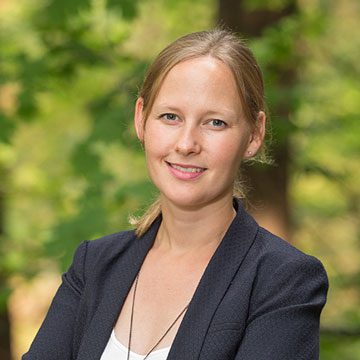
Kirstin Hagelskjaer Petersen
Cornell University · Aerospace Engineering
Active 2002–2026
Academic metrics are sourced from OpenAlex and public funding records; values may differ from Google Scholar.
About
Kirstin Hagelskjaer Petersen is an Associate Professor at Cornell University in the School of Electrical and Computer Engineering, with affiliations in Aerospace Engineering, Computer Science, Mechanical Engineering, and Systems Engineering. Her research explores how principles observed in natural swarms, such as ants, bees, and termites, can be leveraged to achieve advanced autonomy in robot collectives. Her work focuses on understanding the morphology, physical interactions, and environmental shaping that contribute to the error-tolerant and scalable behaviors of biological colonies, and applying these insights to the development of collective robotic systems through hardware and software co-development. Petersen's research themes include collective robotic construction, human-swarm interaction, soft robot collectives, biological swarms, and bio-hybrid collectives. She completed her Ph.D. at Harvard University in 2014 under Professor Nagpal, with her thesis work conducted at the Wyss Institute for Biologically Inspired Engineering. She did her postdoctoral work at the Max Planck Institute for Intelligent Systems from 2014 to 2016, where she was a fellow with the Max Planck ETH Center for Learning Systems. Her academic background also includes a master's degree in Computer Systems Engineering from the University of Southern Denmark and a bachelor's in electro-technical engineering from Odense University College of Engineering. Her research has contributed to understanding…
Research topics
- Computer science
- Artificial intelligence
- Human–computer interaction
- Materials science
- Engineering
Selected publications
Microrobot collectives with reconfigurable morphologies, behaviors, and functions
Nature Communications · 2022-04-26 · 149 citations
articleOpen accessCorrespondingMobile microrobots, which can navigate, sense, and interact with their environment, could potentially revolutionize biomedicine and environmental remediation. Many self-organizing microrobotic collectives have been developed to overcome inherent limits in actuation, sensing, and manipulation of individual microrobots; however, reconfigurable collectives with robust transitions between behaviors are rare. Such systems that perform multiple functions are advantageous to operate in complex environm…
Programmable self-organization of heterogeneous microrobot collectives
Proceedings of the National Academy of Sciences · 2023-06-05 · 57 citations
articleOpen accessAt the microscale, coupled physical interactions between collectives of agents can be exploited to enable self-organization. Past systems typically consist of identical agents; however, heterogeneous agents can exhibit asymmetric pairwise interactions which can be used to generate more diverse patterns of self-organization. Here, we study the effect of size heterogeneity in microrobot collectives composed of circular, magnetic microdisks on a fluid-air interface. Each microrobot spins or oscilla…
Imperfect comb construction reveals the architectural abilities of honeybees
Proceedings of the National Academy of Sciences · 2021-07-26 · 44 citations
articleOpen accessSenior authorHoneybees are renowned for their perfectly hexagonal honeycomb, hailed as the pinnacle of biological architecture for its ability to maximize storage area while minimizing building material. However, in natural nests, workers must regularly transition between different cell sizes, merge inconsistent combs, and optimize construction in constrained geometries. These spatial obstacles pose challenges to workers building perfect hexagons, but it is unknown to what extent workers act as architects ve…
Honey bees and social wasps reach convergent architectural solutions to nest-building problems
PLoS Biology · 2023-07-27 · 16 citations
articleOpen accessCorrespondingThe hexagonal cells built by honey bees and social wasps are an example of adaptive architecture; hexagons minimize material use, while maximizing storage space and structural stability. Hexagon building evolved independently in the bees and wasps, but in some species of both groups, the hexagonal cells are size dimorphic-small worker cells and large reproductive cells-which forces the builders to join differently sized hexagons together. This inherent tiling problem creates a unique opportunity…
2023-03-09 · 11 citations
articleDrones (micro unmanned aerial vehicles) are becoming more prevalent in applications that bring them into close human spaces. This is made possible in part by clear drone-to-human communication strategies. However, current auditory and visual communication methods only work with strict environmental settings. To continue expanding the possibilities for drones to be useful in human spaces, we explore ways to overcome these limitations through physical touch. We present a new application for drones…
Recent grants
CAREER: Environmentally-Mediated Coordination in Natural and Robot Swarms
NSF · $584k · 2021–2027
CPS: Medium: Leveraging Honey Bees as Bio-Cyber Physical Systems
NSF · $957k · 2017–2021
Frequent coauthors
- 17 shared
Steven Ceron
Massachusetts Institute of Technology
- 13 shared
Nils Napp
Cornell University
- 13 shared
Metin Sitti
- 8 shared
Radhika Nagpal
Princeton University
- 7 shared
Michael L. Smith
Auburn University
- 6 shared
Robert F. Shepherd
Cornell University
- 5 shared
Justine E. Vanden Heuvel
Cornell University
- 5 shared
Yoav Matia
Ben-Gurion University of the Negev
Labs
Collective Embodied Intelligence LabPI
Education
- 2016
Postdoc, Physical Intelligence Department
Max Planck Institute for Intelligent Systems
- 2014
PhD, EECS
Harvard University
- 2008
MS, Maersk McKinney Moeller Institute
Syddansk Universitet
- 2005
BS, Electro-technical Engineering
Syddansk Universitet
Awards & honors
- Douglas Whitney ’61 Excellence in Teaching Award, College of…
- Packard Fellowship for Science and Engineering, the David an…
- Elisabeth Schiemann Kolleg Fellow with the Max Planck Societ…
- Max Planck Fellowship for Postdoctoral work (10/22/2014-07/0…
- Research ranked 4th in Science Magazine's Top 10 Scientific…
Similar researchers at Cornell University
- Resume-aware match score
- Save to shortlist
- AI-drafted outreach
See your match with Kirstin Hagelskjaer Petersen
PhdFit ranks faculty by your research interests, methods, and publications — grounded in their actual work, not templates.
- Free to start
- No credit card
- 30-second signup