Resume-aware faculty matching

Find professors who actually fit you

Upload your resume. Four AI agents analyze your background, rank the faculty who fit, inspect their recent research, and help you draft outreach — grounded in their actual work, not templates.

Free to startNo credit cardCancel anytime
Top matches Balanced preset
Dr. Sarah Chen
Stanford · Interpretability · NLP
91
Dr. Marcus Holloway
MIT · Robotics · RL
84
Dr. Aisha Okonkwo
CMU · Fairness · HCI
82
Nova · Professor Researcher · re-ranking top 20…
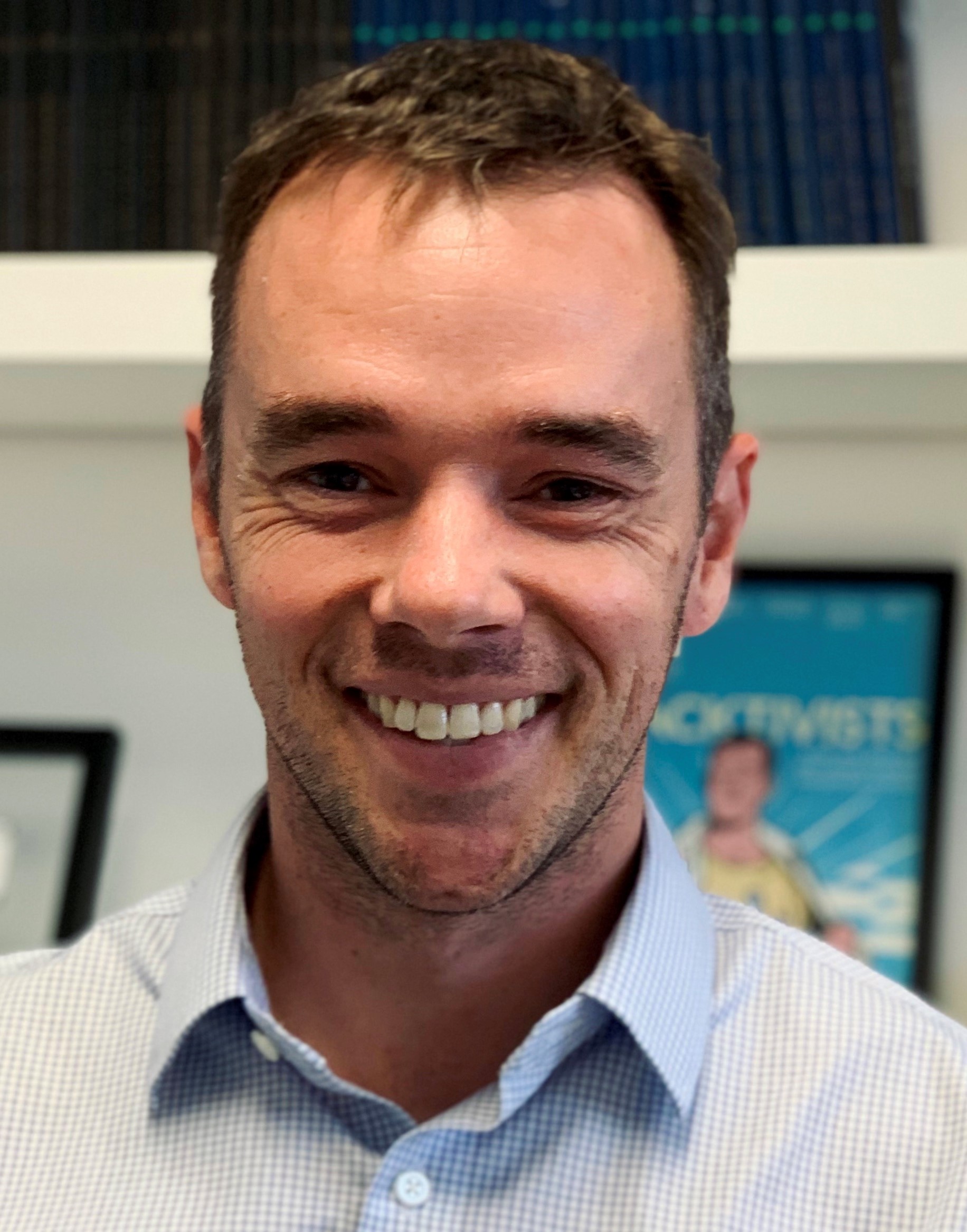
Kevin Lewis

Kevin Lewis

· ProfessorVerified

University of California, San Diego · Sociology

Active 1966–2025

h-index17
Citations4.3k
Papers10521 last 5y
Funding
See your match with Kevin Lewis — sign in to PhdFit.Sign in

About

Kevin Lewis studies the formation and evolution of social networks, the principles of human interaction that produce global network patterns, and the implications of these processes for the genesis and reproduction of inequality. To address these topics, he has analyzed a number of large-scale network datasets—spanning topics such as online dating, internet activism, and college students' behavior on Facebook—and his work has been published in a variety of sociological and interdisciplinary journals.

Research topics

  • Sociology
  • Political Science
  • Social Science
  • Psychology
  • Law
  • Computer Science
  • Medicine
  • Pedagogy
  • Data science
  • Public relations
  • Internet privacy
  • History
  • Engineering ethics
  • Medical education
  • Engineering

Selected publications

  • Training and Development

    2025-11-28

    book-chapter

    Managers of people are often promoted into leadership positions without deep knowledge or understanding of how to train and develop adult teams for success. This chapter will outline practical strategies for onboarding, professionally developing, and maximizing each team member’s talents for success and sustainability of the team. Additionally, foundational to this chapter is how to train and develop with diversity, equity, inclusion, and belonging (DEIB) at the center of your team’s training and development. Throughout this chapter, practical strategies and checklists will be provided for successful onboarding, professional development, and performance management.

  • Social network density predicts partisan animosity

    Applied Network Science · 2025-11-13 · 2 citations

    articleOpen access

    People’s social networks are fragmenting and partisan animosity is rising. Three studies highlight the connection between social network density and partisan animosity. Americans with denser networks (where more social contacts know each other) appear to often harbor less animosity toward political opponents. One explanation for this association is feelings of unity: dense social networks feel more unified, and people project these feelings of connection and common identity onto distant fellow Americans. Study 1 supports this idea with a representative sample of Americans: social network density predicts feelings of local unity, which predicts feelings of national unity, which predicts warmth toward and willingness to interact with political opponents. Study 2 attempts to manipulate perceived social network density and finds a “causal cascade” of indirect effects culminating in lower partisan animosity, suggesting that more involved interventions may reduce partisan animosity. Study 3 uses nationwide county-level data from the Social Capital Atlas and Project Implicit to reveal that communities with higher social network density exhibit lower partisan animosity. The results suggest that considering the overarching structures of social networks is crucial to understanding partisan animosity, and that fostering social cohesion could help mend political divides.

  • Proximity within adolescent peer networks predicts neural similarity during affective experience

    Social Cognitive and Affective Neuroscience · 2024-01-01 · 4 citations

    articleOpen access

    Individuals befriend others who are similar to them. One important source of similarity in relationships is similarity in felt emotion. In the present study, we used novel methods to assess whether greater similarity in the multivoxel brain representation of affective stimuli was associated with adolescents' proximity within real-world school-based social networks. We examined dyad-level neural similarity within a set of brain regions associated with the representation of affect including the ventromedial prefrontal cortex (vmPFC), amygdala, insula, and temporal pole. Greater proximity was associated with greater vmPFC neural similarity during pleasant and neutral experiences. Moreover, we used unsupervised clustering on social networks to identify groups of friends and observed that individuals from the same (versus different) friend groups were more likely to have greater vmPFC neural similarity during pleasant and negative experiences. These findings suggest that similarity in the multivoxel brain representation of affect may play an important role in adolescent friendships.

  • Satisficing in dentistry. Who decides? who benefits? part 2

    Dental Update · 2024-03-02 · 4 citations

    article1st authorCorresponding

    This three-part series of articles challenges some popular myths about supposedly ‘ideal’ treatment plans and is designed to provoke reflection and stimulate debate. It explains the concept of ‘satisficing’, as opposed to ‘maximizing’, in dentistry, and illustrates how subconscious bias and self-interests might lead supposed experts to promote arbitrary aspirational standards and confuse them with what the law expects (the Bolam Test standard), and what is genuinely in the best interests of an individual patient. It is argued that sound, patient-centred pragmatic planning and treatment is equally valid, with wider applicability than routinely defaulting to a self-serving ‘maximalist’ approach. CPD/Clinical Relevance: The ‘satisficing’ concept has wide and profound application across many fields of dentistry.

  • Vicarious Liability and the Moving Target of Dental Litigation: A Wake-up Call for Practice Owners?

    Dental Update · 2024-04-02

    article1st authorCorresponding
  • Satisficing in Dentistry. Who decides? Who benefits? Part 3

    Dental Update · 2024-04-02 · 1 citations

    articleSenior authorCorresponding

    This series of articles challenges some popular myths about supposedly ‘ideal’ treatment plans and is designed to provoke reflection and stimulate debate. It explains the concept of ‘satisficing’ (as opposed to ‘maximizing’) in dentistry, and illustrates how subconscious bias and self-interests might lead supposed experts to promote arbitrary aspirational standards and confuse them with what the law expects (the Bolam Test standard) and what is genuinely in the best interests of an individual patient. It is argued that sound, patient-centred, pragmatic planning and treatment is equally valid, with wider applicability, than routinely defaulting to a self-serving ‘maximalist’ approach. CPD/Clinical Relevance: The ‘satisficing ‘concept has wide and profound application across many fields of clinical (and non-clinical) dentistry.

  • ‘Satisficing’ in dentistry: who decides? who benefits?

    Dental Update · 2024-02-02 · 6 citations

    articleSenior author

    This series of articles challenges some popular myths about supposedly ‘ideal’ treatment plans, and is designed to provoke reflection and stimulate debate. It explains the concept of ‘satisficing’ (as opposed to ‘maximizing’) in dentistry, and illustrates how subconscious bias and self-interests might lead supposed experts to promote arbitrary aspirational standards and confuse them with what the law expects (the Bolam Test standard) and what is genuinely in the best interests of an individual patient. It is argued that sound, patient-centred pragmatic planning and treatment is equally valid, with wider applicability than routinely defaulting to a self-serving ‘maximalist’ approach, often on spurious grounds. CPD/Clinical Relevance: The ‘satisficing’ concept has wide and profound application across many fields of dentistry; this first part explains the basic principles and how and why it is relevant to various aspects of practical dentistry and also to our understanding of professionalism.

  • Social Networks and Computational Social Science

    2024-01-01

    book-chapterSenior author
  • Development of TRIDENT Drill for Ice Mining on the Moon with NASA PRIME-1 and VIPER Missions

    2024-10-10 · 3 citations

    article

    The Regolith and Ice Drill for Exploration of New Terrains (TRIDENT) is a rotary-percussive, 1-m class ice mining drill developed for two exploration missions to the Moon: Volatiles Investigating Polar Exploration Rover (VIPER) and Polar Resources Ice Mining Experiment (PRIME-1). PRIME-1 is scheduled to fly to the Moon in early 2024 and explore the topographic ridge adjacent to Shackleton crater, while VIPER is targeting late 2024 launch date, with a goal of exploring Mons Mouton. Both missions are targeting presumably volatile rich deposits. This paper focuses on the design and development of TRIDENT.

  • Handling orthodontic complaints

    Orthodontic Update · 2023-09-29

    article1st authorCorresponding

    This article explains some proven strategies for successful complaints handling across different areas of orthodontic practice, while stressing the need to recognise and understand the subtleties often encountered when managing complaints about orthodontic care and treatment, and the importance of taking them into account. It will also suggest some ‘upstream’ strategies for making complaints less likely. CPD/Clinical relevance: This paper aims to give orthodontic practitioners clinical insight into complaints handling procedures across private and NHS practice.

Frequent coauthors

  • Donald Mackenzie

    University of Strathclyde

    25 shared
  • David Clifford

    University of Southampton

    25 shared
  • Carsten Sauer

    Bielefeld University

    25 shared
  • Adam Storer

    École de management de Lyon

    25 shared
  • Noah Mark

    University of North Carolina at Charlotte

    25 shared
  • Shamus Khan

    Princeton University

    25 shared
  • Fabien Accominotti

    25 shared
  • Vincent J. Roscigno

    The Ohio State University

    25 shared

Labs

  • Resume-aware match score
  • Save to shortlist
  • AI-drafted outreach

See your match with Kevin Lewis

PhdFit ranks faculty by your research interests, methods, and publications — grounded in their actual work, not templates.

  • Free to start
  • No credit card
  • 30-second signup