
Resume-aware faculty matching

Find professors who actually fit you

Upload your resume. Four AI agents analyze your background, rank the faculty who fit, inspect their recent research, and help you draft outreach — grounded in their actual work, not templates.

Free to startNo credit cardCancel anytime
Top matches Balanced preset
Dr. Sarah Chen
Stanford · Interpretability · NLP
91
Dr. Marcus Holloway
MIT · Robotics · RL
84
Dr. Aisha Okonkwo
CMU · Fairness · HCI
82
Nova · Professor Researcher · re-ranking top 20…
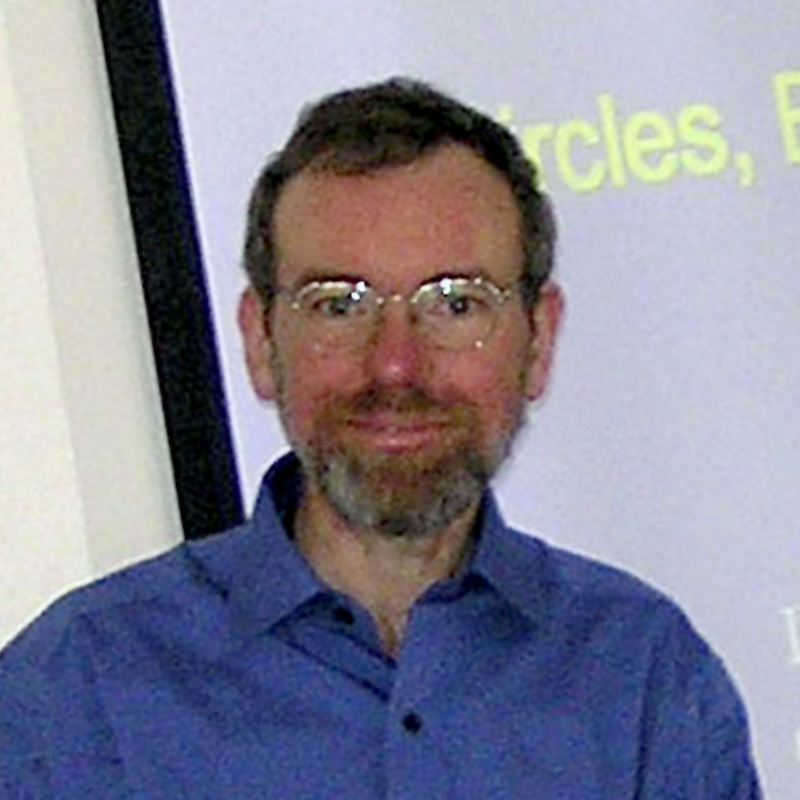
Kevin Kelly

Kevin Kelly

· Professor

Carnegie Mellon University · Philosophy

Active 1967–2024

h-index26
Citations3.5k
Papers1415 last 5y
Funding$104k
See your match with Kevin Kelly — sign in to PhdFit.Sign in

About

Kevin T. Kelly is a Professor and Director of the Center for Formal Epistemology at Carnegie Mellon University, within the Department of Philosophy. His research focuses on the philosophical and mathematical foundations of scientific reasoning, particularly examining Ockham's razor and realism, the role of simplicity in theory choice, and the formal modeling of epistemic processes. Kelly's work explores how empirical simplicity reflects nature's capacity to guide scientists through successive theory revisions, employing point set topology as a mathematical framework. His ongoing projects include the Ockham project supported by the John Templeton Foundation. Kelly has contributed extensively to the philosophy of science, epistemology, and logic, addressing topics such as belief revision, the relationship between qualitative and quantitative beliefs, and the epistemological implications of uncomputability and the problem of induction. His research also investigates the learning power of belief revision, the formal semantics of epistemic logic, and the analogy between empirical and formal reasoning. Throughout his career, Kelly has developed theories on how scientific methods are truth-conducive, the nature of inquiry, and the logical structure of scientific justification, making significant contributions to the understanding of scientific rationality and the formal underpinnings of epistemology.

Research topics

  • Computer Science
  • Artificial Intelligence
  • Telecommunications
  • Geography
  • Mathematics
  • Statistics
  • Philosophy
  • Geodesy
  • Physics
  • Epistemology

Selected publications

  • Detecting in vivo Mitochondrial Dysfunction with 4D Oxy-wavelet MRI in Kainic Acid Induced Temporal Lobe Epilepsy

    Proceedings on CD-ROM - International Society for Magnetic Resonance in Medicine. Scientific Meeting and Exhibition/Proceedings of the International Society for Magnetic Resonance in Medicine, Scientific Meeting and Exhibition · 2024-08-14

    article

    Intractable temporal lobe epilepsy, often acquired after status epilepticus (SE) injury, greatly reduces quality of life. There is an unmet need for a non-invasive method to track progression from SE to epilepsy, which would allow early intervention to prevent irreversible damage to the brain. Mitochondrial dysfunction is becoming a recognized marker of epileptogenesis. Here, we established a novel functional MRI methodology, the 4D Oxy-wavelet MRI, capable of in vivo detection of mitochondrial dysfunction underlying post-SE epileptogenesis in a spatial specific manner. This non-invasive method may aid early detection of subclinical epileptogenesis and serve as a biomarker for therapeutic efficacy.

  • Thoroughly Modern Meno

    2023-07-28 · 6 citations

    articleOpen accessSenior author

    Clark Glymour and Kevin T. Kelly. Thoroughly Modern Meno.

  • Communicating about Alt-Ac Careers with Graduate Advisers

    2023-06-26

    book-chapter
  • Beliefs, Probabilities, and Their Coherent Correspondence

    Cambridge University Press eBooks · 2021 · 9 citations

    1st authorCorresponding
    • Computer Science
    • Artificial Intelligence
    • Epistemology

    There appear to be two sorts of doxastic attitudes, propositional beliefs in the traditional sense (belief that your shoes are tied) and Bayesian credences (degree of belief .998 that your shoes are tied). Deductive consistency and closure traditionally define coherence for belief. Probability theory traditionally defines coherence for degrees of belief. That leaves open the question how propositional and probabilistic beliefs should cohere with one another. We refer to that as the problem of doxastic coherence. We explicate doxastic coherence in terms of rationality constraints on doxastic correspondences that map propositional belief states to Bayesian credal states. Of particular interest is the principle that doxastic correspondences should preserve diachronic coherence. By way of application, we propose a concrete family of coherent doxastic correspondences. Furthermore, we show that the familiar Lockean proposal that one should believe the propositions that pass a credal threshold is incoherent in a number of important respects.

  • The IGFS gravity field observations and products contributions to GGOS infrastructure

    2020

    Senior authorCorresponding
    • Computer Science
    • Geodesy
    • Computer Science

    <p>Through its structure the International Gravity Field Service (IGFS) promotes the interaction, cooperation and synergy between the Gravity Services, namely the Bureau Gravimétrique International (BGI), the International Service for the Geoid (ISG), the International Geodynamics and Earth Tides Service (IGETS), the International Center for Global Earth Models (ICGEM), the International Combination Service for Time-variable Gravity Fields (COST-G) and the International Digital Elevation Model Service (IDEMS).</p><p>Furthermore, via its Central Bureau hosted at the Aristotle University of Thessaloniki (Greece), IGFS provides a link to the Global Geodetic Observing System (GGOS) Bureaus in order to communicate their requirements and recommendations to the IGFS-Centers. Moreover, IGFS provides a coordination host for the utilization of gravity-field related products and services towards their inclusion within a GGOS consistent frame meeting the necessary precision and accuracy requirements.</p><p>In this work, an outline is given on the recent activities of IGFS, namely those related to the contributions to the implementation of: the International Height Reference System/Frame; the Global Geodetic Reference System/Frame; the new Global Absolute Gravity Reference System/Frame and rhe combination of temporal monthly global gravity field models. Particularly, the impact that these activities have and will have in improving the estimation of the Earth’s gravity field, either at global and local scale, is highlighted also in the framework of GGOS.</p>

  • Why Probability Does Not Capture the Logic of Scientific Justification

    Figshare · 2018-06-29 · 34 citations

    articleOpen access1st authorCorresponding

    Department of Philosophy technical report

  • Reliability, Realism, and Relativism

    Research Showcase @ Carnegie Mellon University (Carnegie Mellon University) · 2018-01-01 · 13 citations

    articleOpen access1st authorCorresponding

    Department of Philosophy technical report

  • Theory Choice, Theory Change, and Inductive Truth-Conduciveness

    Studia Logica · 2018-08-04 · 10 citations

    articleSenior author
  • Why Bayesian Confirmation Does Not Capture the Logic of Scientific Justification

    Figshare · 2018-06-29 · 3 citations

    articleOpen access1st authorCorresponding

    Kevin T. Kelly and Clark Glymour. Why Bayesian Confirmation Does Not Capture the Logic of Scientific Justification.

  • A Close Shave with Realism: How Ockham's Razor Helps Us Find The Truth

    Research Showcase @ Carnegie Mellon University (Carnegie Mellon University) · 2018-06-29 · 2 citations

    article1st authorCorresponding

    Kevin T. Kelly. A Close Shave with Realism: How Ockham's Razor Helps Us Find The Truth.

Recent grants

Frequent coauthors

Awards & honors

  • John Templeton Foundation grant (supporting ongoing work)
  • Resume-aware match score
  • Save to shortlist
  • AI-drafted outreach

See your match with Kevin Kelly

PhdFit ranks faculty by your research interests, methods, and publications — grounded in their actual work, not templates.

  • Free to start
  • No credit card
  • 30-second signup