Resume-aware faculty matching

Find professors who actually fit you

Upload your resume. Four AI agents analyze your background, rank the faculty who fit, inspect their recent research, and help you draft outreach — grounded in their actual work, not templates.

Free to startNo credit cardCancel anytime
Top matches Balanced preset
Dr. Sarah Chen
Stanford · Interpretability · NLP
91
Dr. Marcus Holloway
MIT · Robotics · RL
84
Dr. Aisha Okonkwo
CMU · Fairness · HCI
82
Nova · Professor Researcher · re-ranking top 20…
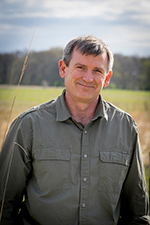
Kevin Gibson

Kevin Gibson

· Professor

Purdue University · Botany & Plant Pathology

Active 1985–2025

h-index22
Citations1.5k
Papers464 last 5y
Funding
See your match with Kevin Gibson — sign in to PhdFit.Sign in

Research topics

  • Agronomy
  • Biology
  • Horticulture
  • Agricultural economics
  • Economics
  • Business
  • Geography
  • Marketing
  • Mathematics

Selected publications

  • Chemical Dynamics Simulations of Water Collisions with a Graphite Surface

    The Journal of Physical Chemistry C · 2025-04-26

    article

    This study presents a comprehensive analysis of the scattering dynamics of D2O molecules on highly oriented pyrolytic graphite surfaces using molecular dynamics simulations. The MD simulation protocols are validated against experiments, which contain only in-plane scattering [Gibson, K. D., J. Chem. Phys. 2024, 160(1), 194705.10.1063/5.0205984]. However, the in-plane results fail to capture the overall dynamics due to the significant contribution of out-of-plane scattering, which is difficult to measure. In this study, our simulations consider both in- and out-of-plane scatterings and show that the intermediate incident angle (∼40°) minimizes water–HOPG interaction. By analyzing the relation between the number of internal turning points, we relate the incident angle to the rate of thermalization of the scattered-off molecules. Our findings highlight the capability of MD simulations to model complex gas–surface interactions that are difficult to capture experimentally, offering an effective and accurate method for future studies across a wider range of energies, temperatures, surfaces, and multimolecule interactions.

  • Effect of buckwheat and silage tarps on sweetpotato between-row weed control

    Weed Technology · 2025-01-01

    articleOpen access

    Abstract Field studies were conducted on certified organic land in Lafayette and Vincennes, IN, in 2023 to determine the impact of different between-row weed control methods on weed suppression and sweetpotato yield. Between-row treatments consisted of organic buckwheat (108 kg ha −1 ) broadcast seeded immediately after sweetpotato transplanting followed by silage tarping from 3 wk after transplanting (WATr) through harvest, organic buckwheat (108 kg ha −1 ) broadcast seeded 3 WATr and terminated 7 WATr, and cultivation as a grower standard. Weed density at 6 WATr was 0, 184, and 162 plants m −2 for the silage tarping, living mulch buckwheat, and cultivation treatments, respectively. Total yield was 11,048 kg ha −1 for the living mulch buckwheat, 19,792 kg ha −1 for the cultivation, and 17,814 kg ha −1 for the tarping treatments. Tarping effectively suppressed weeds and produced sweetpotato yields comparable to cultivation, indicating the potential for use by organic growers. When buckwheat was grown between rows 3 to 7 WATr, sweetpotato yield was lower than it was with tarping and cultivation. These results suggest that researchers should be evaluating tarps for small-acreage farmers as a weed management strategy.

  • Effect of in-row spacing on weed suppression and yield of ‘Covington’ and ‘Monaco’ sweetpotato

    Weed Technology · 2024-01-01

    articleOpen access

    Abstract Organic sweetpotato growers have limited effective weed management options, and most rely on in-season between-row cultivation and hand weeding, which are time consuming, are costly, and deteriorate soil quality. Studies were conducted at the Samuel G. Meigs Horticulture Research Farm, Lafayette, IN, and at the Southwest Purdue Agricultural Center, Vincennes, IN, in 2022 and 2023 to determine the effects of in-row plant spacing and cultivar selection on weed suppression and organic sweetpotato yield. The experiment was a split-split plot design, with in-row spacings of 20, 30, and 40 cm as the main plot factor, weeding frequency (critical weed-free period and weed-free) as the subplot factor, and sweetpotato cultivar (‘Covington’ and ‘Monaco’) as the sub-subplot factor. However, in 2022, we evaluated only in-row spacing and weeding frequency because of the poor establishment of ‘Monaco’. In 2023, sweetpotato canopy at 5 wk after transplanting (WAP) decreased as in-row spacing increased from 20 to 40 cm, and sweetpotato canopy cover of ‘Monaco’ (62%) was greater than that of ‘Covington’ (44%). In-row spacing did not affect weed density at 4, 5, and 6 WAP. As in-row spacing increased from 20 to 40 cm, total sweetpotato yield pooled across both locations in 2023 decreased from 30,223 to 21,209 kg ha −1 for ‘Covington’ and from 24,370 to 20,848 kg ha −1 for ‘Monaco’; however, jumbo yield increased for both cultivars. Findings from this study suggest that an in-row spacing of 20 cm may provide greater yield than the standard spacing of 30 cm for both ‘Monaco’ and ‘Covington’.

  • Evaluation of critical weed-free period for three sweetpotato (<i>Ipomoea batatas</i>) cultivars

    Weed Science · 2024 · 3 citations

    • Agronomy
    • Horticulture
    • Biology

    Abstract Sweetpotato [ Ipomoea batatas (L.) Lam.] is a staple crop that provides nutritional benefits to humans globally, but it is subject to yield loss when competing with weeds, especially during the early stage of establishment. Yield loss can vary widely based on the cultivar, production environment, weed species, and management techniques. To address this challenge, we conducted field research at the Samuel G. Meigs Horticulture Research Farm, Lafayette, IN, and at the Southwest Purdue Agricultural Center, Vincennes, IN, in 2022 to determine the effect of sweetpotato cultivar on the critical weed-free period. The experiment was a split-plot design, with weed-free interval treatments as the main plot factor and cultivar as the subplot factor. The three cultivars used were ‘Covington’, ‘Monaco’, and ‘Murasaki’. Weeds were removed by hand and allowed to establish and compete with the crop beginning at 0, 14, 21, 28, 35, or 42 d after transplanting (DAP). As the weed-free interval increased from 0 to 42 DAP, predicted total yield increased from 19 kg ha −1 to 20,540 kg ha −1 for Covington, 3 kg ha −1 to 11,407 kg ha −1 for Monaco, and 125 kg ha −1 to 13,460 kg ha −1 for Murasaki at the Lafayette location. At Vincennes, as the weed-free interval increased from 0 to 42 DAP, predicted total yield increased from 14,664 kg ha −1 to 33,905 kg ha −1 for Covington, 4,817 kg ha −1 to 18,059 kg ha −1 for Monaco, and 12,735 kg ha −1 to 21,105 kg ha −1 for Murasaki. A threshold of ≤10% total yield reduction was achieved by maintaining sweetpotatoes weed-free 24 DAP for Covington, 20 DAP for Murasaki, and 33 DAP for Monaco.

  • The motivations, challenges and needs of small- and medium-scale beginning farmers in the midwestern United States

    Journal of Agriculture Food Systems and Community Development · 2023 · 8 citations

    • Business
    • Marketing
    • Agricultural economics

    Beginning farmers are increasingly recognized as important agricultural actors in the United States. Efforts to help interested individuals enter agriculture have increased; however, there is still a substantial knowledge gap regarding beginning farmers’ characteristics, motivations to farm, challenges, and information and resource needs, particularly among those who operate small or medium-sized farms. In this research, we collected and analyzed survey data in Indiana to gain a better understanding of small- and medium-scale beginning farmers in the midwestern United States. We found that small- and medium-scale beginning farmers were motivated by their desire for a farming lifestyle and to support local food and agroecological farming systems on a landscape dominated by commodity crops. They relied substantially on off-farm income and faced related challenges including limited access to labor and difficulty balancing their on-farm and off-farm responsibilities. Finding effective marketing strategies also challenged this group of farmers, as they were not well-integrated into existing agricultural programs, and many had limited interactions with agricultural agencies and organizations. Instead, the majority of small- and medium-scale beginning farmers relied heavily on their own internet research and informal interactions with other farmers to learn and obtain help for their farms. Together, our results contribute to a better understanding of small- and medium-scale beginning farmers’ characteristics, motivations, and farming practices, as well as the challenges they face and the support they need to address these challenges. Because beginning farmers often differ from their more established counterparts who operate larger farms, the results of this research can be used to inform tailored agricultural programs and technical assistance that address small- and medium-scale beginning farmers’ specific needs and challenges in order to increase their likelihood of success to not only start but also sustain a small- or medium-scale farm over time.

  • Effect of cereal rye and canola on winter and summer annual weed emergence in corn

    Weed Technology · 2020 · 11 citations

    • Agronomy
    • Biology

    Abstract Field experiments were conducted in 2017 and 2018 at two locations in Indiana to evaluate the influence of cover crop species, termination timing, and herbicide treatment on winter and summer annual weed suppression and corn yield. Cereal rye and canola cover crops were terminated early or late (2 wk before or after corn planting) with a glyphosate- or glufosinate-based herbicide program. Canola and cereal rye reduced total weed biomass collected at termination by up to 74% and 91%, in comparison to fallow, respectively. Canola reduced horseweed density by up to 56% at termination and 57% at POST application compared to fallow. Cereal rye reduced horseweed density by up to 59% at termination and 87% at POST application compared to fallow. Canola did not reduce giant ragweed density at termination in comparison to fallow. Cereal rye reduced giant ragweed density by up to 66% at termination and 62% at POST application. Termination timing had little to no effect on weed biomass and density reduction in comparison to the effect of cover crop species. Cereal rye reduced corn grain yield at both locations in comparison to fallow, especially for the late-termination timing. Corn grain yield reduction up to 49% (4,770 kg ha –1 ) was recorded for cereal rye terminated late in comparison to fallow terminated late. Canola did not reduce corn grain yield in comparison to fallow within termination timing; however, late-terminated canola reduced corn grain yield by up to 21% (2,980 kg ha –1 ) in comparison to early-terminated fallow. Cereal rye can suppress giant ragweed emergence, whereas canola is not as effective at suppressing large-seeded broadleaves such as giant ragweed. These results also indicate that early-terminated cover crops can often result in higher corn grain yields than late-terminated cover crops in an integrated weed management program.

  • Industrial Hemp Knowledge and Interest among North Carolina Organic Farmers in the United States

    Sustainability · 2019-05-11 · 56 citations

    articleOpen access

    Industrial hemp (Cannabis sativa), has been proposed as a new crop that might be of interest to organic farmers in the North Carolina and other states in the United States. However, little is known about how organic farmers view this crop. We conducted a survey among North Carolina certified organic growers to ascertain their knowledge of, and willingness to adopt, industrial hemp. Contact information was obtained from a database of certified organic farmers in North Carolina and the growers were contacted by email and directed to complete an online questionnaire. Growers were asked a wide range of questions about farm characteristics, technology adoption, interest toward industrial hemp, and policy issues regarding hemp adoption. A total of 245 farmers were contacted; 64 started the survey and 35 responded to all questions. Our results indicate that 85% of North Carolina organic growers are interested in growing hemp on their farms and the majority wanted to learn more about the crop production practices, adapted cultivars, and legality of growing it. Seventy-five percent expressed interest in being certified growers while 52% wanted to grow industrial hemp primarily for cannabidiol (CBD) oil. Most (65%) respondents indicate they aspired to be among the first farmers in their area to grow and sell hemp. Growers who have tried new crops or new farming technology in the last three years were more likely to adopt industrial hemp production. These findings will help decision-makers understand the critical concerns of growers who are willing to adopt industrial hemp as an alternative income-generating enterprise.

  • Fostering farm transfers from farm owners to unrelated, new farmers: A qualitative assessment of farm link services

    Land Use Policy · 2019-05-31 · 30 citations

    articleOpen access

    The transition of farms and ranches to the next generation has generated considerable attention and concern. Over the past 30 years, public and private institutions across the U.S. have introduced policies and programs to help farms without identified family successors achieve successful transfers by connecting them with new farmers through “farm link” services. However, the effectiveness of these services is unclear and assessment is needed. This primarily qualitative study used interviews with program leaders and their responses to a questionnaire to assess the 30 active and closed farm link programs of the 12 states of the U.S. Midwest and Central Plains, resulting in a collection of best practice recommendations. Broadly, these programs target differing audiences and offer various services not limited to the function of linking farm/ranch owners with potential non-family successors. Most programs are located in NGO’s (63%), with the others hosted by state departments of agriculture and land grant university extension systems. Program leaders agree that linking is needed to augment seekers’ and owners’ personal networks. They recommend that farm link services focus on medium-term outcomes, and provide a list of metrics. Program leaders also recommend other, complementary services to support and advance non-family transitions to new farmers, primarily: (1) state-level beginning farmer tax credits; (2) educating farm owners’ advisors, such as lenders and tax preparers, about their clients’ opportunities to transfer to an incoming farmer; (3) case management to facilitate transfers between unrelated parties; and (4) providing discussion spaces online and on social media to build farmer/rancher networks and relations between farm seekers and farm owners.

  • Biochar Alters the Root Systems of Large Crabgrass

    HortScience · 2018-03-01 · 9 citations

    articleOpen accessSenior author

    Soil incorporation of biochar appears to increase plant growth in some environments. However, the effect of biochar on root system architecture (RSA) or on weeds is not well understood. Our objective was to examine the effect of biochar on the growth and RSA of large crabgrass ( Digitaria sanguinalis L. Scop.), a common and problematic weed. Plants were grown in rhizoboxes filled with field soil ± either a low-nutrient biochar (LNB) or a high-nutrient biochar (HNB). Rhizoboxes were either filled uniformly with field soil ± biochar (solid) or with + biochar and − biochar-amended field soil so that each occupied half of the rhizobox (split). Large crabgrass biomass and RSA were affected by biochar type in the solid design rhizoboxes and large crabgrass roots proliferated in biochar-amended soil in the split rhizoboxes, regardless of biochar type. This study provides evidence that plant roots can detect and grow toward biochar and suggests that the addition of biochar to soils may increase the ability of large crabgrass to spread vegetatively.

  • The unseen invaders: introduced earthworms as drivers of change in plant communities in North American forests (a meta‐analysis)

    Global Change Biology · 2016-09-03 · 156 citations

    reviewOpen access

    Globally, biological invasions can have strong impacts on biodiversity as well as ecosystem functioning. While less conspicuous than introduced aboveground organisms, introduced belowground organisms may have similarly strong effects. Here, we synthesize for the first time the impacts of introduced earthworms on plant diversity and community composition in North American forests. We conducted a meta-analysis using a total of 645 observations to quantify mean effect sizes of associations between introduced earthworm communities and plant diversity, cover of plant functional groups, and cover of native and non-native plants. We found that plant diversity significantly declined with increasing richness of introduced earthworm ecological groups. While plant species richness or evenness did not change with earthworm invasion, our results indicate clear changes in plant community composition: cover of graminoids and non-native plant species significantly increased, and cover of native plant species (of all functional groups) tended to decrease, with increasing earthworm biomass. Overall, these findings support the hypothesis that introduced earthworms facilitate particular plant species adapted to the abiotic conditions of earthworm-invaded forests. Further, our study provides evidence that introduced earthworms are associated with declines in plant diversity in North American forests. Changing plant functional composition in these forests may have long-lasting effects on ecosystem functioning.

Frequent coauthors

  • William G. Johnson

    17 shared
  • Lori Hoagland

    Purdue University West Lafayette

    16 shared
  • John P. Navazio

    16 shared
  • Jose Gomez Vargas

    Purdue University West Lafayette

    16 shared
  • Ian Kaplan

    16 shared
  • Stephen C. Weller

    Purdue University West Lafayette

    8 shared
  • Vince M. Davis

    University of Wisconsin–Madison

    8 shared
  • Thomas T. Bauman

    5 shared

Labs

  • Resume-aware match score
  • Save to shortlist
  • AI-drafted outreach

See your match with Kevin Gibson

PhdFit ranks faculty by your research interests, methods, and publications — grounded in their actual work, not templates.

  • Free to start
  • No credit card
  • 30-second signup