
About
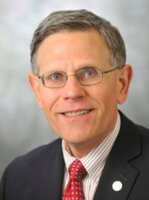
Kelvin K Droegemeier is a Professor of Atmospheric Science and Special Advisor to the Chancellor for Science and Policy at the University of Illinois at Urbana-Champaign. He previously served as the Regent’s Professor of Meteorology, Weathernews Chair Emeritus, and Roger and Sherry Teigen Presidential Professor at the University of Oklahoma, where he was a faculty member from 1985 to 2023. His leadership roles include serving as the university’s vice president for research from 2009 to 2018 and founding and directing the Sasaki Institute for five years, which focused on developing and applying knowledge, policy, and advanced technology for societal impact. Droegemeier’s research areas include satellite and radar remote sensing, thunderstorm dynamics and hazards, and weather and climate risk. He has held prominent federal science and policy leadership positions, including serving on the National Science Board from 2004 to 2016, acting as vice chair, directing the White House Office of Science and Technology Policy from 2019 to 2021, and serving as acting director of the National Science Foundation in 2020. At the state level, he was appointed to the Oklahoma Governor’s Science and Technology Council and served as Cabinet Secretary of Science and Technology. He is a fellow of both the American Meteorological Society and the American Association for the Advancement of Science.
Research topics
- Computer Science
- Business
- Medical physics
- Meteorology
- Philosophy
- Literature
- Finance
- Geography
- Medical education
- Environmental science
- Psychology
- Art
- Oncology
- Medicine
- Internal medicine
Selected publications
Weather Climate and Society · 2026-04-03
articleSenior authorAbstract Floodplain communities face persistent and compounding challenges as climate change and urban development increase the frequency and severity of flooding events. This case study examines how residents living near the Shunganunga Creek floodplain in Topeka, Kansas, perceive recurring flood risks and respond to current communication strategies. Using 11 semi-structured interviews analyzed through reflexive thematic analysis, we identified four major themes shaping risk perception: socioeconomic inequities, proximity and lived experience, competing hazards, and community dynamics. We then applied Protection Motivation Theory to evaluate how threat and coping appraisals shape residents’ ability and willingness to take protective action. Findings reveal that residents often recognize flood risk but lack confidence in their ability to respond effectively, citing financial, informational, and emotional barriers. We argue that existing flood messaging, such as the “Turn Around, Don’t Drown®” campaign, does not adequately address the realities of highly vulnerable floodplain populations. We recommend community-driven, locally tailored communication that builds trust, strengthens coping efficacy, and leverages existing social networks to enhance preparedness. These insights offer practical pathways for refining flood risk communication in urban floodplains and emphasize the broader need for communication strategies that adapt to evolving climate risks.
2025-07-24
preprintOpen accessSenior authorIn communities like those near Topeka’s Shunganunga Creek, where flooding is a frequent and expected part of life, risk communication must adapt to meet the unique circumstances of residents. To understand how people in this floodplain perceive risk and respond to flood warnings, we interviewed 11 residents, guided by principles from Protection Motivation Theory. Participants, including long-time community members and local educators, shared how they perceive risk messages and make protective decisions during flood events. We identified key communication barriers through qualitative thematic analysis, including distrust of official sources, accessibility issues, and reliance on social networks for information. Our study highlights that official warnings emphasize scientific accuracy but do not always align with how at-risk populations interpret and respond to risk. Traditional top-down communication strategies often struggle to account for the localized needs of communities, leading to disregard and inaction from residents. We recommend tailoring flood risk communication to be clear and relatable, addressing the unique circumstances of floodplain communities. Shifting toward community-centered outreach, incorporating trusted local figures, assistance information, and cultural relevance will strengthen resilience against future flooding in a changing climate.
Learning Climate Sensitivity from Future Observations, Fast and Slow
ArXiv.org · 2025-07-21
articleOpen accessSenior authorClimate sensitivity has remained stubbornly uncertain since the Charney Report was published some 45 years ago. Two factors in future climate projections could alter this dilemma: (i) an increased ratio of CO$_2$ forcing relative to aerosol cooling, owing to both continued accumulation of CO$_2$ and declining aerosol emissions, and (ii) a warming world, whereby CO$_2$-induced warming becomes more pronounced relative to climate variability. Here, we develop a novel modeling approach to explore the rates of learning about equilibrium climate sensitivity and the transient climate response (TCR) and identify the physical drivers underpinning these learning rates. Our approach has the advantage over past work by accounting for the full spectrum of parameter uncertainties and covariances, while also taking into account serially correlated internal climate variability. Moreover, we provide a physical explanation of how quickly we may hope to learn about climate sensitivity. We find that, although we are able to constrain future TCR regardless of the true underlying value, constraining ECS is more difficult, with low values of ECS being more easily ascertained than high values. This asymmetry can be explained by most of the warming this century being attributable to the fast climate mode, which is more useful for constraining TCR than it is for ECS. We further show that our inability to constrain the deep ocean response is what limits our ability to learn high values of ECS.
Philosophical Transactions of the Royal Society A Mathematical Physical and Engineering Sciences · 2025-12-11
articleOpen access1st authorCorrespondingJournal of the American Society of Nephrology · 2025-12-17
articleOpen accessSenior authorElsevier eBooks · 2024-01-01 · 2 citations
book-chapterSenior authorCorrespondingDemystifying the Academic Research Enterprise
The MIT Press eBooks · 2023-06-29
bookOpen access1st authorCorrespondingWhat next-generation scholars need to know in order to thrive, and how they can actively participate in shaping the academic research enterprise. The academic research enterprise is highly complex, involving multiple sectors of society and a vast array of approaches. In Demystifying the Academic Research Enterprise, Kelvin K. Droegemeier shows next-generation scholars across all disciplines how to become more productive earlier in their career, as well as how to help shape the academic research enterprise. The topics covered include public perceptions of scholarly work and its use in policy; understanding the big picture of funding and national priorities as well as identifying funding sources; research methods; collecting data and materials; writing grant proposals; publishing results; ethical conduct; bias and peer review; intellectual property and compliance regulations; partnerships and collaboration; diversity, equity, and inclusion; and the future of research. Droegemeier's two principal goals are to enhance and accelerate scholars' understanding of the academic research process and to democratize that understanding, particularly at institutions that traditionally are underrepresented or lack robust resources. While intended for undergraduate and graduate students, postdoctoral scholars, and early career faculty, Demystifying the Academic Research Enterprise is also relevant to mid-career and senior faculty, research administrators, funding organizations, congressional staff, policymakers, and the general public. Droegemeier places scholars in a broader national and international context—not as passive recipients of the existing system but as key actors who actively participate in helping to set priorities, determine policies, drive systemic change, and advance knowledge.
The MIT Press eBooks · 2023
1st authorCorresponding- Philosophy
- Art
- Literature
Bulletin of the American Meteorological Society · 2022
1st authorCorresponding- Meteorology
- Business
- Environmental science
Predictive Radiation Oncology – A New NCI–DOE Scientific Space and Community
Radiation Research · 2022 · 8 citations
- Computer Science
- Medical education
- Medical physics
With a widely attended virtual kickoff event on January 29, 2021, the National Cancer Institute (NCI) and the Department of Energy (DOE) launched a series of 4 interactive, interdisciplinary workshops-and a final concluding "World Café" on March 29, 2021-focused on advancing computational approaches for predictive oncology in the clinical and research domains of radiation oncology. These events reflect 3,870 human hours of virtual engagement with representation from 8 DOE national laboratories and the Frederick National Laboratory for Cancer Research (FNL), 4 research institutes, 5 cancer centers, 17 medical schools and teaching hospitals, 5 companies, 5 federal agencies, 3 research centers, and 27 universities. Here we summarize the workshops by first describing the background for the workshops. Participants identified twelve key questions-and collaborative parallel ideas-as the focus of work going forward to advance the field. These were then used to define short-term and longer-term "Blue Sky" goals. In addition, the group determined key success factors for predictive oncology in the context of radiation oncology, if not the future of all of medicine. These are: cross-discipline collaboration, targeted talent development, development of mechanistic mathematical and computational models and tools, and access to high-quality multiscale data that bridges mechanisms to phenotype. The workshop participants reported feeling energized and highly motivated to pursue next steps together to address the unmet needs in radiation oncology specifically and in cancer research generally and that NCI and DOE project goals align at the convergence of radiation therapy and advanced computing.
Frequent coauthors
- 63 shared
Ming Xue
- 46 shared
Keith Brewster
University of Oklahoma
- 40 shared
Jerald A. Brotzge
Western Kentucky University
- 39 shared
Frederick H. Carr
University of Oklahoma
- 38 shared
James F. Kurose
University of Massachusetts Amherst
- 37 shared
Sandra Cruz-Pol
- 37 shared
Brenda Philips
University of Massachusetts Amherst
- 36 shared
Stephen J. Frasier
University of Massachusetts Amherst
Labs
Education
- 1985
Ph.D. in Atmospheric Science
University of Illinois Urbana-Champaign
- 1982
M.S. in Atmospheric Science
University of Illinois Urbana-Champaign
- 1980
B.S. in Meteorology with Special Distinction
University of Oklahoma
Awards & honors
- Fellow of the American Meteorological Society
- Fellow of the American Association for the Advancement of Sc…
- Resume-aware match score
- Save to shortlist
- AI-drafted outreach
See your match with Kelvin K Droegemeier
PhdFit ranks faculty by your research interests, methods, and publications — grounded in their actual work, not templates.
- Free to start
- No credit card
- 30-second signup