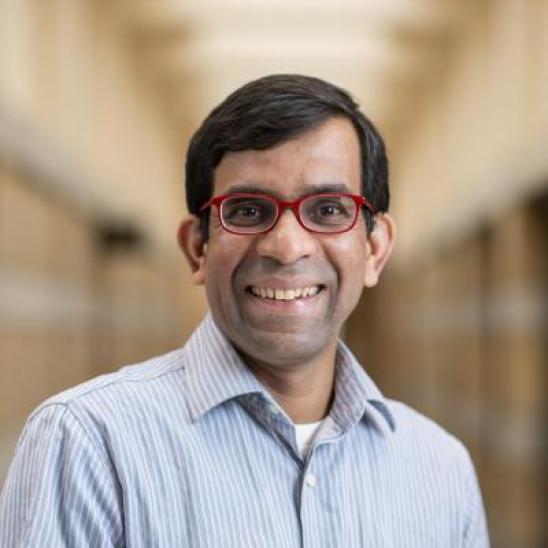
Kaushik Sunder Rajan
· Professor of Anthropology and of Social Sciences in the College; Co-Director, Chicago Center for Contemporary TheoryUniversity of Chicago · Social Policy and Social Services
Active 2003–2025
About
Kaushik Sunder Rajan is a Professor of Anthropology and of Social Sciences in the College at the University of Chicago, with a PhD from the Massachusetts Institute of Technology obtained in 2002. His work lies at the intersection of Medical Anthropology and Science and Technology Studies (STS), with commitments to social theories of capitalism and postcolonial studies. His research explores the nature of scientific knowledge, practice, and institutionalization, as well as political economic structures operating across multiple scales through ethnography, and the theorization of contemporary capitalism. Rajan's scholarly contributions include three major books. His first book, 'Biocapital: The Constitution of Postgenomic Life' (2006), is a multi-sited ethnography of genomics and post-genomic drug development marketplaces in the United States and India. His second book, 'Pharmocracy: Knowledge, Value and Politics in Global Biomedicine' (2017), examines the political economy of global pharmaceuticals, focusing on India’s pharmaceutical politics following the harmonization of clinical trials and intellectual property regimes in the mid-2000s. His most recent book, 'Multisituated: Ethnography as Diasporic Praxis' (2021), considers ethnography as a diasporic praxis, emphasizing its potential as a situated practice of knowledge production, ethical engagement, and political intervention. Currently, Rajan's research project titled 'Just Health?: Constitutionalism and Postcolonial Dis-ease' investigates the politics of health in South Africa through the lens of constitutional law. He is also involved in a collaborative performance-based project called Pulmonographies, which explores a 'politics of breath' through modes of oppression, exploitation, and collectivization, engaging with protests, art, poetry, music, and legal rights in South Africa. His work consistently emphasizes the social and political dimensions of biomedical and biotechnological practices, contributing to debates on decolonization, ethnography, and the global political economy of health and science.
Research topics
- Computer Science
- Business
- Political Science
- Algorithm
- Embedded system
- Geography
- Neuroscience
- Medicine
- Economic growth
- Psychiatry
- Distributed computing
- Computer network
- Law
- Psychology
- Parallel computing
- Economics
- Public economics
- Linguistics
- Programming language
- Philosophy
- Operating system
Selected publications
A Reset for Bioethics: A Statement from the Global Observatory for Genome Editing
The CRISPR Journal · 2025-05-21 · 5 citations
articleHow should we govern our increasing power to intervene in the processes of life? Genome editing, especially of the human germline, has brought this question to the forefront of global debate. We must seek to rectify shortcomings of earlier deliberative approaches by setting aside a science-and-technology first approach; expanding the range of questions for deliberation; revisiting the distribution of innovation's benefits and risks; and reimagining the limits of research. This Perspective from the Organizing Committee of the 2025 Global Observatory for Genome Editing International Summit calls for a new social compact, recognizing and rendering accountable the constitutive role of science and technology in shaping the meaning of human life in the 21st century.
Scaling GPU-Accelerated Databases Beyond GPU Memory Size
Proceedings of the VLDB Endowment · 2025-07-01 · 2 citations
articleThere has been considerable interest in leveraging GPUs' computational power and high memory bandwidth for analytical database workloads. However, their limited memory capacity remains a fundamental limitation for databases whose sizes far exceed the GPU memory size. This challenge is exacerbated by the slow PCIe data transfer speed, that creates a bottleneck in overall system performance. In this work, we introduce a hybrid CPU-GPU query processing strategy that leverages the distinct strengths of CPU and GPU to alleviate the data transfer bottleneck. Our approach performs highly efficient data filtering on the CPU, which substantially reduces the volume of data transferred to the GPU via PCIe, and offloads compute-intensive operators such as joins to the GPU for further processing. Our evaluation on the TPC-H benchmark at scale factors up to 1000 (1TB), using a single A100 GPU with 80GB memory, demonstrates that our approach can effectively handle datasets significantly larger than the GPU memory size. Moreover, it substantially outperforms a state-of-the-art CPU-only database system in both performance and cost-effectiveness.
Biotechnologies in the World: On Global Asymmetries and the Need for Cosmopolitanism
The CRISPR Journal · 2025-05-21 · 2 citations
article1st authorCorrespondingConversations regarding genome editing are not simply about the transformative science involved. They touch upon fundamental moral questions concerning the human condition, indeed what it means to be human itself. The recent approval of a gene therapy for sickle cell disease encapsulates the relationship between scientific innovation and health care access and the relations of power and political economy that structure the world of biotech and biomedicine. Globally transformative biotechnologies must ethically situate themselves if they are not merely to reproduce longstanding historical and structural asymmetries. The time has come to embrace a cosmopolitan ethic that is attuned to the varied constitutionalisms through which debates about public good, healthy societies, and social compacts materialize around the world.
The CRISPR Journal · 2025-08-01
articleThe organizing committee of the 2025 Global Observatory for Genome Editing conference proposes a Charter on Emerging Technologies and Human Dignity. The development of this Charter is guided by four principles: (1) begin with questions of human dignity and the common good; (2) reconsider current innovation systems and the consequences for the distribution of benefits and risks; (3) expand the range of questions for deliberation; and (4) reimagine the limits of research.
SilvanForge: A Schedule-Guided Retargetable Compiler for Decision Tree Inference
2024-11-04 · 3 citations
articleOpen accessThe proliferation of machine learning together with the rapid evolution of the hardware ecosystem has led to a surge in the demand for model inference on a variety of hardware. Decision tree based models are the most popular models on tabular data. This paper is motivated by the problems encountered when targeting inference of these models to run at peak performance on CPU and GPU targets. Existing solutions are neither portable nor achieve the best possible performance for the specific hardware they target. This is because they do not explore and customize optimization configurations to the target processor and the model being used.
SSRN Electronic Journal · 2024-01-01 · 1 citations
preprintOpen access1st authorCorrespondingTreebeard: An Optimizing Compiler for Decision Tree Based ML Inference
2022-10-01 · 6 citations
articleOpen accessDecision tree ensembles are among the most commonly used machine learning models. These models are used in a wide range of applications and are deployed at scale. Decision tree ensemble inference is usually performed with libraries such as XGBoost, LightGBM, and Sklearn. These libraries incorporate a fixed set of optimizations for the hardware targets they support. However, maintaining these optimizations is prohibitively expensive with the evolution of hardware. Further, they do not specialize the inference code to the model being used, leaving significant performance on the table. This paper presents TREEBEARD, an optimizing compiler that progressively lowers the inference computation to optimized CPU code through multiple intermediate abstractions. By applying model-specific optimizations at the higher levels, tree walk optimizations at the middle level, and machine-specific optimizations lower down, TREEBEARD can specialize inference code for each model on each supported CPU target. TREEBEARD combines several novel optimizations at various abstraction levels to mitigate architectural bottlenecks and enable SIMD vectorization of tree walks. We implement TREEBEARD using the MLIR compiler infrastructure and demonstrate its utility by evaluating it on a diverse set of benchmarks. TREEBEARD is significantly faster than state-of-the-art systems, XGBoost, Treelite and Hummingbird, by 2.6×, 4.7× and 5.4× respectively in a single-core execution setting, and by 2.3×, 2.7× and 14× respectively in multi-core settings.
New query optimization techniques in the Spark engine of Azure synapse
Proceedings of the VLDB Endowment · 2021 · 13 citations
- Computer Science
- Computer Science
- Parallel computing
The cost of big-data query execution is dominated by stateful operators. These include sort and hash-aggregate that typically materialize intermediate data in memory, and exchange that materializes data to disk and transfers data over the network. In this paper we focus on several query optimization techniques that reduce the cost of these operators. First, we introduce a novel exchange placement algorithm that improves the state-of-the-art and significantly reduces the amount of data exchanged. The algorithm simultaneously minimizes the number of exchanges required and maximizes computation reuse via multi-consumer exchanges. Second, we introduce three partial push-down optimizations that push down partial computation derived from existing operators ( group-bys , intersections and joins ) below these stateful operators. While these optimizations are generically applicable we find that two of these optimizations ( partial aggregate and partial semi-join push-down ) are only beneficial in the scale-out setting where exchanges are a bottleneck. We propose novel extensions to existing literature to perform more aggressive partial push-downs than the state-of-the-art and also specialize them to the big-data setting. Finally we propose peephole optimizations that specialize the implementation of stateful operators to their input parameters. All our optimizations are implemented in the spark engine that powers azure synapse. We evaluate their impact on TPCDS and demonstrate that they make our engine 1.8X faster than Apache Spark 3.0.1.
2021-09-27 · 2 citations
book1st authorCorrespondingIn Multisituated Kaushik Sunder Rajan evaluates the promises and potentials of multisited ethnography with regard to contemporary debates around decolonizing anthropology and the university. He observes that at the current moment, anthropology is increasingly peopled by diasporic students and researchers, all of whom are accountable to multiple communities beyond the discipline. In this light, Sunder Rajan draws on his pedagogical experience and dialogues to reconceptualize ethnography as a multisituated practice of knowledge production, ethical interlocution, and political intervention. Such a multisituated ethnography responds to contemporary anthropology's myriad commitments as it privileges attention to questions of scale, comparison, and the politics of ethnographic encounters. Foregrounding the conditions of possibility and difficulty for those doing and teaching ethnography in the twenty-first-century, Sunder Rajan gestures toward an ethos and praxis of ethnography that would open new forms of engagement and research
Making valuable health: pharmaceuticals, global capital and alternative political economies
BioSocieties · 2021 · 13 citations
Senior authorCorresponding- Political Science
- Business
- Economics
Frequent coauthors
- 11 shared
R. Govindarajan
Indian Institute of Science Bangalore
- 10 shared
Robert D. Truog
Harvard University
- 10 shared
Laurence Lwoff
Conseil de L'Europe
- 9 shared
Rudolf Jaenisch
Whitehead Institute for Biomedical Research
- 7 shared
Christiane Woopen
Life & Brain (Germany)
- 5 shared
George M. Church
Harvard–MIT Division of Health Sciences and Technology
- 5 shared
Jacob Moses
The University of Texas Medical Branch at Galveston
- 5 shared
Peter Mills
- Resume-aware match score
- Save to shortlist
- AI-drafted outreach
See your match with Kaushik Sunder Rajan
PhdFit ranks faculty by your research interests, methods, and publications — grounded in their actual work, not templates.
- Free to start
- No credit card
- 30-second signup