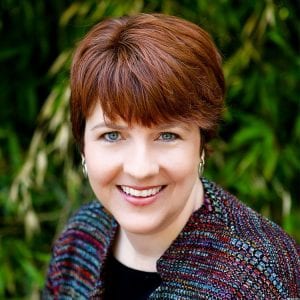
Kathryn Frank
· Associate ProfessorVerifiedUniversity of Florida · Historic Preservation
Active 1954–2025
About
Kathryn Frank is a professor at the UF College of Design, Construction and Planning. Her research focuses on design, construction, and planning within the built environment. She has contributed to the field through her work on various aspects of construction and design, emphasizing the importance of integrating design principles with construction practices. Her background includes extensive experience in the areas of construction and design, and she has been involved in academic and professional initiatives that promote innovation and excellence in these fields. Kathryn Frank's work is characterized by a commitment to advancing knowledge in construction and design, with a particular emphasis on the integration of technology and sustainable practices in the built environment.
Research topics
- Political Science
- Sociology
- Computer Science
- Geography
- Archaeology
- Economics
- Economic growth
- Ecology
- History
- Civil engineering
- Engineering
- Environmental planning
- Geology
- Law
- Biology
- Economic geography
- Economic system
Selected publications
Journal of the American Geriatrics Society · 2025-08-30
articleOpen accessMedical schools are being urged to incorporate dementia content in the foundational years of medical education providing students with a more comprehensive picture of what is required to care for adults who have dementia [1]. We developed, implemented, and evaluated a person-centered session on dementia for first year medical students. The goal of the session was for medical students to see the range of functionality of older adults who have dementia and recognize how to appropriately interact with both older adult and caregiver. During the first 30 min of the 90-min session medical students interviewed a Council of Caregivers (CoC) followed by a 60-min implementation of the Dementia Friends Indiana (DFI) curriculum. The CoC is a panel of three current or former caregivers of a parent or spouse who had dementia and was adapted from our prior work with a “Council of Elders (CoE)” session [2]. The DFI portion of the session was adapted from the world-wide DF. The overarching goal of DF training, regardless of where it is implemented, is for participants to recognize dementia is not a normal aspect of aging [3]. DFI includes a PowerPoint presentation with a video embedded in showing an interview of three older adults who, despite having dementia, have a good quality of life. In 2021, the Indiana Geriatrics Education and Training Center (I-GETC) at Indiana University School of Medicine (IUSM) partnered with the Central Indiana Council on Aging and in Home Solutions (CICOA), the largest Area Agency on Aging in our state, to develop a new dementia session for first-year medical students. IUSM is the largest allopathic medical school in the United States, with nine decentralized campuses. The new dementia session was one of 12 elective offerings during a required course, The Foundations of Clinical Practice, designed for medical students to develop clinical skills and explore the impact of psychosocial factors on health and disease. Attendance for the session was in person for the largest IUSM campus, with virtual attendance by students at other campuses. For the first part of the session voluntary CoC members recommended by CICOA were in varying stages or roles along their caregiving journey (e.g., a millennial whose parent was deceased and a spouse actively caregiving). The CoC was prepared for the session during a 1-h training by the geriatrician who facilitated the CoC session. The geriatrician has expertise in group facilitation. During the session, students generally asked the CoC sample questions we provided to assist them in generating their own questions. For the second part of the session, the Director of DFI from CICOA conducted the interactive DFI training as a large group activity including all medical student participants [3]. Afterward, students broke into small groups with other DFI-trained facilitators for 10 min to ask questions and voice observations. The large group reconvened for brief closing remarks and to complete the post survey. The survey consisted of both Likert scale and open-ended questions. It assessed whether students found value in the session, recognized the importance of a geriatrics session in their curriculum and planned to use what they learned personally or professionally. For example, one open ended question was “What did participating in this session mean to you?” Using the qualitative description method to provide low inference, rich, and accurate description, these questions were independently evaluated by two authors (G.R.W. and S.E.R.) [4]. The dementia session has been delivered annually for two consecutive years. A total of 327 medical students attended a session. Although there are nine IUSM campuses, students from only five campuses (136 in 2021 and 191 in 2022) elected to participate in the dementia session, and among those, students from three campuses elected to complete the survey. The total survey response rate was 201 (53% (72) in 2021 and 66% (129) in 2022). Among the number of students who completed the survey from both years, 170 students (85%) saw value in requiring attendance at the dementia session. Responses to Likert-style questions were largely favorable (see Figure 1). When analyzing the open-ended question, “What did participating in this session mean to you?” the authors (G.R.W. and K.I.F.) met twice to discuss, identify, and agree on major themes [4]. They achieved 97% agreement on categorizing the comments independently and, with further discussion, reached 100% agreement. Four unique themes were identified when analyzing the open-ended question, “What did participating in this session mean to you?”: (1) Professional value of the Session for becoming a future doctor; (2) Personal connection to the Session because of a family member having dementia; (3) New perspective and/or better understanding of dementia; and (4) Challenges of caregiving and/or navigating the health care system for individuals with dementia. We developed, implemented, and evaluated a person-centered dementia session for first-year medical students for two consecutive years that included a CoC and DFI. Medical students uniformly found the session valuable and generally recommended it should be a required component of medical student education. Most medical students responded to an open-ended prompt with comments that they found both the CoC and DFI portions to be informative. Student comments were positive about providing care as future doctors for persons with dementia and personal connections with grandparents with the disease. We will continue implementing this session and work with the course director to increase student attendance at the session. There were limitations identified. First, students who attended the session were interested in an older adult curriculum, potentially skewing our findings toward more positive results. Second, we received less than 70% completion of our evaluations. Finally, we have not assessed the long-term impact of the session, or was a validated tool to assess knowledge and attitudes included. In future iterations, implementing validated assessments of knowledge and attitude should be considered. The dementia session provides a promising model for medical student dementia education that can be replicated. We will use student feedback to improve the quality of this person-centered approach, with the goal of making the session a required component of medical students' first year of training. The author contributions can be categorized as the following. Substantial contributions to conception and design, or acquisition of data, or analysis and interpretation of data: Glenda R. Westmoreland, Kathryn I. Frank, Michael Dustin Ziegler, Melinda Winnie, Emilie L. Garrison, Sarah E. Roth, and Debra K. Litzelman. Drafting the article or revising it critically for important intellectual content: Glenda R. Westmoreland, Kathryn I. Frank, Emilie L. Garrison, Sarah E. Roth, and Debra K. Litzelman. Final approval of the version to be published: Glenda R. Westmoreland, Kathryn I. Frank, Michael Dustin Ziegler, Melinda Winnie, Emilie L. Garrison, Sarah E. Roth, and Debra K. Litzelman. This publication is supported by the Health Resources and Services Administration (HRSA) of the U.S. Department of Health and Human Services (HHS) as part of an award totaling $4,083,767 with zero percentage financed with non-governmental sources. The contents are those of the author(s) and do not necessarily represent the official views of, nor an endorsement, by HRSA, HHS or the U.S. Government. The authors declare no conflicts of interest.
Town Planning Review · 2025-08-26
article1st authorCorrespondingJournal of the American Geriatrics Society · 2025-10-04 · 1 citations
articleOpen accessOBJECTIVES: The primary purpose of the present study was the implementation and evaluation of the ABC Community program, a community-based and telephonically administered version of the Aging Brain Care model delivered by Area Agencies on Aging (AAAs) staff. DESIGN: This study employed a prospective pre-post implementation design with pre-specified effectiveness and fidelity goals, with the main outcome measure being the total score of the Health Aging Brain Care (HABC) Monitor at 3- and 6-month follow-up. The HABC Monitor has demonstrated excellent reliability and validity in monitoring and measuring the burden of dementia symptoms and the quality of life and stress of the informal caregivers. RESULTS: The program served 422 Medicaid Home and Community-Based Services participants living with dementia and their caregivers. Participants' mean age was 78 years, with 67% identifying as female and 30% as belonging to minority groups, including 6% Hispanic or Latino and 28% Black or African American. In comparison to baseline, the total score of the HABC Monitor decreased from 24.6 to 15.4 at 6 months, representing a 37% reduction with an effect size of 0.64 standard deviation (p value < 0.001). Approximately 46% of informal caregivers who had at least mild burden at baseline had no such burden at 6 months, and 92% of those who had no stress at baseline remained burden-free at 6 months. CONCLUSION: The ABC community program might be a scalable collaborative dementia care model targeting socially vulnerable people living with dementia.
What Happened to Rural Community and Regional Development? The Evolution of a Planning Idea
Journal of Planning History · 2024-07-26 · 1 citations
articleSenior authorAt the beginning of the profession in the early 1900s, planning considered uniquely rural places and communities through the lens of regionalism. Yet today it tends to regard all spatiality as part of the urban environment and non-city-dwellers as part of the urban population. To understand this shift, we examine the history of rural regional development planning over the past century up to the Great Recession. We then apply the lessons to consider what a 21st century reinvention of rural planning might entail, particularly the possible recovery of the comprehensive, reformist approach.
Journal of the American Geriatrics Society · 2024-07-23 · 3 citations
letterOpen accessOn September 1, 2023, the Centers for Medicare and Medicaid Services (CMS) released new guidelines for staffing long-term care (LTC) in the U.S. responding to the Executive order from President Biden. The order requires improvement in the quality of care for 1.2 million residents of LTC facilities, most of whom are older adults.1 These guidelines mandate in-facility presence of registered nurses round-the-clock, seven-days-a-week and enhanced presence of nurse's aides who have training to meet the complex care needs of LTC residents.1 Expanding the currently inadequate nursing workforce in LTC is critical. Comprehensive review of the literature found that including geriatrics and LTC content in undergraduate nursing students' curriculum through clinical placements effectively enhanced their competence in these content areas.2 We developed a new geriatrics curriculum for Bachelor of Nursing Students (BSN) that included content as the 4Ms of Age Friendly Care coupled with LTC content.3 Learners completed the multi-modal curriculum, which included an online component, at their own pace. In the absence of real patients through clinical placements, interacting with standardized patients (SPs) is another actionable teaching model. Research by the National Council for the State Boards of Nursing found that replacing traditional clinical hours with high-fidelity simulated experiences are effective in nursing curriculum.4 After completing our multi-modal curriculum, learners applied the content using virtual SPs. Our program is the first of its kind where use of "virtual SPs" means the SPs were live, but students were interacting with them through a virtual platform. After the interaction students received feedback from the SP and a faculty member who was also observing the interaction through Zoom. Our new curriculum used multiple modalities including locally and nationally developed web modules on geriatrics topics, myths of aging, advanced care planning, and LTC and videos on dementia and the 4Ms. Students completed the roughly 10-h curriculum at their own pace. Our objectives focused on students defining the 4Ms, applying them to a LTC population, and having exposure to LTC as a potential new career option. Student evaluation included: (1) pre- and post-knowledge assessment (using the Alzheimer's Disease Knowledge Scale and web-based module questions); (2) attitude assessment (using the Kogan's Attitude Toward Older People Scale and the Four-Domain Sense of Competence in Dementia Care Staff); and (3) skills using four virtual standardized patient scenarios developed by the investigators. Investigators trained SPs on the scenarios. Training was repeated until 80% agreement on checklist completion between the SP and the investigator was achieved. Students were given 20 min to interact with the SPs per scenario, followed by 10 min of feedback provided by both the SP and the faculty observer. Comparing percentage completion of instructional materials and performance on the SP checklists, students who completed more than 50% of their assignments scored higher on the SP checklists and post-tests on all web-based modules compared with those who completed less than 50% of the assignments (66% vs 53% average score, p = 0.02). Students uniformly rated their instruction on the LTC curriculum as positive and their interactions with SPs as helpful and informative. Although 20 nursing students entered our program, not all 20 completed every module and survey. We suspect the low completion rate was because the curriculum was implemented during the students' final semester and was not a graduation requirement. Student knowledge was assessed by comparing pre- and post-test Knowledge Assessment Scores for each individual student using paired t-tests. Table 1 shows significant differences between mean pre- and post-test scores. For the Kogan's Attitude Toward Older People Scale, 13 students completed both the pre- and post-surveys. Assessing the mean and standard deviation for individual students, there was no significant difference between the pre- and post-Kogan surveys (p = 0.12). However, in the analyses of Kogan subscales for positively focused versus negatively focused items, students showed marginal improvement on positively worded items (p = 0.05) with no significant change on negatively focused items (p = 0.73). Similarly, eight students completed both the pre- and post- Alzheimer Disease Knowledge surveys of which there was no significant difference (p = 0.53). For the Four-Domain Sense of Competence in Dementia Care Staff, there was a significant difference between the pre- and the post- (n = 8) scores for three of the four domains (Building Relationships, Care Challenges, and Sustaining Personhood), (p = 0.05), with no significant difference in the Professionalism domain (p = 0.13). The Biden Administration in late 2023 issued an Executive order taking steps to improve the quality of care in LTC facilities through increasing staffing time provided by nurses and nurse's aides. This legislation will result in the need to train more nursing professionals to provide care. According to Miller et al., the declining quality of care in LTC due to staffing shortages is partially a result of the pandemic. We piloted a new curriculum which is multi-modal in both instruction (e.g., online learning and virtual SPs) and assessment. According to Tirola et al., virtual SPs are especially valuable during personnel and resources shortages. Our pilot shows promise in providing instruction on geriatric content and LTC. We found significant difference between the pre- and post-scores for all the web-based modules and a marginally significant improvement in positively focused items on the Attitude Toward Older People survey. There was no significant difference between individual pre- and post-Alzheimer's disease knowledge scores and the Professionalism Domain on the Sense of Competence in Dementia Care Staff. Although low number of students and completion rate of attitude surveys are limitations of our study, piloting innovative curriculum about LTC care for nursing students are essential given the rapidly increasing U.S. aging population. We found coupling online educational modalities with virtual SPs showed promising results for BSN education and deserves further evaluation. Students' responses indicated the web-based content was helpful both for providing instruction and feedback. Multi-modal teaching strategies and assessment methods are essential to increase the nursing workforce in an attempt to meet staffing demands in LTC facilities. Glenda R. Westmoreland: Substantial contributions to conception and design, or acquisition of data, or analysis and interpretation of data; drafting the article or revising it critically for important intellectual content; final approval of the version to be published. Kathryn I. Frank: Substantial contributions to conception and design, or acquisition of data, or analysis and interpretation of data; drafting the article or revising it critically for important intellectual content; final approval of the version to be published. Emilie L. Garrison: Substantial contributions to conception and design, or acquisition of data, or analysis and interpretation of data; drafting the article or revising it critically for important intellectual content; final approval of the version to be published. Qing Tang: Substantial contributions to conception and design, or acquisition of data, or analysis and interpretation of data; drafting the article or revising it critically for important intellectual content; final approval of the version to be published. Julia Loubeau: Substantial contributions to conception and design, or acquisition of data, or analysis and interpretation of data; final approval of the version to be published. Julie Krieger: Substantial contributions to conception and design, or acquisition of data, or analysis and interpretation of data; final approval of the version to be published. Sarah Hartman: Substantial contributions to conception and design, or acquisition of data, or analysis and interpretation of data; final approval of the version to be published. Sarah Roth: Aquisition of data, or analysis and interpretation of data; draft the article or revising it critically for important intellectual content; final approval of the version to be published. Debra K. Litzelman: Substantial contributions to conception and design, or acquisition of data, or analysis and interpretation of data; drafting the article or revising it critically for important intellectual content; final approval of the version to be published. No authors have a conflict of interest to report. This publication is supported by the Health Resources and Services Administration (HRSA) of the U.S. Department of Health and Human Services (HHS) as part of an award totaling $4,083,767 with zero percentage financed with non-governmental sources. The contents are those of the author(s) and do not necessarily represent the official views of, nor an endorsement, by HRSA, HHS or the U.S. Government.
2024-01-01
book-chapterSenior authorJournal of Interprofessional Care · 2023-01-04 · 2 citations
articleThe Indiana Geriatrics Workforce Enhancement Program (GWEP) implemented a new longitudinal geriatrics curriculum for advanced practice registered nurse (APRN) and master of social work (MSW) learners to prepare them for interprofessional collaborative practice in the care of older adults. This paper reports program outcomes of a novel longitudinal interprofessional geriatrics curriculum involving immersive learning for these learners. Outcomes are described in terms of learner reaction, modification of attitudes/perceptions, acquisition of knowledge/skills, behavior change, impact on the organization, and impact on the patient or client using the Freeth/Kirkpatrick evaluation model. Program participation influenced graduates' knowledge of and their perceived ability to participate in team care and job selection in geriatric-focused positions.
<i>TVA and the Grass Roots</i> at 75: The Legacy of a Planning Classic
Journal of Planning Literature · 2023-07-18 · 1 citations
articleSenior authorPlanning struggles with the tension between professional expertise and public voice. The approaching 75th anniversary of Philip Selznick's classic, TVA and the Grass Roots, is an apt time to revisit that tension. In Selznick's analysis, Tennessee Valley Authority (TVA) was a modernist institution aligning with local agricultural elites at the expense of vulnerable Black and poor farmers. He coined the term ‘informal co-optation’ to characterize TVA's affiliation with the powerful. We bring renewed attention to informal co-optation and the institutional aspects of engagement by examining how Selznick's analysis was received contemporaneously, and then considering recent scholarship and the current implications of Selznick's work.
Planning Theory & Practice · 2022-10-20 · 1 citations
articleSenior authorThe recent cultural turn in planning has had important influences across the globe. However, insufficient attention has been given to one of the most interesting aspects of the planning-culture nexus, the potential of planning in integrating the social life of regions. That approach, termed cultural regionalism, shaped thinking about regional planning in the U.S. in the 1920s and ‘30 s, but had essentially disappeared by the 1950s. We explore cultural regionalism through a review of the work of Howard W. Odum and his colleagues and then consider how contemporary planning might benefit from exposure to it.
Nurse Educator · 2022-05-03 · 6 citations
articleOpen accessBACKGROUND: The care of older adults with complex medical conditions requires effective team-based care. PROBLEM: Nursing and social work students need a curriculum that provides them with immersive experiences in geriatrics to prepare them for competent practice. APPROACH: This Geriatric Workforce Enhancement Program supported 5 advanced practice nursing (APN) and 5 master of social work (MSW) student fellows in a 2-semester program, with 3 cohorts completing the fellowship over 3 years (N = 30). OUTCOMES: By the completion of the fellowship, students had (1) demonstrated increased knowledge of age-related changes and health problems experienced by older adults, (2) developed clinical competencies in providing patient-centered health care for older adults, and (3) assessed the fellowship as helpful in preparing for interprofessional team care. CONCLUSIONS: An interprofessional gerontology fellowship for APN and MSW students can develop knowledge and skills in team-based care for older adults. Recommendations for creating a fellowship curriculum are provided.
Frequent coauthors
- 29 shared
Debra K. Litzelman
University School
- 18 shared
Steven R. Counsell
Indiana University – Purdue University Indianapolis
- 13 shared
Emilie Garrison
Arcadia University
- 13 shared
Dawn Butler
Indiana University – Purdue University Indianapolis
- 12 shared
Na Bo
- 12 shared
Yan Tong
- 10 shared
Michael Hibbard
University of Oregon
- 9 shared
Glenda R. Westmoreland
Indiana University School of Medicine
Education
BSN, MSN, PhD
Indiana University School of Nursing
- Resume-aware match score
- Save to shortlist
- AI-drafted outreach
See your match with Kathryn Frank
PhdFit ranks faculty by your research interests, methods, and publications — grounded in their actual work, not templates.
- Free to start
- No credit card
- 30-second signup