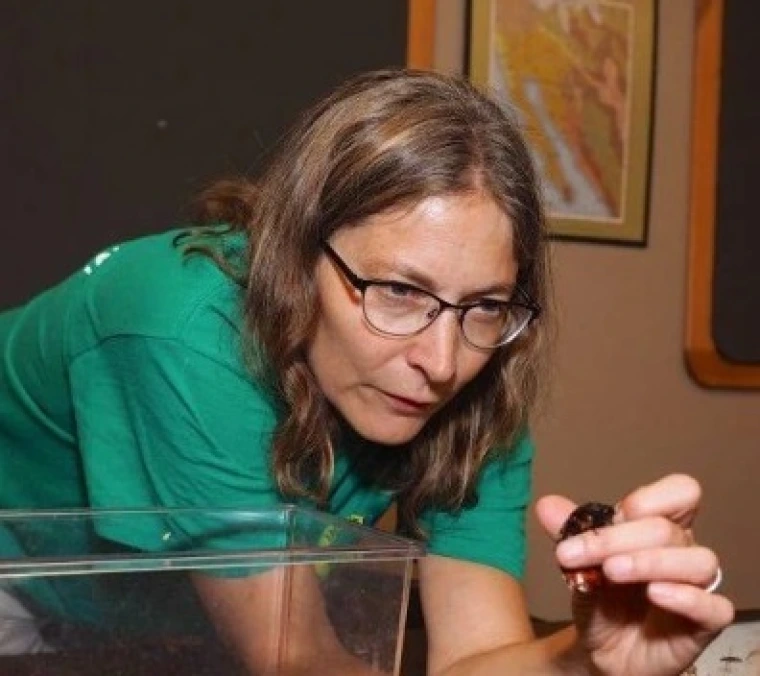
Kathleen Walker
· Associate Professor, Entomology Associate SpecialistUniversity of Arizona · Entomology
Active 1913–2026
About
Kathleen Walker is an Associate Professor and Associate Specialist in the Department of Entomology at the University of Arizona. Her research focuses on the ecology of mosquito vectors of human diseases, particularly Aedes aegypti, which is one of the main vectors of dengue fever around the world. She is involved in the Insect Discovery Outreach Program and contributes to the university's efforts to build sustainable relationships with Indigenous communities, including the O’odham and the Yaqui tribes in Tucson.
Research topics
- Computer Science
- Ecology
- Artificial Intelligence
- Biology
- Virology
- Zoology
- Genetics
- Statistics
- Business
- Knowledge management
- Data science
- Immunology
- Process management
- Risk analysis (engineering)
Selected publications
Journal of Medical Entomology · 2026-01-20
articleOpen accessRhipicephalus sanguineus (Latreille) is a species complex of ticks that are important vectors of many diseases to humans and other animals. In Arizona, the ranges of the 2 primary genetic variants-the temperate and the tropical lineages-overlap. The temperate and tropical lineages of R. sanguineus s.l. have divergent strains of the obligate Coxiella-like endosymbiont; however, it is unknown whether the microbiomes of the temperate and tropical lineages are otherwise different. There is growing evidence that non-pathogenic bacteria may be important components of vector-borne disease dynamics, even at low abundance. This research utilized a blocking primer to prevent sequencing of Coxiella to enable a closer examination of bacterial community structure of R. sanguineus s.l. ticks in Arizona. There were many commonalities among bacterial genera found within R. sanguineus s.l. ticks across the state, but no clear distinctions in bacterial community composition based on lineage, sex, female engorgement level, or collection location. Keywords: acarology, insect-symbiont interaction, microbiology, medical entomology.
Public Health Communication and Trust: Opportunities for Understanding
Journal of Health Communication · 2025-03-28 · 8 citations
articleOpen accessThe COVID-19 pandemic highlighted the importance of effective communication to build and strengthen public trust in the field of public health. To address this need, we conducted virtual qualitative message testing via focus groups and individual in-depth interviews with a demographically and psychographically diverse mix of 100 English-speaking U.S. adults in March and April 2024. Following best practices in health literacy and plain language, we developed and tested 20 primary messages that focused on core values of the public health field and public health activities. Throughout message testing, participants demonstrated an unexpectedly limited or inaccurate understanding of public health, which shaped their reactions to messages. Although participants expressed positive reactions to some aspects of messages that humanize public health professionals, reflect audiences' lived experiences, provide clear and specific examples of public health activities, and highlight public health efforts within a local context, their limited or inaccurate understanding of public health made it difficult to assess message efficacy and resonance. After participants reviewed the messages, researchers observed that participants exhibited negligible shifts in their trust in the public health field and perceptions of its value and still had trouble articulating core public health concepts. Findings reveal substantial information gaps related to public health - that is, what public health is, what public health professionals do, and how it impacts lives and communities - and provide new insights about public health literacy and opportunities for developing effective messaging strategies about the public health field.
Journal of Medical Entomology · 2025-07-02
articleSenior authorWest Nile virus (WNV) (Orthoflavivirus nilense) and Saint Louis encephalitis virus (SLEV) (Orthoflavivirus louisense) are transmitted by Culex quinquefasciatus Say and Culex tarsalis Coquillett in Maricopa County, Arizona, where a significant increase in the number of WNV cases was reported in 2021. We used data collected between 2014 and 2021 from a network of CO2-baited surveillance traps to assess whether particular land use categories may have contributed to this rise in WNV cases. For each vector species and year, we estimated the association between the areas of each of 10 land use categories neighboring the traps and vector abundance or the odds of detecting WNV or SLEV in females from the traps. Across years, the percentage of traps detecting WNV in each vector was positively associated with the number of reported WNV human cases. Positive associations between areas of the land use categories Single-Family Residential, Industrial, and Golf Course and the odds of detecting WNV only occurred in 2021, indicating that a greater occurrence of WNV in vectors from within these land use categories may have contributed to the rise in WNV human cases in 2021. Areas of the land use categories Golf Course and Vacant were consistently negatively associated with Cx. quinquefasciatus abundance and the odds of detecting SLEV. Agriculture was consistently positively associated with Cx. tarsalis abundance and the odds of detecting SLEV. By identifying land use categories that may have mediated arbovirus transmission at landscape scale, our results provide valuable information for developing targeted vector control strategies.
Journal of Medical Entomology · 2025-04-03
article1st authorCorrespondingAedes aegypti (L.), the primary mosquito vector of arboviruses such as dengue and Zika, has a global distribution that includes the southern United States. Control of this peridomestic mosquito is challenging. Ultra-low volume (ULV) pyrethroid sprays are commonly used against adult mosquitoes to break transmission during a disease outbreak, although efficacy data are limited. This study examined the impacts of ULV sprays on Ae. aegypti vectorial capacity as measured by vector abundance and age structure in two cities in Maricopa County, AZ with robust Ae. aegypti populations and a well-developed vector management program. We assessed impacts of routine ULV applications conducted by Maricopa Vector Control Division during the summer rainy seasons of 2017 to 2019 to determine whether existing practices mainly targeting Culex spp. also suppressed Ae. aegypti. The insecticide formulations applied for Culex spp. control (Duet and Permanone 30-30) did not affect Ae. aegypti abundance, but Duet applications slightly reduced female mosquito age. Deltagard, the insecticide product used specifically against Ae. aegypti, was only applied three times in 2018 over small areas, so efficacy assessment was difficult. Deltagard was associated with a small decline in Ae. aegypti abundance. CDC bottle bioassays of Ae. aegypti collected in the study area showed resistance to permethrin and deltamethrin. Overall, the lack of significant mosquito population suppression or age structure changes after insecticide applications suggest that current tools used by Maricopa Vector Control Division are unlikely to effectively control Ae. aegypti populations in the event of a disease outbreak.
Parasites & Vectors · 2025-08-27 · 1 citations
articleOpen accessBACKGROUND: Malaria remains a leading cause of mortality in Kenya, despite concerted efforts in malaria vector control. Reducing outdoor transmission is a key factor in addressing residual malaria. Outdoor latrines are characterized as semi-sheltered structures with humid environments, which may provide an ideal resting site for Anopheles species to feed on human blood and subsequently rest. This study aimed to quantify the abundance of adult mosquitoes in houses and outdoor latrines, as well as explore the environmental factors associated with mosquito abundance. METHODS: Monthly mosquito sampling was conducted in 50 houses and their corresponding outdoor latrines using Prokopack aspirators from July 2023 to April 2024. Household interviews were conducted concurrently to collect data on the number of individuals sleeping in the houses and the quantity of bednets used within the households. In addition, blood meal sources were identified through polymerase chain reaction (PCR) analysis of blood-fed mosquitoes collected from December 2023 to April 2024. RESULTS: Among anopheline species, the An. funestus group was the most common, followed by An. gambiae s.l. in both houses and latrines. In anophelines, the human blood index was 50.0% (n = 15) in houses and 33.3% (n = 4) in latrines, while bovine blood was 60.0% (n = 18) and 66.7% (n = 8), respectively. Ventilated improved pit (VIP) latrines were associated with a 61% decrease in An. gambiae s.l. abundance (adjusted incidence rate ratio [aIRR] = 0.39, 95% confidence interval [CI] = 0.16-0.96) and a 62% decrease in Culex quinquefasciatus abundance (aIRR = 0.38, 95% CI = 0.24-0.60), compared with pit latrines. The presence of a bathing space in latrines was associated with a 23% increase in Cx. quinquefasciatus abundance (aIRR = 1.88, 95% CI = 1.23-2.89) compared with latrines without a bathing space. There was an inverse association between the number of individuals using the latrines and Cx. quinquefasciatus abundance (aIRR = 0.93, 95% CI = 0.89-0.97). CONCLUSIONS: VIP latrines were associated with a lower abundance of An. gambiae s.l. and Cx. quinquefasciatus compared with pit latrines, whereas the presence of a bathing space in latrines was associated with a higher abundance of Cx. quinquefasciatus compared with latrines without bathing spaces. Integrative public health programs that promote the construction of VIP latrines as a low-cost intervention may provide co-benefits for both sanitation and vector control.
Diversity of Ticks and Rickettsiae in the Southwestern United States: Implications for Public Health
Vector-Borne and Zoonotic Diseases · 2025-03-05 · 1 citations
articleBackground: Surveillance is important in addressing the significant public health concerns posed by tick-borne diseases. However, the southwestern U.S. presents particular challenges due to diverse tick fauna and varied ecologies. Methods: From 2021 to 2022, we conducted a partner-based tick surveillance program in Arizona and California to assess the presence of Rickettsia spp. pathogens and species composition of tick vectors. Results: A total of 913 ticks was collected, comprising in descending abundance Rhipicephalus sanguineus , Dermacentor similis , Ixodes pacificus (I. pacificus) , Argas sp ., Otobius megnini, and Haemaphysalis leporispalustris . Arizona submitted predominantly brown dog ticks (90.05% of all ticks from Arizona), while California showed greater tick species richness with five species identified. No Rickettsia rickettsii was detected, but a variety of other Rickettsia spp. was found in ticks from both Arizona and California and included Rickettsia rhipicephali (R. rhipicephali) , Rickettsia massiliae , and Rickettsia monacensis -like rickettsial agents of I. pacificus , and two rickettsial organisms that were not identified to species: one Rickettsia montanensis or Rickettsia raoultii -like, and the other most similar to Candidatus Rickettsia tarasevichiae (R. tarasevichiae). Conclusion: This research contributes to our understanding of tickborne diseases in the southwestern U.S., and emphasizes the need for targeted surveillance and intervention initiatives in a region with complex relationships among ticks, hosts, and Rickettsia species. In particular, the finding of an apparently novel pairing of an unknown Argas sp. tick and R. tarasevichiae -like organism suggests that argasid species are an important target for future research. In addition, the results—both tick species submitted and resulting Rickettsia spp. identified—highlights the strengths and potential biases associated with a partner-based sampling method for tick surveillance.
The Role of Microbial Bt Products in U.S. Crop Protection
2024-10-25
book-chapter1st authorCorrespondingSUMMARY. Microbial Bacillus thuringiensis (Bt) insecticides have been used for over 40 years. In the United States, Bt formulations are primarily applied to control lepidopteran pests on fruit and vegetable crops, to control gypsy moth in forests and to control dipteran pests (mosquitoes and blackflies) that bite humans. A highly selective insecticide with activity conferred primarily by insecticidal crystal proteins (ICPs), Bt is generally not harmful to humans, non-target wildlife or beneficial ar 32thropods. Its selectivity and unique mode of action make it an important alternative to conventional chemical insecticides, and many integrated pest management (IPM) programs for particular fruit and vegetable crops as well as certified organic production include the use of Bt. Agricultural commercialization and adoption of plant-incorporated Bt presents new opportunities to expand the use of Bt ICPs for agricultural pest control, but also raises concerns about the potential for accelerated development of pest resistance to Bt. The relative risks and benefits of microbial and plant-incorporated Bt products are introduced. [Article copies available for a fee from The Haworth Document Delivery Service: 1-800-HAWORTH. E-mail address: < docdelivery@haworthpress.com > Website: < https://www.HaworthPress.com > © 2003 by The Haworth Press, Inc. All rights reserved.]
Scientific Reports · 2024-01-24 · 17 citations
articleOpen accessUnderstanding drivers of disease vectors' population dynamics is a pressing challenge. For short-lived organisms like mosquitoes, landscape-scale models must account for their highly local and rapid life cycles. Aedes aegypti, a vector of multiple emerging diseases, has become abundant in desert population centers where water from precipitation could be a limiting factor. To explain this apparent paradox, we examined Ae. aegypti abundances at > 660 trapping locations per year for 3 years in the urbanized Maricopa County (metropolitan Phoenix), Arizona, USA. We created daily precipitation layers from weather station data using a kriging algorithm, and connected localized daily precipitation to numbers of mosquitoes trapped at each location on subsequent days. Precipitation events occurring in either of two critical developmental periods for mosquitoes were correlated to suppressed subsequent adult female presence and abundance. LASSO models supported these analyses for female presence but not abundance. Precipitation may explain 72% of Ae. aegypti presence and 90% of abundance, with anthropogenic water sources supporting mosquitoes during long, precipitation-free periods. The method of using kriging and weather station data may be generally applicable to the study of various ecological processes and patterns, and lead to insights into microclimates associated with a variety of organisms' life cycles.
American Journal of Tropical Medicine and Hygiene · 2024-01-23 · 2 citations
articleOpen accessAedes aegypti is the primary vector of dengue virus and threatens 3.9 billion people living in many tropical and subtropical countries. Prevention and reduction of dengue and other Aedes-borne viruses, including Zika and chikungunya, requires control of mosquito populations. Community mobilization and input are essential components of vector control efforts. Many vector control campaigns do not engage communities prior to implementation, leading to program failure. Those that do often conduct basic knowledge, attitude, and practice surveys that are not designed to explicitly elicit preferences. Here, we applied a novel stated preference elicitation tool, best-worst choice, to understand preferences, willingness to participate, and willingness to pay for mosquito control in dengue-endemic communities of Peñuelas, Puerto Rico. Findings revealed that the community preferred mosquito control programs that are 1) applied at the neighborhood level, 2) implemented by the local government, and 3) focused specifically on reducing disease transmission (e.g., dengue) instead of mosquito nuisance. Programs targeting the reduction of disease transmission and higher educational level of participants increased willingness to participate. Participants were willing to pay an average of $72 annually to have a program targeting the reduction of diseases such as dengue. This study serves as a model to engage communities in the design of mosquito control programs and improve stakeholders' decision-making.
Healthcare · 2023-06-14 · 5 citations
articleOpen accessThis article presented a new product development tool for adults with intellectual and developmental disabilities (IDD) developed by the Centers for Disease Control and Prevention (CDC). People with IDD who also have extreme low literacy (ELL) have unique communication needs; public health communicators often face challenges developing effective communication materials for this audience. To support CDC communication specialists with the development of communication products for adults with IDD/ELL, CDC, with its partners RTI International and CommunicateHealth, created a product development tool for this audience through literature review, expert input, and interviews with adults with IDD/ELL and caregivers of adults with IDD/ELL. To build evidence around the principles described in the tool, RTI conducted interviewer-administered surveys with 100 caregivers who support people with IDD/ELL. During the interviews, we presented caregivers with stimuli (portions of a communication product) that either did or did not apply a single principle and asked which would be easier for the person they support to understand. Across all 14 principles tested, the caregiver respondents indicated that the principle-based version would be easier for the person they support to understand compared with the non-principle-based version(s). These findings provide additional evidence to support the principles included in CDC's Tool for Developing Products for People with IDD/ELL.
Recent grants
NIH · $442k · 2012
Frequent coauthors
- 36 shared
Kacey C. Ernst
University of Arizona
- 21 shared
Steven Haenchen
University of Southern California
- 20 shared
Mary H. Hayden
University of Colorado Colorado Springs
- 20 shared
Andrew J. Monaghan
University of Colorado Boulder
- 19 shared
Katherine L. Dickinson
- 10 shared
Michael A. Riehle
University of Arizona
- 8 shared
Mary H. Hayden
University of Colorado Colorado Springs
- 7 shared
Yves Carrière
University of Arizona
Labs
- Resume-aware match score
- Save to shortlist
- AI-drafted outreach
See your match with Kathleen Walker
PhdFit ranks faculty by your research interests, methods, and publications — grounded in their actual work, not templates.
- Free to start
- No credit card
- 30-second signup