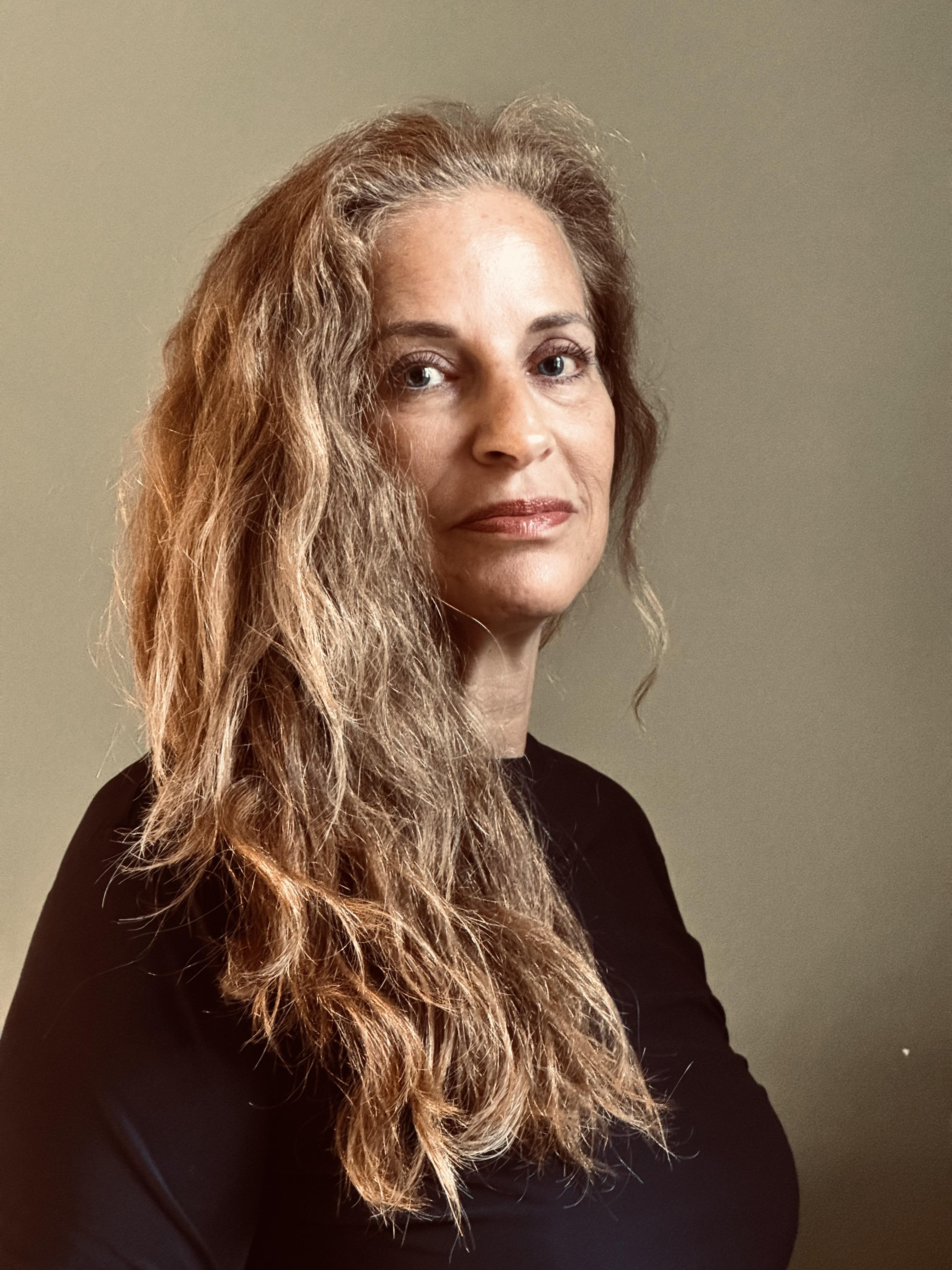
Katharina Galor
· Hirschfeld Associate Teaching Professor of Judaic StudiesBrown University · Religious Studies
Active 1996–2025
About
Katharina Galor is an author whose work explores themes of love, exile, resilience, and shared humanity against the backdrop of significant historical events such as the Holocaust and the Nakba. Her narrative focuses on stories of loss, displacement, and the enduring human spirit, highlighting the challenges and beauty of friendships across borders of identity, memory, and belonging. Her writings have been recognized for their emotional depth and raw portrayal of resilience, and she has received multiple awards for her contributions to literature. The page emphasizes her role as an author and her engagement in public discourse, but does not provide specific details about her academic background, research focus, or professional biography.
Research topics
- History
- Political Science
- Archaeology
- Ancient history
- Environmental ethics
- Genealogy
- Philosophy
- Geography
Selected publications
3 The Rise of Israeli Far-Right Politics: A Queer Feminist Analysis
Edinburgh University Press eBooks · 2025-02-06
book-chapterOpen accessSenior authorIntroduction: Anti-Genderism, Homophobia and Far-Right Politics in the Middle East and Europe
Edinburgh University Press eBooks · 2025-02-06 · 2 citations
book-chapterOpen accessSenior authorGlobally, the Iran protests received widespread support, with state representatives, politicians, artists and activists expressing solidarity with the demonstrators and calling for an end to state violence and oppression.In December 2022, Berlin's historic Brandenburg Gate was illuminated in such an act of support, displaying the same slogan shouted by the Iranian activists: 'Woman, life, freedom'.The former Berlin Mayor Franziska Giffey addressed the crowd during the opening: 'It is an important sign of solidarity that we are standing here together at the Brandenburg Gate, at the landmark, Berlin's symbol of freedom, and that we are making clear: woman, life, freedom'.The mainstream discussions around the protests in Germany, however, showed a continued salience of colonial and Orientalist notions at work in understanding women's rights in the Middle East.For example, Georg Pazderski, a politician in Germany's far-right political party AfD (Alternative fr Deutschland), remarked about the protests: 'The headscarf is a visible symbol of Islamic women's oppression.In Iran, women take their headscarves off at risk of their lives, and in [Germany] the Green-Leftist elites celebrate the headscarf as an alleged sign of emancipation.What is going on in their heads?' (Beck 2022). 1 Failing to recognise that in both the Middle East and Europe women struggle for the choice to wear or not to wear a headscarf, Pazderski's comments further provoked moral panic around the so-called 'Islamisation' of Germany.As the Iran protests and the following debate on women's rights illustrate, both the Middle East and Europe experience an increasing presence and impact of political constituencies that draw on nationalism, populism, religion and conservative familialism while attacking marginalised groups, democratic institutions, academia and queer and feminist movements, as well as wider notions of pluralism and equality.This political shift has introduced multiple challenges to the study of right-wing politics, as differences are so significant that no generalisations hold.In David Ricci's words, 'the right resembles a Rorschach ink-blot whose edges have no particular shape and whose center appears as a trackless region containing no detailed image of what is there' (Ricci 2009, p. 159).In recent years, many researchers have focused on the 'far right' as a set of politics aiming to promote and reinstall 'race, gender, and sexual hierarchies' (Anievas and Saull 2023) and to strip marginalised groups of their rights and protection in the process.While right-wing politics are often promoted by illiberal, populist, authoritarian and conservative political actors, they also increasingly find support in the mainstream.
2023-11-01
book-chapter1st authorCorresponding2023-11-01 · 1 citations
book1st authorCorrespondingJewish Women: Between Conformity and Agency examines the concepts of gender and sexuality through the primary lens of visual and material culture from antiquity through to the present day. The backbone of this transhistorical and transcontextual study is the question of Jewish women’s agency in four different geographical, chronological, and methodological contexts, beginning with women’s dress codes in Roman-Byzantine Syro-Palestine, continuing with rituals of purity in medieval Ashkenaz, worship in papal Avignon and the Comtat Venaissin, and ending with marriage and divorce in Israeli film. Each of these explorations is interested in creating a dialogue between the patriarchal legacy of the traditional texts and the chronologically corresponding visual and material culture. The author challenges traditional approaches to the study of Jewish culture by employing tools from art history, archaeology, and film and media studies. In each of these different contexts, there is ample evidence that women—despite persistent overall structural discrimination—have found ways to challenge male constructs of gender norms. Ultimately, these examples from past and present times highlight women’s eminence in shaping Jewish history and culture. Bringing a new interdisciplinary lens to the study of the history of gender and sexuality, the book will be of interest to students and researchers of Jewish history and culture, art history, archaeology, and film studies.
Sacred Space in Papal Avignon and the Comtat Venaissin
2023-11-01
book-chapter1st authorCorrespondingMarriage and Divorce in Israeli Film
2023-11-01
book-chapter1st authorCorrespondingSocial Skin in Roman-Byzantine Syro-Palestine
2023-11-01 · 1 citations
book-chapter1st authorCorrespondingRitual Purity in Medieval Ashkenaz
2023-11-01
book-chapter1st authorCorresponding2023-11-01
book-chapter1st authorCorrespondingIntroduction: Film and the Gender Lens
2022-01-01
other1st authorCorresponding
Frequent coauthors
- 20 shared
Sa’ed Atshan
- 17 shared
Hanswulf Bloedhorn
- 7 shared
Jürgen Zangenberg
Leiden University
- 5 shared
Jean-Baptiste Humbert
- 3 shared
Andrew Willis
- 3 shared
Yunfeng Sui
- 2 shared
Gideon Avni
Israel Antiquities Authority
- 2 shared
Paul Yule
Heidelberg University
Awards & honors
- Golda Meir Postdoctoral Fellowship, Hebrew University of Jer…
- National Science Foundation Grant, “Core Computer Vision in…
- Berliner Antike-Kolleg Fellowship, Berlin, Germany
- Einstein Center Chronoi Fellowship, Berliner Antike-Kolleg,…
- Leo Baeck Foundation Grant (book project *Gender and Tempora…
- Resume-aware match score
- Save to shortlist
- AI-drafted outreach
See your match with Katharina Galor
PhdFit ranks faculty by your research interests, methods, and publications — grounded in their actual work, not templates.
- Free to start
- No credit card
- 30-second signup