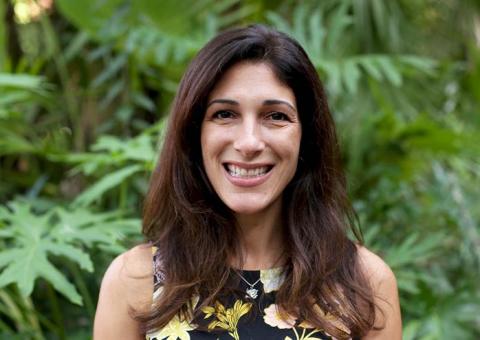
Julie Brown
· Associate ProfessorVerifiedUniversity of Florida · Education
Active 1998–2026
About
Julie Brown is a faculty member at the University of Florida, associated with the College of Education. Her academic background includes a Ph.D. in Education from the University of North Carolina at Chapel Hill, where she also earned her M.A. in Education and B.A. in English. She has held positions such as Senior Manager for Research and Evaluation at the Lastinger Center for Learning and has been an Adjunct Assistant Professor at the University of North Carolina at Chapel Hill. Her research focuses on early childhood education, particularly how children's educational experiences in child care, prekindergarten, and early elementary settings support their development. She aims to identify experiences that improve children's early language and literacy skills, which are crucial for their future success as readers. Dr. Brown has been involved in research projects related to early literacy, classroom instructional quality, and intervention fidelity, and has contributed to the field through numerous publications. She continues to work on projects at the Frank Porter Graham Child Development Institute, including Targeted Reading Instruction, Early Learning Network, and Family Life Project.
Research topics
- Pedagogy
- Mathematics education
- Psychology
- Sociology
- Engineering ethics
Selected publications
Journal of Advanced Nursing · 2026-04-19
articleOpen accessAIMS: To identify facilitators and barriers to quality, equitable discharge teaching by paediatric emergency department nurses during the COVID-19 pandemic, describe impacts of inequitable discharge teaching, and identify potential solutions to the barriers. DESIGN AND METHODS: Twenty-two nurses in a single urban paediatric hospital participated in individual interviews from January to April 2022 via phone or videoconference. Interviews were transcribed and analysed using an inductive codebook. RESULTS: Six barriers to equitable discharge teaching were identified: ED overcrowding, travel nurse training/knowledge, burnout and stress, increased role complexity, COVID precautions, and resource bottlenecks. Two facilitators were also identified: engagement and effective communication. Nurses described the impacts of these barriers along with proposed solutions to improve discharge teaching. CONCLUSIONS: The COVID-19 pandemic created additional barriers to discharge teaching in the paediatric emergency department. Nurses identified barriers and facilitators, the impacts on patients and families, and potential solutions to improve equitable discharge teaching. PRACTICE IMPLICATIONS: This study identifies how periods of high patient volumes or frequent process changes during a pandemic exacerbate inequities in discharge teaching. IMPACT: This study identifies barriers and facilitators that shaped nurses' ability to provide quality, equitable discharge teaching during the COVID-19 pandemic and offers actionable guidance for hospital leaders and health systems to improve discharge teaching and enhance emergency preparedness for future public health crises. REPORTING METHOD: This study conforms to the Standards for Reporting Qualitative Research. PATIENT OR PUBLIC CONTRIBUTION: This study did not include patient or public involvement in its design, conduct, or reporting. TRIAL REGISTRATION: ClinicalTrials.gov identifier: NCT04676490.
Science Education · 2025-07-10 · 1 citations
articleABSTRACT This study is part of a larger project on culturally and linguistically responsive instruction for multilingual learners (MLs) in biology (CLIMB), aimed at enhancing MLs’ engagement in science practices, biology content, and language development. We developed the CLIMB observation protocol to capture how teachers implement responsive instruction, integrating language development, biology content, and science practices. The protocol is comprised of six elements that align with research‐backed practices to support MLs: Attention to Language, Multiple Modalities, Collaboration, Affirming Identities, Funds of Knowledge, and Sociopolitical Consciousness. Through three iterative phases—domain specification and expert review, item revision with teacher feedback, and pilot testing—we describe the protocol's development and provide validity evidence for its use in observing biology teachers of MLs. Results provide evidence for the validity and reliability of the CLIMB protocol in capturing teachers’ culturally and linguistically responsive instructional practices in secondary biology classrooms. The protocol facilitates systematic observation of instructional elements, offering a tool for researchers and practitioners to document and analyze responsive teaching for MLs. By providing a structured framework for observing instruction, the protocol advances research methodology in science education, particularly for studies involving MLs. Although developed in a biology education context, this protocol offers a model for adaptation to other science disciplines seeking to integrate culturally and linguistically responsive instruction. Future work may use this tool to examine relationships between observed instructional practices and MLs’ science learning outcomes.
Disciplinary and Interdisciplinary Science Education Research · 2025-04-22 · 1 citations
reviewOpen accessAbstract Efforts towards providing inclusive science and mathematics education for marginalized students are increasingly found in literature advocating for equity-oriented instruction through supporting students’ critical consciousness. Despite a growing body of research centering on teachers’ development of culturally relevant pedagogies, studies examining how teachers support students’ critical consciousness development are scarce in the context of science and mathematics education. Thus, this systematic review uses empirical literature on critical consciousness to explore teachers’ experiences integrating sociopolitical issues into their science and mathematics classrooms. Using keywords synonymous with critical consciousness, 19 studies were identified through searches in various databases. The 19 studies were analyzed through an iterative coding process to identify how teachers supported students’ critical reflection, critical efficacy, and critical action by analyzing reported incorporation of sociopolitical issues, instructional strategies, and science and mathematical practices. The results highlight four themes: (1) Teachers discussed sociopolitical issues at various distances to the self (2) Classroom discussions and community projects were used to engage students in their critical consciousness (3) Science and mathematics instruction and sociopolitical issues were used synergistically to further student understanding (4) Critical efficacy was seldom explicitly discussed in the studies. Implications of this study include suggestions for future research and practices.
TESOL Journal · 2025-03-17 · 1 citations
articleOpen accessSenior authorABSTRACT This article illustrates how science teachers can build upon the spatial repertoire within sheltered English instruction to support multilingual learners (MLs). Specifically, this work explores how multiple modalities within a secondary marine biology classroom can be leveraged for instruction to support language and content learning, as well as learners' participation in disciplinary practices. Through qualitative analysis of three classroom lessons, we highlight how a marine biology teacher drew on this spatial repertoire to support MLs use of language, content knowledge, and participation in science and engineering practices. Though content‐area teachers do not always view themselves as language teachers, this work serves as an example of how a science teacher augmented instruction to meet the needs of her MLs.
Antimicrobial resistance and One Health in the high school biology curriculum
Journal of Microbiology and Biology Education · 2025-09-30 · 2 citations
articleOpen accessAntimicrobial resistance (AMR) is the ability of a microbial organism to resist treatment designed to kill it. It poses a significant global threat to public health, affecting humans, animals, and the environment, in a concept collectively referred to as One Health. While one of the major mitigators of this pressing issue is education, the high school curriculum in the United States does not cover any aspects of AMR. As such, to address this challenge, we developed and delivered a one-week-long unit on AMR within a One Health framework into a high school biology curriculum. The unit aimed to enhance students' understanding of AMR and its implications across the One Health sectors. A survey was designed and administered to measure current knowledge, awareness, interest, and motivation. Through a combination of lectures developed using Universal Design of Learning principles, interactive discussions using team-based learning (TBL) with the help of content experts, hands-on laboratory exercise, and poster presentations, biology students explored the mechanisms of resistance and novel mitigation strategies. Pre- and post-assessments revealed a marked improvement in students' knowledge and comprehension of AMR and therapeutic strategies, such as silver nanoparticles, bacteriocins, bacteriophages, CRISPR-Cas, and immunotherapy. This research study provides a detailed overview of the curriculum design, instructional strategies, and assessment outcomes, offering a replicable model for broadly integrating AMR education into high school curricula. We found that the AMR mitigation strategies lesson, delivered through TBL, significantly enhanced students' understanding of novel therapeutic strategies and fostered high levels of engagement throughout the AMR and One Health unit.
What’s troubling you? Examining how biology teaching assistants talk about teaching concerns
Journal of Microbiology and Biology Education · 2025-06-05 · 1 citations
articleOpen accessABSTRACT Undergraduate students in science classes are more engaged and demonstrate increased performance when instructional methods include authentic science practices and active learning strategies. Non-majors students (i.e., those enrolled in science classes to fulfill a degree requirement) typically receive instruction that is more lecture-based and prescribed, however, which contributes to disinterest, diminished self-expectations, and lower performance. Teaching assistants (TAs) often interact with undergraduate students more closely in science classes than faculty and thus could potentially have far-reaching impacts on these students. Therefore, understanding how TAs think about their science teaching and the concerns they have about their methods can lead to designing more effective TA professional development (PD). In this qualitative study, we explored TA written reflections and employed first- and second-cycle analysis techniques to identify themes reflecting TAs’ perceptions of their science teaching and concerns for improvement. We found that TAs’ concerns about their teaching centered on three themes: subject-specific concerns , student-centered concerns , and delivery and presentation concerns . Further, these concerns changed over time and varied across TA experience level. We offer insight into how TAs’ teaching concerns evolve and discuss the implications of these insights for TA PD.
Review of Education · 2024-09-17 · 6 citations
reviewOpen accessSenior authorAbstract In this systematic literature review spanning 2000 to 2024, we examine the landscape of culturally relevant education (CRE) in Europe. Our goal is to present a clear picture of how in‐service and pre‐service teachers perceive, practice and experience CRE in the evolving European context. Following the Preferred Reporting Items for Systematic Reviews and Meta‐Analyses (PRISMA) protocol, we analysed 48 empirical studies from European countries. In a multiphase process, we utilised qualitative methods to iteratively identify key features to categorise study purposes and outcomes for meaningful reporting. Included studies primarily consisted of self‐reported data on perspectives, practices and experiences of in‐service or pre‐service educators working with learners that are culturally and linguistically diverse compared to the dominant culture of the studies' locations. The aim was to reveal the state of CRE research in the context of Europe by identifying the reviewed studies' goals, key findings and suggestions to move forward. Our findings highlight well‐intentioned educators, yet there is a discernible need for improved teacher education programmes and in‐service professional learning that focus on supporting educators' culturally relevant practices. The review emphasises the necessity of better preparing European educators to effectively meet the needs of their culturally and linguistically diverse student populations. We offer a series of recommendations synthesised from the examined studies, pointing towards a need for reform at multiple levels, including pre‐service teacher education, professional development, school and community practices and policy changes. As we navigate the educational landscape of Europe, our synthesis aims for a clear understanding and practical insights, fostering an environment where educators can effectively nurture the potential of every learner. Context and implications Rationale for this study: The study aims to assess the state of culturally relevant teacher education in Europe, highlighting the gap in research through a systematic review of the literature to help inform future educational efforts. Why the new findings matter: These findings matter because they offer a structured insight into current practices and challenges, suggesting significant opportunities for enhancing teacher preparation in culturally diverse settings across the continent of Europe. Implications for practitioners, policy makers and researchers: Policy makers may use these insights to better support and develop policies that enhance teacher training, aiming for inclusivity and diversity in classrooms. Researchers are provided with a detailed analysis of existing works and trends, highlighting challenges and unexplored areas, thus offering the potential to push the boundaries of educational research in culturally relevant pedagogy. Overall, these implications aim to foster an educational environment where diversity is not only recognised but actively embraced and integrated into teaching practices.
Enhancing multilingual participation in science practices through language scaffolding
Language and Education · 2024-11-20 · 5 citations
articleSenior authorInternational Journal of Science Education · 2023-07-13 · 3 citations
articleOpen accessSenior authorTo make sound science-related decisions in a global society, individuals must possess a science identity, or see themselves as capable of doing and understanding science. Science identity development begins in school-aged years, when multilingual students (MLs) are often marginalised in the classroom due to language challenges and low expectations placed on them. This descriptive multiple case study explores the science identities expressed by six US high school MLs in their biology classrooms. Data from semi structured interviews were analysed through qualitative coding methods. Secondary data sources included field notes from observations conducted in each student’s classroom six times during the school year. Results revealed that all MLs expressed science identity indicators, including feeling like a scientist, having a personal interest in science, and seeing science as related to their worlds. Other important identity indicators were not expressed among all students, such as views of themselves as ‘good’ science students, doing or using science outside of school, and career aspirations. Over half of MLs cited language as a direct barrier to their science identities. The study makes several contributions to the field of science education, which are detailed. Implications are presented for nurturing MLs’ science identities in the formal classroom.
Journal of Science Teacher Education · 2023-04-11 · 2 citations
article1st authorCorrespondingDeveloping culturally responsive science teachers requires changes in one’s knowledge and dispositions, as well as one’s instructional practices. Multicultural science instruction (MSI) provides educators with a framework for strengthening and disrupting the formal curriculum in ways that infuse critical, historical, and culturally responsive connections. Practitioners need not only to see MSI modeled by teacher educators and their colleagues, but also to have concrete resources provided on their journey. While MSI has been defined and researched in academic literature for decades, there is not yet a clear understanding of how it is depicted in authoritative practitioner spaces—such as the National Science Teachers Association (NSTA)—where 40,000 members regularly seek out instructional resources. This potentially limits a major avenue for science teacher education toward inclusive, equitable ends. We conducted a review of 29 articles in the NSTA journals Science Scope and The Science Teacher to examine the nature and scope of MSI in secondary settings. NSTA publishes nine issues per journal each year, with approximately 15–30 entries per issue. Results indicated, on average, fewer than three MSI-focused articles were published per journal per year for the 10-year period under review. The characterization of MSI within articles was consistent with published scholarship. However, generally inclusive pedagogies dominated, rather than targeted approaches that advance the critical and emancipatory aims of MSI. Articles featuring family collaboration and sociopolitical consciousness represented 2% and 10%, respectively, of all observed MSI. Implications for supporting science teachers’ multicultural instruction with authoritative resources are discussed.
Frequent coauthors
- 156 shared
Amie Goodin
- 99 shared
Almut G. Winterstein
Center for Drug Evaluation and Research
- 83 shared
Laura E. Happe
University of Florida
- 83 shared
Inmaculada Hernandez
University of Montana
- 82 shared
Elizabeth A. MacLean
Pfizer (United States)
- 81 shared
James P. Wilson
University of Oxford
- 81 shared
Elizabeth Burke
James Madison University
- 81 shared
Gene Reeder
Labs
Lastinger Center for LearningPI
Education
- 2016
M.Ed., Curriculum & Instruction (Science Education)
University of Florida
- 2014
Ph.D., Curriculum & Instruction (Science Education)
University of Florida
- 2003
B.S., Animal & Veterinary Science
University of Rhode Island
Awards & honors
- Recipient, Abecedarian Award, Frank Porter Graham Child Deve…
- Resume-aware match score
- Save to shortlist
- AI-drafted outreach
See your match with Julie Brown
PhdFit ranks faculty by your research interests, methods, and publications — grounded in their actual work, not templates.
- Free to start
- No credit card
- 30-second signup