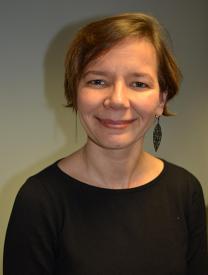
Julia Gray
· Associate ProfessorVerifiedUniversity of Pennsylvania · Political Science
Active 1958–2025
About
Julia Gray is an Associate Professor of Political Science whose research centers on the functioning of institutions, especially in contexts characterized by change and uncertainty. Her scholarly work primarily investigates international economic institutions and their life cycles, with a particular emphasis on emerging markets. Through various manuscripts, she explores topics such as the reputational effects of international organizations, the dynamics of vitality, inertia, change, and death within the lifespans of these organizations, as well as the duration and implementation of international economic agreements. Additionally, her research addresses heuristics in financial markets and the discrepancies between the formal structures and actual functions of institutions. Beyond her research, Julia Gray serves as the co-director of the Lauder Institute at the Wharton School and holds a visiting fellowship with the Global Governance program at the European University Institute.
Research topics
- Political Science
- Computer Science
- Law
- Sociology
- Social Science
- Economics
- Public relations
- International trade
- Public administration
- Psychology
- Law and economics
Selected publications
Edward Elgar Publishing eBooks · 2025-06-17
book-chapter1st authorCorrespondingThe life cycle of international cooperation: Introduction to the special issue
The Review of International Organizations · 2024-07-11 · 26 citations
articleOpen access1st authorCorrespondingAbstract International organizations’ lives often extend far beyond the moment of their initial contracting. How IOs do adapt to shifting circumstances in their member states global geopolitical changes, and even internal dynamics within the IO itself? This special issue on the life cycle of international cooperation explores the ebbs and flows of the IOs that underpin the international system. Firm theory, organizational sociology, and agency theory all have incorporated life cycles perspectives into the study of organizations, but IR has yet to fully harness these frameworks. A life cycles approach centers on, first, incorporating the IO itself as the core unit of analysis and, second, the dynamic processes within IOs — including life stages such as false starts, consolidation, inertia, growth, revitalization, death, and succession. Incorporating these dynamic processes into our understanding of IOs reminds us that historically, IOs have always experienced periods of both flourishing and faltering. Grasping the mechanisms that drive these changes is indispensable for a thorough understanding of the international system’s vitality and resilience. Articles in this issue explore the durability of IOs in the face of crises; the measures that IOs deploy to legitimize their existence; the role of individual leaders’ rhetoric in IO vitality; the tradeoffs that member states face between pulling the plug on an IO versus creating a new institution; the effect of member-state IO withdrawal on the international system overall; and the mass public’s perceptions of such withdrawals.
Leaders in the United Nations General Assembly: Revitalization or politicization?
The Review of International Organizations · 2024-01-27 · 12 citations
articleOpen accessSenior authorAbstract How do leaders address the world in service of international cooperation, and do their messages enhance or detract from the global agenda? Leaders increasingly appear at the United Nations General Assembly (UNGA), a deliberative forum meant for diplomacy, not politics. At the same time, the UNGA has long undergone revitalization efforts, and leaders’ contributions could potentially ensure more meaningful cooperation. Building on theories of leader communication, we argue that, in contrast to other country representatives, heads of state have more leeway to deviate from the assembly’s priorities; as politicians, they have incentives to discuss their own, more particularistic, topics. Drawing from novel data on leaders’ speeches in the UNGA, we use text analytics to show that leaders tend to depart from the policy agenda of the session. Furthermore, national political leaders speak more plainly, centering speech on themselves and departing from the general conventions of diplomatic debate. This suggests that, while leaders’ attendance potentially generates more publicity and visibility for the UNGA, their contributions may also undermine the general debate. Our findings shed light on the ways in which leaders can politicize mulitlateral cooperation, and we give evidence for the role of individuals in the vitality of international organizations.
Global Studies Quarterly · 2024
- Computer Science
- Psychology
- Computer Science
The Incentives of Leaders in International Organizations: Evidence from the UN General Assembly
International Interactions · 2023-12-15 · 4 citations
articleSenior authorVoters and selectorates tend to prioritize domestic policy, so when and why do national political leaders choose to spend their time at international organizations (IOs)? Heads of state only began to address international assemblies such as the UN in recent decades; their appearances are puzzling, considering that leaders rarely get direct political benefit from multilateral cooperation, whose gains tend to be diffuse and slow-moving. This paper presents a theory of the motivations behind leaders’ appearances at IOs. We argue that because multilateralism tends to be incidental to survival in office, heads of state tend to use IOs for prestige, not policy. But prestige is a luxury: both democrats and autocrats tend to prioritize international cooperation only when they can afford to do so domestically. Autocrats and democrats alike face domestic constraints—namely, the end of a term or gridlock in democracies, or under-institutionalized regimes in autocracies—when they consider international appearance, although the presence of other leaders amplifies the prestige value of a visit to an IO. Novel data on speakers at the United Nations General Assembly support our argument on leader appearances. We show that for the majority of leaders, domestic constraints temper their ability to appear at the UN, despite the draw of other leaders in recent years.Sabemos que los votantes y los selectorados tienden a priorizar la política interna, entonces, ¿cuándo y por qué eligen los líderes políticos nacionales pasar su tiempo en las organizaciones internacionales (OOII)? Los jefes de Estado solo comenzaron a dirigirse a asambleas internacionales como la ONU en las últimas décadas y sus apariciones en ellas aún resultan desconcertantes, teniendo en cuenta que los líderes rara vez obtienen beneficios políticos directos de la cooperación multilateral. Este artículo presenta una teoría con relación a las motivaciones existentes detrás de las apariciones de los líderes en las OOII. Argumentamos que, debido a que el multilateralismo tiende a ser incidental a la supervivencia en el cargo, los jefes de Estado tienden a utilizar a las OOII como una forma de ganar prestigio y no por motivaciones políticas. Sin embargo, el prestigio es un lujo: tanto los demócratas como los autócratas tienden a priorizar la cooperación internacional solo cuando pueden permitírselo a nivel nacional. Tanto los autócratas como los demócratas se enfrentan a limitaciones internas (por ejemplo, el final de un mandato o el estancamiento en las democracias, o los regímenes poco institucionalizados en las autocracias) cuando consideran una aparición internacional. Sin embargo, la presencia de otros líderes aumenta el valor en materia de prestigio que ofrece una visita a una OOII. Los nuevos datos sobre los oradores en la Asamblea General de las Naciones Unidas respaldan nuestro argumento acerca de las apariciones de los líderes. Demostramos que, para la mayoría de los líderes, las limitaciones internas atenúan su capacidad para comparecer en la ONU, a pesar de la atracción que han podido ejercer otros líderes durante los últimos años. Nuestras conclusiones tienen implicaciones importantes para el estudio de cómo los incentivos de los ejecutivos afectan a la atención que estos prestan a la cooperación internacional.Les électeurs et les sélectorats ont tendance à s’intéresser davantage à la politique nationale, alors pourquoi et quand les dirigeants politiques nationaux choisissent-ils de passer du temps dans des organisations internationales (OI) ? Les chefs d’État ne s’adressent aux assemblées internationales, comme l’ONU, que depuis ces dernières décennies. Leurs apparitions sont déconcertantes, étant donné que les dirigeants ne bénéficient que rarement sur le plan politique d’une coopération multilatérale. Cet article présente une théorie des motivations qui se cachent derrière les apparitions des dirigeants aux OI. Nous affirmons que puisque le multilatéralisme a tendance à ne pas avoir d’incidence sur un mandat, les chefs d’État utilisent les OI pour gagner en prestige, et non pour la politique. Or, le prestige est un luxe : tant les démocrates que les autocrates n’ont tendance à privilégier la coopération internationale que lorsqu’ils peuvent se le permettre sur le plan national. Autocrates comme démocrates sont confrontés à des contraintes nationales quand ils envisagent une apparition internationale : la fin d’un mandat ou les blocages politiques dans les démocraties, et les régimes sous-institutionnalisés dans les autocraties. Néanmoins, la présence d’autres dirigeants décuple la valeur prestigieuse d’une visite dans une OI. Des données inédites sur les intervenants lors de l’Assemblée générale des Nations unies soutiennent notre argument quant aux apparitions de dirigeants. Nous montrons que pour la majorité des dirigeants, les contraintes nationales restreignent leurs possibilités d’apparition à l’ONU, malgré le succès d’autres dirigeants ces dernières années. Nos conclusions s’accompagnent d’implications importantes pour l’étude des conséquences des motivations de l’exécutif sur son attention à la coopération internationale.
Déléguer la diplomatie : la rhétorique des représentants à l’Assemblée générale des Nations unies
Revue Internationale des Sciences Administratives · 2021-12-02 · 4 citations
article1st authorCorrespondingLorsque des dirigeants politiques mandatent des représentants auprès d’organisations internationales, ces derniers sont souvent censés parler d’une seule et même voix. Or, plusieurs types de représentants de pays interviennent sur la scène internationale, notamment des représentants permanents, mais aussi des délégués plus ouvertement “politiques’’. Nous avançons que les représentants permanents auprès des Nations unies ont des perspectives de carrière qui les rapprochent des fonctionnaires et qui les différencie des délégués politiques. En ce sens, ils parlent généralement d’une manière plus homogène que d’autres types d’orateurs et utilisent une rhétorique diplomatique relativement plus technique. En outre, compte tenu de leurs motivations professionnelles, ils sont plus réticents à critiquer l’ONU. En bref, les représentants permanents parlent plus comme des fonctionnaires que comme des politiques. Nous utilisons l’analyse de texte pour étudier les différences dans la rhétorique des représentants à l’Assemblée générale des Nations unies. Nous mettons en évidence des distinctions marquées entre les discours de différents types de représentants. Ces conclusions, en contradiction avec les hypothèses traditionnelles, ont des conséquences sur notre compréhension des interactions entre administration publique et représentation au sein des organisations internationales. Remarques à l’intention des praticiens Les délégations auprès des organisations internationales ne parlent pas ‘‘d’une seule et même voix’’. Dans cet article, nous montrons que les représentants permanents auprès des Nations unies ont plus de caractéristiques propres aux fonctionnaires que d’autres représentants d’un même pays. Pour les praticiens, il est important de comprendre que la manière dont certaines catégories d’intervenants internationaux exercent leurs fonctions peut être très distincte. Ces différences de ton —même parmi les représentants d’un même État— peuvent influer sur le processus de négociation et les débats.
Delegating diplomacy:rhetoric across agentsin the United Nations General Assembly
2021-03-21
article1st authorCorrespondingWhen political principals send agents to international organizations (IOs), those agents are often assumed to speak in a single voice. Yet various types of country representatives appear on the international stage including permanent representatives as well as more overtly “political” government officials. We argue that permanent delegates at the United Nations face career incentives that align them with the bureaucracy, setting them apart from political delegates. To that end, they tend to speak more homogeneously than do other types of speakers, while also using relatively more technical, diplomatic rhetoric; and career incentives will make them more reluctant to criticize the UN. In other words, permanent representatives speak more like bureaucratic agents than like political principals. We apply text analytics to study differences across agents’ rhetoric at the UN General Assembly. We demonstrate marked distinctions between the speech of different types of agents, contradictory to conventional assumptions, with implications for our understandings of the interplay between public administration and agency at IOs.
Inflation concerns and mass preferences over exchange‐rate policy
Economics and Politics · 2021-07-06 · 21 citations
articleOpen accessSenior authorCorrespondingAbstract Exchange‐rate policies are cornerstones of the world economy. They also have fundamental welfare and distributional consequences on nations, firms, and individuals. How do individuals internalize these consequences? We challenge the conventional wisdom on the source of mass preferences and argue that many individuals understand currency policies through the lens of inflation. Specifically, we argue that people who are concerned about inflation are more likely to support a fixed exchange rate regime and are more likely to oppose depreciation. We present observational and experimental evidence across middle‐income (Argentina and Serbia) and developed (United Kingdom) countries to support our argument. Further tests suggest that fears over purchasing power—instead of debt or savings considerations—drive inflation concerns.
Delegating diplomacy: rhetoric across agents in the United Nations General Assembly
International Review of Administrative Sciences · 2021 · 24 citations
1st authorCorresponding- Political Science
- Sociology
- Political Science
When political principals send agents to international organizations, those agents are often assumed to speak in a single voice. Yet, various types of country representatives appear on the international stage, including permanent representatives as well as more overtly “political” government officials. We argue that permanent delegates at the United Nations face career incentives that align them with the bureaucracy, setting them apart from political delegates. To that end, they tend to speak more homogeneously than do other types of speakers, while also using relatively more technical, diplomatic rhetoric. In addition, career incentives will make them more reluctant to criticize the United Nations. In other words, permanent representatives speak more like bureaucratic agents than like political principals. We apply text analytics to study differences across agents’ rhetoric at the United Nations General Assembly. We demonstrate marked distinctions between the speech of different types of agents, contradictory to conventional assumptions, with implications for our understandings of the interplay between public administration and agency at international organizations. Points for practitioners Delegations to international organizations do not “speak with one voice.” This article illustrates that permanent representatives to the United Nations display more characteristics of bureaucratic culture than do other delegates from the same country. For practitioners, it is important to realize that the manner in which certain classes of international actors “conduct business” can differ markedly. These differences in tone—even among delegates from the same principal—can impact the process of negotiation and debate.
Opportunistic, not Optimal Delegation: The Political Origins of Central Bank Independence
Comparative Political Studies · 2020-09-22 · 15 citations
articleOpen accessEconomists have long argued that central banks ran by technocrats have greater independence from the government. But in many countries, politically experienced central bankers are at the helm, including even highly independent central banks. To explain the level of central bank independence awarded, we develop a formal model where nominating politicians screen central bankers for their political ambitions. We show how screening and reelection efforts by the nominating politician changes the level of autonomy associated with different types of candidates. We predict that technocrats are associated with higher levels of independence than nominees with political experience, but as the appointing politician faces tougher reelection, candidates with political experience are associated with higher independence as well. We test our theory using new data from 29 post-communist countries between 1990 and 2012. We find evidence that the reelection strategy of the nominating politician is an important predictor of the level of central bank independence.
Frequent coauthors
- 9 shared
Jonathan Slapin
University of Zurich
- 6 shared
Alexander Baturo
- 4 shared
Philip Potter
- 4 shared
Alex Baturo
- 3 shared
René Lindstädt
University of Birmingham
- 2 shared
Eric Arias
- 1 shared
Béatrice Heuser
- 1 shared
Seung-Whan Choi
Education
Ph.D., Political Science
University of California, Los Angeles
M.S., International Political Economy
London School of Economic
B.A.
Amherst College
- Resume-aware match score
- Save to shortlist
- AI-drafted outreach
See your match with Julia Gray
PhdFit ranks faculty by your research interests, methods, and publications — grounded in their actual work, not templates.
- Free to start
- No credit card
- 30-second signup