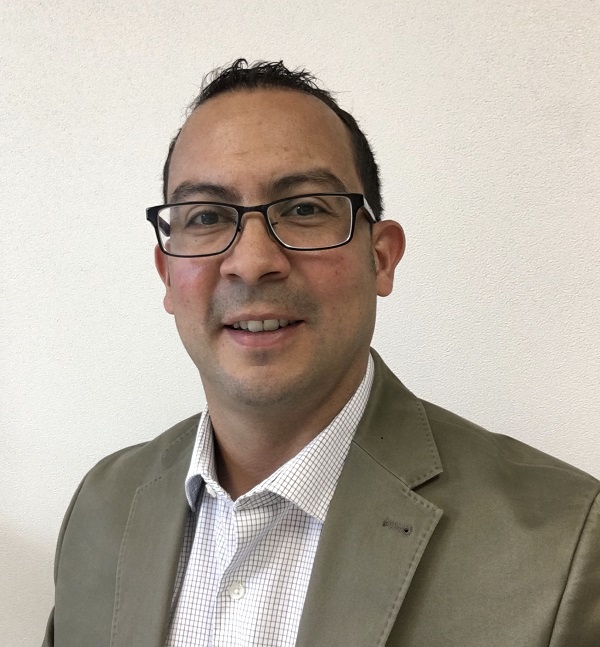
Juan Carlos Laya
· Associate ProfessorVerifiedTexas A&M University · Geology & Geophysics
Active 1950–2025
About
Juan Carlos Laya is an Associate Professor at Texas A&M University in the Department of Geology & Geophysics. His research interests are centered on carbonate sedimentology, with a particular focus on the role of climate and ocean circulation in the evolution of carbonate platforms. He also specializes in diagenesis and dolomitization, employing observation and experimental methods to study these processes. His work includes carbonate facies analysis and paleogeography reconstruction of Permian times, especially in South America and the Permian Basin. Recently, he has been investigating fundamental problems in carbonate sedimentation and diagenesis using multi-scale approaches in regions such as the Middle East, Caribbean, and West Texas, as well as studying Miocene carbonate platform evolution through ocean drilling data.
Research topics
- Paleontology
- Geology
- Geochemistry
- Chemistry
- Mineralogy
- Oceanography
- Physical geography
- Climatology
- Ecology
- Geography
- Biology
Selected publications
2025-08-21 · 2 citations
articleSSRN Electronic Journal · 2025-01-01
preprintOpen accessDesigning an Engaging Exercise for Teaching Ichnofossil Identification using SedimentSketch
Abstracts with programs - Geological Society of America · 2025-01-01
articleVision Transformers based Pore Type Classification for Carbonate Reservoir Characterization
2025-01-01 · 1 citations
articleSummary Classifying pores into their intrinsic depo-diagenetic or petrophysical morphotypes is a fundamental practice within carbonate petrography, typically performed qualitatively/semi-quantitatively. In this study, we present a framework that shifts the scope of pore typing towards quantitative and reproducible data analytics by developing a Vision Transformers (ViT) based model to classify macropores in thin sections into their respective Lucia classes. The ViT architecture is augmented by the addition of a Feature Fusion block, which integrates spatial features from a Convolutional Neural Network (CNN) with ViT features, enhanced by a Global Token Addition (GTA). Critically, our classifier leverages neighbourhood information based upon the recognition that pore types cannot be solely classified based upon shape, but also requires the consideration of the pore system’s local spatial context. Trained and tested using 4,115 labelled pores obtained from 25 high-resolution scans, our model provides an accurate, automated classification of carbonate macropores, demonstrating higher precision and recall rates than benchmark CNN models. The high throughput pore-textural classification capabilities demonstrated herein offer unprecedented opportunities in the quantitative characterization of carbonates, providing improved scalability of petrographic datasets utilized for rock typing, or for studies aiming to elicit broad spatiotemporal trends in carbonate petrophysics and diagenesis.
2025-11-02
articleThis work-in-progress, innovative research paper presents the design of SedimentSketch, an application designed to facilitate the teaching of sedimentology concepts. Effectively teaching these concepts often requires specialized equipment, hands-on experience with sedimentological samples, and personalized instruction. SedimentSketch was designed to complement in-class instruction on sedimentology. SedimentSketch embodies active learning principles, allowing students to interact meaningfully with the material. Aligned with existing research, SedimentSketch seeks to engage students with science concepts through educational videos, games, and exercises, designed to mimic geologists' real-world tasks. In this paper, we evaluated the usability of SedimentSketch. Specifically, we addressed the research question: What are the perceptions of geoscience experts regarding SedimentSketch? Four geoscience experts and instructors were interviewed about their experience using SedimentSketch. A qualitative thematic analysis of participant feedback revealed perceptions regarding the application's ease of use, novelty, and relevance to geoscience instruction. Participants also identified areas of improvement and potential enhancements. These preliminary findings will inform future development and help improve the design. Future work will involve testing the application in real classroom settings and evaluating its impact on student outcomes.
Hybrid AI framework for detecting deep-fake tweets on social media
2025-01-01
articleOpen access1st authorCorrespondingDeepfake technology is developing quickly, which brings both potential and concerns, especially on social media where misleading content can sway public opinion and disseminate false information. Deepfake tweets are dangerous because they spread misleading information and sway online debates. They a
Controls on carbonate island formation and evolution: South Joulter Cay, Great Bahama Bank
The Depositional Record · 2025-08-18 · 1 citations
articleOpen access1st authorCorrespondingAbstract Islands in active carbonate depositional systems can profoundly impact local wave, wind and tidal energy distributions, affecting sediment factories and facies distributions. Island development and facies were investigated for South Joulter Cay, located within the modern Joulters ooid sandbody of Great Bahama Bank, using high‐resolution imagery, a digital elevation model, field observations and radiocarbon dating of weakly cemented rock samples. Island ridge morphology exhibits three distinct developmental stages spanning the last 1400 years, with differences in ooid sand distribution, tidal channels, wind, waves and longshore currents driving island development. Radiocarbon dating suggests that the nucleation and development of South Joulter Cay occurred in stages over the last 1400 years. Island development started with linear ridges oriented SE‐NW and extending approximately 2 km, and this was followed by a second stage of arcuate ridges influenced by local tidal channels. The third stage consisted of triangular cuspate ridges driven by longshore currents and bidirectional winds and waves. Storm activity and associated shifts in local hydrodynamics appear to have played an important role in forming the initial ridges and those created during transitions between growth stages. Although a single storm event is unlikely to cause lasting changes, prolonged periods of intense storm activity over decades are more probably to drive the island's changes and development. Periods with elevated hurricane activity in the northern Bahamas during the Medieval Climate Anomaly or Little Ice Age may be a possible control on the punctuated development of South Joulter Cay.
SEPM (Society for Sedimentary Geology) eBooks · 2025-01-01
book-chapterKey Messages: (1) Early marine diagenesis in Happy Field created oomoldic porosity through dissolution of aragonitic ooids by undersaturated seawater. (2) Spatial heterogeneity observed in porosity and cementation from thin section analysis suggests a possible directional fluid flow pathway controlled by bottom water currents. (3) Results support the hypothesis that bottom water circulation in the basin played a key role in porosity development, offering a new analog for similar ooid grainstone reservoirs locally and globally.
Computers & Geosciences · 2025-10-30 · 4 citations
articleMarine and Petroleum Geology · 2025-03-05 · 7 citations
article
Frequent coauthors
- 59 shared
Carlos A. Alvarez Zarikian
Discovery Place
- 49 shared
Montserrat Alonso-García
University of Algarve
- 49 shared
Or M. Bialik
University of Münster
- 45 shared
Luigi Jovane
Universidade de São Paulo
- 44 shared
Angela L. Slagle
International Ocean Discovery Program
- 44 shared
Gregor P. Eberli
- 43 shared
Christian Betzler
Universität Hamburg
- 40 shared
Santi D. Pratiwi
Education
- 2012
PhD Geological Scienes, Earth Sciences
Durham University Department of Earth Sciences
- 2010
MSc Geological Sciences, Geology
Universidad Central de Venezuela
- 2002
BEng Geological Engineering, Geological Engineering
Universidad de Los Andes
- Resume-aware match score
- Save to shortlist
- AI-drafted outreach
See your match with Juan Carlos Laya
PhdFit ranks faculty by your research interests, methods, and publications — grounded in their actual work, not templates.
- Free to start
- No credit card
- 30-second signup