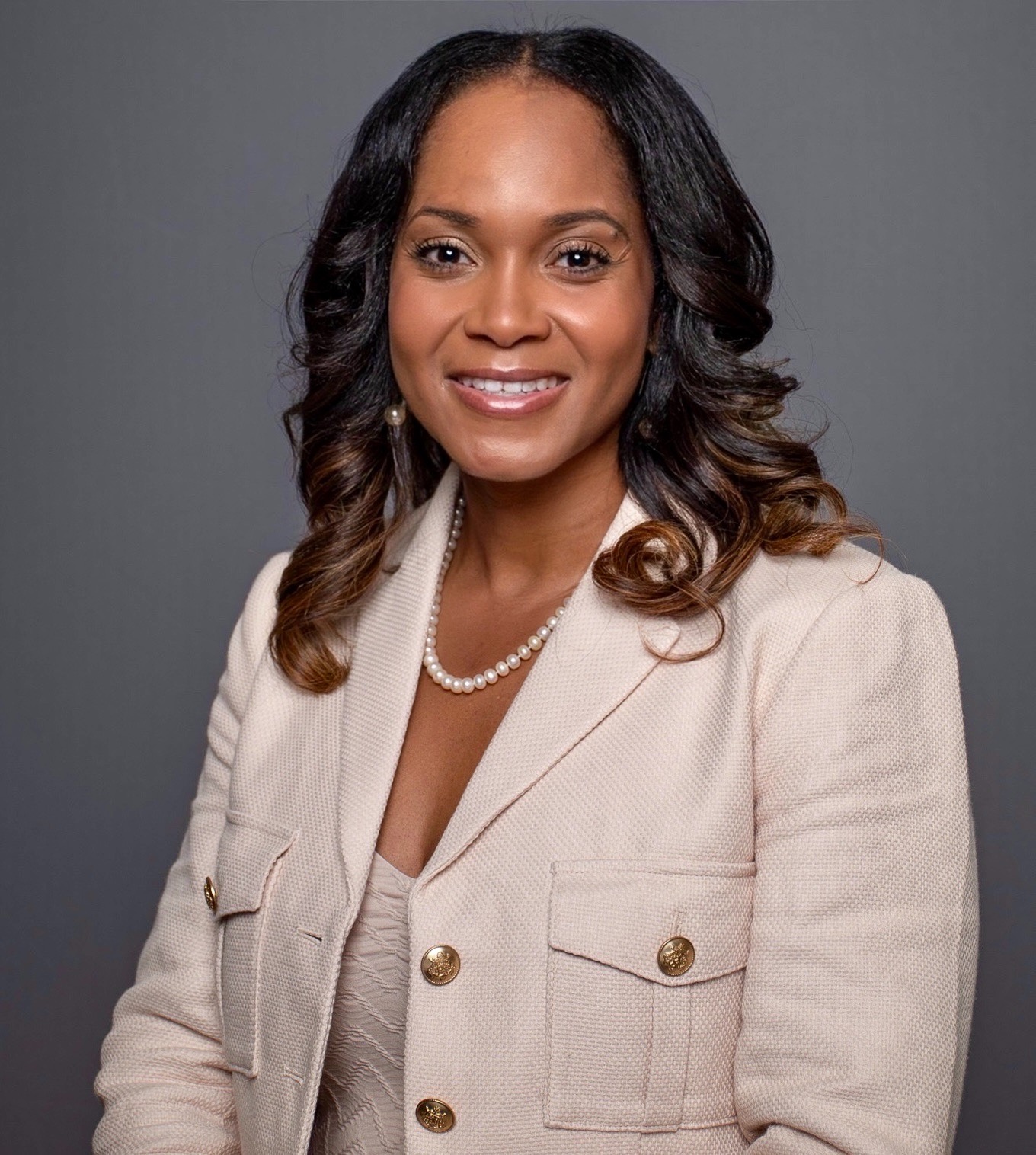
Joy Gaston Gayles
· Head, Department of Educational Leadership, Policy, and Human Development and Alumni Association Distinguished Graduate ProfessorVerifiedNorth Carolina State University · Health, Physical Education, and Recreation
Active 2007–2025
About
Joy Gaston Gayles is the Head of the Department of Educational Leadership, Policy, and Human Development at NC State and holds the title of Alumni Association Distinguished Graduate Professor. Her role involves leading academic and research initiatives within her department, contributing to the advancement of educational leadership and policy. Her position signifies a focus on educational research and leadership development, although specific details about her research focus, background, or key contributions are not provided in the page text.
Research topics
- Sociology
- Political Science
- Social Science
- Social psychology
- Law
- Computer Science
- Psychology
- Pedagogy
- History
- Anthropology
- Public relations
- Medicine
- Gender studies
Selected publications
Critical Qualitative Research and Social Justice
2025-06-06
book-chapterThis introductory chapter frames the entire volume by inviting readers to dialogue with the five of us as we discuss critical and social justice qualitative inquiry concepts and questions, including decolonial, transformative, critical interpretivist, participatory, or related approaches that disrupt dominant paradigms. We encourage readers to respond to the questions and concepts in this chapter (in researcher memos and/or in dialogue with other readers) in the hopes that it will help deepen your own perspectives and scholarly contributions. In addition, we introduce the chapters and chapter authors, including the ways in which the critical and social justice concepts overlap and connect with each other. This chapter and the encyclopedia-like volume are designed to help readers understand and navigate the labyrinthine of critical and social justice concepts available to researchers.
Humanizing Higher Education: A Path Forward in Uncertain Times
Review of higher education/The review of higher education · 2023 · 9 citations
1st authorCorresponding- Sociology
- Political Science
- Sociology
Humanizing Higher Education was the 2022 conference theme for the Association for the Study of Higher Education. This presidential address takes a forward look back on higher education within a global context and in the aftermath of a global health pandemic, making an argument for the need to humanize higher education. The address offers a definition for dehumanization and discusses manifestations of dehumanization in institutional cultures. The article concludes with a model for humanizing higher education as a path forward in uncertain times.
Confronting Systems of Privilege and Power in the Classroom
2023-06-26
book-chapterSenior authorThe discussion of multicultural competence centers on understanding key concepts such as privilege and power, and how they are used in the classroom setting. This chapter distinguishes between important constructs related to privilege and power followed by a discussion of how they operate in society, including in the classroom, from a theoretical perspective. It then summarizes a study conducted on faculty experiences teaching diversity and focus on power dynamics in the classroom. Unpacking the term imperialism provides a lens through which to describe how power is negotiated and wielded in the classroom. Patriarchy works with imperialism and White supremacy to maintain dominance in society, and faculty can gain power by structuring their class to conform to patriarchy The chapter concludes with practical strategies for dealing with power dynamics and helping individuals recognize and name systems of power and privilege in a way that empowers to interrupt larger systems of oppression.
Humanizing Approaches to Justice and Wellness
2023-08-05
preprintOpen access1st authorCorrespondingDr. Gayles shares her journey through the COVID-19 shutdown, how she dealt with the challenges, and how she used what she learned to lead as president of the Association for the Study of Higher Education. Dr. Gayles also shares wisdom on ways to challenge yourself throughout your journey at NC State and beyond.
2023-08-07 · 1 citations
book-chapterOpen access1st authorCorrespondingBlack women undergraduate students face systemic barriers to success within college environments and persist through their efforts to support and retain themselves and each other. This chapter highlights the experiences of high-achieving undergraduate Black women in science, technology, engineering, and mathematics (STEM) majors at a predominantly white institution using community cultural wealth as a critical lens. This chapter concludes with three lessons for institutional leaders to support and retain Black women in higher education. Embedded within the three lessons are examples of how Black women created supportive peer mentoring communities for themselves and others, with implications for Black women graduate students and faculty.
Journal of college student development · 2022 · 6 citations
Senior authorCorresponding- Sociology
- Social psychology
- Psychology
The purpose of this study was to develop a substantive theory using a grounded theory approach to describe the development of advocacy and ally-ship among college students with marginalized identities. Findings support that participation in advocacy and allyship is a continuously evolving and messy process of becoming aware, educating self, exploring beliefs, feeling connected, experiencing affirmation, and navigating viewpoints, which all underscore the core category: Doing the Right Something.
Unapologetic Educational Research: Addressing Anti-Blackness, Racism, and White Supremacy
Culture Studies ↔ Critical Methodologies · 2021 · 35 citations
- Sociology
- Sociology
- Social Science
We explore “ Unapologetic Educational Research: Addressing Anti-Blackness, Racism, and White Supremacy” to engage scholars in thinking about and reflecting on what it means to conduct qualitative research from a standpoint that honors Black lives in the research process while also disrupting racism and white supremacy. First, we unapologetically take up topics including engaging “diversity” in qualitative research, interrogating the etic perspective in the “new” focus on race, using critical perspectives to inform research and practice, examining the racialization of positionality, focusing on Black women educational leaders, and engaging schools and communities. Next, we engage in dialogue with each other to push ourselves—and you/the reader—to think more deeply about the serious and potentially dangerous implications of our research decisions. Given the unprecedented historical present we are all experiencing in our lifetime, we are committed to shifting the landscape of qualitative research as well as using research to shift our sociopolitical context toward racial equity and justice.
Exploring Rural Engineering Students’ College-Choice Process at Two Land-Grant Universities
The Rural Educator · 2021-11-17 · 4 citations
articleOpen accessSenior authorThis qualitative case study examines the college choice decisions of rural students enrolled in engineering majors to understand what conditions and experiences led rural students to pursue engineering at their institution. We found four themes that help illuminate rural engineering students’ college choice journeys (1) The Inextricable Nature of College, Major, and Career Choice (2) “The Smart Person Thing to Do:” The Power of Prestige, (3) “Are You Sure You Don’t Want to Change your Major?” Dissonance Between Aspirations and Expectations, and (4) School and Community as Crucial Resources in College and Major Exploration. These findings have implications for those working with rural high school students seeking engineering degrees and admissions processes at four-year colleges and universities.
Proceedings of the 2020 AERA Annual Meeting · 2020-01-01
article1st authorCorrespondingMentoring for Success across the Academic Spectrum
2020-01-01
book-chapter1st authorCorresponding
Frequent coauthors
- 11 shared
Frimpomaa Daagye Ampaw
Morgan State University
- 6 shared
Bridget Turner Kelly
- 5 shared
Shouping Hu
Florida State University
- 4 shared
Alyssa Bryant Rockenbach
North Carolina State University
- 4 shared
Rebecca E. Crandall
Oregon State University
- 3 shared
Heather A. Davis
Virginia Tech
- 3 shared
Katie N. Smith
National Institutes of Health
- 2 shared
Shauna M. Morin
Education
- 2005
Ph.D., Education Policy
University of North Carolina at Chapel Hill
- 2000
M.A., Education Policy
University of North Carolina at Chapel Hill
- 1997
B.A., Political Science
University of North Carolina at Chapel Hill
Awards & honors
- Alumni Association Distinguished Graduate Professor
- President, Association for the Study of Higher Education (AS…
- 2020 Chancellor’s Creating Community Award for Outstanding F…
- 2018 University Faculty Scholar at NC State
- Zenobia L. Hikes Woman of Color in the Academy Award
- Resume-aware match score
- Save to shortlist
- AI-drafted outreach
See your match with Joy Gaston Gayles
PhdFit ranks faculty by your research interests, methods, and publications — grounded in their actual work, not templates.
- Free to start
- No credit card
- 30-second signup