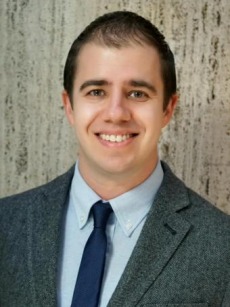
Joshua Schlachet
VerifiedUniversity of Arizona · East Asian Studies
Active 2021–2023
About
Joshua Schlachet is an assistant professor and historian of early modern and modern Japan, specializing in the cultural history of food and nourishment in the eighteenth and nineteenth centuries. His current project, “Nourishing Life: Diet, Body, and Society in Early Modern Japan,” examines the emergence of a dietary “common knowledge” as new practical guidebooks circulated among ordinary readers, expanding the concept of a well-nourished body to encompass economic productivity, status hierarchy, and moral cultivation. His research interests include global and comparative food studies, histories of science and health, book history and popular publishing, material culture and artisanship, and Dutch-Japanese exchange. Schlachet teaches courses on Japanese and East Asian history, dietary cultures, and everyday life.
Research topics
- History
- Sociology
- Environmental ethics
- Traditional medicine
- Social science
Selected publications
Kitchens of Dejima: Japanese Cookery and Dutch Sovereignty in Nineteenth-Century Miniatures
Verge Studies in Global Asias · 2023-07-26
article1st authorCorrespondingAbstract: Through an object-oriented history of Japanese foodways on the move, this article explores how a miniature kitchen diorama collected by Jan Cock Blomhoff in Nagasaki in the 1820s situated Japan within the Netherlands’ narrative of post-Napoleonic national sovereignty. Blomhoff’s kitchen blended a display of Japanese culinary craftsmanship—its tools, vessels, and utensils procured from Japanese artisans—with classical Dutch dollhouse design that evoked Golden Age domestic prosperity, a microcosm of a properly functioning state. Everyday life objects like Blomhoff’s kitchen became powerful symbols for continuity throughout the Netherlands’ era of national dissolution. Despite limited mobility outside Japan during the early modern period, representation of cooking and domestic life through miniaturized kitchen accouterments produced an insistent presence of Japanese foodways in the European imagination.
Asian Medicine · 2022-11-10
article1st authorCorrespondingAbstract This article explores a reactionary, and ultimately failed, medical dietary movement that sought to counter the influence of Western nutritional sciences at the turn of the twentieth century. Its supporters looked to the early modern past to create a vision of traditional Japanese foodways based on whole grains, unpolished rice, and locally grown vegetables, a nutritional regimen they called cerealism. In articulating a Japanese national diet, cerealism offered a new promise to not only recapture Japan’s food culture but its national subjectivity by envisioning native eating habits that could build both superior physique and quality of character. The intrusion of the Western staples of bread and meat, supporters feared, could cause the downfall of the Japanese nation on bodily, spiritual, and economic grounds. Cerealism thus sought to upend the universal claims of Western medical science by posing a simple question: Was there such a thing as Japanese nutrition?
New Voices in Japanese Studies · 2021-09-01
articleOpen access1st authorCorrespondingThis article, through a series of provocations and anecdotes from my research into dietary health in early modern Japan (1600-1868), makes the case for transhistorical thinking as a productive analytical mode, allowing the past to speak to present concerns in creative and unexpected ways. As this volume seeks a fresh approach to Japanese Studies post-pandemic, addressing this tension between past and present, I argue, offers a productive way to turn the challenges of COVID-19 into opportunities for greater impact and interconnection. Now, however, is a bad time to question science. Vaccine hesitancy, resistance to mask mandates, and the overall politicization of commonsense health guidelines among a substantial plurality of the population indicate a sustained mistrust of health science expertise precisely when belief and compliance would do the most medical and social good. Doing the history of health in Japan through a transhistorical lens, I argue, exposes how a set of social divisions and challenges that may appear through a presentist lens to be as novel as the virus itself, and tied inextricably to the demands and paradoxes of modern state-based public health regimes, are in fact variants of issues that have been faced in dramatically different historical circumstances. This article follows these themes through three broad provocations that resonate between health’s past and present, drawn from the nineteenth-century history of diet and nutrition in Japan: skepticism of doctors and a critique of medical expertise; prioritising preventative versus retroactive care; and balancing health with opening the economy.
Education
- 2018
Ph.D., East Asian Languages and Cultures, History - East Asia Program
Columbia University
- 2011
M.A., Japanese Studies, Center for Japanese Studies
University of Michigan
- 2008
B.A., History & East Asian Studies
Cornell University
- 2003
A.O.S., Culinary Arts
The Culinary Institute of America
- Resume-aware match score
- Save to shortlist
- AI-drafted outreach
See your match with Joshua Schlachet
PhdFit ranks faculty by your research interests, methods, and publications — grounded in their actual work, not templates.
- Free to start
- No credit card
- 30-second signup