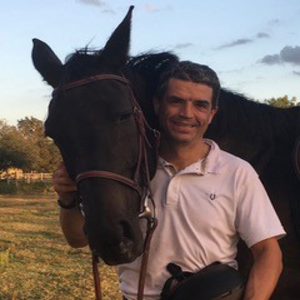
José Luis Bermúdez
· Professor of Philosophy and Charles H. Gregory ’64 Chair in Arts and SciencesVerifiedTexas A&M University · Philosophy
Active 1971–2025
About
José Luis Bermúdez is a Professor of Philosophy and the Samuel Rhea Gammon Professor of Liberal Arts at Texas A&M University. He was awarded the AFS Distinguished Achievement Award for Research in 2021. Bermúdez served as Interim Dean of the College of Arts and Sciences from May 2022 to July 2023 and has held various administrative roles at Texas A&M, including Dean of the College of Liberal Arts, Associate Provost for Strategic Planning, and Acting Dean of the College of Dentistry. Before joining Texas A&M in 2010, he was a Professor of Philosophy, Director of the Center for Programs in Arts and Sciences, and Director of the Philosophy-Neuroscience-Psychology Program at Washington University in St. Louis. Born in Bogotá, Colombia, Bermúdez was educated at St Paul's School in London and at King's College, Cambridge, where he earned his B.A., M.A., and Ph.D. His research interests are interdisciplinary, focusing on philosophy of mind, philosophy of psychology, rationality, and cognitive science, with significant contributions to understanding self-awareness, language and thought, and rational thought. Bermúdez has authored eight books and edited six volumes, with notable works including 'The Paradox of Self-Consciousness,' 'Thinking without Words,' and 'The Power of Frames.' His work explores the intersection of philosophy and cognitive and behavioral sciences, contributing to debates on self-consciousness, language, and rationality.
Research topics
- Psychology
- Sociology
- Artificial Intelligence
- Political Science
- Computer Science
- Mathematics education
- Social psychology
- Law and economics
- Linguistics
- Public relations
- Mathematics
- Law
- Engineering
- Cognitive science
Selected publications
Impact of additive manufacturing in the field of medicine(2010 -2025)
Gestión de Operaciones Industriales · 2025-08-11
articleOpen accessEn este artículo de revisión se analiza el impacto de la fabricación aditiva en el área de la medicina. En un contexto donde la personalización de tratamientos y el avance de tecnologías de impresión 3D están transformando el ámbito clínico, se identifican sus aplicaciones en el área medicinal. El objetivo principal fue explorar cómo esta tecnología está revolucionando el área de la medicina y lo que se quiere lograr a futuro. Para esta investigación se basó mediante el uso de la metodología PRISMA, en una revisión sistemática de estudios recientes sobre la fabricación aditiva o impresión 3D en el campo de la medicina. Entre los principales hallazgos, se evidenció que ésta permite una mayor precisión en los tratamientos, ha facilitado el aprendizaje anatómico, y logra reducir los tiempos de operación. Finalmente, se concluyó que la fabricación aditiva representa una herramienta innovadora y con gran potencial para el desarrollo de la medicina.
2025-09-25
other1st authorCorresponding2025-09-25
book-chapter1st authorCorrespondingAbstract In DA II.3, Aristotle turns to the main business of De Anima, the detailed analyses of individual capacities that will take up the remainder of the book, beginning in DA II.4 with nourishment and generation. The first two sections of this chapter explore the methodology for studying individual capacities that Aristotle sketches out in DA II.3 and the beginning of DA II.4, turning in Section 6.3 to the discussion of nourishment and generation in DA II.4. In DA II.5 Aristotle shifts to perception, developing a complicated and much-discussed account of how the perceiving subject is changed in the act of perception. Section 6.4 introduces some of the key issues, while Section 6.5 explores the discussion of the objects of perception in DA II.6 and introduces Aristotle’s distinctive perceptual realism.
2025-09-25
book-chapter1st authorCorrespondingAbstract In contrast, for example, to Plato’s Socrates in the Theaetetus, Aristotle takes a very expansive view of perception. This gives him a powerful explanatory framework for thinking about the behavior of non-human animals, as well as those forms of intentional behavior that are plausibly shared between human and non-human animals. The notion of imagination (phantasia) is at the heart of his analyses here. At the same time, his expansive approach to perception goes hand in hand with innovative accounts of how we apprehend the common sensibles, such as shape, size, and number (in DA III.1) and the nature of reflexive awareness (in DA III.2).
Are there epistemic norms of inquiry? Comments on David Thorstad’s Inquiry Under Bounds
Philosophical Studies · 2025-11-15
article1st authorCorresponding2025-09-25
book-chapter1st authorCorrespondingAbstract This chapter focuses on Aristotle’s discussion of nous in DA III.4–6. Section 9.1 discusses what Aristotle takes to fall under the scope of nous, as well as his terminology and the different translation options. Section 9.2 sketches out some uncontroversial starting points for thinking about nous, bringing out key continuities and discontinuities between the discussion of nous and the earlier parts of the De Anima. Section 9.3 focuses primarily on DA III.4 and on the role of nous in generating thinkable objects from the deliverances of the senses. Section 9.4 offers a close reading of DA III.5, tentatively suggesting a way of doing justice to both of the two dominant approaches to the text (the human interpretation and the divine interpretation).
Aristotle and his predecessors: The question of motion
2025-09-25
book-chapter1st authorCorrespondingAbstract The first book of the De Anima (DA I) is a fascinating window into how Aristotle viewed his predecessors and contemporaries—and perhaps even into those thinkers themselves. Woven into the discussion of the presocratic and some of his contemporaries are several very important arguments that structure and constrain the positive accounts that Aristotle puts forward in DA II and DA III. These include intriguing discussions of motion and the psuchê, the nature of perception, and the relation between the psuchê and the body. This chapter begins with a general discussion of Aristotle’s method in DA I, explaining in Section 2.1 how and why he engages with earlier thinkers. In Section 2.2 we will look at what the thinkers he discusses took to be the defining features of the psuchê. The final section, Section 2.3, then focuses on his subtle and important discussion of motion and the psuchê.
2025-09-25
book-chapter1st authorCorrespondingAbstract Instead of going chapter by chapter through Aristotle’s discussion of the individual senses, this chapter explores themes common to all modalities. Section 7.1 explores why Aristotle thinks that perception requires a medium. Section 7.2 discusses how Aristotle thinks of sensible qualities interacting with the medium and with the organs of sense. Finally, Section 7.3 will explore Aristotle’s suggestion in DA II.12 that perception should be understood in terms of the reception of forms. Making sense of this initially baffling claim takes us back to the discussion of perception as a distinctive type of alteration in DA II.5 (see 6.4 above) and sheds light on the debate between “literalist” and “spiritualist” interpretations of Aristotle’s theory of perception.
Introducing Aristotle and the <i>De Anima</i>
2025-09-25
book-chapter1st authorCorrespondingAbstract The most obvious context for Aristotle’s De Anima is Aristotle himself—his life and times, on the one hand, and his personality, philosophical temperament, and the peculiarities of his prose style, on the other. This chapter begin with these in Sections 1.1 and 1.2. Section 1.3 gives an overview of Aristotle’s writings, the corpus aristotelicum. The book that we know as the De Anima is titled Peri Psuchês in Greek, which might be translated as ‘On the Psuchê.’ But what is the psuchê? What is the book actually about? These questions are the focus of Section 1.4.
2025-09-24 · 1 citations
book1st authorCorrespondingAbstract Aristotle’s De Anima explores the concept of the psuchê, a distinctively Greek concept that overlaps in certain respects with our modern notions of the mind and the soul, but that applies to plants and non-human animals, as well as to human beings. In the De Anima, Aristotle develops an innovative and challenging account of how the psuchê relates to the body, before going on to offer thought-provoking accounts of its different capacities, starting with nutrition and reproduction. In addition to discussing perception in general, Aristotle explores the five individual sense modalities in detail, as well as perceptual imagination. He then goes on to discuss the intellectual capacities that he takes to be distinctive of human beings (including the famous discussion of the “agent intellect” in III.5) before giving a sophisticated account of how desire leads to action. This book situates the De Anima in the context of ancient Greek philosophy, as well as relating it to Aristotle’s corpus as a whole. Each chapter is organized around focus readings from the De Anima and elsewhere in Aristotle’s writings (as well as some readings from Plato’s Phaedo and Theaetetus). The author develops a historically informed account of Aristotle’s arguments in the De Anima that draws connections with contemporary philosophy of mind as appropriate. The reader is introduced to some of the key topics and controversies in modern Aristotle scholarship, as well as to the insights of the ancient and medieval commentators.
Frequent coauthors
- 37 shared
Farhad Rachidi
Universidad Nacional de Colombia
- 25 shared
Marcos Rubinstein
HES-SO University of Applied Sciences and Arts Western Switzerland
- 17 shared
A.M. Hussein
University of Baghdad
- 17 shared
D. Pavanello
École Polytechnique Fédérale de Lausanne
- 16 shared
V. Shostak
Admiral Makarov National University of Shipbuilding
- 12 shared
W. Janischewskyj
University of Toronto
- 10 shared
Mario Paolone
- 10 shared
Brandon N. Towl
Awards & honors
- AFS Distinguished Achievement Award for Research (2021)
- ACLS fellowship (2018-2019)
- NEH Summer Stipend (2018)
- British Academy Postdoctoral Fellowship (1993-1996)
- Resume-aware match score
- Save to shortlist
- AI-drafted outreach
See your match with José Luis Bermúdez
PhdFit ranks faculty by your research interests, methods, and publications — grounded in their actual work, not templates.
- Free to start
- No credit card
- 30-second signup