Resume-aware faculty matching

Find professors who actually fit you

Upload your resume. Four AI agents analyze your background, rank the faculty who fit, inspect their recent research, and help you draft outreach — grounded in their actual work, not templates.

Free to startNo credit cardCancel anytime
Top matches Balanced preset
Dr. Sarah Chen
Stanford · Interpretability · NLP
91
Dr. Marcus Holloway
MIT · Robotics · RL
84
Dr. Aisha Okonkwo
CMU · Fairness · HCI
82
Nova · Professor Researcher · re-ranking top 20…
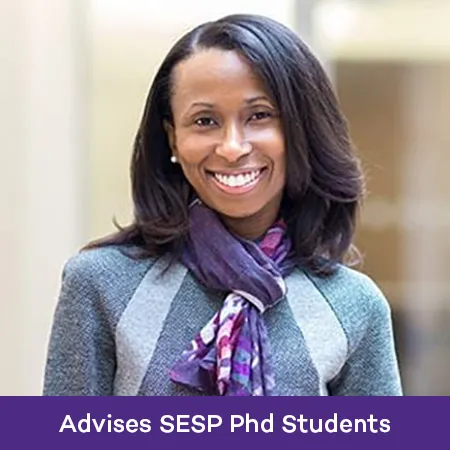
Jolie C. Matthews

Jolie C. Matthews

· Associate Professor, Learning Sciences...Verified

Northwestern University · Social Policy Analysis and Evaluation

Active 2014–2023

h-index4
Citations58
Papers136 last 5y
Funding
See your match with Jolie C. Matthews — sign in to PhdFit.Sign in

About

Jolie C. Matthews is an Associate Professor in the Learning Sciences at Northwestern University and is affiliated with the Joint PhD Program in Computer Science and Learning Sciences. Her research focuses on the sociotechnological and sociocultural dimensions of cognition, examining how media, popular culture, and digital forces influence people's beliefs about historical and contemporary events, individuals, and groups. Her work emphasizes learning across various contexts, digital literacy, historical consciousness, and the representation of individuals and groups in digital spaces, with particular attention to dominant narratives, source credibility, metacognition, and bias. She earned her PhD in Learning Sciences and Technology Design from Stanford University, where she served as a research assistant. Her scholarly contributions explore the ways media and digital environments shape understanding, influence perceptions, and contribute to social and cultural narratives, aiming to deepen insights into media literacy, bias, and digital cognition.

Research topics

  • Computer Science
  • Sociology
  • Social Science
  • Art
  • Gender studies
  • Literature
  • Political Science
  • Visual arts
  • History
  • Psychology
  • Media studies
  • Pedagogy
  • Art history
  • Biology
  • Social psychology
  • Aesthetics

Selected publications

  • Still never at the top: representation of Asian and Black characters in Sony/Marvel Studios’ <i>Spider-Man</i> trilogy

    Critical Studies in Media Communication · 2023 · 7 citations

    1st authorCorresponding
    • Sociology
    • Computer Science
    • Art history

    This article examines the portrayal of Asian and Black characters in Sony/Marvel Studios’ Spider-Man trilogy. We analyze Ned Leeds, Brad Davis, Liz Allan, and M.J. “Michelle Jones-Watson,” as well as minor characters, through the lens of racial triangulation (Kim, 1999 Kim, C. J. (1999). The racial triangulation of Asian Americans. Politics & Society, 27(1), 105–138. https://doi.org/10.1177/0032329299027001005[Crossref], [Web of Science ®] , [Google Scholar]). We focus not only on traditional white/Asian/Black comparisons across racial groups, but also on sub-triangulations within groups, such as positioning Black women in comparison to other Black women or Black men, or Asian men to other Asian men or Asian women, along with comparisons to white representations. Despite the trilogy’s diverse cast, Ned, Brad, Liz, and M.J. remain separated from and in opposition to one another, with their existence and purpose constructed around their relationship and/or relevance to Peter Parker (Spider-Man), the white main character. The trilogy furthermore employs long-standing stereotypes about people of Asian and Black descent to help maintain whiteness at the top of all triangulations. We argue for a greater need to push beyond surface representations of “diversity” to consider how media actually represent different groups.

  • College students’ perspectives of bias in their news consumption habits

    Journal of Media Literacy Education · 2022 · 5 citations

    1st authorCorresponding
    • Psychology
    • Political Science
    • Sociology

    This article builds off prior work on news consumption habits and perception of bias in the news by focusing on college students’ self-generated definitions of bias, and the strategies they employ to guard against how their personal bias potentially affects what news they choose to believe and consume. Through interviews with undergraduate students, findings show that while participants acknowledged they had personal bias to a degree, the majority still defined bias as an external issue imposed on them by others than as an internal issue shaping their thoughts about the sources they consumed. Some students attempted to mitigate any perceived bias they had by reading multiple or opposite perspectives than their own, while others believed it enough to be “aware” of their bias and continue to consume news as they pleased. A few students didn’t check their bias at all. Some saw bias as a positive under certain circumstances.

  • HISTORICAL PERSPECTIVE TAKING AND THE SELF IN ONLINE COMMUNITY DISCUSSIONS

    Discourse Processes · 2022-03-09 · 1 citations

    article1st authorCorresponding

    This article investigates how members of an online community engaged in historical perspective taking in their discussions of the events and figures portrayed in a historical television show. As a means to justify their interpretations and situate themselves inside the possible mindsets of historical figures, members drew on three aspects of the “self” in their practices: the experience-self, the identity-self, and the abstract-self. Members challenged one another’s views and provided counterarguments to support challenges to their perspectives, while simultaneously failing to acknowledge the problematic elements sometimes inherent in their views. This article extends the literature on perspective taking, content analysis, and historical interpretation in community discussions.

  • Enacting Resistance to Intersecting Oppressions Through Satirical Digital Writing on LGBTQ+ YouTube

    Routledge eBooks · 2021 · 1 citations

    • Art
    • Biology

    Digital writing on social media has the potential to both resist and reproduce the hegemonic beliefs and norms that undergird intersecting structures of power. In this chapter, we discuss enactments of resistance to intersecting oppressions, along with the tensions that arise in these activities, within the digital context of LGBTQ+ YouTube. Specifically, we examine how digital composers in LGBTQ+ reaction videos mobilized discursive repertoires of satirical humor to challenge and discuss hegemonic ideologies. Studying how people contest intersecting oppressions on social media can inform critical media pedagogies and other literacy approaches that focus on understanding and disrupting the structures of power seen in media forms and technologies. Ubiquitous on social media, humor can be a critical, creative force for subverting power and gesturing to other ways of constructing meaning and identity in the world. Yet, important tensions arise in spaces of everyday interaction, from trolls who perpetuate hate to critical commenters who flatten or equate structures of power. Educators and scholars must create room for tensions and setbacks in activities of writing resistance.

  • Media Literacy as an Internal and External Process. A Response to “Red States, Blue States, and Media Literacy: Political Context and Media Literacy”

    Democracy & Education · 2020-05-18 · 1 citations

    articleOpen access1st authorCorresponding

    Curry and Cherner’s article, “Red States, Blue States, and Media Literacy: Political Context and Media Literacy,” discusses preservice teachers’ perspectives of teaching media literacy skills in politically opposite “Red” and “Blue” States. In this response, I argue the inclusion of additional demographic information about participants might open up new avenues for which to analyze the data. I also address how the article theoretically takes up media literacy as well what other definitions exist, with suggestions for how the term might be expanded to include internal (self-reflective) and external (outside sources) processes for students and educators to consider.

  • Dominant Narratives and Historical Perspective in Time Travel Stories: A Case Study of <i>Doctor Who</i>

    The Social Studies · 2020 · 4 citations

    1st authorCorresponding
    • Sociology
    • Social Science
    • Sociology

    Historical novels, films, and other media can disrupt or reinforce dominant narratives about the past. Educators must be careful that when they attempt to select material from a range of seemingly diverse perspectives, they do not choose content that nevertheless maintains problematic depictions of people, places, and events. Time travel stories offer a unique opportunity for students to consider, discuss, and research both “the past” and popular media’s construction of the past, as well as confront their assumptions about what they believe is “true to history” and why. This article presents a case study and content analysis of the time travel TV show Doctor Who, and its narrative construction of the past around race and gender in particular. Implications are discussed for how the show might teach students about historical perspective and popular media’s influence on perceptions of history in subtle and overt ways.

  • A past that never was: historical poaching in<i>Game of Thrones</i>fans’ Tumblr practices

    Popular Communication · 2018-03-29 · 13 citations

    article1st authorCorresponding

    This article explores the textual and historical poaching practices by Tumblr fans of the novels A Song of Ice and Fire and the television adaption Game of Thrones, a pseudo-historical fantasy series. Fans critique both the text (novels and TV show) and other fans’ interpretations of the text, as well as parallel real-world history with the world and characters of the series. Tensions arise around the “historical accuracy” of the novels and show, along with the role that dominant narratives and cultural norms play in interpreting a past that never was through the lens of a real-world past. Fantasy and history intersect in layered ways and are used by fans to support a variety of textual points of view. Issues of violence, presentism, colonialism, gender, and “historical truths” are argued in relation to the ahistoricism or historicism of the novels/show.

  • Historical Inquiry in an Informal Fan Community: Online Source Usage and the TV Show<i>The Tudors</i>

    Journal of the Learning Sciences · 2015-10-29 · 14 citations

    article1st authorCorresponding

    This article examines an informal online community dedicated to The Tudors, a historical television show, and the ways in which its members engaged with a variety of sources in their discussions of the drama's real-life past. Data were collected over a 5-month period. The analysis included the types of sources used in conversation; members' purpose for invoking and reaction to sources; as well as topic, participation, and response patterns in the discussion forum. The community is a space in which popular culture and the discipline of history meet. Members come together because of a fictional depiction of the past, yet a desire to corroborate, clarify, contextualize, or uncover what really happened leads users to participate in detective-like inquiry work and the learning of new topics they had not previously considered. Members also challenge and critique one another's positions and the sources other members invoke in multiple ways, including by using more formal disciplinary heuristics in this informal setting. Key differences emerge in members' purpose for invoking sources, with popular media used more frequently for illustrating a point or asking a question and nonfiction works most invoked to support and argue historical claims.

  • Professionals and nonprofessionals on Goodreads: Behavior standards for authors, reviewers, and readers

    New Media & Society · 2015-04-24 · 27 citations

    article1st authorCorresponding

    In 2013, Goodreads, a social media Website for book lovers, announced policy changes that included the deletion of reviews that discuss an author’s behavior. These changes occurred after a series of author/reviewer incidents in 2012 and 2013. This article presents a case study of one of those incidents in 2012, when a Goodreads reviewer wrote a negative review of a novel, the author and agent responded on Twitter, and a public discussion ensued around behavior standards for both literary professionals and nonprofessionals. The above incident, and how it does or does not foreshadow the later changes in Goodreads policy, offers a lens through which to examine evolving reading and writing practices and literary censorship, as well as how nonprofessional book reviewers and readers conceive of their and literary professionals’ roles in a complex social media literary landscape.

  • "Be a Voice, Not an Echo": Supporting Identities as Digital Media Citizens

    The MIT Press eBooks · 2014-06-27

    book-chapter

Frequent coauthors

  • Caitlin K. Martin

    5 shared
  • Brigid Barron

    Stanford University

    4 shared
  • Amber Levinson

    Stanford University

    3 shared
  • Maryanna Rogers

    3 shared
  • Caitlin K. Martin

    Stanford University

    2 shared
  • Daniel Stringer

    2 shared
  • Jolene Zywica

    2 shared
  • Daniel K. Stringer

    1 shared

Education

  • PhD, Learning Sciences and Technology Design , Education

    Stanford University

  • Master of Professional Writing

    University of Southern California

  • BA, Concentation Ancient, Medieval and Renaissance Studies, Gallatin School of Individualized Studies

    New York University

  • Resume-aware match score
  • Save to shortlist
  • AI-drafted outreach

See your match with Jolie C. Matthews

PhdFit ranks faculty by your research interests, methods, and publications — grounded in their actual work, not templates.

  • Free to start
  • No credit card
  • 30-second signup