Resume-aware faculty matching

Find professors who actually fit you

Upload your resume. Four AI agents analyze your background, rank the faculty who fit, inspect their recent research, and help you draft outreach — grounded in their actual work, not templates.

Free to startNo credit cardCancel anytime
Top matches Balanced preset
Dr. Sarah Chen
Stanford · Interpretability · NLP
91
Dr. Marcus Holloway
MIT · Robotics · RL
84
Dr. Aisha Okonkwo
CMU · Fairness · HCI
82
Nova · Professor Researcher · re-ranking top 20…
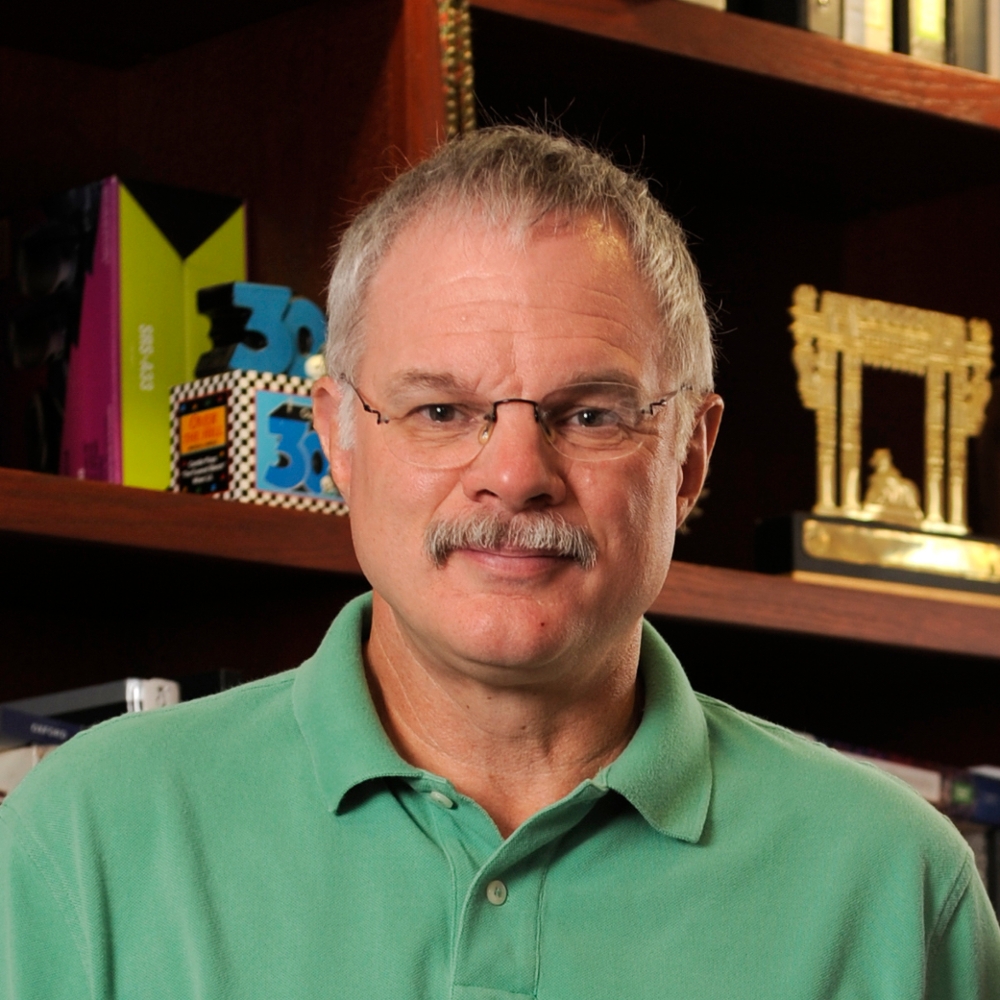
John Woolford

John Woolford

· Professor and Co-director, CNASTVerified

Carnegie Mellon University · Biological Sciences

Active 1974–2025

h-index56
Citations9.3k
Papers13010 last 5y
Funding$13.5M2 active
See your match with John Woolford — sign in to PhdFit.Sign in

About

John L. Woolford, Jr. is a Professor in the Department of Biological Sciences at Carnegie Mellon University and Co-Director of C-NAST. His laboratory studies the pathway of assembly of ribosomes in eukaryotes, utilizing the yeast Saccharomyces cerevisiae as an experimental organism. His research focuses on understanding the highly conserved process of ribosome biogenesis, including the identification and characterization of proteins necessary for this process that do not become part of the mature ribosome. Woolford's work involves state-of-the-art genomics, proteomics, molecular biology, classical genetics, and biochemical approaches to elucidate the order of ribosome assembly and the function of non-ribosomal proteins involved in ribosome biogenesis. His lab has developed methods to purify ribosome assembly intermediates, enabling detailed investigation into the assembly process and its coordination with cell growth and proliferation. Woolford's contributions have advanced understanding of the molecular mechanisms underlying ribosome assembly, with implications for cell growth regulation and disease processes.

Research topics

  • Biology
  • Genetics
  • Cell biology
  • Materials science
  • Mathematics
  • Computational biology
  • Geometry
  • Physics

Selected publications

  • Ataxin-2-like promotes translation of nonpolyadenylated reovirus mRNA

    Nature Communications · 2025-12-17 · 2 citations

    articleOpen access

    Mammalian orthoreovirus (reovirus) nonstructural protein μNS nucleates viral factories (VFs), which are sites of viral genome replication, protein synthesis, and particle assembly. Reovirus mRNAs are not polyadenylated, yet these transcripts are efficiently translated. To identify host factors associated with translation in VFs, we conducted a proteomics screen and identified ataxin-2-like (ATXN2L) as a μNS-interacting protein. CRISPR-mediated gene knockout (KO) of ATXN2L impairs reovirus replication. The ATXN2L RNA-binding domains are required for reovirus replication and association with the 3' terminus of nonpolyadenylated reovirus mRNAs. Synthesis of viral proteins is diminished in ATXN2L-KO cells following reovirus infection. Translation of a reovirus reporter construct is diminished following transfection of ATXN2L-KO cells with nonpolyadenylated mRNA but not with polyadenylated mRNA. These data identify ATXN2L as an essential mediator of translation of nonpolyadenylated reovirus mRNA.

  • Putting It All Together: The Roles of Ribosomal Proteins in Nucleolar Stages of 60S Ribosomal Assembly in the Yeast Saccharomyces cerevisiae

    Biomolecules · 2024-08-09 · 5 citations

    reviewOpen accessSenior authorCorresponding

    Here we review the functions of ribosomal proteins (RPs) in the nucleolar stages of large ribosomal subunit assembly in the yeast Saccharomyces cerevisiae. We summarize the effects of depleting RPs on pre-rRNA processing and turnover, on the assembly of other RPs, and on the entry and exit of assembly factors (AFs). These results are interpreted in light of recent near-atomic-resolution cryo-EM structures of multiple assembly intermediates. Results are discussed with respect to each neighborhood of RPs and rRNA. We identify several key mechanisms related to RP behavior. Neighborhoods of RPs can assemble in one or more than one step. Entry of RPs can be triggered by molecular switches, in which an AF is replaced by an RP binding to the same site. To drive assembly forward, rRNA structure can be stabilized by RPs, including clamping rRNA structures or forming bridges between rRNA domains.

  • Unraveling the influences of sequence and position on yeast uORF activity using massively parallel reporter systems and machine learning

    eLife · 2023 · 39 citations

    • Biology
    • Genetics
    • Computational biology

    yeast. While nearly all AUG uORFs were robust repressors, most non-AUG uORFs had relatively weak impacts on expression. Machine learning regression modeling revealed that both uORF sequences and locations within transcript leaders predict their effect on gene expression. Indeed, alternative transcription start sites highly influenced uORF activity. These results define the scope of natural uORF activity, identify features associated with translational repression and NMD, and suggest that the locations of uORFs in transcript leaders are nearly as predictive as uORF sequences.

  • Author response: Unraveling the influences of sequence and position on yeast uORF activity using massively parallel reporter systems and machine learning

    2023-05-07

    peer-reviewOpen access

    The regulatory role of thousands of upstream open-reading frames were measured and used to determine the relative influences of sequence, structural, and positional features on translation regulation and nonsense-mediated decay.

  • Yeast ribosome biogenesis factors Puf6 and Nog2 and ribosomal proteins uL2 and eL43 act in concert to facilitate the release of nascent large ribosomal subunits from the nucleolus

    Nucleic Acids Research · 2023-10-09 · 4 citations

    articleOpen accessSenior author

    Large ribosomal subunit precursors (pre-LSUs) are primarily synthesized in the nucleolus. At an undetermined step in their assembly, they are released into the nucleoplasm. Structural models of yeast pre-LSUs at various stages of assembly have been collected using cryo-EM. However, which cryo-EM model is closest to the final nucleolar intermediate of the LSU has yet to be determined. To elucidate the mechanisms of the release of pre-LSUs from the nucleolus, we assayed effects of depleting or knocking out two yeast ribosome biogenesis factors (RiBi factors), Puf6 and Nog2, and two ribosomal proteins, uL2 and eL43. These proteins function during or stabilize onto pre-LSUs between the late nucleolar stages to early nucleoplasmic stages of ribosome biogenesis. By characterizing the phenotype of these four mutants, we determined that a particle that is intermediate between the cryo-EM model State NE1 and State NE2 likely represents the final nucleolar assembly intermediate of the LSU. We conclude that the release of the RiBi factors Nip7, Nop2 and Spb1 and the subsequent stabilization of rRNA domains IV and V may be key triggers for the release of pre-LSUs from the nucleolus.

  • Additional principles that govern the release of pre-ribosomes from the nucleolus into the nucleoplasm in yeast

    Nucleic Acids Research · 2022-06-23 · 15 citations

    articleOpen accessSenior authorCorresponding

    During eukaryotic ribosome biogenesis, pre-ribosomes travel from the nucleolus, where assembly is initiated, to the nucleoplasm and then are exported to the cytoplasm, where assembly concludes. Although nuclear export of pre-ribosomes has been extensively investigated, the release of pre-ribosomes from the nucleolus is an understudied phenomenon. Initial data indicate that unfolded rRNA interacts in trans with nucleolar components and that, when rRNA folds due to ribosomal protein (RP) binding, the number of trans interactions drops below the threshold necessary for nucleolar retention. To validate and expand on this idea, we performed a bioinformatic analysis of the protein components of the Saccharomyces cerevisiae ribosome assembly pathway. We found that ribosome biogenesis factors (RiBi factors) contain significantly more predicted trans interacting regions than RPs. We also analyzed cryo-EM structures of ribosome assembly intermediates to determine how nucleolar pre-ribosomes differ from post-nucleolar pre-ribosomes, specifically the capacity of RPs, RiBi factors, and rRNA components to interact in trans. We observed a significant decrease in the theoretical trans-interacting capability of pre-ribosomes between nucleolar and post-nucleolar stages of assembly due to the release of RiBi factors from particles and the folding of rRNA. Here, we provide a mechanism for the release of pre-ribosomes from the nucleolus.

  • Ribosomal protein eL39 is important for maturation of the nascent polypeptide exit tunnel and proper protein folding during translation

    Nucleic Acids Research · 2022-05-27 · 15 citations

    articleOpen accessCorresponding

    During translation, nascent polypeptide chains travel from the peptidyl transferase center through the nascent polypeptide exit tunnel (NPET) to emerge from 60S subunits. The NPET includes portions of five of the six 25S/5.8S rRNA domains and ribosomal proteins uL4, uL22, and eL39. Internal loops of uL4 and uL22 form the constriction sites of the NPET and are important for both assembly and function of ribosomes. Here, we investigated the roles of eL39 in tunnel construction, 60S biogenesis, and protein synthesis. We show that eL39 is important for proper protein folding during translation. Consistent with a delay in processing of 27S and 7S pre-rRNAs, eL39 functions in pre-60S assembly during middle nucleolar stages. Our biochemical assays suggest the presence of eL39 in particles at these stages, although it is not visualized in them by cryo-electron microscopy. This indicates that eL39 takes part in assembly even when it is not fully accommodated into the body of pre-60S particles. eL39 is also important for later steps of assembly, rotation of the 5S ribonucleoprotein complex, likely through long range rRNA interactions. Finally, our data strongly suggest the presence of alternative pathways of ribosome assembly, previously observed in the biogenesis of bacterial ribosomal subunits.

  • Unraveling the influences of sequence and position on yeast uORF activity using massively parallel reporter systems and machine learning

    bioRxiv (Cold Spring Harbor Laboratory) · 2021-04-17 · 5 citations

    preprintOpen access

    Abstract Upstream open reading frames (uORFs) are potent cis -acting regulators of mRNA translation and nonsense-mediated decay (NMD). While both AUG- and non-AUG initiated uORFs are ubiquitous in ribosome profiling studies, few uORFs have been experimentally tested. Consequently, the relative influences of sequence, structural, and positional features on uORF activity have not been determined. We quantified thousands of yeast uORFs using massively parallel reporter assays in wildtype and Δ upf1 yeast. While nearly all AUG uORFs were robust repressors, most non-AUG uORFs had relatively weak impacts on expression. Machine learning regression modeling revealed that uORF functions are strongly impacted by both their sequences and locations within transcript leaders. Indeed, alternative transcription start sites highly influenced uORF activity. These results define the scope of natural uORF activity, identify features associated with translational repression and NMD, and suggest that the locations of uORFs in transcript leaders are nearly as important as uORF sequences.

  • The nucleolus as a polarized coaxial cable in which the rDNA axis is surrounded by dynamic subunit-specific phases

    Current Biology · 2021-04-16 · 21 citations

    articleOpen accessSenior author
  • Translation | Ribosome Assembly

    Elsevier eBooks · 2021-01-01

    book-chapterSenior author

Recent grants

Frequent coauthors

  • Jelena Jakovljevic

    University of Kragujevac

    23 shared
  • Michael Gamalinda

    Bayer (Germany)

    17 shared
  • Yi‐Fang Tsay

    Institute of Molecular Biology, Academia Sinica

    14 shared
  • Mohanish Deshmukh

    14 shared
  • Amanda G. Paulovich

    Fred Hutch Cancer Center

    13 shared
  • Jason Talkish

    University of California, Santa Cruz

    11 shared
  • Ning Gao

    National Center for Nanoscience and Technology

    11 shared
  • Jesús de la Cruz

    Universidad Autónoma de Coahuila

    10 shared

Labs

Education

  • Ph.D.

    Duke University

  • Other

    Brandeis University

  • Resume-aware match score
  • Save to shortlist
  • AI-drafted outreach

See your match with John Woolford

PhdFit ranks faculty by your research interests, methods, and publications — grounded in their actual work, not templates.

  • Free to start
  • No credit card
  • 30-second signup