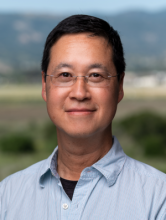
John S. W. Park
· ProfessorUniversity of California, Santa Barbara · Asian American Studies
Active 2004–2022
About
John S. W. Park is a Professor of Asian American Studies and an affiliated faculty member in Sociology at the University of California, Santa Barbara. His academic specialization includes immigration law and policy, race theory, political theory, and public law. He completed his Ph.D. in Jurisprudence and Social Policy at Berkeley's Boalt Hall School of Law in 2000, after earning a Master’s degree in Public Policy from Harvard Kennedy School in 1993 and a B.A. in Rhetoric from Berkeley, graduating summa cum laude and Phi Beta Kappa in 1991. Prior to his current appointment, he was an Assistant Professor of American Studies and Asian American Studies at the University of Texas at Austin. His professional experience includes working for a year at an immigration law firm in San Francisco. Professor Park has held various administrative roles, including Associate Dean for Undergraduate Education at UCSB and Associate Director for the UC Center for New Racial Studies. He has also served as Chair of the Department of Asian American Studies and has been a visiting faculty member at the Yonsei International Summer School in Seoul, South Korea. His scholarly work includes the publication of several books, notably 'Elusive Citizenship' (2004), which explores the philosophical and legal justifications for federal immigration law and its impact on Asian Americans; 'Probationary Americans' (2005), co-authored with his brother Edward Park, on contemporary immigration rules and race theory; and 'Illegal Migrations and the Huckleberry Finn Problem' (2013), which was recognized as an Outstanding Academic Title by the Association of College and Research Libraries. Currently, he is working on a scholarly book on Korean and Korean American history. Professor Park has contributed extensively to academic journals, edited volumes, and review publications in the fields of race, immigration, and Asian American Studies. His teaching encompasses courses on Asian American legal history, Korean American history, Chinese American history, colonialism and migration, legal issues in Asian American communities, law and politics, race and law, and jurisprudence, all from interdisciplinary perspectives. He has also been involved in international teaching, including courses on American immigration and constitutional law in Seoul. His professional service includes editorial board memberships, manuscript reviews, and leadership roles within academic organizations. He is actively engaged in advising students and has received awards for his service to students and his contributions to the university community.
Research topics
- Political Science
- Law
- Computer Science
Selected publications
New York University Press eBooks · 2022
1st authorCorresponding- Political Science
- Law
- Political Science
New York University Press eBooks · 2022
1st authorCorresponding- Political Science
- Political Science
- Law
Since the late nineteenth century, federal and state rules governing immigration and naturalization have placed persons of Asian ancestry outside the boundaries of formal membership. A review of leading cases in American constitutional law regarding Asians would suggest that initially, Asian immigrants tended to evade exclusionary laws through deliberate misrepresentations of their identities or through extralegal means. Eventually, many of these immigrants and their descendants came to accept prevailing legal norms governing their citizenship in the United States. In many cases, this involved embracing notions of white supremacy. John S. W. Park argues that American rules governing citizenship and belonging remain fundamentally unjust, even though they suggest the triumph of a "civil rights" vision, where all citizens share the same basic rights. By continuing to privilege members over non-members in ways that are politically popular, these rules mask injustices that violate principles of fairness. Importantly, Elusive Citizenship also suggests that politically and socially, full membership in American society remains closely linked with participation in exclusionary practices that isolate racial minorities in America.
New York University Press eBooks · 2020
1st authorCorresponding- Computer Science
- Computer Science
JAMA Oncology · 2020 · 220 citations
- Medicine
- Internal medicine
- Oncology
Importance: Pathologic complete response (pCR) is a known prognostic biomarker for long-term outcomes. The I-SPY2 trial evaluated if the strength of this clinical association persists in the context of a phase 2 neoadjuvant platform trial. Objective: To evaluate the association of pCR with event-free survival (EFS) and pCR with distant recurrence-free survival (DRFS) in subpopulations of women with high-risk operable breast cancer treated with standard therapy or one of several novel agents. Design, Setting, and Participants: Multicenter platform trial of women with operable clinical stage 2 or 3 breast cancer with no prior surgery or systemic therapy for breast cancer; primary tumors were 2.5 cm or larger. Women with tumors that were ERBB2 negative/hormone receptor (HR) positive with low 70-gene assay score were excluded. Participants were adaptively randomized to one of several different investigational regimens or control therapy within molecular subtypes from March 2010 through 2016. The analysis included participants with follow-up data available as of February 26, 2019. Interventions: Standard-of-care neoadjuvant therapy consisting of taxane treatment with or without (as control) one of several investigational agents or combinations followed by doxorubicin and cyclophosphamide. Main Outcomes and Measures: Pathologic complete response and 3-year EFS and DRFS. Results: Of the 950 participants (median [range] age, 49 [23-77] years), 330 (34.7%) achieved pCR. Three-year EFS and DRFS for patients who achieved pCR were both 95%. Hazard ratios for pCR vs non-pCR were 0.19 for EFS (95% CI, 0.12-0.31) and 0.21 for DRFS (95% CI, 0.13-0.34) and were similar across molecular subtypes, varying from 0.14 to 0.18 for EFS and 0.10 to 0.20 for DRFS. Conclusions and Relevance: The 3-year outcomes from the I-SPY2 trial show that, regardless of subtype and/or treatment regimen, including 9 novel therapeutic combinations, achieving pCR after neoadjuvant therapy implies approximately an 80% reduction in recurrence rate. The goal of the I-SPY2 trial is to rapidly identify investigational therapies that may improve pCR when validated in a phase 3 confirmatory trial. Whether pCR is a validated surrogate in the sense that a therapy that improves pCR rate can be assumed to also improve long-term outcome requires further study. Trial Registration: ClinicalTrials.gov Identifier: NCT01042379.
Awards & honors
- Mellon Sawyer Seminar Award on "Race, Precarity, and Privile…
- Outstanding Academic Title by the Association of College and…
- Margaret T. Getman Service to Students Award (2011)
Similar researchers at University of California, Santa Barbara
- Resume-aware match score
- Save to shortlist
- AI-drafted outreach
See your match with John S. W. Park
PhdFit ranks faculty by your research interests, methods, and publications — grounded in their actual work, not templates.
- Free to start
- No credit card
- 30-second signup