
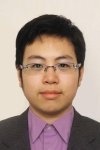
Jing Yan
· Assistant Professor of Molecular, Cellular and Developmental BiologyYale University · Psychology
Active 2004–2026
Academic metrics are sourced from OpenAlex and public funding records; values may differ from Google Scholar.
About
Jing Yan is an assistant professor of molecular, cellular and developmental biology at Yale’s Faculty of Arts and Sciences. Her research focuses on understanding the biochemical and biophysical interactions within bacterial biofilm communities, particularly those formed by Vibrio cholerae, the bacterium responsible for cholera. Her work aims to uncover how bacteria recognize each other, adhere to surfaces, and then disperse to form new colonies, which is crucial for developing strategies to combat biofilm-related infections that are resistant to antibiotics. Yan's research employs a combination of genetics, microscopy, simulations, and biochemical analyses to investigate the molecular mechanisms underlying biofilm formation and dispersal. She has contributed to revealing that the extracellular matrix of biofilms, mainly composed of exopolysaccharides (EPS), is not inherently sticky but instead plays a role in excluding non-contributing cells, effectively acting as a membership marker. Her findings also show that as biofilms age, bacteria remodel their surfaces to switch interactions from attraction to repulsion, facilitating dispersal and colonization of new environments. Yan's work provides significant insights into the complex dynamics of bacterial communities and has implications for developing new approaches to treat biofilm-associated infections.
Research topics
- Biology
- Materials science
- Microbiology
- Genetics
- Nanotechnology
- Chemistry
- Physics
- Quantum mechanics
- Business
- Mathematics
Selected publications
Nano Energy · 2020 · 123 citations
Physical Biology · 2021 · 95 citations
Bacterial biofilms are communities of bacteria that exist as aggregates that can adhere to surfaces or be free-standing. This complex, social mode of cellular organization is fundamental to the physiology of microbes and often exhibits surprising behavior. Bacterial biofilms are more than the sum of their parts: single-cell behavior has a complex relation to collective community behavior, in a manner perhaps cognate to the complex relation between atomic physics and condensed matter physics. Bio…
Morphogenesis and cell ordering in confined bacterial biofilms
Proceedings of the National Academy of Sciences · 2021 · 92 citations
Senior authorCorrespondingbiofilms embedded in hydrogels as they grow by four orders of magnitude from their initial size. We show that the morphodynamics and cell ordering in embedded biofilms are fundamentally different from those of biofilms on flat surfaces. Treating embedded biofilms as inclusions growing in an elastic medium, we quantitatively show that the stiffness contrast between the biofilm and its environment determines biofilm morphology and internal architecture, selecting between spherical biofilms with no…
Searching for the Secret of Stickiness: How Biofilms Adhere to Surfaces
Frontiers in Microbiology · 2021 · 70 citations
Senior authorCorresponding. Techniques used to characterize biofilm adhesion are also reviewed. An understanding of biofilm adhesion strategies can guide the development of novel approaches to inhibit or manipulate biofilm adhesion and growth.
Lipoarabinomannan mediates localized cell wall integrity during division in mycobacteria
Nature Communications · 2024-03-11 · 21 citations
articleOpen accessThe growth and division of mycobacteria, which include clinically relevant pathogens, deviate from that of canonical bacterial models. Despite their Gram-positive ancestry, mycobacteria synthesize and elongate a diderm envelope asymmetrically from the poles, with the old pole elongating more robustly than the new pole. The phosphatidylinositol-anchored lipoglycans lipomannan (LM) and lipoarabinomannan (LAM) are cell envelope components critical for host-pathogen interactions, but their physiolog…
Recent grants
Collaborative Research: Multiscale Analysis and Simulation of Biofilm Mechanics
NSF · $522k · 2022–2025
Frequent coauthors
- 29 shared
Japinder Nijjer
Yale University
- 28 shared
Steve Granick
University of Massachusetts Amherst
- 28 shared
Bonnie L. Bassler
Howard Hughes Medical Institute
- 25 shared
Howard A. Stone
- 20 shared
Qiuting Zhang
Fuzhou University
- 18 shared
Ned S. Wingreen
Princeton University
- 16 shared
Rich Olson
Wesleyan University
- 13 shared
Jung‐Shen B. Tai
University of Colorado Boulder
Labs
Yale Biofilm Research LabPI
Education
- 2014
Ph.D., Materials Science and Engineering
University of Illinois at Urbana-Champaign
- 2009
BS, Chemistry
Peking University
Awards & honors
- Breakthrough Prize in Fundamental Physics (2026)
Similar researchers at Yale University
- Resume-aware match score
- Save to shortlist
- AI-drafted outreach
See your match with Jing Yan
PhdFit ranks faculty by your research interests, methods, and publications — grounded in their actual work, not templates.
- Free to start
- No credit card
- 30-second signup