
Resume-aware faculty matching

Find professors who actually fit you

Upload your resume. Four AI agents analyze your background, rank the faculty who fit, inspect their recent research, and help you draft outreach — grounded in their actual work, not templates.

Free to startNo credit cardCancel anytime
Top matches Balanced preset
Dr. Sarah Chen
Stanford · Interpretability · NLP
91
Dr. Marcus Holloway
MIT · Robotics · RL
84
Dr. Aisha Okonkwo
CMU · Fairness · HCI
82
Nova · Professor Researcher · re-ranking top 20…
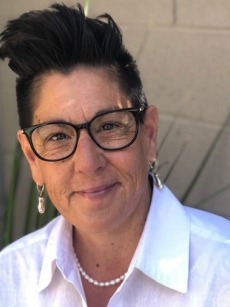
Jill Koyama

Jill Koyama

· External AffiliateVerified

University of Arizona · Public & Applied Humanities

Active 2004–2025

h-index19
Citations905
Papers7817 last 5y
Funding
See your match with Jill Koyama — sign in to PhdFit.Sign in

About

Jill Koyama is Vice Dean for Educational Leadership & Innovation at Arizona State University. Drawing on her educational training in both anthropology and education at Teachers College, Columbia University, she focuses her research on the intersections of social inequities and educational policy. Her work is situated across three integrated strands of inquiry: the productive social assemblage of policy; the controversies of globalizing educational policy; and the politics of language policy and immigrant and refugee education. For the past eight years, her research has centered on how, even under dire circumstances and inhospitable politics, refugee, asylum seekers, and other newcomers access and create resource-rich networks, make space for themselves and their families, and take civic action in the United States. Her research challenges notions of global citizenship and interrogates traditional pathways of civic engagement and education. She authored the book "Making Failure Pay: High-Stakes Testing, For-Profit Tutoring, and Public Schools," published in 2010 by The University of Chicago Press, and co-edited the volume "US Education in a World of Migration: Implications for Policy and Practice" in 2014, published by Routledge Press. Her work has appeared in several academic journals, including the American Journal of Education, Anthropology and Education Quarterly, British Journal of Sociology of Education, Educational Policy, Educational Researcher, Journal of Education Policy, and Urban Review.

Research topics

  • Sociology
  • Political science
  • Public relations
  • Pedagogy
  • Psychology

Selected publications

  • Anthropology and Education Policy Research:

    2025-07-17

    book-chapterSenior author
  • “Cruel Optimism”: The Unmet Promises of US Schooling for Those Who Are Labeled as “Refugees”

    2025-04-17 · 1 citations

    book-chapter1st authorCorresponding

    Globally, refugees are portrayed as victims in need of humanitarian aid or alternatively, suspicious burdens on resettlement nations, such as the United States (US). Further, refugees are often portrayed as distinctly different from other migrants. However, in schools in the Southwestern US, students of refugee background and students whose families have crossed the Mexican–US border often find themselves as classmates. Here, the author contributes to the fields of education policy and praxis by analyzing the politics and complexities of labeling minoritized students in schools. Drawing on data collected in an 18-month case study of a Southwest school district’s response to students of refugee and migrant backgrounds and their families, the author interrogates the labeling and positioning of the students in policy and practices. The author shows students of refugee and Mexican-migrant backgrounds being put in competition against each other for educational supports and resources students. The author also reveals how some of the students refuse both the labels and positioning. The author concludes with the implications for all students and offers recommendations for educators.

  • Educational Anthropologists Respond to the 2024 <scp>US</scp> Presidential Election

    Anthropology & Education Quarterly · 2025-03-29 · 2 citations

    articleOpen access

    ABSTRACT This multivocal, multimedia commentary presents some educational anthropologists' responses to the 2024 US Presidential election and events immediately following. It follows the 2017 special issue entitled “Educational Anthropologists Respond to the 2016 US Presidential Election.”

  • Working the ruins: Coloniality and what remains in refugee education

    International Journal of Qualitative Studies in Education · 2025-05-14 · 1 citations

    articleCorresponding
  • "America Will Educate Me Now": What Do Iraqi Refugees with Special Immigrant Visas Deserve and Who Decides?

    Journal on Education in Emergencies · 2025-01-01

    articleOpen access1st authorCorresponding

    Although thousands of Iraqi refugees who worked with the Allied Forces during the Iraq war have been resettled in the United States, little is known about their experiences. In the aggregate, they are a well-educated, multilingual subset of refugees who aspire to earn college and higher education degrees. In this article, I draw from a series of interviews conducted between 2011 and 2018 with 13 of these Iraqi refugees. My aim is to more fully understand and document their college-going experiences in the US. Framed by notions of deservingness and coloniality in education, this study is driven by two questions: In what ways and by whom are Iraqi refugees with Special Immigrant Visas positioned with regard to deservingness and worthiness in higher education? How do they position themselves? I explore how notions and discourses of deservingness, and their practical and political application, affect the resettlement experiences of these Iraqi refugees. The findings indicate that, because of their Special Immigrant Visa designation and their work with the Allied Forces, these refugees are positioned, and position themselves, not only as deserving but sometimes as being owed a college education. The study offers insights into the long-term effects crisis has on the education of those who are far removed, both geographically and temporally, from a crisis-affected area where they once lived.

  • Coloniality and Refugee Education in the United States

    Social Sciences · 2024-06-13 · 8 citations

    articleOpen access1st authorCorresponding

    In this paper, we demonstrate the ways in which the schooling of refugee youth in the United States reflects ongoing coloniality in education. Drawing on data collected in a case study, conducted between 2013 and 2016, as part of a larger ongoing ethnography of a Southwest United States District school’s response to refugee students, we show how the enactment of policies, pedagogies, and practices within schools reinforce the government’s control over refugee students and their families. In schools, the students are kept out of certain school spaces, marginalized in remedial courses, and denied academic opportunities and integrated support services. Using empirical data, we demonstrate how the restriction of the students’ movement in and around schools is embedded within the larger limitations embedded in coloniality and assimilation. We situate our analysis within the tensions and interactions between coloniality, assimilation, and neoliberalism as articulated in studies within anthropology and sociology, migration studies, critical refugee studies, and cultural studies. We conclude with a call for the decolonization of education and offer a practical starting point in refugee education.

  • A note from the editorial team

    Anthropology & Education Quarterly · 2024-04-22

    articleOpen access

    Like teaching, editing is time-consuming work that often leaves less time for reflection than we would like, even with the support of our wonderful associate editors and reviewers.However, since we assumed the AEQ editorship in January 2023, we wanted to take the time to reflect carefully on what the journal has emphasized (and not emphasized) in the recent past, to become aware of any biases or blind spots that may be shaping what gets accepted for publication in the journal-and, by extension, what topics potential authors might see as appropriate or desirable (or less so) for AEQ.We hope readers will indulge the exercise of doing a bit of quantitative analysis on our own professional practice, which tends to be overwhelmingly qualitative.In order to take a systematic look at what groups, topics, and methods have been well represented and possibly underrepresented in AEQ over the past decade, we decided to conduct an analysis that is quite different methodologically from what usually appears in the journal.AEQ book review editor Katie Clones compiled a study corpus (dataset) composed of all the abstracts from the past 10 years of AEQ, excluding those from special issues and reflections from or on the field.For the purposes of comparison, Katie then compiled a reference corpus of all the abstracts from the past 10 years of two journals that are closely related to AEQ in aims and scope and in which many AEQ authors also publish: International Journal of Qualitative Studies in Education (QSE) and Equity, Excellence & Education (EEE).She also excluded abstracts from articles for special issues of those journals.In total, the AEQ study corpus contains 15,983 words, and the QSE-EEE reference corpus contains 140,483 words.Brendan then drew on his training in linguistics to conduct what is known in corpus linguistics as a "keyword analysis," using the free software package #LancsBox (Brezina et al., 2021).Briefly, a keyword analysis compares two different corpora to see whether there are statistically significant differences in how likely a word is to appear in one of them but not the other.In other words, a keyword analysis of the study corpus (AEQ abstracts) and reference corpus (QSE-EEE abstracts) should indicate whether there are topics, groups, and methods that are more likely to appear in AEQ than in any other journal.Those are called "positive keywords."Words that are less likely to appear in AEQ than its competitors are called "negative keywords."Obligatory corpus linguistics boilerplate follows: For the identification of keywords, Kilgarriff's (2009) simple maths parameter was used with the

  • The Labeling and Positioning of Refugee Students and Their Refusal to be (Mis)Positioned

    Multicultural Perspectives · 2023-10-02 · 9 citations

    article1st authorCorresponding

    Around the world, refugees are portrayed as victims in need of humanitarian aid or alternatively, suspicious burdens on resettlement societies. These stereotypical portrayals position them as distinct from other migrants. However, in schools, students are homogenized. Here, we contribute to the fields of multicultural education and migration studies by analyzing the politics and complexities of labeling minoritized students in schools. Drawing on data collected in an 18-month case study of a Southwest school district's response to refugee students and their families, we interrogate the labeling and positioning of refugee students. We show refugee students from African and Middle Eastern nations being labeled as African American to bolster a school districts' racial desegregation data and being put in competition with Mexican-migrant students for services. We also reveal how some of the refugees refuse the labels and positioning. We conclude with the implications for all students and offer recommendations for educators.

  • Fabricating and positioning refugees as workers in the United States

    Discourse Studies in the Cultural Politics of Education · 2023-08-23 · 4 citations

    article1st authorCorresponding

    ABSTRACTIn this paper, which draws on two years of qualitative research, I examine the ways in which refugees are positioned and position themselves in job training programs and in their initial US jobs. I provide examples of how ‘factishes’, a combination of facts and fetishes, are fabricated and position the refugees, and those working with them, in discourses associated with migration. Moving from notions of humanitarian aid to economic utility, trainers and employers position the refugees as economic stabilizers, capable of performing low-skill jobs, which US-born workers do not often choose, and which undocumented Mexican migrants do not ‘deserve’. In doing so, they also position themselves as helpful humanitarians. The positioning is useful in securing initial employment for the refugees but not in longer term career advancement. Some of the refugees challenge the positioning, modifying the factishes to improve their employment prospects and possibly their long-term integration into society.KEYWORDS: Refugeesvocational trainingpositioning theoryfactishesemploymentUnited States Disclosure statementNo potential conflict of interest was reported by the author(s).

  • Note from the editors

    Anthropology & Education Quarterly · 2023-08-24

    articleSenior authorCorresponding

    We follow what has become a tradition, since the 1970s, in publishing the Council on Anthropology and Education (CAE) presidential addresses alongside colleagues' responses. The following conversation, initiated by the 2016 presidential address of Bradley A. Levinson (this issue), continues Anthropology & Education Quarterly's documentation of what educational anthropologists have done, have thought about, and continue to debate. Levinson, following Patricia Sánchez, argues that maintaining a written record of such conversations—and disagreements—is “important for CAE's [collective] ethnographic soul” (this issue). To his initial remarks, Levinson appends historical context and commentary on the writing and reception of the address. We present his piece and two accompanying responses, by Bryan McKinley Jones Brayboy and Sofia A. Villenas, as a particular conversation in anthropology and education that spans several years. Importantly, the conversation is not limited to the articles in this issue of AEQ. A multiplicity of other voices, past and present, exists in this series of articles. Brayboy observes that his response engages other “data points,” including his in-person attendance at Levinson's 2016 address and their subsequent correspondence between 2017 and 2018, mediated by the AEQ editorial team at that time. Villenas, for her part, reflects on the collaboratively developed CAE mission statement in terms of what it affords critical scholars and practitioners in the anthropology of education as we mentor graduate students and seek to be relevant to “a broad spectrum of educators, public pedagogues, knowledge holders, and policy makers” (this issue). All three pieces in this issue are also in dialogue with Marta Baltodano's 2017 presidential address (published in 2019) and the corresponding responses from Patricia Sánchez (2019) and Rosemary Henze (2019). At the time, Henze asserted that presidential addresses are “part of a larger dialogue and history, and. . . cannot and should not be taken out of context” (398). She also lamented that “some of the previous discourse to which [Baltodano] responds remains unpublished, so we cannot go back and see for ourselves the full text to which she is responding” (Henze, 2019, 398). Sánchez, likewise, pointed to the historical importance of AEQ as a “stable platform where we can document and preserve at least part of our history, including our organization's trials and tribulations” (2019, 402). While we think it important to address this gap in the record, we also urge readers of this issue to return to Baltodano's 2017 presidential address and responses to understand this snippet of the larger conversation in context. Levinson, Brayboy, and Villenas all advocate a vision of CAE as “a big tent of educators, administrators, and researchers who work in schools, community-based organizations, and sites of adult education” (Villenas, this issue). Understandably, and demonstrated across the three pieces, the “big tent” includes a diversity of ideas and, indeed, some tensions. Within that tent, Brayboy eloquently affirms that we need spaces in which to engage one another generously in light of different perspectives and various understandings of the field. As editors, we hope that AEQ is one of those spaces and that publishing these three pieces will seed future dialogue in anthropology and education.

Frequent coauthors

  • Resume-aware match score
  • Save to shortlist
  • AI-drafted outreach

See your match with Jill Koyama

PhdFit ranks faculty by your research interests, methods, and publications — grounded in their actual work, not templates.

  • Free to start
  • No credit card
  • 30-second signup