
Jesse Dixon
· M.D., Ph.D.University of California, San Diego · Medical Genetics
Active 1878–2025
Academic metrics are sourced from OpenAlex and public funding records; values may differ from Google Scholar.
About
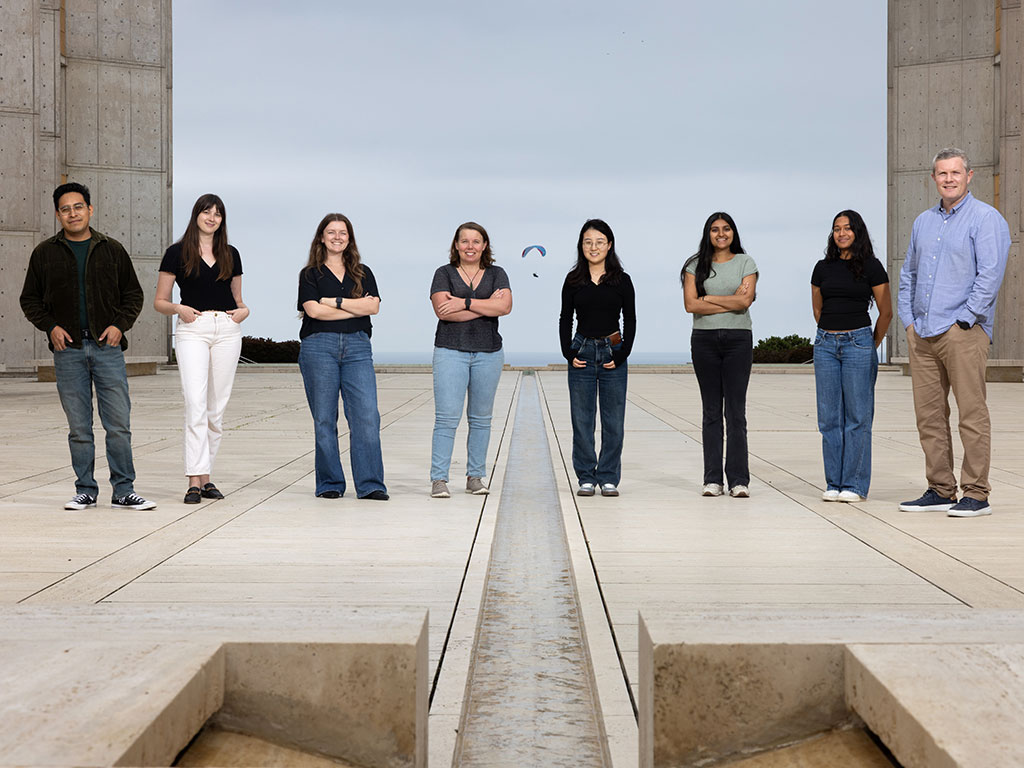
Jesse Dixon is an Associate Professor in the Gene Expression Laboratory at the Salk Institute for Biological Studies. He completed his undergraduate degree in Molecular Biology at Princeton University. He then earned both his MD and PhD at the University of California San Diego, where his PhD research in Biomedical Sciences was conducted in the lab of Bing Ren, focusing on genome-wide principles of higher-order chromatin structure. Jesse Dixon began his independent career at the Salk Institute as an independent fellow through the Helmsley Salk Fellows Program. His research centers on understanding the organization and regulation of the genome, particularly the principles governing chromatin architecture and its impact on gene expression.
Research topics
- Biology
- Cell biology
- Chemistry
- Cancer research
- Computational biology
- Genetics
Selected publications
Proceedings of the National Academy of Sciences · 2018-07-09 · 178 citations
articleOpen access, has been in medicinal use since ancient times. However, the therapeutic targets and signaling cascades modulated by curcumin have been enigmatic despite extensive research. Here we identify dual-specificity tyrosine-regulated kinase 2 (DYRK2), a positive regulator of the 26S proteasome, as a direct target of curcumin. Curcumin occupies the ATP-binding pocket of DYRK2 in the cocrystal structure, and it potently and specifically inhibits DYRK2 over 139 other kinases tested in vitro. As a result,…
Structure and evolution of the Fam20 kinases
Nature Communications · 2018-03-19 · 84 citations
articleOpen accessThe Fam20 proteins are novel kinases that phosphorylate secreted proteins and proteoglycans. Fam20C phosphorylates hundreds of secreted proteins and is activated by the pseudokinase Fam20A. Fam20B phosphorylates a xylose residue to regulate proteoglycan synthesis. Despite these wide-ranging and important functions, the molecular and structural basis for the regulation and substrate specificity of these kinases are unknown. Here we report molecular characterizations of all three Fam20 kinases, an…
Hippo pathway regulation by phosphatidylinositol transfer protein and phosphoinositides
Nature Chemical Biology · 2022 · 63 citations
Proceedings of the National Academy of Sciences · 2019-11-21 · 61 citations
articleOpen accessDependence on the 26S proteasome is an Achilles' heel for triple-negative breast cancer (TNBC) and multiple myeloma (MM). The therapeutic proteasome inhibitor, bortezomib, successfully targets MM but often leads to drug-resistant disease relapse and fails in breast cancer. Here we show that a 26S proteasome-regulating kinase, DYRK2, is a therapeutic target for both MM and TNBC. Genome editing or small-molecule mediated inhibition of DYRK2 significantly reduces 26S proteasome activity, bypasses b…
Reversible phosphorylation of Rpn1 regulates 26S proteasome assembly and function
Proceedings of the National Academy of Sciences · 2019-12-16 · 58 citations
articleOpen accessThe fundamental importance of the 26S proteasome in health and disease suggests that its function must be finely controlled, and yet our knowledge about proteasome regulation remains limited. Posttranslational modifications, especially phosphorylation, of proteasome subunits have been shown to impact proteasome function through different mechanisms, although the vast majority of proteasome phosphorylation events have not been studied. Here, we have characterized 1 of the most frequently detected…
Recent grants
NIH · $1.3M · 2015
NIH · $1.8M · 2010
NIH · $134k · 1989
Frequent coauthors
- 78 shared
Carolyn A. Worby
University of California, San Diego
- 46 shared
C D Minth
University of Michigan–Ann Arbor
- 44 shared
Bernard A. Roos
- 40 shared
Philip Andrews
University of Alaska Fairbanks
- 38 shared
Randy S. Haun
Arkana Laboratories
- 36 shared
Sandra E. Wiley
MEI Pharma (United States)
- 35 shared
Junyu Xiao
Peking University
- 33 shared
Tomohiko Maehama
Kobe University
Labs
1-2 sentence research focus
Similar researchers at University of California, San Diego
- Resume-aware match score
- Save to shortlist
- AI-drafted outreach
See your match with Jesse Dixon
PhdFit ranks faculty by your research interests, methods, and publications — grounded in their actual work, not templates.
- Free to start
- No credit card
- 30-second signup