
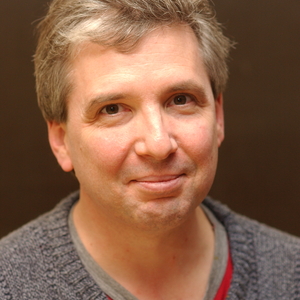
Jeffrey Park
· Professor of Earth & Planetary SciencesYale University · Department of Earth and Planetary Sciences
Active 1981–2025
Academic metrics are sourced from OpenAlex and public funding records; values may differ from Google Scholar.
About
Jeffrey Park is a Professor of Earth & Planetary Sciences at Yale University and serves as the Director of Graduate Studies in the department. His research focuses on mapping mantle flow associated with plate tectonics using seismic anisotropy, as well as utilizing scattered seismic waves and seismic anisotropy to infer aligned cracks and rock fabrics in the Earth's crust. He has a background in physics, having received his Bachelor of Science Degree from Princeton University in 1979, and earned his Doctorate in Earth Sciences from the University of California, San Diego in 1985. His early interest in earth sciences was sparked by the 1971 earthquake in Sylmar, California, and his subsequent introduction to plate tectonics solidified his commitment to the field. Park has held various offices, including Director of the Yale Institute for Biospheric Studies, Chairman of the Environmental Studies Program at Yale College, and President of the Seismology Section of the American Geophysical Union. His teaching philosophy emphasizes advising students with active curiosity and providing them with projects that foster independence and interest, often leading students to present at scientific meetings within months of research. His background and research contributions are rooted in seismology, geophysics, and earth system science.
Research topics
- Geology
- Oceanography
- Seismology
- Geochemistry
- Mineralogy
- Telecommunications
- Engineering
- Geophysics
Selected publications
Progress in Earth and Planetary Science · 2020 · 62 citations
Senior authorCorrespondingAbstract Oceans on Earth are present as a result of dynamic equilibrium between degassing and regassing through the interaction with Earth’s interior. We review mineral physics, geophysical, and geochemical studies related to the global water circulation and conclude that the water content has a peak in the mantle transition zone (MTZ) with a value of 0.1–1 wt% (with large regional variations). When water-rich MTZ materials are transported out of the MTZ, partial melting occurs. Vertical directi…
A Plan for a Long-Term, Automated, Broadband Seismic Monitoring Network on the Global Seafloor
Seismological Research Letters · 2020 · 25 citations
Abstract Establishing an extensive and highly durable, long-term, seafloor network of autonomous broadband seismic stations to complement the land-based Global Seismographic Network has been a goal of seismologists for decades. Seismic signals, chiefly the vibrations from earthquakes but also signals generated by storms and other environmental processes, have been processed from land-based seismic stations to build intriguing but incomplete images of the Earth’s interior. Seismologists have mapp…
Why Is Crustal Underplating Beneath Many Hot Spot Islands Anisotropic?
Geochemistry Geophysics Geosystems · 2019-10-11 · 21 citations
article1st authorCorrespondingAbstract High‐frequency harmonic regression (2.0–4.0‐Hz cutoff) of receiver functions at two long‐running seismic observatories at mid‐Pacific hot spot islands confirms earlier detections of underplated material with seismic velocities intermediate to crust and mantle, and reveals it to be multilayered and anisotropic within ~30 km of the surface. Magmatic underplating beneath the oceanic Moho has been proposed to accompany basaltic melt that erupts at the seafloor and (eventually) atop a subaer…
Broader Impacts of the Metasomatic Underplating Hypothesis
Geochemistry Geophysics Geosystems · 2019-10-11 · 20 citations
articleOpen access1st authorCorrespondingAbstract The “metasomatic underplating” hypothesis argues that crustal fractures develop during hot spot magma ascent to allow seawater to infiltrate and to serpentinize the sub‐Moho mantle. Published seismic velocities and layer thicknesses support estimates that 1 km of seawater could be chemically bound within an underplated layer, which may require 2–4 Myr to mature. If a serpentinized mantle layer underlies hot spot tracks and/or aseismic ridges, their buoyancy can induce flat‐slab behavior…
Love-to-Rayleigh scattering across the eastern North American passive margin
Tectonophysics · 2020-01-15 · 15 citations
articleOpen access
Recent grants
Love-Rayleigh Scattering and Regional Anisotropy in USArray
NSF · $210k · 2010–2015
Frequent coauthors
- 31 shared
Vadim Levin
Association for the Development of Earthquake Prediction
- 25 shared
G. Laske
Scripps Institution of Oceanography
- 25 shared
Heping Sun
- 25 shared
Houze Xu
Institute of Geodesy and Geophysics
- 25 shared
P. Davis
University of California, San Diego
- 25 shared
G. Roult
Université Paris Cité
- 25 shared
Emile A. Okal
Northwestern University
- 25 shared
Jeroen Tromp
Princeton University
Awards & honors
- President, Seismology Section of the American Geophysical Un…
- Member of Governing Board, American Institute of Physics (AI…
- Chairman of Executive Committee, Incorporated Research Insti…
Similar researchers at Yale University
- Resume-aware match score
- Save to shortlist
- AI-drafted outreach
See your match with Jeffrey Park
PhdFit ranks faculty by your research interests, methods, and publications — grounded in their actual work, not templates.
- Free to start
- No credit card
- 30-second signup