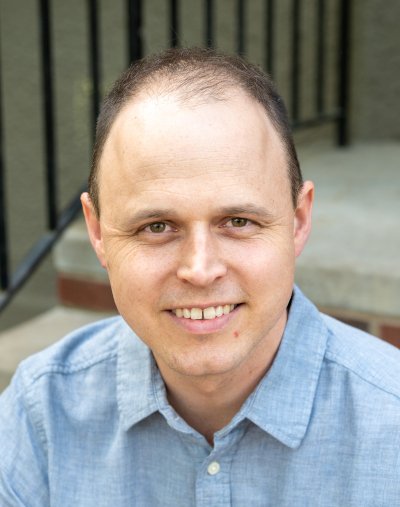
Jeffrey Calder
· Professor, School of MathematicsVerifiedUniversity of Minnesota · Mathematics
Active 1966–2026
About
Jeffrey Calder is a professor in the School of Mathematics at the University of Minnesota. His research focuses on using the theory of partial differential equations (PDEs) and the calculus of variations to study foundational problems in machine learning and data science. Calder aims to develop new, more efficient algorithms based on strong theoretical principles, often involving proving large sample size continuum limits for discrete problems. In this context, the continuum refers to the big data limit of discrete machine learning, and tools from continuum analysis are used to understand why algorithms work well and when they might fail. His work is particularly exciting when it leads to new algorithms with performance guarantees. Calder earned his PhD in Applied Mathematics from the University of Michigan, Ann Arbor, in 2014. He also holds a MSc in Mathematics from Queen’s University in Kingston, Canada, obtained in 2010, and a BSc in Mathematics and Engineering from the same university in 2008. His contributions include being awarded the Al and Dorothy Marden Professorship and securing a $1.2 million NSF grant for deep learning research. His research aims to pave the way for smarter and safer autonomous vehicles and other applications in data science and machine learning.
Research topics
- Computer Science
- Artificial Intelligence
- Mathematics
- Mathematical analysis
- Physics
- Statistics
- Machine Learning
- Combinatorics
- Discrete mathematics
- Theoretical computer science
- Applied mathematics
- Optics
- Geography
Selected publications
Proceedings of the AAAI Conference on Artificial Intelligence · 2026-03-14
articleOpen accessTeleoperation can enable human intervention to help handle instances of failure in autonomy thus allowing for much safer deployment of autonomous vehicle technology. Successful teleoperation requires recreating the environment around the remote vehicle using camera data received over wireless communication channels. This paper develops a new predictive display system to tackle the significant time delays encountered in receiving camera data over wireless networks. First, a new high gain observer is developed for estimating the position and orientation of the ego vehicle. The novel observer is shown to perform accurate state estimation using only GNSS and gyroscope sensor readings. A vector field method which fuses the delayed camera and Lidar data is then presented. This method uses sparse 3D points obtained from Lidar and transforms them using the state estimates from the high gain observer to generate a sparse vector field for the camera image. Polynomial based interpolation is then performed to obtain the vector field for the complete image which is then remapped to synthesize images for accurate predictive display. The method is evaluated on real-world experimental data from the nuScenes and KITTI datasets. The performance of the high gain observer is also evaluated and compared with that of the EKF. The synthesized images using the vector field based predictive display are compared with ground truth images using various image metrics and offer vastly improved performance compared to delayed images.
On the continuum limit of t-SNE for data visualization
arXiv (Cornell University) · 2026-04-13
preprintOpen access1st authorCorrespondingThis work is concerned with the continuum limit of a graph-based data visualization technique called the t-Distributed Stochastic Neighbor Embedding (t-SNE), which is widely used for visualizing data in a variety of applications, but is still poorly understood from a theoretical standpoint. The t-SNE algorithm produces visualizations by minimizing the Kullback-Leibler divergence between similarity matrices representing the high dimensional data and its low dimensional representation. We prove that as the number of data points $n \to \infty$, after a natural rescaling and in applicable parameter regimes, the Kullback-Leibler divergence is consistent as the number of data points $n \to \infty$ and the similarity graph remains sparse with a continuum variational problem that involves a non-convex gradient regularization term and a penalty on the magnitude of the probability density function in the visualization space. These two terms represent the continuum limits of the attraction and repulsion forces in the t-SNE algorithm. Due to the lack of convexity in the continuum variational problem, the question of well-posedeness is only partially resolved. We show that when both dimensions are $1$, the problem admits a unique smooth minimizer, along with an infinite number of discontinuous minimizers (interpreted in a relaxed sense). This aligns well with the empirically observed ability of t-SNE to separate data in seemingly arbitrary ways in the visualization. The energy is also very closely related to the famously ill-posed Perona-Malik equation, which is used for denoising and simplifying images. We present numerical results validating the continuum limit, provide some preliminary results about the delicate nature of the limiting energetic problem in higher dimensions, and highlight several problems for future work.
On the continuum limit of t-SNE for data visualization
arXiv (Cornell University) · 2026-04-13
articleOpen access1st authorCorrespondingThis work is concerned with the continuum limit of a graph-based data visualization technique called the t-Distributed Stochastic Neighbor Embedding (t-SNE), which is widely used for visualizing data in a variety of applications, but is still poorly understood from a theoretical standpoint. The t-SNE algorithm produces visualizations by minimizing the Kullback-Leibler divergence between similarity matrices representing the high dimensional data and its low dimensional representation. We prove that as the number of data points $n \to \infty$, after a natural rescaling and in applicable parameter regimes, the Kullback-Leibler divergence is consistent as the number of data points $n \to \infty$ and the similarity graph remains sparse with a continuum variational problem that involves a non-convex gradient regularization term and a penalty on the magnitude of the probability density function in the visualization space. These two terms represent the continuum limits of the attraction and repulsion forces in the t-SNE algorithm. Due to the lack of convexity in the continuum variational problem, the question of well-posedeness is only partially resolved. We show that when both dimensions are $1$, the problem admits a unique smooth minimizer, along with an infinite number of discontinuous minimizers (interpreted in a relaxed sense). This aligns well with the empirically observed ability of t-SNE to separate data in seemingly arbitrary ways in the visualization. The energy is also very closely related to the famously ill-posed Perona-Malik equation, which is used for denoising and simplifying images. We present numerical results validating the continuum limit, provide some preliminary results about the delicate nature of the limiting energetic problem in higher dimensions, and highlight several problems for future work.
Numerical solution of a PDE arising from prediction with expert advice
European Journal of Applied Mathematics · 2025-04-02
articleOpen access1st authorCorrespondingAbstract This work investigates the online machine learning problem of prediction with expert advice in an adversarial setting through numerical analysis of, and experiments with, a related partial differential equation. The problem is a repeated two-person game involving decision-making at each step informed by $n$ experts in an adversarial environment. The continuum limit of this game over a large number of steps is a degenerate elliptic equation whose solution encodes the optimal strategies for both players. We develop numerical methods for approximating the solution of this equation in relatively high dimensions ( $n\leq 10$ ) by exploiting symmetries in the equation and the solution to drastically reduce the size of the computational domain. Based on our numerical results we make a number of conjectures about the optimality of various adversarial strategies, in particular about the non-optimality of the COMB strategy.
Eigenvalues and Singular Values
Springer undergraduate texts in mathematics and technology · 2025-01-01
book-chapter1st authorCorrespondingLinear Algebra, Data Science, and Machine Learning
Springer undergraduate texts in mathematics and technology · 2025-01-01 · 1 citations
book1st authorCorrespondingGraph Theory and Graph-based Learning
Springer undergraduate texts in mathematics and technology · 2025-01-01
book-chapter1st authorCorrespondingGeometry-Preserving Encoder/Decoder in Latent Generative Models
arXiv (Cornell University) · 2025-01-16
preprintOpen accessGenerative modeling aims to generate new data samples that resemble a given dataset, with diffusion models recently becoming the most popular generative model. One of the main challenges of diffusion models is solving the problem in the input space, which tends to be very high-dimensional. Recently, solving diffusion models in the latent space through an encoder that maps from the data space to a lower-dimensional latent space has been considered to make the training process more efficient and has shown state-of-the-art results. The variational autoencoder (VAE) is the most commonly used encoder/decoder framework in this domain, known for its ability to learn latent representations and generate data samples. In this paper, we introduce a novel encoder/decoder framework with theoretical properties distinct from those of the VAE, specifically designed to preserve the geometric structure of the data distribution. We demonstrate the significant advantages of this geometry-preserving encoder in the training process of both the encoder and decoder. Additionally, we provide theoretical results proving convergence of the training process, including convergence guarantees for encoder training, and results showing faster convergence of decoder training when using the geometry-preserving encoder.
Neural Networks and Deep Learning
Springer undergraduate texts in mathematics and technology · 2025-01-01
book-chapter1st authorCorrespondingPhilosophical Transactions of the Royal Society A Mathematical Physical and Engineering Sciences · 2025-06-05
articleSenior authorWe propose a new method for data visualization based on attraction–repulsion swarming (ARS) dynamics, which we call ARS visualization. ARS is a generalized framework that is based on viewing the t-distributed stochastic neighbour embedding (t-SNE) visualization technique as a swarm of interacting agents driven by attraction and repulsion. Motivated by recent developments in swarming, we modify the t-SNE dynamics to include a normalization by the total influence , which results in better posed dynamics in which we can use a data size independent time step (of <mml:math xmlns:mml="http://www.w3.org/1998/Math/MathML" display="inline" overflow="scroll"> <mml:mrow> <mml:mi>h</mml:mi> <mml:mo>=</mml:mo> </mml:mrow> <mml:mrow> <mml:mn>1</mml:mn> </mml:mrow> </mml:math> ) and a simple gradient descent iteration. ARS also includes the ability to separately tune the attraction and repulsion kernels, which gives the user control over the tightness within clusters and the spacing between them in the visualization. In contrast with t-SNE, our proposed ARS data visualization method is not gradient descent on the Kullback–Leibler (KL) divergence, and can be viewed solely as an interacting particle system driven by attraction and repulsion forces, which illustrates that the KL divergence is not an essential part of the t-SNE algorithm. We provide theoretical results illustrating how the choice of interaction kernel affects the dynamics, and experimental results to validate our method and compare to t-SNE on the MNIST, Cifar-10, SVHN and NORB datasets. This article is part of the theme issue ‘Partial differential equations in data science’.
Recent grants
CIF: III: Medium: MoDL+: Analytical Foundations for Deep Learning and Inference over Graphs
NSF · $1.2M · 2022–2026
Nonlinear partial differential equations and continuum limits for large discrete sorting problems
NSF · $76k · 2015–2016
NSF · $442k · 2020–2026
NSF · $163k · 2017–2020
Nonlinear partial differential equations and continuum limits for large discrete sorting problems
NSF · $37k · 2016–2017
Frequent coauthors
- 20 shared
Peter J. Olver
- 20 shared
Katrina Yezzi-Woodley
- 15 shared
Martha Tappen
University of Minnesota
- 13 shared
Alfred O. Hero
University of Michigan–Ann Arbor
- 12 shared
Nicolás García Trillos
University of Wisconsin–Madison
- 11 shared
Pedro Angulo-Umana
Twin Cities Orthopedics
- 11 shared
Riley O’Neill
University of Minnesota
- 11 shared
Bo Hessburg
Education
- 2014
Doctor of Philosophy, Applied and Interdisciplinary Mathematics
University of Michigan
- 2010
Master of Science, Mathematics
Queen's University
- 2008
Bachelor of Science, Mathematics and Engineering
Queen's University
Awards & honors
- Al and Dorothy Marden Professorship
- NSF grant for deep learning research
- Resume-aware match score
- Save to shortlist
- AI-drafted outreach
See your match with Jeffrey Calder
PhdFit ranks faculty by your research interests, methods, and publications — grounded in their actual work, not templates.
- Free to start
- No credit card
- 30-second signup