Resume-aware faculty matching

Find professors who actually fit you

Upload your resume. Four AI agents analyze your background, rank the faculty who fit, inspect their recent research, and help you draft outreach — grounded in their actual work, not templates.

Free to startNo credit cardCancel anytime
Top matches Balanced preset
Dr. Sarah Chen
Stanford · Interpretability · NLP
91
Dr. Marcus Holloway
MIT · Robotics · RL
84
Dr. Aisha Okonkwo
CMU · Fairness · HCI
82
Nova · Professor Researcher · re-ranking top 20…
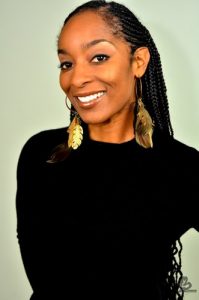
Jeanine Staples

Jeanine Staples

· Professor of Education (LLED), African American Studies, and Women's, Gender, and Sexuality Studies

Pennsylvania State University · African American Studies

Active 2005–2022

h-index8
Citations172
Papers602 last 5y
Funding
See your match with Jeanine Staples — sign in to PhdFit.Sign in

About

Jeanine Staples is an associate professor of literacy and language, African American studies, and women's, gender, and sexuality studies at Penn State. As an educational anthropologist, she focuses on dismantling supremacist patriarchies through research, teaching, and coaching. She explores personal and public voices and stories to address social issues by researching the evolution and function of new literacies and texts through narrative discourse. Her work aims to expose the foundations of social ills such as racism, sexism, and ableism, and provides means for their remediation. Her scholarship includes her book, The Revelations of Asher: Towards Supreme Love in Self (2016), and her 2014 TEDx talk, “How to Die Peacefully.” Staples earned her bachelor’s degree in English literature and urban education from Howard University, her master’s in teaching and curriculum from Harvard University, and her doctoral degree in reading, writing, and literacy with distinction from the University of Pennsylvania. She has received numerous awards and honors, including the Ralph C. Preston Award for Scholarship in Teaching and Literacy Research in the Service of Social Justice, the National Council of Teachers of English Early Career Educator of Color Leadership Award, and others. She has served as a board member for the Africana Research Center at Penn State, a Fellow for the Social Science Research Institute/Children, Youth and Family Consortium, and has been named a Senior Fellow at Columbia University School of Law's Center for Intersectionality and Social Policy Studies, as well as a senior visiting scholar at the University of Rhode Island's Harrington School of Communications.

Research topics

  • Sociology
  • Psychology
  • Art
  • History
  • Literature

Selected publications

  • Extraordinary Pedagogies: Toward a Model for Dynamic and Disruptive Teacher Education

    Proceedings of the 2019 AERA Annual Meeting · 2022

    1st authorCorresponding
  • Extraordinary Literacies/Empyreal Logics: Regarding Praxes of Black Girls and Women in Schools and Society

    Proceedings of the 2019 AERA Annual Meeting · 2022

    1st authorCorresponding
  • How #BlackGirlMagic Cultivates Supreme Love to Heal and Save Souls That Can Heal and Save the World: An Introduction to Endarkened Feminist Epistemlogical and Ontological Evolutions of Self Through a Critique of Beyoncé’s Lemonade

    Taboo · 2018-04-19 · 2 citations

    articleOpen access1st authorCorresponding

    The Lemons in Lemonade Beyonc's 2016 visual album, Lemonade, is an artistic and conceptual triumph. It is filled with cultural references from powerhouse literature like Hurston's Their Eyes Were Watching God, Morrison's The Bluest Eye and Sula, Butler's Kindred, and the poetry of newcomer Warsan Shire. 1 It presents a tapestry of journey method through iterations of consciousness and experiences that are tied to a feminine and Black feminist tradition/s. Each of the album's eleven chapters, from "Intuition" to "Redemption," contains critical expressions and creative embodiments of a human predicament assigned to women, to Black women in particular: t/Terror in love. This t/Terror consists of the intimate partner-based relational microaggressions many of us endure and ineffectually discuss with our affinity groups (e.g., mothers and daughters, nieces and aunties, sisterfriends, and colleagues). These aggressions, fielded from very early childhood to elder adulthood, result in emotional tax, psychological breaks, and somatic pain (Staples, 2012 These microaggressions include (and are not limited to) infidelity, gaslighting (the practice of convincing a mentally healthy person that their con-

  • Toward Critical and Creative Explorations of the t/Terror Narratives of Black and Brown Girls and Women to Inform Social Justice for Emotional Justice through New Literacies Studies

    Journal of black sexuality and relationships · 2017-01-01 · 3 citations

    article1st authorCorresponding

    Toward Critical and Creative Explorations of the t/Terror Narratives of Black and Brown Girls and Women to Inform Social Justice for Emotional Justice through New Literacies Studies Jeanine M. Staples, Special Issue Guest Editor (bio) It is my pleasure to introduce this special issue of the journal of Black Sexuality and Relationships, entitled "Love and Literacies: Critical Explorations of Black Women's Race, Gender, and Sexuality Through New Literacy Studies." My idea for this special issue sparked soon after the questionable death of Sandra Bland on July 13, 2015. During that time, I felt myself searching for accounts of how Black girls and women experience relational and social t/Terrors in schools and society (Staples, 2011, 2012, 2015). My own work had shown me how microaggressive terrors accumulate over time in the lives of girls and women of color as meta-level crises—Terrors—that garner the attention of local and national public discourse (Staples, 2016). As a result, I felt a deep desire to map our lived experiences onto the terrain of violences being accounted for in the historical and contemporary contexts of the United States. I initially attempted to do so through the instances of violence highlighted through #BlackLivesMatter movement. The #BlackLivesMatter movement, founded by straight and queer Black women, had, by July 2015, garnered international acclaim for drawing broad-based attention to the maltreatment of Black boys and men in various contexts. The movement was particularly successful in highlighting state sanctioned violence in schools and society. Prior to Ms. Bland's suspicious death, however, there were few stories of the pain of Black girls and women. The #SayHerName1 movement followed #BlackLivesMatter and was also founded by a group of Black women. Yet, #SayHerName focuses on drawing attention to the equally (and often more) heinous experiences of Black girls and women in the same contexts (Savali, 2014). Despite the important role that women of color are playing in initiating [End Page vii] social change, girls and women who are Black and Brown are still, ironically, rendered less visible and less relevant in the fight for social justice and equity. Such marginalization and erasures compound the sociocultural and socioemotional consequences of prior and existent experiences with gendered and racial aggressions. Understanding the impact that marginalizations, abuses, and erasures have on the abilities of Black and Brown girls and women to develop and construct affirming, actualizing, emotional, psychological, and physical states of well-being is of dire importance. Therefore, it is imperative that the voices and experiences of Black and Brown girls and women be further illuminated. While the lives and voices of Black and Brown girls and women are concurrently powerful (Jones-DeWeever, 2009) and vulnerable (Staples, 2016), it is precisely this tension that necessitates understanding deeply how they articulate voice and stories of t/Terror in love and life. This can happen through social, cultural, emotional, sexual, and spiritual multimodal interactions and expressions. These interactions, expressions, and subsequent artifacts, act as a means of negotiating and managing the complexities of interior life and adverse exterior circumstances. In other words, we might ask, How do Black and Brown girls manage emotional duress, stress, anxiety, depression, and other destabilizing emotional states in their interior lives through everyday literacy-based engagements? How do their literate efforts support healing and generate happiness—as pertaining to optimism, positivity, and hopefulness—and enable the embodiment of well-being? In addition, how do their literacy practices, their literate lives, support deep excavation of the soul–where meaning making happens–and deep evolution of the soma–where memory production takes place? Specifically at issue is the need to grasp seriously the ways our lover identities form infrastructure for our interior and exterior lives—both emotional and material, respectively. Endarkened or Black feminist thought can help to out and complicate the ways Black and Brown girls and women come to know themselves as lovers (see Collins, 2000; Crenshaw, 1989, 1991, 2015; hooks, 1993; 2001a, 2001b, 2002b, 2004; Weheliye, 2014)–lovers of Self, Other, and All. This happens by creating space for an intersection of exploration that includes emotionality, sexuality, spirituality, physicality, and intellectualism–aspects of Self, Other, and All. The authors included in this...

  • Do you remember (Asher speaks: A poem)

    Peter Lang eBooks · 2016-08-31

    book-chapter1st authorCorresponding
  • “That’s how I fucked him right back.” (Or, a literacy practice that pays homage to Mukhtaran) (Jeanine speaks)

    Peter Lang eBooks · 2016-08-31

    book-chapter1st authorCorresponding
  • Honoring the voices of selves and the necessity of a responsive reading/writing research pedagogy (Jeanine speaks)

    Peter Lang eBooks · 2016-08-31

    book-chapter1st authorCorresponding
  • The evolution of disordered coherence: A critically creative means for uncovering the risings and revelations of fragmented selves in qualitative data (as literacy events) (Jeanine speaks)

    Peter Lang eBooks · 2016-08-31

    book-chapter1st authorCorresponding
  • Small (Laish speaks with help from Nason: A poem)

    Peter Lang eBooks · 2016-08-31

    book-chapter1st authorCorresponding
  • As you would have them do unto you (A brief on casual sex, occasional commitments, and multiple “truths”) (Jeanine speaks)

    Peter Lang eBooks · 2016-08-31

    book-chapter1st authorCorresponding

Frequent coauthors

  • Kelly K. Wissman

    University at Albany, State University of New York

    2 shared
  • Rachel E. Nichols

    University of South Carolina

    1 shared
  • Indira Bailey

    Claflin University

    1 shared
  • Rogena M. Degge

    1 shared
  • Douglas Blandy

    1 shared
  • William Drakeford

    1 shared
  • Simone Gibson

    1 shared
  • Karen Keifer‐Boyd

    Pennsylvania State University

    1 shared

Awards & honors

  • The Ralph C. Preston Award for Scholarship in Teaching and L…
  • The National Council of Teachers of English Early Career Edu…
  • The Global Awareness in Teacher Education Award – University…
  • Research Fellow for the Stanford Center on Adolescence (2008…
  • Fellow for the Social Science Research Institute/Children, Y…
  • Resume-aware match score
  • Save to shortlist
  • AI-drafted outreach

See your match with Jeanine Staples

PhdFit ranks faculty by your research interests, methods, and publications — grounded in their actual work, not templates.

  • Free to start
  • No credit card
  • 30-second signup