
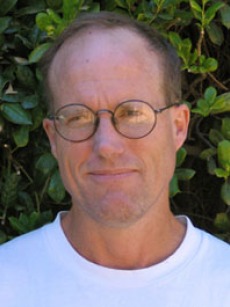
Jay Quade
University of Arizona · East Asian Studies
Active 1960–2025
Academic metrics are sourced from OpenAlex and public funding records; values may differ from Google Scholar.
About
Professor Jay Quade's research is quite broad but centers on low-temperature geochemistry, radiometric dating, and paleoenvironmental reconstruction, primarily focused on the Cenozoic era. He and his students have conducted research across various regions including the western USA, central Asia, Ethiopia, southern South America, and Turkey. His work often involves collaboration with archaeologists and anthropologists on recent projects. The analytical work for his research is primarily carried out in the Environmental Isotope Laboratory run by Dave Dettman and the Accelerator Mass Spectrometry facility led by Greg Hodgins, specializing in 14 C dating. Professor Quade has taught a range of courses related to geochemistry, isotopic methods, and the coevolution of the Earth and biosphere, and he actively shares datasets and research compilations. His office is located in the Gould-Simpson Building at the University of Arizona, and he maintains contact through email and phone.
Research topics
- Geology
- Oceanography
- Paleontology
- Physical geography
- Geography
- Physics
- Ecology
- Environmental chemistry
- Geochemistry
- Biology
Selected publications
The role of the westerlies and orography in Asian hydroclimate since the late Oligocene
Geology · 2020 · 83 citations
Abstract Interactions between midlatitude westerlies and the Pamir–Tian Shan mountains significantly impact hydroclimate patterns in Central Asia today, and they played an important role in driving Asian aridification during the Cenozoic. We show that distinct west-east hydroclimate differences were established over Central Asia during the late Oligocene (ca. 25 Ma), as recorded by stable oxygen isotopic values of soil carbonates. Our climate simulations show that these differences are present w…
Science Advances · 2020-03-05 · 78 citations
articleOpen accessHomo erectus was anatomically variable and behaviorally flexible using both Oldowan and Acheulian artifacts.
Resetting Southern Tibet: The serious challenge of obtaining primary records of Paleoaltimetry
Global and Planetary Change · 2020 · 58 citations
1st authorCorrespondingGeochimica et Cosmochimica Acta · 2023-07-03 · 38 citations
articleOpen accessSenior authorRapid and precise measurement of carbonate clumped isotopes using laser spectroscopy
Science Advances · 2022 · 28 citations
produced by digestion of 51 synthetic carbonates equilibrated at 6° to 1100°C is consistent with results for natural carbonates and previous calibrations. Our system results were indistinguishable from IRMS systems after replicating the InterCarb interlaboratory calibration. Measurement by TILDAS could change the landscape for clumped isotope analysis.
Recent grants
Collaborative Research: Calibrating the Isotopologue-47 Geothermometer in Soils
NSF · $86k · 2009–2012
NSF · $206k · 2011–2015
Construction of a low-level 14C facility at the University of Arizona
NSF · $165k · 2004–2006
Frequent coauthors
- 68 shared
Sileshi Semaw
National Research Center on Human Evolution
- 64 shared
Scott W. Simpson
Case Western Reserve University
- 57 shared
Naomi E. Levin
University of Michigan–Ann Arbor
- 47 shared
Robert F. Butler
University of Portland
- 39 shared
Guillaume Dupont‐Nivet
Géosciences Rennes
- 38 shared
Peter G. DeCelles
University of Arizona
- 38 shared
Melanie Everett
- 34 shared
Julio L. Betancourt
Similar researchers at University of Arizona
- Resume-aware match score
- Save to shortlist
- AI-drafted outreach
See your match with Jay Quade
PhdFit ranks faculty by your research interests, methods, and publications — grounded in their actual work, not templates.
- Free to start
- No credit card
- 30-second signup