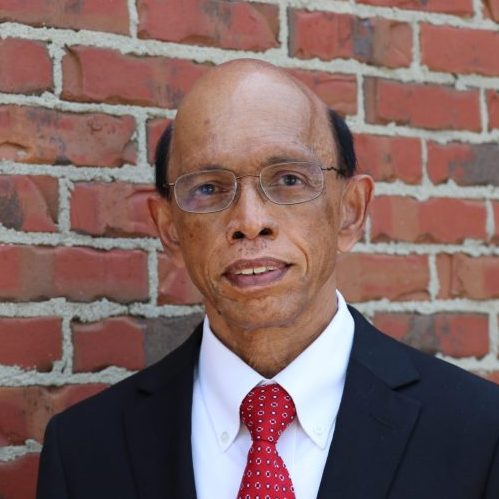
Jay Jayaratne
· Professor; State Leader for Extension EvaluationNorth Carolina State University · Human Development and Family Science
Active 1998–2025
About
Dr. K.S.U. (Jay) Jayaratne is a professor in the Department of Agricultural and Human Sciences with extensive experience in extension education, program evaluation, and international agriculture. He grew up in Kitulgala, Sri Lanka, and has worked as an Extension District Director in Sri Lanka before earning his Ph.D. from Iowa State University. Since joining the University of Georgia faculty in 2001 as an Evaluation Specialist, he has served in various roles, including Assistant Professor and State Leader for Program Evaluation at North Carolina State University since 2006. His responsibilities include providing evaluation leadership to North Carolina Cooperative Extension faculty, with a focus on extension program planning, evaluation, and international agricultural development. Dr. Jayaratne has accumulated 35 years of extension education experience, with 25 years in the United States and 10 in Sri Lanka. His research interests encompass extension program planning, evaluation, and international agriculture. He is a member of several professional organizations, including the American Evaluation Association, the American Association for Agricultural Education, and the Association for International Agricultural and Extension Education. Recognized for his contributions, he has received numerous awards such as the Distinguished International Educator Award and the American Association for Agricultural Education Fellow. His work emphasizes developing innovative approaches to agricultural research and education, fostering diversity in the workforce, and addressing complex global food system challenges.
Selected publications
Advancements in Agricultural Development · 2025-11-17
articleOpen access1st authorCorrespondingKnowledge gained is an important outcome indicator used in the evaluation of extension education programs. Three evaluation designs commonly used to document extension program participants’ knowledge change are: (a) objective knowledge pre-test, post-test design, (b) subjective knowledge pre-test, post-test design, and (c) subjective knowledge retrospective pre-test, post-test design. This study was designed to examine the relationship between measuring variables of objective knowledge pre-test, post-test, and subjective knowledge pre-test, post-test designs, and to examine the validity of subjective knowledge pre-test and post-test designs in assessing the knowledge gained by the Cook Smart Eat Smart extension participants. The researchers developed the survey instrument to document objective knowledge and subjective knowledge. The survey was administered before and after completing the training. The study received 71 responses. Paired sample t-test and correlation analysis were used to achieve research objectives. The findings indicate that all three designs are effective in documenting the changes in participants’ knowledge. Findings also verified the accuracy and validity of the subjective knowledge retrospective pre-test and post-test design. The evaluation of extension programs is strengthened by evidence demonstrating the validity of both objective and subjective measures for assessing knowledge gain, a key outcome indicator in extension education.
Advancements in Agricultural Development · 2024-03-29 · 1 citations
articleOpen accessThe purpose of this study was to determine the training needs of extension agents in Uganda to lead successful education programs on genetically engineered (GE) crops. This was a descriptive survey research study conducted online with public agricultural extension agents in the eastern agro-ecological zone of Uganda. This study used Borich’s method to identify training needs. A survey instrument was designed to determine extension agents’ perceived importance and proficiency of 60 competencies organized under the eight Public Issues Education (PIE) framework competency constructs. The survey received 58 usable responses comprising an 83% response rate. All eight PIE competency constructs were perceived by the extension agents to be important. This study identified additional four competencies important for PIE in addition to the eight competencies in the model. Agents’ greatest training needs were creating partnerships and designing GE education programs. The lowest training needs were creating an environment of professionalism and managing conflicts. The findings indicate the importance of training extension agents on how to engage with farmers in new ways to educate them on GE technology. This study provides implications for determining the training needs of extension agents in PIE such as educating farmers on GE technology.
Advancements in Agricultural Development · 2024-11-15 · 3 citations
articleOpen accessAssessment of program outcomes in extension often relies on subjective measures, such as perceived or self-reported knowledge, which are criticized for potential bias and inaccuracy. Conversely, objective knowledge, i.e., how much an individual actually knows, is considered more accurate. Studies show varying associations between subjective and objective knowledge, ranging from no correlation to high correlation, and their influence on behavior change also varies. In this study, we aim to quantify the relationship between subjective knowledge, objective knowledge, and behavior change. Data were collected from Master Gardener Volunteer training attendees. We used Pearson correlation and hierarchical linear regressions to explore the relationship between subjective and objective knowledge and their influence on behavior, i.e., engagement in gardening practices. Our findings show that subjective and objective knowledge post-training were moderately correlated, indicating that participants' self-assessments were not entirely accurate before training. Interestingly, only subjective knowledge before training predicted engagement in gardening practices after training, highlighting the significant role of perceived understanding in behavior change. Based on the findings, we suggest that extension programs should focus on addressing participants' existing beliefs to foster enduring behavior change. By designing programs that consider these pre-existing perceptions, extension can more effectively translate knowledge into practical, lasting behaviors.
Journal of Agricultural Education · 2024-06-30 · 1 citations
articleOpen accessSenior authorBecause of the need to produce more globally competent students, researchers have called for integrating global concepts into the agricultural education curriculum over the past decade. Despite this, many teachers have not been adequately prepared to facilitate such in practice. This investigation sought to examine [State] SBAE teachers’ perspectives on globally competent teaching during an international experience in Costa Rica. As a result of our analysis of the data, three themes emerged (1) teaching outside of the margins, (2) global storytelling, and (3) innovative global experiences. The themes narrated the ways in which the teachers in this study articulated how they intended to create globally competent students in SBAE as a result of their international experience. The results of this investigation also illuminated a critical implication for the discipline – if we more intimately connect the local to the global, perhaps SBAE could position itself to engage in discussions and address problems associated with diversity, equity, inclusion, and belonging (DEIB) more profoundly. Moving forward, we recommend that teacher educators and state agricultural education leaders explore how international experiences might be used as an entry point for SBAE to engage in critical conversations and understand how issues of DEIB can be addressed more effectively.
How to Build Community Networks and Resources Necessary for a Successful 4-H Program
Journal of Extension · 2024-06-19
articleOpen accessThe purpose of this research was to explore the strategies effective in building community networks and pooling the resources necessary for laying the foundation to develop a successful county 4-H Extension program in early careers of Extension agents. We conducted this three-round Delphi study with a panel of specially selected 24 successful 4-H Extension agents. The Delphi research process led to identify seven strategies effective in building community networks and six strategies effective in building the necessary resources for the development of an effective county 4-H Extension program. We made practical recommendations based on these findings.
Critical Competencies of 4-H Camp Staff for Achieving High Performance
Journal of Extension · 2023-08-28
articleOpen accessCamps provide a substantial opportunity for youth to develop important life skills. Identifying and training staff on critical competencies are essential to achieving the desired outcomes for camp participants. The purpose of this study was to determine the most critical competencies of the 4-H residential camp staff for achieving high staff performance. The modified Delphi technique was used to achieve study objectives. The Delphi panel of this study consisted of 23 4-H camping experts from across the United States. This three-round Delphi study led to identify 15 critical competencies that will be useful in standardizing 4-H camp staff training programs.
Journal of Extension · 2023-05-09 · 9 citations
articleOpen accessBarriers to the successful implementation of diversity, equity, and inclusion (DEI) education and outreach initiatives are being documented across higher education institutions as DEI policies and protocols are gaining attention. Despite growing attention to promote DEI in higher education institutions, there remains a need to examine barriers preventing DEI efforts in a systematic way, particularly in Extension education contexts to formulate strategies to promote DEI. We present an expert, consensus-based framework to identify the most salient barriers to successful DEI implementation in Extension. We also discuss opportunities for Extension practitioners to overcome salient barriers with tailored mitigation strategies.
An Analytic Needs Assessment for Extension Education: Views from Extension Professionals and Faculty
Journal of Human Sciences and Extension · 2023-03-01 · 2 citations
articleOpen accessSenior authorThis study describes professional development for Extension educators and curricula expectations for those preparing for Extension careers – as perceived by members of the American Association for Agricultural Education (AAAE) and Joint Council of Extension Professionals (JCEP). We relate and differentiate findings from two surveys with open-ended questions. Regarding professional development, JCEP respondents identified program planning and evaluation, but AAAE respondents prioritized research methods. JCEP respondents prioritized practical experiences in Extension Education college courses, and AAAE members reported some practical Extension experiences in the college curriculum. College faculty may apply the results for impactful academic, professional development, and research programs.
Journal of Extension · 2023-05-04 · 1 citations
articleOpen accessSenior authorForest landowners are an important target audience for many state Extension programs. Acknowledging the differences and associations between landownership values, characteristics, and educational preferences of forest landowners should lead to improvement of educational programs and ensuring that educational needs are being met. Through an internet-based survey of forest landowners four distinct landowner typologies were identified based on respondents’ reason for owning forestland. Results also identified the educational needs and barriers to meeting these needs for the landowners. Creating typologies based on attitudinal responses will allow for a more focused approach to developing educational products and services to meet landowner needs.
Journal of Extension · 2023-12-01 · 2 citations
articleOpen accessTo address concerns about the applicability of existing intercultural competence models to the Extension context, we aimed to develop a systematic intercultural competence framework tailored for Extension professionals through a collaborative and consensual process. A three-phased Delphi approach was utilized with a panel of 36 intercultural competence experts in Extension across academic disciplines to identify and finalize competencies thought to be necessary across career phases. The panel agreed upon 54 competencies in total with 13 competencies to develop in the first year, 37 competencies to develop in the first three years and four competencies in years two through seven.
Labs
Agricultural and Human SciencesPI
Awards & honors
- 2026: Distinguished International Educator Award, American A…
- 2025: Jackson Rigney International Service Award (Finalist),…
- 2020: American Association for Agricultural Education Fellow
- 2020: Distinguished Researcher Award, American Association f…
- 2018: Distinguished Extension Educator Award, American Assoc…
- Resume-aware match score
- Save to shortlist
- AI-drafted outreach
See your match with Jay Jayaratne
PhdFit ranks faculty by your research interests, methods, and publications — grounded in their actual work, not templates.
- Free to start
- No credit card
- 30-second signup