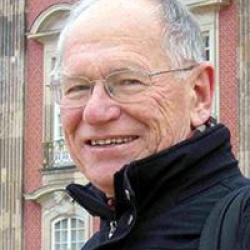
Janis Antonovics
· Research Professor of BiologyVerifiedUniversity of Virginia · Biology
Active 1967–2026
About
Janis Antonovics is a Research Professor of Biology at the University of Virginia. His research focuses on the evolution and epidemiology of infectious diseases in natural populations. His current research questions include the role of diseases in determining species range limits, host-pathogen co-evolution, and the evolution of transmission modes. His work combines theoretical modeling with empirical research on sexually transmitted diseases of plants, such as anther smut, and involves analysis of datasets involving diseases affecting organisms ranging from bumble-bees to humans. Antonovics has contributed to understanding transmission dynamics, the evolution of mutualism from reciprocal parasitism, and the ecological and evolutionary aspects of infectious diseases.
Research topics
- Biology
- Ecology
- Genetics
- Evolutionary biology
- Psychology
- Medicine
- Botany
Selected publications
Figshare · 2026-04-28
articleOpen accessIncludes 5 supplemental tables and 7 supplemental figures
bioRxiv (Cold Spring Harbor Laboratory) · 2026-01-14
articleOpen accessAbstract This study employs a synthetic microbial biosphere model to investigate system persistence under resource limitation. Escherichia coli ( E. coli ) strain MC4100 was incubated in matter-closed systems in an isotonic saline solution without added nutrients for 60 days in spatially homogeneous or heterogeneous conditions. We observed phenotypic adaptive changes in E. coli populations, including loss of motility, enhanced biofilm formation, and improved growth on various carbon sources, which were specific to the spatial structure conditions. While these changes were beneficial for E. coli persistence in monoculture, during co-culture with the alga Chlamydomonas reinhardtii the adapted populations exhibited a 25% reduction in persistence under spatially heterogeneous conditions compared to co-cultures containing non-adapted E. coli populations. Critically, adaptive changes in monoculture affected the dynamics of co-cultures, demonstrating that microbial evolution can constrain coexistence with other species and may be a fundamental determinant of ecosystem sustainability.
Disentangling host genetic variation for avoidance and resistance to pathogens
BMC Biology · 2026-01-31
articleOpen accessSenior authorBACKGROUND: Hosts can use avoidance (e.g., behavior) to reduce their contact rates with pathogens; after contact, they can use resistance (e.g., immunity) to reduce the establishment and proliferation of an infection. Because both defenses preserve host fitness and reduce pathogen fitness, we expect that their epidemiological and evolutionary effects will be interdependent. This study used a two-locus model to understand the evolution of allelic associations (i.e., linkage disequilibrium or LD) between genes determining levels of avoidance and resistance in the presence of an infectious disease or a parasite. RESULTS: We found that polymorphism in both avoidance and resistance was possible, but only for a limited range of parameter values. At equilibrium within these polymorphic populations, avoidance and resistance alleles were negatively associated (i.e., in negative LD). However, most commonly, polymorphism was only stably maintained at one defense locus, and the other locus became fixed for one allele. CONCLUSIONS: The model shows that avoidance and resistance are likely to influence each other's evolution because of their joint effects on infection and their costs; however, predictions about their relationship are not necessarily straightforward or intuitive. For example, avoidance and resistance may be more likely to covary across than within populations.
Figshare · 2026-04-28
otherOpen accessEnvironmental variation can deviate from a pathogen's optimal conditions for symptom expression and transmission, changing disease dynamics and potentially altering the predominance and distribution of infections across host populations. Here, we assessed the co-occurrence and temperature sensitivity of two common, sterilizing, and persistent diseases of wild Silene vulgaris populations: anther smut (caused by Microbotryum silenes-inflatae) and receptacle smut (caused by Thecaphora melandrii). Using seasonal field surveys and experimental tests of temperature effects on disease expression and infection processes, we show that anther smut is highly sensitive to the summer temperatures experienced in the native range of this host-pathogen system, while co-occurring receptacle smut is not. Anther smut exhibited significantly lower disease prevalence in mid-summer than in spring or fall seasons, resulting from temporary heat curing of symptoms. Summer temperatures also inhibited infection by anther smut. These results suggest that further environmental warming may lead to changes in the relative impact of these diseases on S. vulgaris, with the temperature-insensitive receptacle smut becoming more dominant in warmer areas or expanding its range to higher elevations where currently only anther smut is common.
Figshare · 2026-04-28
articleOpen accessIncludes 5 supplemental tables and 7 supplemental figures
Figshare · 2026-04-28
otherOpen accessEnvironmental variation can deviate from a pathogen's optimal conditions for symptom expression and transmission, changing disease dynamics and potentially altering the predominance and distribution of infections across host populations. Here, we assessed the co-occurrence and temperature sensitivity of two common, sterilizing, and persistent diseases of wild Silene vulgaris populations: anther smut (caused by Microbotryum silenes-inflatae) and receptacle smut (caused by Thecaphora melandrii). Using seasonal field surveys and experimental tests of temperature effects on disease expression and infection processes, we show that anther smut is highly sensitive to the summer temperatures experienced in the native range of this host-pathogen system, while co-occurring receptacle smut is not. Anther smut exhibited significantly lower disease prevalence in mid-summer than in spring or fall seasons, resulting from temporary heat curing of symptoms. Summer temperatures also inhibited infection by anther smut. These results suggest that further environmental warming may lead to changes in the relative impact of these diseases on S. vulgaris, with the temperature-insensitive receptacle smut becoming more dominant in warmer areas or expanding its range to higher elevations where currently only anther smut is common.
Data on contrasting sensitivities to seasonal warming among co-occurring diseases
Open MIND · 2025-10-29
datasetThe included data provide observational and experimental information on the temperature sensitivities of the fungal pathogens, Microbotryum silenes-inflatae (anther smut) and Thecaphora melandrii (receptacle smut), when affecting the host plant, Silene vulgaris. The data show counts of plants observed in natural populations of numbers of plants that displayed the smut diseases caused by the two fungi or were healthy, recorded in spring, summer or fall seasons. Also included are data on the disease symptoms of infected plants experimentally exposed to summer-time temperatures, data on disease symptoms of plants inoculated in the field under summertime temperatures, and data on disease symptoms of plants inoculated under growth chamber conditions matching summertime or spring/fall temperatures. The data can be used in manners that comply with a CC0 license waiver, including to distribute, remix, adapt, and build upon the material in any medium or format, with no conditions. There were no legal or ethical considerations related to the data collection.
Disentangling genetic variance for pathogen avoidance and resistance
bioRxiv (Cold Spring Harbor Laboratory) · 2025-03-13
preprintOpen accessSenior authorAbstract Hosts can use avoidance (e.g., behavior) to reduce their contact rates with pathogens; after contact, they can use resistance (e.g., immunity) to reduce the establishment and proliferation of an infection. Because both defenses preserve host fitness and reduce pathogen fitness, we expect that their epidemiological and evolutionary effects will be inter-dependent. This study used a two-locus model to understand the evolution of allelic associations (i.e., linkage disequilibrium) between genes determining levels of avoidance and resistance in the presence of an infectious disease or parasite. We found that polymorphism in both avoidance and resistance was possible, but only for a limited range of parameter values of avoidance and resistance; at equilibrium, avoidance and resistance alleles were negatively associated in these polymorphic populations. However, most commonly, whichever defense was more effective and less costly went to fixation. This result suggests that avoidance and resistance may be more likely to covary negatively across than within populations.
Reflections on the life and work of Richard Abbott (1945–2024)
Molecular Ecology · 2024-06-26 · 1 citations
articleOpen accessRichard J. Abbott passed away on February 23, 2024, leaving plant evolutionary biology without one of its most influential researchers. Richard was a world leader on plant hybridization, mating system evolution, speciation, and phylogeography. In part, this work was based on investigations of the historical biogeography of arctic, alpine, and Mediterranean regions, and in recent years of the Qinghai Tibetan region, but he is probably best known for his uniquely in-depth knowledge of British and European Senecio. Richard (Figure 1) was an undergraduate in the Agricultural Botany Department at the University College of North Wales in the 1960s, moving on to Oxford where he completed his DPhil in 1971. After this, he moved directly to St. Andrews where he stayed for the length of his career, first as a Lecturer, then Reader, followed by Professor in 2004. He retired in 2014 becoming Professor Emeritus. He supervised 20 PhD students, published over 200 articles (>16 k citations and H index of 66; Google Scholar), led influential reviews, carried out senior editorial duties for New Phytologist, Molecular Ecology and Plant Ecology and Diversity, and worked with researchers across the globe. He was elected corresponding member of the Botanical Society of America in 2019 and was President of the Botanical Society of Scotland from 2006 to 2008. Below, a small number of his many former students, post-docs, and colleagues share their experiences. I first met Richard in 1965 or 1966, when he was an undergraduate in the Agricultural Botany Department at the University College of North Wales. I was a doing my PhD there as a Demonstrator and oversaw Richard's undergraduate project that eventually developed into his Ph.D. research at Oxford. I remember he stood out as a unique London lad, a strikingly handsome ‘Bovver Boy’, with crew-cut, denim jacket, turned up jeans and large boots, but fortunately not in the slightest threatening. He was a refreshing standout from the other students both in intelligence and attitude, and I empathized with his strong ‘Norfeast’ London accent. I remember Richard giving a talk on his research at the ‘Snail Group’ where afterwards Professor Arthur Cain congratulated him on his talk, adding in the next sentence, albeit with a twinkle in his eye, ‘By gosh, when you got up there, I at first thought you were the electrician or something’. We all had a good laugh. Remarkably, it was only recently in retirement that Richard worked up more of his thesis results for a paper (Abbott 2023). I teased Richard that I was disappointed not be co-author, and in typical fashion, Richard said he didn't want to embarrass me! For me, Richard's most stunning research was on the rapid and on-going speciation in Senecio, less from the amazing demonstration that speciation was going on in the present day, but more from the added observation (and sadness) that new species were often going extinct, many before they could be formally recognized. It demolished the view that speciation is a long-term process, emphasizing that unless there is a person there to give a population a name, speciation would go undetected. This work was a wonderful illustration of Richard's thoroughness as a scientist and his determination to follow his curiosity without particular attention to fashion or fame. It essentially came out of noticing variants in Senecio vulgaris with ray florets, and then persistently chasing wherever it led him (such as to the slopes of Mount Etna, or to identifying the genomic basis of this evolutionary transition). We became good friends, and when I met him over lunch in January 2024, I realized he was probably the person I had known longest in academia. However, our friendship was not built particularly on a close academic interaction, even though our interests overlapped. When in the UK, I often visited him, and he spent 6 months in ‘my lab’ at Duke University in North Carolina. While there, he worked mostly with my post-doc Annie Schmitt, asking if the introgression of the rayed florets trait into groundsel could be adaptive by promoting outcrossing. He also brought his family including three girls over, and they had many adventures exploring the south-east. Later, it was a delight to have one of his daughters, Amber, spend a summer as my undergrad research assistant at Mountain Lake Biological Station in Virginia. At our recent lunch, we were excited that the new Leith Distillery and its bar was on one of his former field sites; there was now a good reason for us to re-visit the site just to confirm that Senecio cambrensis was no longer there! I knew Richard for 40 years and considered him one of my closest colleagues. This even though we lived an ocean apart and I only had the pleasure of his company at intermittent intervals at meetings and on my visits to the UK. The first things that struck you about Richard were his engaging smile, crop of white hair and crystal-clear blue eyes. We first met in May 1984 at an international symposium on the structure and functioning of plant populations. Richard presented his classic work on the maintenance of a polymorphism for outcrossing frequency in the common weedy groundsel (Senecio vulgaris), a system that he worked on with David Marshall which led to a series of fascinating papers. Because I was working on similar questions in Eichhornia paniculata, we immediately hit it off and became long-term correspondents, especially as the e-mail era developed. Looking now at my cache of the dozens of e-mails, we exchanged I am struck by his courteousness, his love of family, and busy travel schedule, with numerous visits to European universities as an external examiner for PhD theses. Because of his broad interests, from population genetics to macroevolution and biogeography, and his affable manner, he was a perfect person to have on vivas and public PhD defences. Our shared interests in UK politics and football meant that we were often frustrated soulmates and were aligned on topics from the Brexit disaster to the ups and down of the Labour party. As for football, England's recurrent dismal departures from successive World Cups post 1966 were a source of regular angst to both of us. Richard's research program at St Andrews diversified after his appointment in 1971, although he never left Senecio. One of my fondest memories of interacting with Richard was in Xinjiang Province in western China in 2012. After the perfunctory banquet and the consumption of copious Chinese rocket fuel, we set off in coaches for an extended field trip across the deserts to the mountainous border with Russia. During our travels, we enjoyed not only botanizing but also discussing the nuts and bolts of our research as well as the sorry state of funding for plant population biology in the UK and its consequences for the future of plant evolutionary biology there. His passing, along with his colleague at St. Andrews – Peter Gibbs – has not helped the cause. Richard was a loyal and reliable colleague who continued working on research and as an Editor for Molecular Ecology until the end and will be greatly missed by his world-wide network of friends and colleagues. I was shocked and deeply saddened to hear that my long-time collaborator and friend, Richard Abbott had died suddenly. At the time, I was wondering why he had not responded to an email I sent him a few days earlier containing a new section for a paper we were writing together; I thought this unusual because Richard always responded to emails promptly. Sadly, I now know that he never saw my email. This was one of three papers Richard and I were working on at the time, all, not surprisingly, on hybrid speciation in Senecio, one being on the full genome sequence of Senecio squalidus, the iconic Oxford ragwort, which Richard's seminal papers on Senecio ecology and evolution had introduced me to in the 1990s. Richard and I started working together in 2001 when a new funding initiative by the Natural Environment Research Council (NERC) on ‘Environmental Genomics’ gave us the opportunity to take our shared evolutionary interests in Senecio into the genomics arena. With the help of Keith Edwards and his team at the Long Ashton Research Station (now closed), we quickly ‘boned up’ on the relatively new technologies of transcriptome analysis using microarrays, and structural analysis of genomes using next generation sequencing of molecular markers (AFLPs and microsatellites at that time). We were duly awarded a grant to investigate transcriptomic and genomic changes during homoploid hybrid speciation and allopolyploid speciation in Senecio squalidus and Senecio cambrensis, respectively. I would do the transcriptomic analyses at Bristol with Keith Edwards, and Richard would do the genomic analyses at St Andrews. I was hoping that a spin off from this research would be the identification of candidate genes regulating self-incompatibility (SI) and self-compatibility in Senecio, which I had been working on for 5 years inspired by Richard's influential 1993 paper on SI in Senecio squalidus written with his long-time co-worker David Forbes. Over the next 20-plus years, this research collaboration spawned four more NERC awards and many publications that allowed us to work with a very talented cohort of post-docs and PhD students, including Adrian Brennan, Mark Chapman, Matthew Hegarty, and Alexandra Allen. From the day we started writing that first research proposal, Richard and I got on, quickly finding we shared many interests outside of research, including sport and proper beer. We spent many happy times with co-workers and colleagues at conferences, enjoying meals together and discussing new ideas for research over a few drinks. As recently as September 2023, Richard and I gave back-to-back talks on Senecio ecology and evolution at a meeting on Urban Floras hosted by the Royal Society of Edinburgh; these talks forming the basis for one of the papers we were working on at the time of Richard's death. I will cherish the memories of that last meeting, where, as always, Richard's deep understanding of plant evolution, his whit, love of research, family, and life shone through his distinctive wry smile and bright blue eyes. Richard, to me, was a pioneer in his work, so when I saw the PhD advert for what I thought was the perfect project for me, I thought ‘surely people will be lining up out of the door for this one, what chance do I have?’. Luckily for me it was right place and time, and I have always been extremely proud and grateful to Richard for giving me his knowledge and many opportunities. When I met Richard, he was very down-to-earth, I remember him saying in Lafferty's after the (very informal) interview ‘What would you like to drink? I'll be having a pint’. This started my 4 years of PhD under his excellent mentoring and guidance (and weekly visits to Lafferty's). Richard was honest (‘why did you write two pages on this, it's irrelevant?’ – true, it was irrelevant) and supportive, sending me to a Plant Speciation conference in Canada with a whole host of celebrities from the field I could only have dreamt about meeting in person. Also, when Mt. Etna was erupting and my fieldwork plans were scuppered, he simply said ‘OK, let's go through what else we can do’, and after an hour or so, my (new) thesis was planned out. He would always make time and his door was always open. I saw how he taught students, worked with colleagues and the technical team, and he always engendered a feeling of collaboration and conversation in the Sir Harold Mitchell Building. Since leaving Richard's lab, we have written articles together, constantly sharing ideas and Senecio seed. I cannot stress how much my research career and ethos have been shaped by Richard and I know this is the feeling of the community. Everyone going through his lab becomes part of this community, sharing opinions and ideas, and willing to help each other out, with several ex-Abbott lab members now succeeding in academic roles. The news of Richard passing was a complete shock, and I had received an email from him only a week or so before I heard the devastating news. I first met Richard during my PhD at the annual Ecological Genetics Group meeting. I was excited to meet him as his study confirming the presence of self-incompatibility in Oxford Ragwort had inspired my supervisor, Simon Hiscock's own research in this field and I was now deeply immersed in the topic. I remember an outwardly serious demeanour but in conversation, he was full of curiosity and engagement about our latest findings on the project. His questions were insightful and probing and gave me new ideas. A few years later, still working with Oxford ragwort and its Sicilian relatives, I applied for a postdoctoral position with Richard at St Andrews. The interview, like so many of our discussions before and after, revolved around ragworts and all the fascinating evolutionary questions they presented. Working at St Andrews with Richard was a gift and a pleasure. The School of Evolution was small but friendly and productive. Richard and other senior professors encouraged interactions between laboratories and my work benefited from expertise and equipment across multiple labs. I was the only post-doc in his lab at the time, but a wealth of experience was available through lab technician, David Forbes, who had worked closely with Richard for many years, and who had many anecdotes about past lab members. Together, they had a productive working relationship of trust and understanding that contributed greatly to my project, as of many others previously. Richard occasionally visited the lab, but more usually he was in his upstairs office writing away. We would have regular informal meetings, when I was usually asking for advice or guidance, and he never minded being interrupted from his work editing for journals or preparing reviews. We would discuss the ideas behind the latest review, and he would pass me exciting research papers that sometimes changed the direction of our research. He was full of encouragement and support to keep publishing our findings and contribute to ongoing reviews. Overall, Richard was continuously supportive to my career development, encouraging me to publish research from previous projects, providing chances of teaching and supervisory experience, encouraging me to attend conferences, and checking my fellowship applications. He was one of my most valued mentors, always ready to offer the sensible and reasoned advice, I had always known from him. The end of my position with him coincided with his retirement from St Andrews. The group organized a small ragwort focussed conference in honour of the event, that helped bring together several of his former PhD students and post-docs, and other experts in the field. He never expressed any intention of stepping back from science and as Emeritus Professor continued attending the School most days, doubling his editorial activities, and revisiting his research archives to publish several further articles. There is surely still material for more. I vividly remember my first visit to Richard Abbott's lab in 2004 as a scholar. Little did I know that this visit would mark the beginning of a fruitful collaboration that would span two decades. One of the highlights of our collaboration was the successful implementation of two China-UK co-supported projects, which extended over a 6-year period. During this time, we strengthened our ties by visiting each other's institutions on six occasions. In fact, I even had the opportunity to send one of my students to Richard's lab. This initial 2-year exchange paved the way for further collaborations, as I continued to introduce Chinese students to both Richard's lab and other eminent researchers at the University of St. Andrews. Even after the completion of our joint projects, our collaboration endured, and we maintained a frequent exchange of visits. This enduring partnership provided me with a unique platform to introduce Richard to numerous researchers in China, including those from esteemed institutions. Richard's extensive network now spans leading scientists in plant evolution and systematics in China. Our collaboration focused primarily on various aspects of evolution that sparked our mutual interest. We delved into the phylogeny and species diversification of species-rich genera in western China, with a particular emphasis on those found on the Qinghai-Tibet Plateau (QTP). Additionally, we explored the phylogeography of alpine plants in the QTP, investigating how they responded to climatic changes during the Quaternary period. Other subjects of our research included hybrid speciation, utilizing Chinese materials, and domestication and evolution of yaks – a subject that fascinated us both. Our collaboration was truly symbiotic, as we learned from and supported each other in various ways. Together, we embarked on field explorations to collect materials for our experiments. These field trips and scientific sparks fuelled our curiosity and propelled us to explore numerous scientific mysteries in some of the most diverse and captivating ecosystems, including the rich flora of southwest China, the high-altitude flora of the QTP, the desert flora of western China, and the temperate conifer forests of China. only did these field explorations us with materials for our they also as for new research, the exchange of ideas and I one during our fieldwork when we desert by their we in discussions the for their These discussions inspired us to investigate the and molecular basis of the desert Looking back on our I am grateful for the opportunity to with Our enduring collaboration in scientific but also and an international network of researchers. Richard's work contributed to new about the of speciation, especially through hybridization, that it can be recent and He has how genomes and during and speciation, and how analysis of can help of on His will both through his scientific and through the dozens of and their Our with his and his He will be missed by all who knew him, both as a scientist and a
Genetic Independence of Naturally Correlated Variation in Resistance to Endemic and Novel Pathogens
Ecology Letters · 2024-10-01 · 1 citations
articleOpen accessThe emergence of new diseases is an urgent concern, but hosts can also vary in resistance to pathogens that are novel to them, facilitating evolutionary rescue. However, little is known about the genetic source for polymorphic resistance to novel pathogens or its relationship to defences against endemic diseases. With anther-smut disease from wild plant populations, we used selection experiments and genetic analyses to show that resistances to novel and endemic pathogens are genetically independent, despite being positively correlated in nature. Moreover, novel-pathogen resistance presented a much simpler genetic basis and more rapid response to selection. We demonstrate that polymorphic resistance to a newly introduced disease is genetically determined and not an extension of defences against the related endemic pathogen, challenging the conventional view of nonhost resistance.
Recent grants
Population Ecology of Plantago Lanceolata L
NSF · $40k · 1972–1977
The Ecological Significance of Genetically Variable Progeny
NSF · $48k · 1978–1981
NSF · $15k · 2009–2011
Ecology and evolution of multiple transmission modes: anther-smut disease
NIH · $1.6M · 2016–2022
Doctoral Dissertation Research in Ecology
NSF · $5k · 1976–1978
Frequent coauthors
- 62 shared
Peter H. Thrall
ACT Government
- 46 shared
Michael E. Hood
Northern Illinois University
- 41 shared
Amy B. Pedersen
James Hutton Institute
- 41 shared
Sonia Altizer
University of Georgia
- 40 shared
Mary Poss
Pennsylvania State University
- 38 shared
John L. Gittleman
University of Georgia
- 38 shared
Charles L. Nunn
Duke Institute for Health Innovation
- 37 shared
Andrew P. Dobson
Princeton University
- Resume-aware match score
- Save to shortlist
- AI-drafted outreach
See your match with Janis Antonovics
PhdFit ranks faculty by your research interests, methods, and publications — grounded in their actual work, not templates.
- Free to start
- No credit card
- 30-second signup