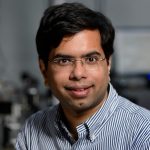
Ishan Barman
· ProfessorVerifiedJohns Hopkins University · Mechanical Engineering
Active 2005–2026
About
Ishan Barman is a professor of mechanical engineering with joint appointments in the Johns Hopkins Sidney Kimmel Cancer Center and the Russell H. Morgan Department of Radiology and Radiological Science. His research program is dedicated to engineering innovation for the analysis of complex biological systems, addressing questions relevant to both fundamental biology and applied clinical research. The key pillars of his research include biophotonics, nanomaterials, and artificial intelligence (AI). His laboratory develops noninvasive spectroscopic and imaging tools to explore biomolecular and biophysical phenomena, utilizing computational methods to analyze spectroscopic data across various biological levels, from single-molecule sensing to tissue and organismal behavior monitoring. Barman has pioneered the application of spontaneous and surface-enhanced Raman spectroscopy (SERS) in diverse pathophysiological contexts, engineering nanostructured probes for ultrasensitive molecular detection and quantitative tissue microspectroscopy for early cancer detection and objective cancer grading. His work integrates nanomanufacturing, DNA self-assembly, molecular and cellular biology, and data sciences, including AI, to develop virus sensing platforms, DNA nanotechnology-based probes, nanostructured substrates for cell analysis, and AI-assisted cellular imaging. Barman has authored 135 journal articles, 140 conference papers, holds 15 patents, and has delivered 95 invited talks. He has received numerous awards, including the NIH MIRA Award, NIH Director’s New Innovator Award, and others, recognizing his contributions to bioengineering and biomedical imaging.
Research topics
- Materials science
- Nanotechnology
- Computer Science
- Embedded system
- Optoelectronics
- Chemistry
- Biochemistry
- Molecular biology
- Biology
- Chromatography
Selected publications
Biosensors and Bioelectronics · 2026-02-05
articleSenior authorCorrespondingVisualizing adipocyte differentiation trajectories under fructose and glucose via Raman imaging
2026-03-05
articleSenior authorSmall Structures · 2026-03-01
articleOpen accessSenior authorCorrespondingProgramming Quantum Hardware with DNA The cover illustrates the deterministic integration of single silver nanocluster emitters into a quantum computing architecture. By establishing a “Rule-of-10” threshold for DNA-templated metallization, in their Research Article (10.1002/sstr.202500822), Swati Tanwar, Ishan Barman, and co-workers achieve one-per-site growth with nanometer precision. This quantitative framework enables the scalable patterning of discrete photonic arrays, bridging the gap between bottom-up biological assembly and the next generation of chip-based quantum technologies.
2026-01-15
articleSenior authorNano Letters · 2026-02-02
articleOpen accessSenior authorCorrespondingSurface-enhanced Raman spectroscopy (SERS) possesses molecular specificity and single-molecule sensitivity. Yet, intensity-based SERS assays are vulnerable to nontarget analyte-induced intensity fluctuations, while frequency-shift-based SERS assays are constrained by the instrument's spectral resolution, limiting the translational quantitative applications of SERS. Herein, we introduce a stochastic colloidal plasmon-enhanced spectral sampling (SCOPE) strategy for spectral super-resolution SERS spectroscopy. Through large-scale stochastic spectral sampling in a chemically homogeneous, spectrally dynamic colloidal solution containing plasmonic nanoparticles and analyte molecules, we obtain an empirical approximation of the probability density function of the sample's spectral response. This enables accurate estimation of the true peak center with subresolution precision through Gaussian histogram fitting. Building on SCOPE, we develop a spectrally super-resolved colloidal SERS immunoassay for multiplexed detection of a panel of protein biomarkers spanning endocrine, cardiovascular, and hemostatic conditions. We believe this study paves the way for spectrally super-resolved spectroscopic applications in a variety of analytical domains.
From photons to phenotypes: label-free quantitative phase imaging of astrocytes
2026-03-05
articleAutomated High-Throughput Raman Spectral Framework for Cellular Differentiation Monitoring
Nano Letters · 2026-01-22
articleOpen accessSenior authorCorrespondingHigh-throughput, label-free monitoring of cellular differentiation remains a major challenge in stem cell biology and regenerative medicine. Raman spectroscopy offers rich molecular specificity without perturbing the cell state, but the analytical complexity of large, unlabeled spectral data sets has limited its adoption. Here, we introduce a scalable computational framework that adapts algorithms from single-cell genomics for the analysis of line-illumination Raman spectroscopy data. Applying this approach, we track the stepwise differentiation of human induced pluripotent stem cells into hepatocyte-like cells at single-cell resolution across more than 1.8 million spectra. By integration of unsupervised clustering with supervised learning, our pipeline enables rapid analysis (<2 min per imaging field), monitoring key biochemical markers, such as cytochromes, glycogen, and lipids, and real-time discrimination of successful and aberrant differentiation without labeling. This work establishes a generalizable strategy for Raman-based cell state profiling and supports non-invasive, in-line monitoring in stem cell manufacturing pipelines.
DNA-origami-templated silver nanoclusters: precision assembly and quantum photonic functionality
2026-03-05
articleCells prioritize the regulation of cell mass density
Science Advances · 2025-08-27 · 4 citations
articleOpen accessA cell’s global physical state is characterized by its volume and dry mass. The ratio of cell mass to volume defines the cell mass density (CMD), which is also a measure of macromolecular crowding and concentrations of all proteins. Using the fluorescence eXclusion method (FXm) and quantitative phase microscopy (QPM), we investigate CMD dynamics following sudden changes in media osmolarity. We find that while cell volume and mass exhibit complex behavior after osmotic shock, CMD follows a straightforward monotonic recovery over 48 hours. This recovery is cell cycle independent and depends on coordinated adjustment of protein synthesis and volume growth rates. Unexpectedly, the protein synthesis rate decreases when CMD increases. We observe that nucleoplasm-cytoplasm transport is CMD dependent, which contributes to negative regulatory feedback on CMD. The Na + /H + exchanger helps regulate CMD by affecting both protein synthesis and volume change. Together, we reveal that cells have a robust control system that actively regulates CMD during environmental change.
Single–cell Raman imaging reveals fructose impairs brown adipocyte differentiation
Biosensors and Bioelectronics · 2025-09-13 · 1 citations
articleOpen accessSenior authorCorresponding
Recent grants
NIH · $2.5M · 2022
NIH · $3.4M · 2012
Next-generation optical nanoprobes: From quantum biosensing to cellular monitoring
NIH · $1.6M · 2023–2028
Frequent coauthors
- 90 shared
Santosh Kumar Paidi
Johns Hopkins University
- 87 shared
Kristine Glunde
Johns Hopkins University
- 61 shared
Soumik Siddhanta
Indian Institute of Technology Delhi
- 57 shared
Ramachandra R. Dasari
Massachusetts Institute of Technology
- 56 shared
Piyush Raj
Johns Hopkins University
- 50 shared
Rishikesh Pandey
University of Connecticut
- 49 shared
Peng Zheng
- 43 shared
Narahara Chari Dingari
Massachusetts Institute of Technology
Awards & honors
- NIH MIRA Award for Established Investigators
- Oracle Research Fellow
- Emerging Leader in Molecular Spectroscopy Award
- Eastern Analytical Symposium (EAS) Young Investigator
- Johns Hopkins University Catalyst Award
- Resume-aware match score
- Save to shortlist
- AI-drafted outreach
See your match with Ishan Barman
PhdFit ranks faculty by your research interests, methods, and publications — grounded in their actual work, not templates.
- Free to start
- No credit card
- 30-second signup