
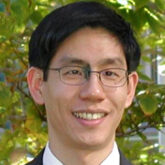
Isaac Chuang
· Julius A. Stratton Professor in Electrical Engineering and PhysicsMassachusetts Institute of Technology · Physics
Active 1987–2026
Academic metrics are sourced from OpenAlex and public funding records; values may differ from Google Scholar.
About
Isaac Chuang is the Julius A. Stratton Professor in Electrical Engineering and Physics at MIT. He is a pioneer in the field of quantum information science, with significant contributions including the experimental realization of two, three, five, and seven quantum bit quantum computers using nuclear spins in molecules. His work provided the first laboratory demonstrations of many important quantum algorithms, such as Shor's quantum factoring algorithm. Prof. Chuang's development of error correction, algorithmic cooling, and entanglement manipulation techniques has advanced the ability to control light and matter at the quantum level, laying a foundation for large-scale quantum information processing systems. Prof. Chuang joined MIT in 2000 from IBM, where he was a research staff member. He earned his doctorate in Electrical Engineering from Stanford University, where he was a Hertz Foundation Fellow. He also holds two bachelor's and one master's degrees in Physics and Electrical Engineering from MIT, and completed post-doctoral fellowships at Los Alamos National Laboratory and the University of California at Berkeley. He is co-author of the textbook 'Quantum Computation and Quantum Information' with Michael Nielsen. His research interests include how physical systems can represent and process information, understanding nature through information and computation, and developing architectures for quantum information systems.
Research topics
- Computer science
- Physics
- Quantum mechanics
- Materials science
- Algorithm
Selected publications
Long-lived metastable-qubit memory
Physical review. A/Physical review, A · 2025-02-18 · 9 citations
articleThe authors demonstrate an experimental realization of a long-lived quantum memory using the optical-frequency--metastable-state--ground-state architecture in a trapped ion, where the qubit is stored in the metastable states while an ancillary ion is used for sympathetic cooling. A dynamical decoupling sequence and leakage detection are employed to extend the coherence time to approximately four times the natural lifetime of the metastable state.
IEEE Transactions on Signal Processing · 2025-01-01 · 5 citations
articleOpen accessSenior authorSignal processing stands as a pillar of classical computation and modern information technology, applicable to both analog and digital signals. Recently, advancements in quantum information science have suggested that quantum signal processing (QSP) can enable more powerful signal processing capabilities. However, the developments in QSP have primarily leveraged <italic xmlns:mml="http://www.w3.org/1998/Math/MathML" xmlns:xlink="http://www.w3.org/1999/xlink">digital</i> quantum resources, such a…
Fault-tolerant neural networks from biological error correction codes
Physical review. E · 2024-11-05 · 5 citations
articleSenior authorIt has been an open question in deep learning if fault-tolerant computation is possible: can arbitrarily reliable computation be achieved using only unreliable neurons? In the grid cells of the mammalian cortex, analog error correction codes have been observed to protect states against neural spiking noise, but their role in information processing is unclear. Here, we use these biological error correction codes to develop a universal fault-tolerant neural network that achieves reliable computati…
Modular quantum signal processing in many variables
Quantum · 2025-06-18 · 4 citations
articleOpen accessSenior authorDespite significant advances in quantum algorithms, quantum programs in practice are often expressed at the circuit level, forgoing helpful structural abstractions common to their classical counterparts. Consequently, as many quantum algorithms have been unified with the advent of quantum signal processing (QSP) and quantum singular value transformation (QSVT), an opportunity has appeared to cast these algorithms as modules that can be combined to constitute complex programs. Complicating this,…
Integrated-photonics-based systems for polarization-gradient cooling of trapped ions
Light Science & Applications · 2026-01-15 · 2 citations
preprintOpen accessTrapped ions are a promising modality for quantum systems, with demonstrated utility as the basis for quantum processors and optical clocks. However, traditional trapped-ion systems are implemented using complex free-space optical configurations, whose large size and susceptibility to vibrations and drift inhibit scaling to large numbers of qubits. In recent years, integrated-photonics-based systems have been demonstrated as an avenue to address the challenge of scaling trapped-ion systems while…
Recent grants
NSF · $714k · 2011–2017
NSF · $125k · 2007–2010
MRI-R2: Laser Acquisition and Modernization Program (LAMP) for Quantum Science and Engineering
NSF · $2.3M · 2010–2013
Frequent coauthors
- 60 shared
Andrew Ho
- 57 shared
Justin Reich
Massachusetts Institute of Technology
- 57 shared
Jaroslaw Labaziewicz
- 54 shared
Guang Hao Low
- 50 shared
Jim Waldo
- 47 shared
Peter F. Herskind
Novo Nordisk (Denmark)
- 46 shared
Yufei Ge
National University of Defense Technology
- 42 shared
John Chiaverini
Massachusetts Institute of Technology
Awards & honors
- 2010 // American Physical Society Fellow
Similar researchers at Massachusetts Institute of Technology
- Resume-aware match score
- Save to shortlist
- AI-drafted outreach
See your match with Isaac Chuang
PhdFit ranks faculty by your research interests, methods, and publications — grounded in their actual work, not templates.
- Free to start
- No credit card
- 30-second signup