Resume-aware faculty matching

Find professors who actually fit you

Upload your resume. Four AI agents analyze your background, rank the faculty who fit, inspect their recent research, and help you draft outreach — grounded in their actual work, not templates.

Free to startNo credit cardCancel anytime
Top matches Balanced preset
Dr. Sarah Chen
Stanford · Interpretability · NLP
91
Dr. Marcus Holloway
MIT · Robotics · RL
84
Dr. Aisha Okonkwo
CMU · Fairness · HCI
82
Nova · Professor Researcher · re-ranking top 20…
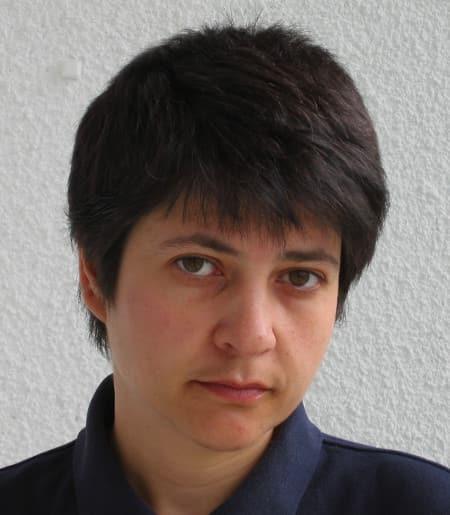
Irena Peeva

Irena Peeva

· Distinguished Professor of Arts & Sciences in MathematicsVerified

Cornell University · Mathematics

Active 1989–2026

h-index28
Citations2.7k
Papers887 last 5y
Funding$1.2M
See your match with Irena Peeva — sign in to PhdFit.Sign in

About

Irena Peeva is a Distinguished Professor of Arts & Sciences in the Department of Mathematics at Cornell University. Her primary research area is Commutative Algebra, with a focus on Free Resolutions and Hilbert Functions. She has also worked on the connections of Commutative Algebra with Algebraic Geometry, Combinatorics, Computational Algebra, Noncommutative Algebra, and Subspace Arrangements. Her work on free resolutions and Hilbert functions involves a core area in Commutative Algebra that contains numerous challenging conjectures and open problems. Peeva's research includes associating free resolutions to modules, a concept introduced by Hilbert, which provides a method for describing the structure of modules. She has contributed to the field through various publications, including research monographs and articles in reputable journals.

Research topics

  • Mathematics
  • Pure mathematics
  • Combinatorics
  • Arithmetic
  • Mathematical analysis
  • Statistics
  • Discrete mathematics

Selected publications

  • Koszul binomial edge ideals

    Forum of Mathematics Sigma · 2026-01-01

    articleOpen accessSenior author

    Abstract The study of Koszul binomial edge ideals was initiated by V. Ene, J. Herzog, and T. Hibi in 2014, who found necessary conditions for Koszulness. The binomial edge ideal $J_G$ associated to a finite simple graph G is always generated by quadrics. It has a quadratic Gröbner basis if and only if the graph G is closed. However, there are many known nonclosed graphs G where $J_G$ is Koszul. We characterize the Koszul binomial edge ideals by a simple combinatorial property of the graph G .

  • Koszul Binomial Edge Ideals

    arXiv (Cornell University) · 2026-01-21

    preprintOpen accessSenior author

    As the binomial edge ideal of a graph is always generated by homogeneous quadratic polynomials corresponding to the edges of the graph, the question of when a binomial edge ideal defines a Koszul algebra has been studied by many authors ever since the class of ideals was first defined. Several partial results are known, including a characterization of those binomial edge ideals that possess a quadratic Gröbner basis. However, a complete characterization of the graphs determining Koszul binomial edge ideals has remained elusive. Inspired by our recent work characterizing when the graded Möbius algebras of graphic matroids are Koszul, we answer the question once and for all by proving that a graph defines a Koszul binomial edge ideal if and only if it is strongly chordal and claw-free.

  • Koszul graded Möbius algebras and strongly chordal graphs

    Selecta Mathematica · 2025-03-05

    articleSenior author
  • Koszul Graded Möbius Algebras and Strongly Chordal Graphs

    arXiv (Cornell University) · 2024-12-24

    preprintOpen accessSenior author

    The graded Möbius algebra of a matroid is a commutative graded algebra which encodes the combinatorics of the lattice of flats of the matroid. As a special subalgebra of the augmented Chow ring of the matroid, it plays an important role in the recent proof of the Dowling-Wilson Top Heavy Conjecture. Recently, Mastroeni and McCullough proved that the Chow ring and the augmented Chow ring of a matroid are Koszul. We study when graded Möbius algebras are Koszul. We characterize the Koszul graded Möbius algebras of cycle matroids of graphs in terms of properties of the graphs. Our results yield a new characterization of strongly chordal graphs via edge orderings.

  • Syzygies over a polynomial ring

    EMS Press eBooks · 2023-12-15

    book-chapterOpen access1st authorCorresponding
  • Closed binomial edge ideals

    Journal für die reine und angewandte Mathematik (Crelles Journal) · 2023-08-30

    article1st authorCorresponding

    Abstract We prove a conjecture by Ene, Herzog, and Hibi (2011) that the Betti numbers of the binomial edge ideal <m:math xmlns:m="http://www.w3.org/1998/Math/MathML"> <m:msub> <m:mi>J</m:mi> <m:mi>G</m:mi> </m:msub> </m:math> {J_{G}} of a closed graph G coincide with the Betti numbers of its lex initial ideal <m:math xmlns:m="http://www.w3.org/1998/Math/MathML"> <m:msub> <m:mi>M</m:mi> <m:mi>G</m:mi> </m:msub> </m:math> {M_{G}} . We describe the Betti numbers of the ideal <m:math xmlns:m="http://www.w3.org/1998/Math/MathML"> <m:msub> <m:mi>M</m:mi> <m:mi>G</m:mi> </m:msub> </m:math> {M_{G}} .

  • Binomial edge ideals over an exterior algebra

    MATHEMATICA SCANDINAVICA · 2023 · 1 citations

    1st authorCorresponding
    • Mathematics
    • Pure mathematics
    • Statistics

    We introduce the study of binomial edge ideals over an exterior algebra.

  • The Regularity Conjecture for prime ideals in polynomial rings

    EMS Surveys in Mathematical Sciences · 2021 · 3 citations

    Senior authorCorresponding
    • Mathematics
    • Combinatorics
    • Pure mathematics

    This paper presents a survey on recent developments on regularity of prime ideals in polynomial rings.

  • Layered resolutions of Cohen–Macaulay modules

    Journal of the European Mathematical Society · 2020 · 6 citations

    Senior authorCorresponding
    • Mathematics
    • Pure mathematics
    • Arithmetic

    Let S be a Gorenstein local ring and suppose that M is a finitely generated Cohen–Macaulay S -module of codimension c . Given a regular sequence f_1, \ldots, f_c in the annihilator of M we set R = S/(f_1, \ldots, f_c) and construct layered S -free and R -free resolutions of M . The construction inductively reduces the problem to the case of a Cohen–Macaulay module of codimension c-1 and leads to the inductive construction of a higher matrix factorization for M . In the case where M is a sufficiently high R -syzygy of some module of finite projective dimension over S , the layered resolutions are minimal and coincide with the resolutions defined from higher matrix factorizations we described in [EP]. Our results provide a characterization of all MCM modules over a complete intersection in terms of higher matrix factorizations.

  • Quadratic complete intersections

    Journal of Algebra · 2019-12-03 · 2 citations

    articleCorresponding

Recent grants

Frequent coauthors

  • David Eisenbud

    29 shared
  • Vesselin Gasharov

    Philips (Germany)

    25 shared
  • Volkmar Welker

    Philipps University of Marburg

    11 shared
  • Marc Chardin

    7 shared
  • Bernd Sturmfels

    7 shared
  • Mike Stillman

    7 shared
  • Jason McCullough

    6 shared
  • Frank–Olaf Schreyer

    5 shared

Awards & honors

  • A&S honors 10 faculty with endowed professorships
  • Two mathematics professors honored with 2019 Simons Fellowsh…
  • Resume-aware match score
  • Save to shortlist
  • AI-drafted outreach

See your match with Irena Peeva

PhdFit ranks faculty by your research interests, methods, and publications — grounded in their actual work, not templates.

  • Free to start
  • No credit card
  • 30-second signup