
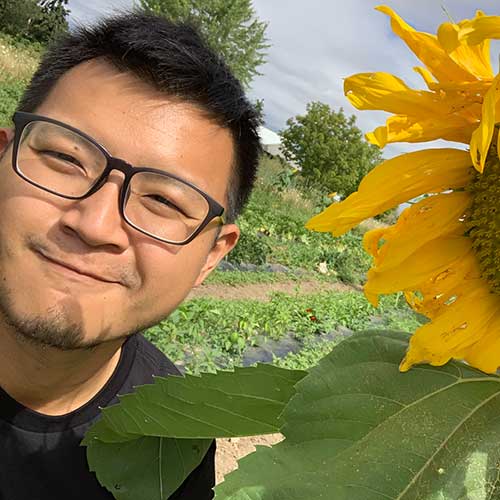
Hsuan Chen
· Assistant ProfessorVerifiedNorth Carolina State University · Horticultural Science
Active 1993–2026
About
Hsuan Chen is an Assistant Professor of Horticultural Science at NC State University, located in Kilgore Hall. He holds a PhD in Plant Breeding and Genetics from Oregon State University, an MS in Agronomy from National Taiwan University, and a BS in Life Sciences from the National University of Kaohsiung. His research interests focus on ornamental plant breeding utilizing versatile technologies such as conventional plant breeding, cytogenetics, ploidy manipulation, molecular marker-assisted selection, and interspecific hybridization. Dr. Chen is dedicated to breeding ornamental plants with novel traits, environmental friendliness, and improved production efficiency. He has industry experience as a Research Scientist and Plant Breeder at Oregon CBD in Oregon. His expertise includes cytogenetics, ploidy confirmation, and chromosome squashes, which are available for consultation. Dr. Chen is actively involved in research related to plant genetics, breeding, and genomics within the field of horticultural science.
Research topics
- Biology
- Biochemistry
- Genetics
- Ecology
- Botany
- Cell biology
Selected publications
AI-driven gene-sets, networks, pathways, and interactions analyses of multi-omics data
Progress in molecular biology and translational science · 2026-01-01
book-chapterDiscover Sustainability · 2026-04-21
articleOpen accessCorrespondingUnderstanding the spatiotemporal dynamics of carbon storage and its driving factors is crucial for achieving the Sustainable Development Goals (SDGs). As an important tributary of the upper reaches of the Yangtze River, the Fujiang River Basin plays a significant role in ecological protection and sustainable development due to the spatiotemporal evolution and future trends of its carbon storage. Based on the land use data of the Fujiang River Basin from 2000 to 2020, this study simulated and analyzed the carbon storage under four scenarios for the year 2030: natural development scenario (NDS), ecological protection scenario (EPS), farmland protection scenario (FPS), and urban development scenario (UDS), using the InVEST and PLUS models. The results show that: (1) From 2000 to 2020, the carbon storage in the Fujiang River Basin first increased and then decreased, with a total increase of 0.44 Tg over 20 years. The spatial distribution showed a significant pattern of “high in the upper reaches and low in the middle and lower reaches”. (2) In the future scenario predictions, the carbon storage under the NDS and EPS will show an increasing trend, while that under the FPS and UDS will show a decreasing trend. Among them, the total carbon storage under the EPS will be the highest, reaching 1,052.33 Tg, demonstrating obvious protective benefits. (3) The spatial differentiation of carbon storage in the Fujiang River Basin was influenced by multiple factors, with DEM being the key factor and having the strongest explanatory power when interacting with other factors. The research results provide important scientific basis for ecological protection, land use planning, and sustainable development in the Fujiang River Basin. By identifying optimal pathways, this study supports regional efforts to achieve the "dual carbon" goals, ultimately contributing to climate change mitigation, terrestrial ecosystem conservation, and the broader SDG agenda.
Spatiotemporal trajectory of B cells in lymphoid follicle of COPD
2025-09-27
article1st authorCorresponding<bold>Introduction:</bold> Lymphoid follicles, mainly composed of B cells, have been recognised in COPD for over two decades but remain underexplored, lacking longitudinal and spatial insights. <bold>Aims:</bold> Using GeoMx spatial transcriptomics, we assessed the spatiotemporal formation and changes of lymphoid follicles in a mouse model of cigarette smoke-induced COPD. <bold>Methods:</bold> Mice were exposed to cigarette smoke for 2, 4, 6, 8, and 12 weeks, with time-matched air-exposed controls (n=8 per time point). GeoMx profiled whole transcriptomes in key lung regions: airways, arteries, parenchyma, and lymphoid follicles. <bold>Results:</bold> Immune cell infiltration, lung function decline, and airway pathogenesis emerged early, with emphysema by mid-stage. Spatial profiling revealed a trajectory of B cells. Early smoke exposure reduced B cells in the parenchyma (p=0.0024). By mid-stage, B cells increased via arterial recruitment (p=0.0002) but concentrated in follicles rather than distributing evenly. Over time, follicles expanded due to increased B cell content (p=0.0319). Autoimmune genes (e.g., <italic>Enpp2</italic>) increased in follicles, and inflammatory genes (e.g., <italic>Ccl7</italic>) declined. Single-cell analysis traced B cells to bone marrow origins, supporting lymphoid follicle formation after prolonged smoke exposure. <bold>Conclusion:</bold> Our study reveals a spatiotemporal trajectory of B cell accumulation in lymphoid follicles after mid-stage smoke exposure, suggesting an autoimmune mechanism in COPD progression. <fig><object-id>erj;66/suppl_69/PA6336/F1</object-id><object-id>F1</object-id><object-id>F1</object-id><graphic></graphic></fig>
Theoretical and Applied Genetics · 2025-05-13 · 2 citations
articlePlant Physiology and Biochemistry · 2025-01-29 · 8 citations
articleOverexpression of OsDUF868.12 enhances salt tolerance in rice
Frontiers in Plant Science · 2025-01-29 · 1 citations
articleOpen access1st authorExcessive salt accumuln in soil is one of the most important abiotic stresses in agricultural environments. The Domain of Unknown Function 868 (DUF868) family, comprising 15 members in rice, has been identified in the protein family database. In this study, we cloned and functionally characterized OsDUF868.12 , a member of the OsDUF868 family, to elucidate its role in rice response to salt stress. A series of experiments, including RT-qPCR, Agrobacterium-mediated transient transformation in tobacco for localization analysis, phenotypic characterization, physiological and biochemical index measurement, and leaf staining, were conducted to investigate the function of OsDUF868.12 under salt stress. Transcriptional analysis revealed that OsDUF868.12 exhibited the most significant response to low temperature and salt stress. Preliminary subcellular localization studies indicated that OsDUF868.12 is localized in the cell membrane. Phenotypic Identification Experiments showed Overexpression lines of OsDUF868.12 enhanced resistance to salt stress and increased survival rates, while knockout lines of OsDUF868.12 were opposite. Physiological and biochemical assessments, along with leaf staining, demonstrated that overexpression of OsDUF868.12 improved the activity against oxidative stress.under salt stress. Furthermore, overexpression of OsDUF868.12 elevated the transcription levels of positively regulated salt stress-related genes. These findings suggest that overexpression of OsDUF868.12 enhances rice tolerance to salt stress at the molecular level through a series of regulatory mechanisms. This study provides valuable insights into the functional roles of the DUF868 family in plant responses to abiotic stress.
Palaeoworld · 2025-03-10
articleLife · 2025-04-01
articleOpen accessThe Qinghai-Tibet Plateau represents a highly sensitive region to global climate change. Understanding Holocene climate variations and vegetation responses in this area holds significant value for predicting future climate patterns, vegetation distribution changes, and biodiversity loss. Here, we aim to reconstruct Holocene climate conditions in the northeastern Qinghai-Tibet Plateau using modern and Holocene pollen records through weighted averaging-partial least squares (WA-PLS) analysis, and to examine the spatial-temporal relationship between vegetation dynamics and climate change during different characteristic periods. The results indicate that: (1) During the Holocene, the climate generally tended toward warmth and humidity with increased extremity. Based on temperature variations, it can be divided into ten characteristic periods. (2) The Holocene saw an increase in maximum temperature, average temperature, and precipitation, while minimum temperature decreased. (3) Forest decreased, undergoing three stages: expansion, contraction, and continuous contraction leading to stabilization. Grassland increased, following the stages of full expansion, localized expansion, and contraction with stabilization. (4) Under climatic influence, forest areas slightly expanded, while grassland areas slightly contracted. Meanwhile, land salinization intensified. We aim to enhance the understanding of climate change and vegetation evolution, providing a theoretical basis for addressing future climate change and biodiversity loss.
The impact of income uncertainty on household economic vulnerability: new Evidence from China
Applied Economics · 2025-12-24
articleOpen accessCorrespondingRice · 2025-12-01 · 1 citations
articleOpen accessSoil salinization is becoming a huge threat to reducing productivity of rice (Oryza sativa L.) around the world. Previous studies have found that some Domain of unknown function (DUF) proteins play an essential role in the growth and development of plants. The DUF936 family is reported to respond to abiotic stresses, but the specific molecular mechanisms of its members remain elusive. In this study, OsSSID6 (Salt-Stress Induced DUF936 protein) is found at the cell membrane and the protein's expression could be affected by several abiotic stresses. The CRISPR/Cas9 knockout lines increased salt tolerance in rice, whereas the overexpression lines showed more sensitivity. And meanwhile the similar changes of ROS-scavenging capacity were observed both in knockout and overexpression lines. Transcriptome analysis identified that the expression of genes linked to multiple metabolic pathways, including phenylpropanoid and flavonoid biosynthesis, and stress response, was significantly up-regulated in KO lines. Our findings reveal that OsSSID6 gene modulates rice salt stress tolerance by orchestrating a network of metabolic pathways, including those involved in the reactive oxygen species (ROS) scavenging system, phenylpropanoid and flavonoid biosynthesis and stress response-related mechanism. sThese results provide important information for engineering salt-tolerant crops.
Frequent coauthors
- 40 shared
Cuiling Yang
- 40 shared
Daojie Wang
Henan University
- 37 shared
Pei Wang
South China Agricultural University
- 37 shared
Chun‐Peng Song
State Key Laboratory of Cotton Biology
- 37 shared
Xiao Zhang
Northwest A&F University
- 36 shared
Shicong Li
State Key Laboratory of Cotton Biology
- 36 shared
Qiuli Leng
Institute of Plant Protection
- 21 shared
Jack Wang
Louisiana State University Health Sciences Center New Orleans
Education
- 2006
Ph.D., Horticultural Science
University of California, Davis
- 2002
M.S., Horticultural Science
University of California, Davis
- 2000
B.S., Horticultural Science
University of California, Davis
- Resume-aware match score
- Save to shortlist
- AI-drafted outreach
See your match with Hsuan Chen
PhdFit ranks faculty by your research interests, methods, and publications — grounded in their actual work, not templates.
- Free to start
- No credit card
- 30-second signup