Resume-aware faculty matching

Find professors who actually fit you

Upload your resume. Four AI agents analyze your background, rank the faculty who fit, inspect their recent research, and help you draft outreach — grounded in their actual work, not templates.

Free to startNo credit cardCancel anytime
Top matches Balanced preset
Dr. Sarah Chen
Stanford · Interpretability · NLP
91
Dr. Marcus Holloway
MIT · Robotics · RL
84
Dr. Aisha Okonkwo
CMU · Fairness · HCI
82
Nova · Professor Researcher · re-ranking top 20…
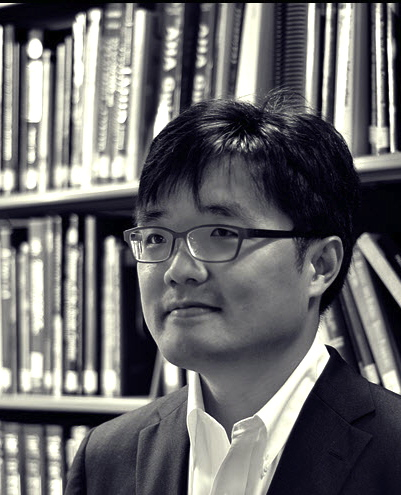
Hoi-eun Kim

Hoi-eun Kim

· Director of Undergraduate Studies, Associate Professor

Texas A&M University · History

Active 2012–2021

h-index5
Citations127
Papers223 last 5y
Funding
See your match with Hoi-eun Kim — sign in to PhdFit.Sign in

About

Hoi-eun Kim is an associate professor and the Director of Undergraduate Studies in the Department of History at Texas A&M University. He is a social and cultural historian specializing in modern Europe and modern East Asia, with a particular focus on the interactions between Germany, Japan, and Korea during the 19th and 20th centuries. His research emphasizes the role of medical doctors as transnational agents of knowledge formation and empire-building. Kim's first book, 'Doctors of Empire: Medical and Cultural Encounters between Imperial Germany and Meiji Japan,' published by the University of Toronto Press in 2014, examined the 'Germanization' of medical education and practices in Meiji Japan from 1868 to 1912. Currently, supported by the National Endowment for the Humanities, he is working on a book about Japanese doctors in colonial Korea (1910-1945) as researchers, teachers, and private practitioners. His post-doctoral research has been supported by notable organizations such as the Japan Society for the Promotion of Science, the Academy of Korean Studies, and the German Academic Exchange Services. Kim's recent publications have received awards from the American Association for the History of Medicine and the Business History Conference.

Research topics

  • Political Science
  • Law
  • Sociology
  • Medicine
  • History
  • Economics
  • Management
  • Gender studies
  • Family medicine
  • Market economy

Selected publications

  • Imperatives of Care: Women and Medicine in Colonial Korea by Sonja M. Kim

    Harvard Journal of Asiatic Studies · 2021

    1st authorCorresponding
    • Political Science
    • Sociology
    • Political Science

    Reviewed by: Imperatives of Care: Women and Medicine in Colonial Korea by Sonja M. Kim Hoi-eun Kim Imperatives of Care: Women and Medicine in Colonial Korea by Sonja M. Kim. Honolulu: University of Hawaiʻi Press, 2019. Pp. viii + 228. $80.00 hardcover, $28.00 paper. Sonja Kim’s comprehensive account is the first monograph-length study in English that explores the entangled relations between women and medicine in colonial Korea (1910–1945). It discusses the full spectrum of women’s engagement both as providers and consumers of [End Page 375] medical services and discourses. Through ample details drawn from a rich array of primary sources, Kim describes the expanded opportunities for women in colonial Korea: the training of female physicians, nurses, and midwives; their achievements and tribulations; the sophisticated marketing practices of patent medicine targeting female ailments; and hygiene and sanitation education. But for every new opportunity, as Kim describes, there was a countervailing force. Ultimately, the idealized role of women remained exclusively as married mothers who produced offspring and tended to their well-being. Central to this seemingly contradictory expansion and restriction of women’s roles was the notion of “care.” The provision of care was not the exclusive domain of women in premodern Korea, but it came to be increasingly connected to women’s reproductive functions by Korean nationalist reformers at the turn of the twentieth century. This refashioning was later embraced and further intensified by the Japanese colonial regime in Korea. In chapter 1, “Sanitizing Women and the Domestic Sciences,” Kim traces this critical transformation by analyzing the notion of home management and women’s education. According to Kim, “a strict gendered delineation between a male outer or public sphere of state politics-work and female inner or private sphere in the domicile did not exist in Chosŏn Korea [1392–1910]” (p. 22). While “how a woman behaved in her husband’s home affected the moral order of the cosmos” (p. 18), the primary responsibility of raising children fell on the shoulders of husbands, the male head of the household. Then, as Korea was forcefully drawn into the whirlwind change of global order in the second half of the nineteenth century, Korean nationalist reformers started to re-envision “the duties, obligations, and roles the state and the people were expected to perform for each other” (p. 23). This strategy for survival in the world of imperialism and social Darwinism, coupled with the influence of Japanese texts on home economics and their Chinese translations, resulted in the phenomenon that “household management became gendered female, now identified as the heavenly ordained duty, responsibility, and civic role of married women” (p. 37). Once transformed into a female role, the proper management of the household, which now included training in sanitation and public-health practices for the better care of family members, remained women’s responsibility throughout the colonial era. The establishment of a new major in kasa 家事 (domestic services) in 1929 at Ewha 梨花 College [End Page 376] (present-day Ewha Womans University) is an illustrative example in this regard. While this new discipline undoubtedly exemplified the expansion of educational opportunities for women in colonial Korea, it also evinced that gendered division of labor came to be intensified. In other words, Japan’s new colonial regime, through such novelties as domestic services, “re-imagined and reinforced expectations for women” (p. 50) primarily as care providers. The association of care with women also affected the professionalization of female physicians, which is the focus of chapter 2. Here, Kim reiterates the overarching argument of the book: “the medical field granted women expanded educational and occupational opportunities. Yet at the same time, it reinforced gendered labor and spatial divisions, restricting those very opportunities and marginalizing women in medicine at large” (p. 53). From the early twentieth century, there was a constant demand for female physicians, who were believed to provide better treatments for gynecological concerns, in the general context of women’s refusing medical care provided by male physicians. However, with the door shut to Korean women in higher institutions for medical education for much of the colonial period (Keijō 京城 Women’s Medical College had its first graduates only in 1942...

  • Pierre-Yves Donzé, <i>Making Medicine a Business: X-ray Technology, Global Competition, and the Transformation of the Japanese Medical System, 1895-1945</i>

    Social History of Medicine · 2020

    1st authorCorresponding
    • Political Science
    • Management
    • Medicine

    As Pierre-Yves Donzé rightly points out, all too often, history of medicine has focused on intellectual, social and cultural aspects of medical care and its practitioners and institutions, leaving the economic side of the story to historians of business. In this important book that bridges the two fields of history, Donzé endeavours to ‘investigate and discuss how medicine transformed into a growing business and what roles technology played in the process’ (p.6) by focusing on X-ray technology and its adoption and localisation in Japan in the first half of the twentieth century. He does this by analysing major stakeholders such as manufacturers and distributors of equipment (Chapter 2), doctors (Chapter 3), hospitals (Chapter 5), the Japanese state (Chapter 6), and the relations between doctors and producers of X-ray equipment (Chapter 4). The result is an impressive study, detailing the establishment of a market-based health care system in Japan in the 1920s.

  • It’s Madness: The Politics of Mental Health in Colonial Korea by Theodore Jun Yoo

    Monumenta Nipponica · 2019-03-10

    article1st authorCorresponding

    Reviewed by: It’s Madness: The Politics of Mental Health in Colonial Korea by Theodore Jun Yoo Hoi-Eun Kim It’s Madness: The Politics of Mental Health in Colonial Korea. By Theodore Jun Yoo. University of California Press, 2016. 248 pages. Hardcover, $65.00/£54.95. In this richly detailed account of mental illness and its attendant politics in Korea, Theodore Jun Yoo follows his well-received first book, on gender and politics, with a second volume focusing on Korea under Japanese occupation.1 He writes that his central task in the current book is “to trace the ‘genealogy of madness’ by analyzing how Korean society sought to make sense of behaviors that were unusual, frightening, or bizarre” (p. 10). While two of the four main chapters deal specifically with the colonial era, in keeping with his primary purpose of locating secular trends and changes in the identification, treatment, and management of the mentally ill in Korea, Yoo in fact covers a much more expansive time frame, devoting his entire first chapter and the first half of his third chapter to the second half of the Joseon (Chosǒn) Dynasty (1392–1910). The result of this widened temporal lens can be seen in contrast with more typical studies of modern psychiatry that posit a teleological transition from the premodern era, characterized by the prevalence of shaman-mediated exorcism, to the period of (colonial) modernity in which medical authorities, armed with biomedical nosologies and enabled by bureaucratic apparatuses, defined and enforced normality for modern subjects. Yoo instead presents a narrative driven by the concept “palimpsest,” borrowed from literary theorist Sarah Dillon [End Page 292] (p. 160, n. 12), which helps him to emphasize the multilayered nature of the formation of modern discourses on madness in Korea. In other words, Yoo sees in colonial Korea not a clean slate created by the triumphant rise to dominance of modern psychiatry, but “an amalgam of ideas from traditional Korean folk culture, Chinese traditional medicine, and modern psychiatry” (p. 11) that was bequeathed to postcolonial Korea more or less in toto. As Yoo details in the first chapter of the book, two disparate ideas on mental illness prevailed in Korea before the introduction of modern psychiatry in the early twentieth century. One was shamanism, which “viewed patients’ unresolved grudges or misfortune, or their possession by spirits, as the cause of mental afflictions” and whose remedies involved sacrificial rituals to soothe perturbed spirits or drive away evil ones through exorcism—a practice that was often violent and at times even fatal (p. 44). By the end of the Joseon period, however, “there was a slow shift from the personal, spirit-centered approach of shamanism . . . to naturalistic medical methods that focused on the processes of somatization” (p. 41). At the center of this addition of a new layer to the palimpsest was the sophistication of Korean medicine, which systemized both the etiology and the treatments found in traditional Chinese medicine. For practitioners of Korean medicine such as Heo Jun (1539–1615), mental illness was merely a symptom reflecting an imbalance in the body, just as human emotions were linked to specific organs. Any medical intervention in this tradition was therefore designed to restore the balance of bodily energies and organs. While a group of progressive Korean scholars began to discuss Western psychiatric institutions as early as the 1880s as part of their vision for a sweeping reform movement in the spirit of enlightenment, the real occasion for the introduction of modern psychiatry came with the formal colonization of the peninsula in 1910, as elaborated in chapter 2. According to Yoo, two largely unrelated (or even oppositional) strands of psychiatry took root in colonial Korea. On the one hand, there was the Christianity-inspired, habilitation-focused approach adopted by Charles Inglis McLaren (1882–1957), a missionary doctor at the Severance Union Hospital in Korea from 1923, who “attempted to offer his patients both spiritual and psychological solutions, modeling his approach on Jesus’s own treatment of the ill and downtrodden” (p. 61). Standing in contrast to this “spiritualized psychotherapy” was what Yoo calls “a German-style approach to psychiatry, including its emphasis on diagnostic nosology and its...

  • Adulterated Intermediaries: Peddlers, Pharmacists, and the Patent Medicine Industry in Colonial Korea (1910–1945)

    Enterprise & Society · 2019-09-26 · 10 citations

    article1st authorCorresponding

    In studying the patent medicine industry in colonial Korea (1910–1945), I pay attention to the inordinately large number of peddlers and small retailers—45,688 in 1935—who functioned as human intermediaries in the burgeoning medicinal market. By almost exclusively studying printed advertisements, previous scholars have depicted the patent medicine industry as the vanguard of modern marketing or as a willing partner in the commercial propagation of the hegemonic vision of the colonial biopower. Conscious of the severely limited reach of modern media in the colonial context, I argue instead that incentivized sales intermediaries were equally significant in the success of the patent medicine industry. But the significance and contributions of the peddlers to the patent medicine industry were double-edged—the peddlers helped the industry by facilitating physical dissemination of patent medicine to end consumers, but their constant use of deception and fraud tainted the reputation of the industry. The anticipated move toward stricter regulation, however, did not happen due to two interrelated factors—a nascent group of pharmacists trained in modern pharmacology had strong ties to the patent medicine industry and the lukewarm response from the colonial government put the brakes on any meaningful reform. Overall, by bringing to the fore the pivotal roles peddlers played, my article provides a more nuanced discussion of the marketing practices of the patent medicine industry, the nature of the emerging professional class of pharmacists, and the efficacy (or lack thereof) of the regulatory power of the colonial government.

  • Patching Up a Diplomatic Fissure: Reassessing Richard Wunsch, a German Physician to the Korean Court, 1901–1905*

    German History · 2019-02-20

    article1st authorCorresponding

    Abstract In 1901 the Korean imperial court invited Greifswald-educated medical doctor Richard Wunsch to be personal physician to Emperor Kojong, only to abandon him upon his arrival in Seoul. Previous scholarship has understood Wunsch’s wasteful four-year engagement as a typical example from an incompetent regime on the cusp of its forceful transformation into Japan’s protectorate in 1905. Based upon careful analysis of hitherto unexplored diplomatic documents from both German and Korean sides, I argue that the appointment of Wunsch needs be understood in the whirlwind of diplomatic tension between Germany and Korea that arose over the issue of a disputed mining concession in 1898. The mutually agreed arrangement to install a German doctor in the Korean court in 1901 was a symbol of the patched-up relationship, with each side harbouring a different agenda—the German government wanted to put a powerful person in the court to gain an edge in imperial politics in Korea, and Koreans wished to have a German doctor who would function as a counterweight to the more dominant presence of American and British doctors in the court. By reconstructing the impact of convoluted factors, both local and global, in the invitation of a German doctor to Korea, this article provides a detailed case study of the use of medical science by the German imperial government as a chip in the global game of influence. It also functions as an overdue corrective to a commercially inspired and prevalent image of Wunsch that has capitalized upon a self-orientalizing tendency in contemporary Korea.

  • A Genealogical Interrogation of Prussian Neoclassical “Tectonics” in East Asia

    eScholarship (California Digital Library) · 2016-06-01

    articleOpen access1st authorCorresponding

    Chun Jin-sung 전진성.&amp;nbsp;Sangsang ŭi At'ene, Perŭllin-Tok'yo-Sŏul&amp;nbsp;상상의 아테네, 베를린-도쿄-서울: 기억과 건축이 빚어낸 불협 화음의 문화사&amp;nbsp;[Imaginary Athens, Berlin-Tokyo-Seoul]. Seoul: Ch'ŏnnyŏnŭisangsang, 2015. ISBN: 9791185811086.\n\nIn this impressively ambitious book, Chun Jin-sung (Chŏn Chinsŏng), the Berlin-educated historian of modern Germany, traces the entangled formation of urban landscapes and architectural landmarks in Berlin, Tokyo, and Seoul. Readers who know Chun primarily through his critically acclaimed work on modern German history may find his inclusion of Japan and Korea as a field of inquiry, as well as his venture into architectural history, rather unexpected. Yet this turn has been long in the making...&amp;nbsp;

  • Reauthenticating Race: Na Sejin and the Recycling of Colonial Physical Anthropology in Postcolonial Korea

    ˜The œjournal of Korean studies · 2016-01-01 · 11 citations

    article1st authorCorresponding

    What are the roles of colonial physical anthropology in postcolonial societies? Does it simply disappear from the public scene, losing its academic and political utility of providing seemingly scientific justification for colonial racism? Or does it have a renewed life, serving another master in the name of science? The analysis of the postcolonial intellectual trajectories of Na Sejin (also known as Ilchae and Nishiki Seishin), Korea's foremost anatomist and physical anthropologist, points to an unsavory continuity. Under the new political demands of the postcolonial nation-state, Na, who consciously or unconsciously collaborated with the colonial regime in justifying colonial racial essentialization, did not find it problematic to use body measurements collected and analyzed by his Japanese teachers and colleagues during the Colonial Period to identify the racial characteristics of Koreans. Rather, in postcolonial Korea, which reasserted ethnic uniformity as the constructive lynchpin of the post-Liberation nation-state, Na retooled his skills and reauthenticated the category of "race" to support a discourse of a homogeneous ethnic Korean society using measurable (and therefore seemingly irrefutable) scientific evidence. Recognizing this continuity of physical anthropology through the colonial and postcolonial periods is to discover the long-term legacy of knowledge that originated from German physician-anthropologists in Meiji Japan, a legacy that was mediated and relayed by Japanese progenies in Imperial Japan, and found its unexpected utility in postcolonial Korea.

  • Made in Meiji Japan

    Geschichte und Gesellschaft · 2015-06-01 · 2 citations

    article1st authorCorresponding

    In the study of German expatriates in Asia, the active participation and input of local host societies has often been ignored. Using an influential group of Germans in Meiji Japan (1868 -1912) and their relationship to the host society as a case study, this essay argues that "Germanness", a concept that has been long regarded as the exclusive domain of German nationals, was subject to global influence, articulated, created, and imagined by those who wanted to define it for their own interests and agenda. In Meiji Japan, the appropriation and embodiment of Germanness by German-educated Japanese elites (not a quality exclusive to ethnic Germans) functioned as scaffolding for the enduringly positive image of Germany throughout the tumultuous decades of the 1890s and 1900s, while dislodging German professionals from their privileged positions in Meiji Japan.

  • Transnational Revision of the History of Modern Medicine in Japan

    2015-01-01

    article1st authorCorresponding

    It is not easy to write a book-length scholarly work on a historical topic that has been too familiarized to the public. The new book is supposed to compete with stereotypes and popularized anecdotes, as much as previous academic research on it. The author is accordingly expected to appeal not only to experts, but also to lay public readers who often compare academic works with popular historical novels, movies, and television shows. The history of medicine in early modern Japan might be one exemplar of such excessively popularized topics—at least for Japanese readers. Numbers of Japanese and foreign “heroes” who laid the foundation of the modern medicine in Japan have been repeatedly portrayed in popular culture, along with other pioneers of modern science, technology, military, commerce, politics, and philosophy. In other words, the history of modern medicine in Japan is an important component of the saga of “miraculous” 293

  • Epilogue Fatal Affinities? The Long-Term Legacies Of German–Japanese Medical Relations

    University of Toronto Press eBooks · 2014-12-31

    book-chapter1st authorCorresponding

Awards & honors

  • Best article prize from the American Association for the His…
  • Best article prize from the Business History Conference (202…
  • Support from the National Endowment for the Humanities (Awar…
  • Support from the Japan Society for the Promotion of Science…
  • Support from the Academy of Korean Studies
  • Resume-aware match score
  • Save to shortlist
  • AI-drafted outreach

See your match with Hoi-eun Kim

PhdFit ranks faculty by your research interests, methods, and publications — grounded in their actual work, not templates.

  • Free to start
  • No credit card
  • 30-second signup