Resume-aware faculty matching

Find professors who actually fit you

Upload your resume. Four AI agents analyze your background, rank the faculty who fit, inspect their recent research, and help you draft outreach — grounded in their actual work, not templates.

Free to startNo credit cardCancel anytime
Top matches Balanced preset
Dr. Sarah Chen
Stanford · Interpretability · NLP
91
Dr. Marcus Holloway
MIT · Robotics · RL
84
Dr. Aisha Okonkwo
CMU · Fairness · HCI
82
Nova · Professor Researcher · re-ranking top 20…
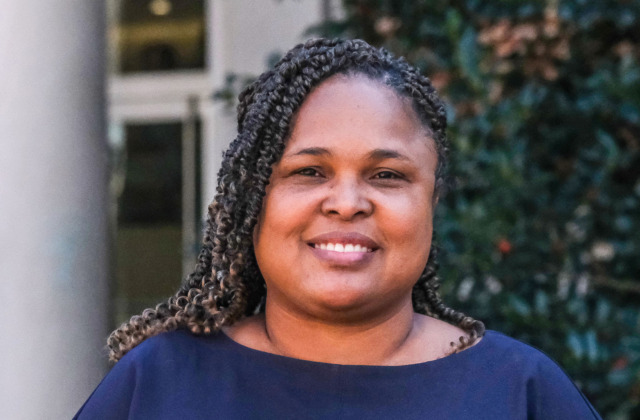
Helyne Frederick

Helyne Frederick

· Program Director, Human Development and Family Science; Director, Interprofessional Education and Practice Clinical ProfessorVerified

University of North Carolina at Chapel Hill · Health Behavior

Active 2011–2026

h-index6
Citations92
Papers2411 last 5y
Funding
See your match with Helyne Frederick — sign in to PhdFit.Sign in

About

Dr. Helyne Frederick is a faculty member in the UNC School of Education, serving as Program Director for Human Development and Family Science (HDFS) and Director of Interprofessional Education and Practice. She directs the undergraduate HDFS program and is passionate about helping students and professionals enhance their skills in providing services for children and families. Her background includes previous roles as an Associate Professor and Program Director for the Family and Consumer Sciences Program at Winthrop University in South Carolina, where she developed the HDFS program and led it to obtain the Certified Family Life Educator credential from the National Council on Family Relations. Her research focuses on familial and extra-familial factors associated with risky sexual behaviors among adolescents and young adults, with particular attention to black and Caribbean youth. Dr. Frederick employs both qualitative and quantitative methods, conducting qualitative interviews with Grenadian adolescents about reproductive health and communication with their mothers regarding sexuality. She has published work examining Caribbean and American women's perceptions of sexual communication and health behaviors. Additionally, her research utilizes data from the National Longitudinal Study on Adolescent Health to analyze interpersonal factors related to risky sexual behaviors and STD contraction among African-American adolescents and young adults. She also engages in the Scholarship of Teaching and Learning, exploring culturally sensitive pedagogy for Family Life Education and the dynamics of teaching large classes.

Research topics

  • Sociology
  • Political Science
  • Psychology
  • Gender studies
  • Demography
  • Medicine
  • Social psychology
  • Family medicine
  • Gerontology

Selected publications

  • The heroines of healthcare model: A framework for use in studies of Black women healthcare workers

    Women s Health · 2026-01-01

    articleOpen access

    Black women healthcare workers serve as key drivers of health equity, providing quality care to a population that faces a gamut of concerns regarding (1) patient-provider interactions as well as (2) access to care. As such, it is vital to make sure healthcare is an inclusive field where Black women workers are not overly burdened, or uniquely susceptible to burnout. Here, we present the Heroines of Healthcare Model, which is a conceptual framework developed to better understand the well-being and lived experiences of Black women in healthcare professions. Drawing upon interdisciplinary literature, we combine sociological theory, Historical Womanism with social psychological framework, Superwoman Schema to contextualize Black women's labor, and the overall burden of care work. The Heroines of Healthcare Model not only centers the voices of Black women, but also provides a tool for educators, practitioners, and researchers to develop more inclusive policies, curricula, and wellness strategies. By shifting the narrative from deficit to empowerment, the model affirms the value of Black women's contributions and experiences within healthcare, ultimately promoting equity and systemic transformation.

  • Parenting across borders: Experiences of Black English‐speaking Caribbean parents abroad

    Family Relations · 2026-03-27

    articleSenior author

    ABSTRACT Objective This study explores the parenting experiences of transnational parents from three English‐speaking Caribbean countries: Grenada, Jamaica, and Trinidad and Tobago. Background While transnational parenting has been well studied in other contexts, research on Caribbean parents remains limited, underscoring the need for further exploration into the experiences of these families. Method Ten parents (six mothers and four fathers) participated in the study; all of whom self‐identified as immigrants from the Black English‐speaking Caribbean. Participants had migrated to the United States or Canada, leaving one or more children behind in their home country. Parents were recruited via word of mouth and publicly accessible Caribbean community groups on social media. Semistructured interviews were video‐recorded, transcribed verbatim, and analyzed. Results We derived six themes: (a) reliance on family caregivers, (b) communication and connection, (c) commitment to education, (d) financial support and resource management, (e) emotional distress, and (f) joint parenting roles and family conflicts. Conclusion These findings highlight the emotional, financial, and family relationship stressors faced by Caribbean transnational mothers and fathers, as well as their resilience and adaptive strategies in long‐distance parenting. Implications The study underscores the need for support systems to strengthen parent–child relationships, improve financial transparency, and assist families in managing transnational caregiving dynamics. These insights are particularly valuable for family scholars and practitioners working with Caribbean families, informing strategies to better support transnational parenting dynamics.

  • The heroines of healthcare model: A framework for use in studies of Black women healthcare workers

    Open MIND · 2026-02-05

    articleOpen access1st authorCorresponding

    Black women healthcare workers serve as key drivers of health equity, providing quality care to a population that faces a gamut of concerns regarding (1) patient-provider interactions as well as (2) access to care. As such, it is vital to make sure healthcare is an inclusive field where Black women workers are not overly burdened, or uniquely susceptible to burnout. Here, we present the Heroines of Healthcare Model, which is a conceptual framework developed to better understand the well-being and lived experiences of Black women in healthcare professions. Drawing upon interdisciplinary literature, we combine sociological theory, Historical Womanism with social psychological framework, Superwoman Schema to contextualize Black women's labor, and the overall burden of care work. The Heroines of Healthcare Model not only centers the voices of Black women, but also provides a tool for educators, practitioners, and researchers to develop more inclusive policies, curricula, and wellness strategies. By shifting the narrative from deficit to empowerment, the model affirms the value of Black women's contributions and experiences within healthcare, ultimately promoting equity and systemic transformation.

  • Black Women’s Sexual Communication: Retrospective Accounts of Messages from Male and Female Family Members

    UNC Libraries · 2025-03-22

    articleOpen access

    The study used Black feminist theory and methods to examine messages about the composition of, and potential differences in the sexual health that Black women received from male and female loved ones. Black feminist theory grounded the study by ensuring Black women were involved in research team composition, design, recruitment, and data analysis. Our inductive thematic analysis of focus group data from 24 Black women revealed seven themes: Indirect Communication, Absence of Communication, Messages to Shield, and Prepare from male figures. The themes from female figures included: Absence of Communication, Open Communication, and Empowerment, Pleasure, and Judgment-Free Communication. A seventh theme that connected across gender focused on Objectification and Gender Stereotypes. Findings of the study suggest that there is a need for greater focus on improving family communication about sex for Black women and the need to center communication that empowers Black women to engage in healthy sexual practices.

  • A Black Feminist Analysis of Patient Provider Concordance in Sexual Health Care

    UNC Libraries · 2025-05-06

    articleOpen access

    Racial disparities in gynecological health have persisted over time. Interestingly, there is a dearth of research that centers Black women’s experiences with gynecologists and even less research that uses Black feminist theory and methods. We use semi-structured interviews ( N = 39) to understand the sexual health care related experiences of Black women at a Predominately White Institution (PWI) and a Historically Black College or University (HBCU). We found that the following themes captured Black women’s experiences: (1) Feeling Ignored, (2) Having Their Intelligence Insulted, (3) Receiving Proper Help and Education, (4) Benefits of Concordance across Race and Sex Categories, (5) Discomfort Due to Sexual Taboos, (6) Perceived Medical Racism, (7) Impact of other Intersectional Identities, and (8) No Impact. Implications for enhancing experiences with sexual health care appointments and improving patient provider relationships are discussed.

  • “She’s Always Made Sure That We Had Black Doctors, Particularly Women Doctors If We Could… and How It Can Sometimes Be the Difference Between Life and Death.” Black College Women’s Reflections On Medical Racism As a Social Determinant of Health

    Journal of Racial and Ethnic Health Disparities · 2025-03-07 · 4 citations

    articleOpen access

    Historical instances of medical racism and the impact of ongoing disparities are an understudied determinant of Black women's sexual health. Here, we use a Black feminist approach to engage Black women in a qualitative exploration of the impact of medical racism on their health-related decision-making. Specifically, we explore the question, how does exposure to information on medical racism impact Black women today and inform their perceptions of healthcare? This qualitative study uses Black feminist approaches to study design including advisory boards, interviewer concordance, and focus group data collection with Black female college students who were in the developmental phase of emerging adulthood, ages 18-25. We also led seven virtual focus groups that focused on dialogue around agents of sexual socialization including knowledge of historical and ongoing medical racism. Four themes emerged from our thematic analysis. The first theme was compromised mental health. The second theme was a wealth and health paradox whereby income and education did not mitigate the impact of racism on health. The third theme was medical racism and distrust. And the fourth theme was around the role of Black Americans as guinea pigs, autonomous actors, and advocates in healthcare. Medical racism, whether it is experienced firsthand, vicariously, or as a part of one's history, is a source of anxiety for Black women. This barrier to care must be addressed to promote health equity in the USA.

  • Understanding Openness to Involvement in Sexual Health Care Research: Narratives from a Sample of Black College Women in the United States

    UNC Libraries · 2025-06-24

    articleOpen accessSenior author

    Little is known about Black college women's openness to participating in sexual health care research. Guided by literature on Black feminism, the current study involved qualitative interviews with 39 Black Women (aged 19-25, mean age 20.7) from one historically Black university and one predominantly white university who answered questions about participating in research on the sexual health of Black women. Results from our thematic analysis found that participants were willing to participate in research when they were recruited by trusted community members, particularly Black female researchers. The women were willing to participate because they saw the value in having Black women's perspectives on sexual health research and improving Black women's lives. We found that participants believed that non-Black women researchers should receive training to increase understanding of the issues facing Black women and create safe and judgment-free spaces to engage Black Women in sexual health research. Participants wanted non-Black female and all male researchers to demonstrate a genuine interest in their lives as Black women. The findings highlight the importance of listening to the perspectives of participants and their experiences with sexual health care providers.

  • Who Participates in Research and Why: Reducing Barriers to Diversifying Samples in Developmental Psychobiology

    Developmental Psychobiology · 2025-12-02

    articleOpen access

    Recent calls emphasize the need to diversify samples in developmental psychobiology regarding race and ethnicity. However, there is limited guidance on effective methods to involve individuals from marginalized communities in research, or which issues these participants prioritize when considering involvement in studies with neurobiological data collection. Here, we explore these motivations for caregivers with children of color who participated in developmental psychobiology research and how their racial/ethnic identities influenced their experience. Semistructured interviews were conducted with 13 caregivers whose children participated in a study exploring adversity and brain development (61.5% self-identify as Black; 100% self-identifying as a woman). Using thematic analysis, we observed that caregivers participated to spend quality time with their child, gain insights to inform their parenting, diversify research, and satisfy their own scientific curiosity. While caregivers generally reported enjoying their participation, they additionally reported remaining mindful of how they present themselves among research staff to mitigate negative stereotypes and keep their families safe, consistent with known historical harm from the scientific community. Lastly, caregiver's feedback on how to increase representation and better disseminate study findings are reported. These results emphasize the importance of centering participants of color to improve representation and minimize harm in psychobiological study procedures.

  • Developing and teaching an interprofessional service-learning undergraduate course for pre-health and human services students

    UNC Libraries · 2025-04-01

    articleOpen access
  • Who Participates in Research and Why: Reducing Barriers to Diversifying Samples in Developmental Psychobiology

    UNC Libraries · 2025-12-11

    articleOpen access

    Recent calls emphasize the need to diversify samples in developmental psychobiology regarding race and ethnicity. However, there is limited guidance on effective methods to involve individuals from marginalized communities in research, or which issues these participants prioritize when considering involvement in studies with neurobiological data collection. Here, we explore these motivations for caregivers with children of color who participated in developmental psychobiology research and how their racial/ethnic identities influenced their experience. Semistructured interviews were conducted with 13 caregivers whose children participated in a study exploring adversity and brain development (61.5% self-identify as Black; 100% self-identifying as a woman). Using thematic analysis, we observed that caregivers participated to spend quality time with their child, gain insights to inform their parenting, diversify research, and satisfy their own scientific curiosity. While caregivers generally reported enjoying their participation, they additionally reported remaining mindful of how they present themselves among research staff to mitigate negative stereotypes and keep their families safe, consistent with known historical harm from the scientific community. Lastly, caregiver's feedback on how to increase representation and better disseminate study findings are reported. These results emphasize the importance of centering participants of color to improve representation and minimize harm in psychobiological study procedures.

Frequent coauthors

  • Jeannette Wade

    University of North Carolina at Greensboro

    8 shared
  • Dorrian Wilson

    University of North Carolina at Chapel Hill

    4 shared
  • Sharon K. Parker

    Curtin University

    4 shared
  • Sharon Parker

    North Carolina Agricultural and Technical State University

    4 shared
  • Hannah Dillon

    University School

    3 shared
  • Kwani Taylor

    North Carolina Agricultural and Technical State University

    3 shared
  • Nancy J. Bell

    2 shared
  • Kimberly Corson

    2 shared

Awards & honors

  • Frederick named as ACC Academic Leaders Network Fellow
  • Resume-aware match score
  • Save to shortlist
  • AI-drafted outreach

See your match with Helyne Frederick

PhdFit ranks faculty by your research interests, methods, and publications — grounded in their actual work, not templates.

  • Free to start
  • No credit card
  • 30-second signup