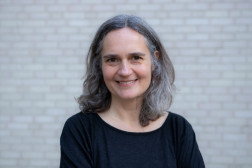
Heather Paxson · Massachusetts Institute of Technology · PhdFit
Resume-aware faculty matching
Find professors who actually fit you
Upload your resume. PhdFit's six research agents compare your background with faculty profiles, recent publications, lab focus, and outreach opportunities, then rank professors with evidence you can review.
Resume-aware matchingEvidence from recent researchOutreach drafts included
Advisor Match Brief Resume uploaded
Resume signals5 found
NLPHCIFairnessGraph MLPyTorch
Six-agent analysisRunning
Axel · Candidate AnalystResume parsed
Nova · Professor ResearcherRecent papers
Echo · Match ExplainerEvidence linked
Atlas · Strategy AdvisorFit ranked
Lyra · Outreach WriterDraft queued
Juno · Meeting Prep CompilerNext step ready
SC
Dr. Sarah Chen
Stanford · NLP & interpretability
91
fit
Fairness + NLP projects overlap with her recent work.
Strong methods fit: model evaluation and interpretability.
Clear outreach angle for current trustworthy AI research.
Outreach angle
Ask how her lab is extending interpretability methods into fairness audits for real-world AI systems.
Heather Paxson
· Associate Dean for Faculty, MIT School of Humanities, Arts and Social Sciences William R. Kenan, Jr. Professor of Anthropology Margaret MacVicar Faculty FellowVerified
Heather Paxson is the Associate Dean for Faculty at MIT's School of Humanities, Arts, and Social Sciences and holds the title of William R. Kenan, Jr. Professor of Anthropology. She is also a Margaret MacVicar Faculty Fellow. Her role involves academic leadership within the faculty at MIT. The page indicates her primary affiliation with the Department of Anthropology, but does not provide specific details about her research focus, background, or key contributions.
The discipline of anthropology has long grappled with the challenge of developing theoretical forms while simultaneously grounding these concepts in concrete phenomena. Is kinship, for example, an empirically observable domain of human life; one model of relationship-making; or an ideological claim, only present in specific times and places, about the value of shared “blood” or genetic inheritance? Are rituals the ceremonial practices by which humans punctuate a collective temporal order, the communicative dimension of all social activity, or merely the artifact of utilitarian models of cultural life (that is to say, what remains after all “practical” activity has been accounted for can only be a “ritual”)? The notion of terroir, glossed as “the taste of place,” presents a similar conundrum. Is terroir best understood as a very specific attribute of viticultural performance; a cultural category of perception (perhaps one developed to evaluate precisely said viticultural qualities); or a framework for articulating the material connection between histories, modes, and techniques of food production and the communities of consumers who appreciate these goods?
What is it we actually do when we say we are conducting more-than-human ethnography? What is in the multispecies toolbox? This conversation gathered anthropologists with long-term investments in environmental research to discuss methods and exchange practical field experiences as a step towards addressing these questions. Our conversation centred around the notion of ‘ecography’ as a way to expand how we think about human societies (the ethnos in ethnography), embracing how societies are always emplaced and enmeshed within wider systems of relations (ecos). The concept, with its explicit reference to ethnography, allows us to sidestep some of the thorny epistemological debates around how, or indeed if it is possible and desirable, to cross the species boundary. For some, it remained an open question as to whether and to what extent ecography brought something novel to the table. Our conversation turned into a playful discussion about multispecies and more-than-human ethnography, and anthropology in the age of the Anthropocene.
Eating is a liminal activity, occurring at the threshold between "inside" and "outside" the body. . . . As such it represents both opportunity and danger, and so it stands to reason that it would be freighted with significance that bears upon values and the relative worth of diff er ent ways of life.
Introduction eating beside ourselves heather paxsonEating is a liminal activity, occurring at the threshold between "inside" and "outside" the body. . . .As such it represents both opportunity and danger, and so it stands to reason that it would be freighted with significance that bears upon values and the relative worth of diff er ent ways of life.-carolyn korsmeyer, "introduction: perspectives on taste," the taste culture reader transformative acts and pro cesses of eating-tasting, ingesting, digesting, metabolizing-serve to nourish bodies, but they accomplish much else besides.They nourish relations and in this way share features with acts of care (Abbots, Lavis, and Attala 2015).They materialize social differences and in this way participate in gendered (and sexist), racializing (and racist), and classed (and classist) body politics (e.g., Bourdieu
What does the history of the periodic table and of cheese-making in the provinces of the Russian Empire have to do with one another? (A story of markets and cooperatives, the elementary and the scalable, of non-standardized quark -- and of milk gone sour).\n\nIn An Anthropogenic Table of Elements: Experiments in the Fundamental, edited by Timothy Neale, Courtney Addison, and Thao Phan. Toronto: University of Toronto Press, 2022
North Carolina State University Libraries eBooks · 2021 · 2 citations
1st authorCorresponding
Food science
Business
Biology
Cheesemaking is an ancient means of preserving milk. But is cheese made from raw milk inherently riskier than cheese made from pasteurized milk? Heather Paxson will take us through the cultural history and practical implications of U.S. food safety regulation of cheese, which since 1949 has been predicated on a binary distinction between pasteurization and its absence. By bringing into view the artisan techniques of cheesemaking that can accomplish food safety on a par with (or may even exceed) pasteurization, she reframes cheese safety as a matter of holistic practice, not merely "clean" inputs. She will also reflect on the role and challenge of classification -how best to sort a limitless variety of cheese types into meaningful categories -for safety regulators, producers, retailers and consumers alike.
Although it is popular to credit microbes as metabolic “laborers” responsible for producing the distinctive flavors and preservative properties of raw milk cheeses, cured meats, and assorted ferments, the fermentation value of foods can be put at risk by the material conditions and regulatory politics of international trade. Transportation and distribution are therefore today considered an aspect of and not something that follows production and value formation. Drawing on preliminary research with specialty importers, consolidators, and brokers, this article traces the work of moving fermented foods across oceans and borders, highlighting how the timescapes and transformations associated with mobility and perishability interact in ways that might erode product value but that can also successfully be navigated by retailers and their suppliers through skillful logistical and semiotic practices.